Home / News / Industry News / Can Solar Panels Power a Heat Pump Efficiently

Can Solar Panels Power a Heat Pump Efficiently

INDUSTRY NEWS Solar Heating and Cooling

Renewable HVAC System Planning

Can Solar Panels Power a Heat Pump for Whole-Building Heating and Cooling?

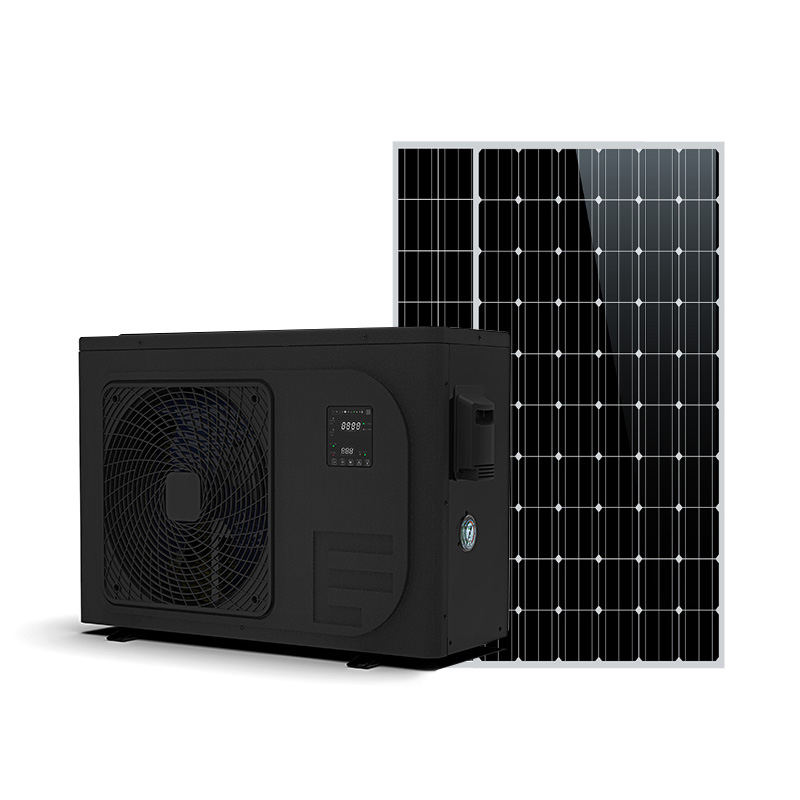
Solar-compatible central heat pumps combine high-efficiency electric heating and cooling with photovoltaic power generation. A properly designed system can use daytime solar production to reduce grid electricity consumption while maintaining comfortable indoor temperatures throughout different seasons.

System Type Air Source or Ground Source
Power Supply Solar, Grid or Hybrid
Main Application Central Heating and Cooling
01
System Definition

What Is a Solar Heat Pump?

Heat transfer equipment powered partly or fully by solar-generated electricity

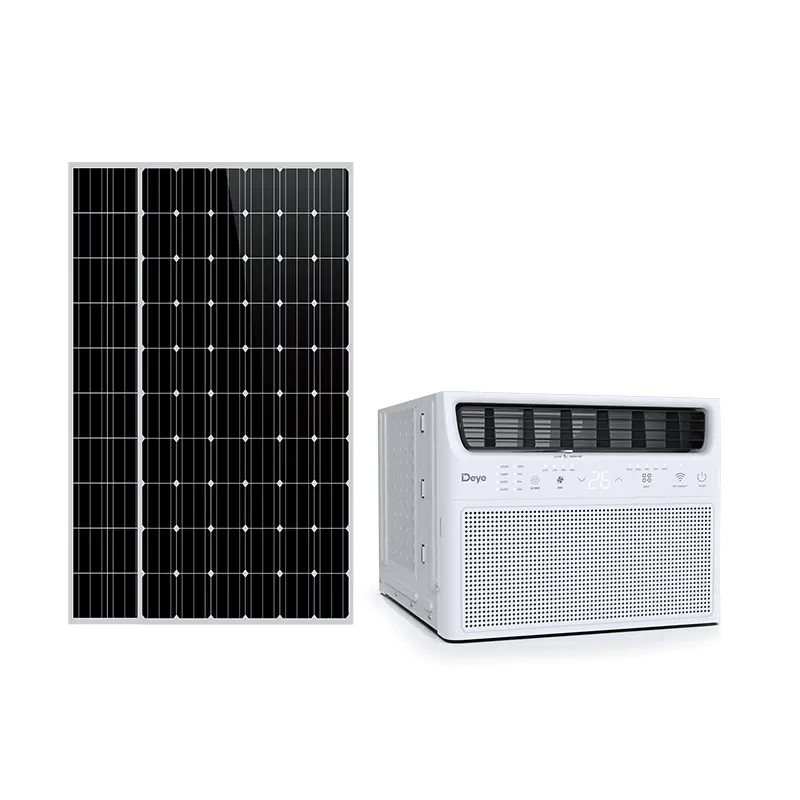
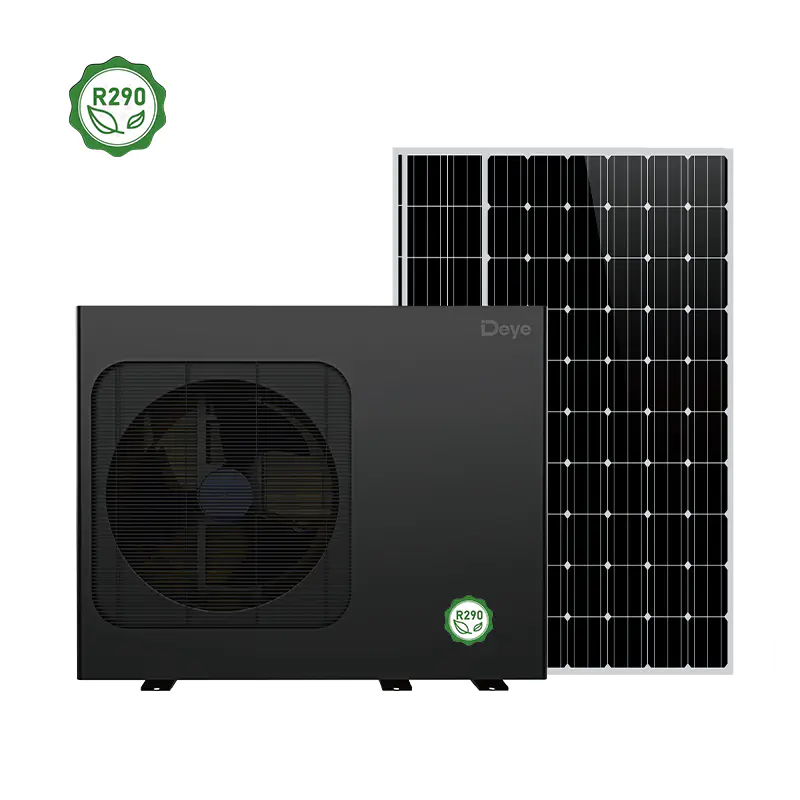
A solar heat pump is normally an electrically driven heat pump connected to a photovoltaic system. The solar panels generate electricity, while the heat pump transfers heat between indoor and outdoor environments. The term does not usually mean that sunlight directly heats the refrigerant inside the equipment.

Solar heat pumps can provide space heating, space cooling, and, in some system configurations, domestic hot water. They are suitable for residential buildings, offices, hotels, schools, workshops, agricultural facilities, and other properties where heating and cooling loads represent a large percentage of annual electricity consumption.

Solar-compatible central heat pumps are designed to work with building-wide ductwork, fan coil units, hydronic systems, underfloor heating, or other centralized temperature distribution systems. The heat pump may use solar electricity during the day and obtain additional electricity from the grid or battery when solar generation is insufficient.

Solar Panels Produce DC electricity from sunlight
Inverter Converts DC power into usable AC power
Heat Pump Moves heat instead of producing it directly
Distribution System Delivers heating or cooling throughout the building

02
Operating Principle

How Do Solar Heat Pumps Work?

A heat pump uses a refrigeration cycle to absorb heat from one area and release it into another. In heating mode, an air-source heat pump extracts available heat from outdoor air and transfers it indoors. In cooling mode, the cycle reverses and moves indoor heat outside.

Ground-source systems exchange heat with the ground through buried pipe loops. Water-source systems use an appropriate water source as the heat exchange medium. Each type can be combined with a photovoltaic system when its electrical requirements match the available solar array, inverter, protection devices, and energy management controls.

Stage 1 Solar Electricity Generation

Photovoltaic modules produce DC electricity according to solar radiation, panel temperature, orientation, tilt angle, shading, and module condition.

Stage 2 Electrical Conversion

A solar inverter converts the generated DC electricity into AC electricity compatible with the heat pump and the building electrical system.

Stage 3 Heat Transfer

The compressor, refrigerant circuit, evaporator, and condenser move thermal energy between the building and the selected external heat source.

Stage 4 Energy Source Balancing

Solar power is used when available. Grid electricity or battery storage supplies the remaining demand during low sunlight, nighttime operation, or peak heating load.

03
Solar Compatibility

Can Solar Panels Power a Heat Pump?

Yes, when panel capacity, inverter output, and heat pump demand are correctly matched

The answer to “can solar panels power a heat pump” is yes. A photovoltaic system can provide some or all of the electricity required by a heat pump. The actual percentage supplied by solar energy depends on the heating or cooling load, local climate, equipment efficiency, panel capacity, available sunlight, and operating schedule.

Users also ask, “can solar panels run a heat pump?” Solar panels can run a heat pump directly during daylight when the solar array produces enough power. A grid-connected system can automatically draw additional electricity when solar production falls below demand. An off-grid system requires sufficient battery capacity and inverter output to maintain operation when sunlight is unavailable.

The question “can you power a heat pump with solar panels” should be evaluated through both power and energy. Instantaneous power determines whether the system can operate at a specific moment. Daily and seasonal energy calculations determine whether the solar array can produce enough electricity over the required period.

System Configuration Solar Contribution Battery Requirement Operating Characteristic
Grid-Connected Heat Pump Partial or high daytime contribution Not required Grid automatically covers solar shortfall
Hybrid Heat Pump System Solar used as the preferred source Optional Solar, battery, and grid can work together
Off-Grid Heat Pump System Solar provides all generated electricity Required Requires careful winter and nighttime sizing
Solar-Assisted Daytime System Focused on daytime load reduction Usually not required Suitable for daytime cooling or scheduled heating
04
Solar Array Sizing

How Many Solar Panels Are Needed to Power a Heat Pump?

The number of solar panels depends on the heat pump electrical input, daily operating time, seasonal load, panel wattage, peak sunlight hours, system efficiency, and whether the heat pump must operate after sunset. Heating demand may be highest during winter, when daily solar production can be lower than summer production.

Basic Calculation Required solar array power = Daily heat pump electricity use ÷ Peak sunlight hours ÷ System efficiency

Example Operating Data

Average electrical input 2.5kW
Daily operating time 8 hours
Daily electricity use 20kWh
Peak sunlight hours 5 hours
System efficiency 80%

Calculated Solar Array

20kWh ÷ 5h ÷ 0.80 = 5kW

A theoretical 5kW array could be formed with approximately eleven 455W solar panels. A practical design may use twelve to fourteen panels to compensate for module temperature, inverter loss, dust, partial shading, changing weather, and seasonal reduction in solar output.

Average Heat Pump Input Daily Runtime Daily Electricity Demand Reference Solar Array Approximate 455W Panel Quantity
1.5kW 6 hours 9kWh 2.3kW–3.0kW 6–7 panels
2.5kW 8 hours 20kWh 5.0kW–6.5kW 11–15 panels
4.0kW 8 hours 32kWh 8.0kW–10.5kW 18–24 panels
6.0kW 10 hours 60kWh 15.0kW–20.0kW 33–44 panels
Winter sizing requires additional attention.

A heat pump may consume more electricity during cold weather because the temperature difference between indoors and outdoors is greater. Solar production may also decrease because of shorter daylight hours, low sun angle, snow cover, cloud, or poor weather. Annual average solar data should not be used alone for critical winter heating design.

05
Performance Evaluation

Is a Heat Pump Worth It with Solar?

A heat pump can be worth combining with solar when the building has a substantial annual heating or cooling demand. Heat pumps are electrically driven, allowing photovoltaic electricity to offset part of their operating cost. A well-insulated building with correctly sized equipment usually provides better results than a poorly insulated building with an oversized or undersized system.

Conditions That Improve Value

Long annual operating time

Buildings requiring both winter heating and summer cooling can use the heat pump and solar system through more months of the year.

High daytime electricity demand

Daytime heating, cooling, hot water, or commercial operation can consume solar electricity while it is being generated.

Good building insulation

Reduced heat loss allows the heat pump to maintain temperature with lower compressor power and shorter operating cycles.

Suitable low-temperature distribution

Underfloor heating and properly designed fan coil systems can reduce the required water temperature and improve heat pump efficiency.

Conditions Requiring Careful Review

Severe winter temperatures

Very low outdoor temperature can increase electricity consumption and may require larger equipment, backup heating, or a different heat source.

Limited solar installation area

Roof shape, structural capacity, shading, access paths, and local regulations may restrict the usable photovoltaic capacity.

High nighttime heating demand

Nighttime operation relies on grid power or battery storage because solar panels do not generate electricity after sunset.

Existing high-temperature radiators

Some traditional radiators require water temperatures that reduce heat pump efficiency unless the emitters or building envelope are upgraded.

06
Equipment Selection

Choosing Solar-Compatible Central Heat Pumps

Solar-compatible central heat pumps should be selected according to the building load, local design temperature, heating distribution method, available electrical supply, solar inverter output, and control strategy. The heat pump does not require a special type of sunlight, but it must operate safely and efficiently with the electrical system.

Heating Capacity

Heating capacity should match the calculated building heat loss at the local design temperature. Selecting equipment only by floor area can produce inaccurate results.

Cooling Capacity

Cooling selection should account for solar heat gain, windows, insulation, occupants, lighting, equipment, ventilation, and local summer temperature.

Input Power Range

Variable-speed heat pumps can adjust compressor output and may follow available solar generation more smoothly than fixed-output equipment.

COP and SCOP

COP describes operating efficiency under defined conditions. SCOP provides a seasonal view and is useful for comparing heating performance over a broader temperature range.

Electrical Phase

Confirm whether the unit uses single-phase or three-phase electricity and whether the solar inverter and building supply can support the required voltage and current.

Low-Temperature Operation

Check rated capacity, input power, defrost performance, and leaving-water temperature at the lowest expected outdoor temperature.

Control Compatibility

Energy management controls can coordinate solar generation, battery charge, thermal storage, grid power, room temperature, and time-of-use operation.

07
System Comparison

Common Types of Solar Heat Pumps

Air Source

Air-to-Air Heat Pump

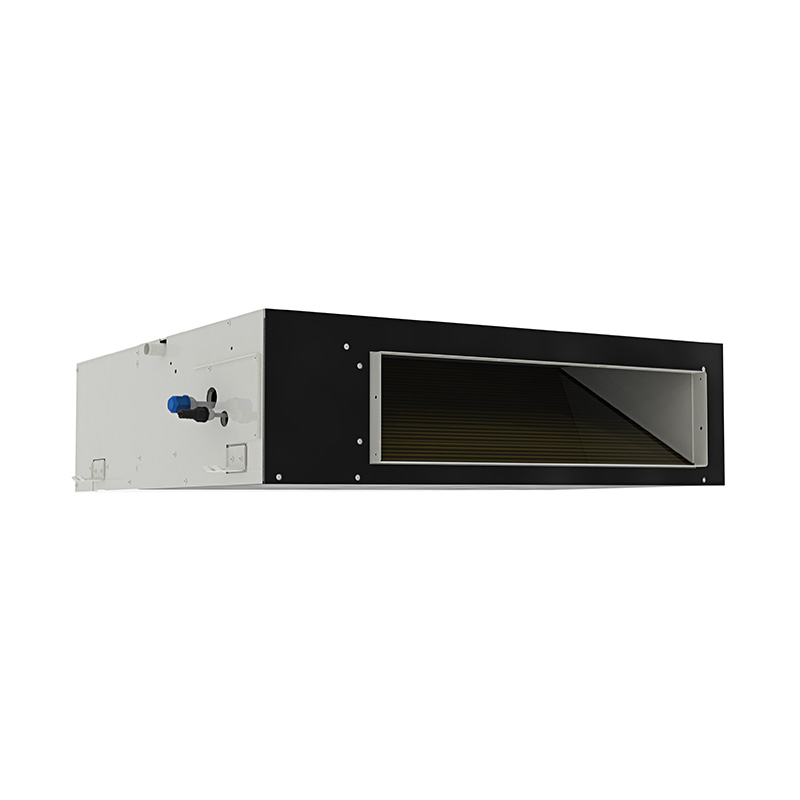
Transfers heat between outdoor air and indoor air. It is commonly connected to ducted or ductless indoor units and can provide both heating and cooling.

Suitable for:

Homes, offices, shops, and buildings requiring direct air heating and cooling.

Air Source

Air-to-Water Heat Pump

Transfers energy from outdoor air into a water circuit for underfloor heating, fan coil units, low-temperature radiators, or domestic hot water.

Suitable for:

Central hydronic heating, cooling, and integrated hot-water systems.

Ground Source

Ground-Source Heat Pump

Uses buried loops to exchange heat with the ground. Ground temperature is more stable than outdoor air temperature, but installation requires suitable land, drilling, or excavation.

Suitable for:

Long-term projects with available ground area and significant annual load.

Water Source

Water-Source Heat Pump

Exchanges heat with an appropriate water source. Water quality, flow rate, environmental conditions, filtration, and local approval must be considered.

Suitable for:

Projects with a reliable and technically suitable water source.

08
Project Planning

What Must Be Confirmed Before Installation?

01

Building Heating and Cooling Load

Determine heat loss, cooling load, insulation performance, air leakage, window area, occupancy, ventilation demand, and required indoor temperatures.

02

Solar Resource and Installation Space

Review monthly sunlight data, roof orientation, panel angle, shading, structural capacity, access space, snow load, wind load, and cable distance.

03

Electrical Infrastructure

Confirm service voltage, phase, breaker capacity, inverter output, cable size, surge protection, isolation, grounding, and local electrical rules.

04

Heat Distribution System

Check duct dimensions, airflow, water flow, pipe diameter, pump head, radiator capacity, fan coil selection, and required water temperature.

05

Backup and Energy Storage

Decide whether grid support, battery storage, thermal storage, or auxiliary heating is required during nighttime, poor weather, defrost cycles, or extreme cold.

06

Control Strategy

Define solar priority, battery reserve, hot-water schedule, room temperature, grid charging restrictions, weather compensation, and demand response settings.

09
Frequently Asked Questions

Questions About Solar Heat Pump Systems

Is there such a thing as a solar heat pump?

Yes. The term usually refers to a heat pump powered partly or fully by electricity generated from photovoltaic panels. It may be grid-connected, hybrid, or off-grid.

Can solar panels run a heat pump at night?

Solar panels cannot produce electricity at night. Night operation requires grid electricity, a sufficiently sized battery, or another backup power source.

Can a heat pump operate only when solar power is available?

It can be scheduled for periods of strong solar production, but buildings requiring continuous temperature control normally need grid support, batteries, or thermal storage.

Why does a heat pump use more electricity in cold weather?

The equipment must move heat across a larger temperature difference. Air-source systems may also require defrost cycles, which can temporarily increase electricity use.

Can an existing photovoltaic system support a central heat pump?

It may support part or all of the demand when the solar array, inverter, electrical service, wiring, protection equipment, and available generation capacity are sufficient.

Does adding more panels always eliminate grid electricity use?

Not necessarily. Heating demand can occur at night or during low-sunlight winter periods. Panel capacity, battery storage, seasonal production, and building heat loss must be evaluated together.

Are solar heat pumps suitable for domestic hot water?

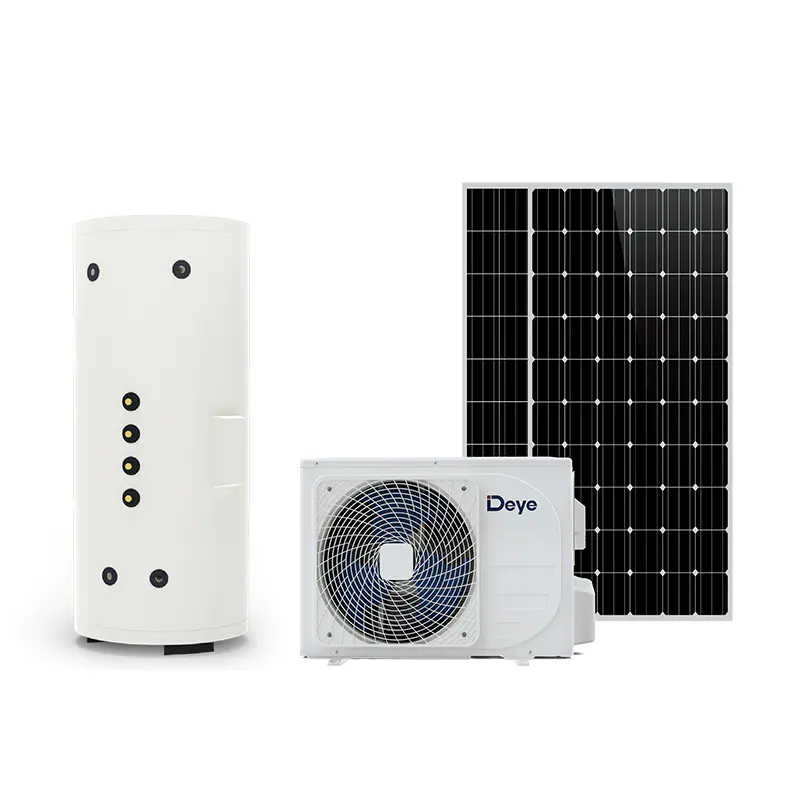
Many air-to-water and ground-source heat pump systems can produce domestic hot water. Required tank temperature, storage volume, hygiene cycle, and backup heating should be included in system selection.

System Configuration Information

Match Solar-Compatible Central Heat Pumps to the Actual Project Load

Reliable system selection requires more than a building floor area or a general panel quantity. Heating demand, cooling demand, local climate, water temperature, electrical supply, operating schedule, solar generation, and backup requirements must be reviewed as one complete system.

Heat Pump Information

Heating and cooling capacity

Rated and maximum input power

Operating temperature range

Required outlet water temperature

Single-phase or three-phase supply

Defrost and auxiliary heating requirements

Solar System Information

Solar panel rated power

Available roof or ground area

Monthly peak sunlight hours

Solar inverter model and output

Battery capacity and usable energy

Grid availability and local voltage

Building Information

Location and climate conditions

Building floor area and insulation

Required indoor temperature

Heating and cooling operating hours

Existing ducts, radiators, or floor heating

Domestic hot-water requirement

View Solar Heat Pump Solutions