

 Español
 русский
 Français
 Português
 Deutsch
 عربى
عربى italiano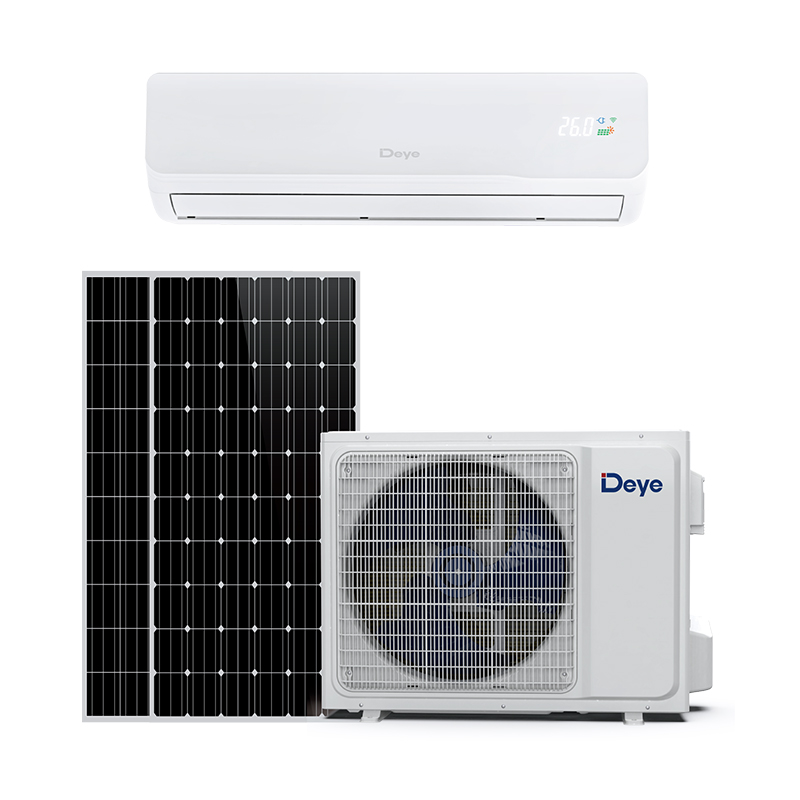
-1.jpg)

Content
- 1 The Reality of Solar Cooling: Do Solar-Powered Air Conditioners Exist?
- 2 Technical Breakdown: Is It Possible to Run AC on Solar?
- 3 The Financial Equation: Are Solar Air Conditioners Worth It?
- 4 The Challenges: What Are the Disadvantages of Solar Air Conditioners?
- 5 System Components and Sizing Your Setup
- 6 Installation Scenarios: Where Solar AC Shines
- 7 Comparative Analysis: Solar AC vs. Traditional AC + Home Solar
- 8 Frequently Asked Questions (FAQ) & Consumer Knowledge Base
The Reality of Solar Cooling: Do Solar-Powered Air Conditioners Exist?
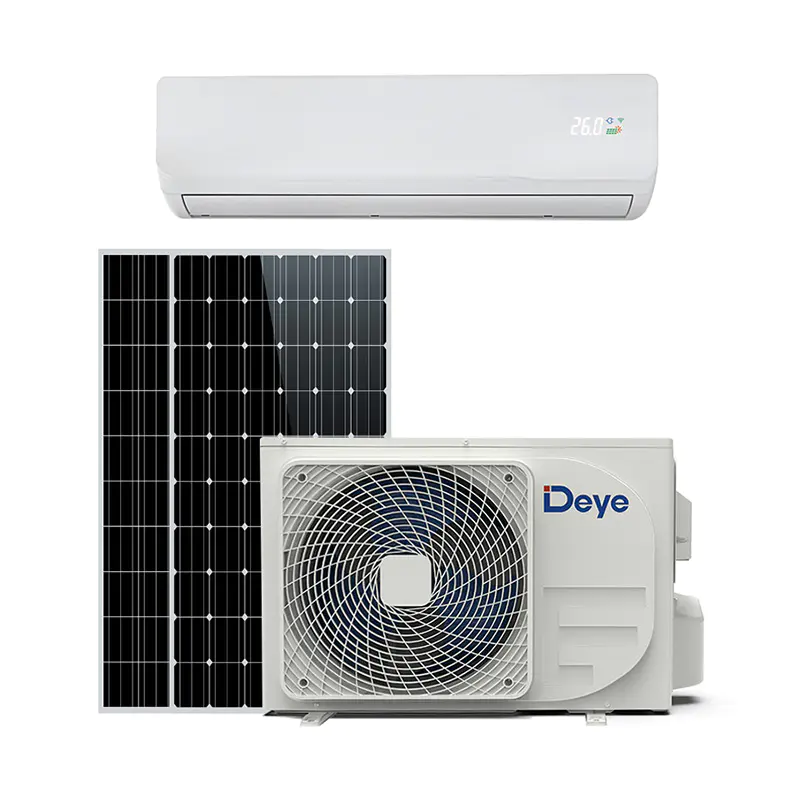
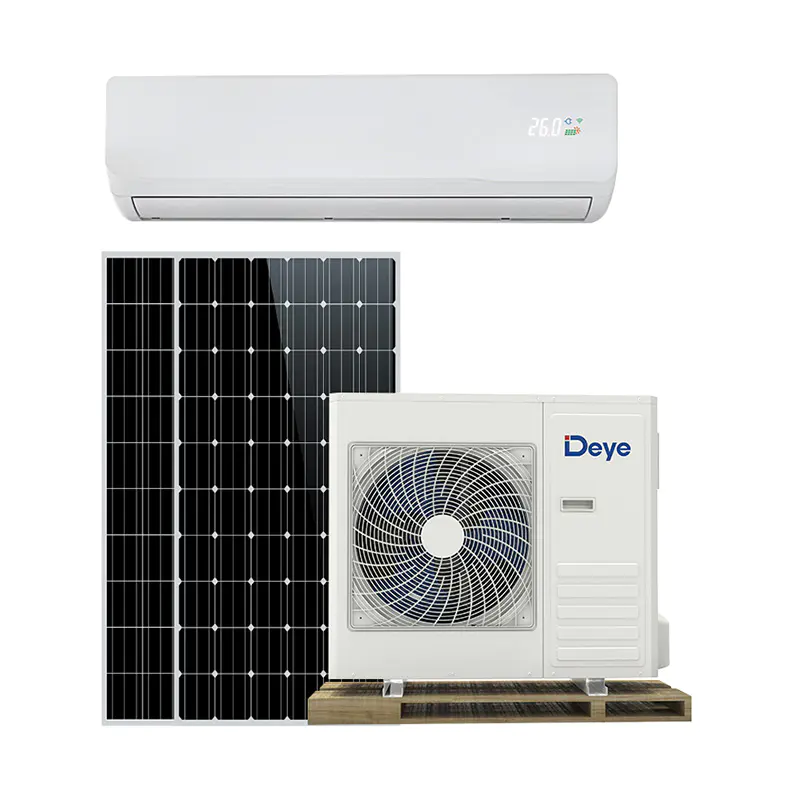
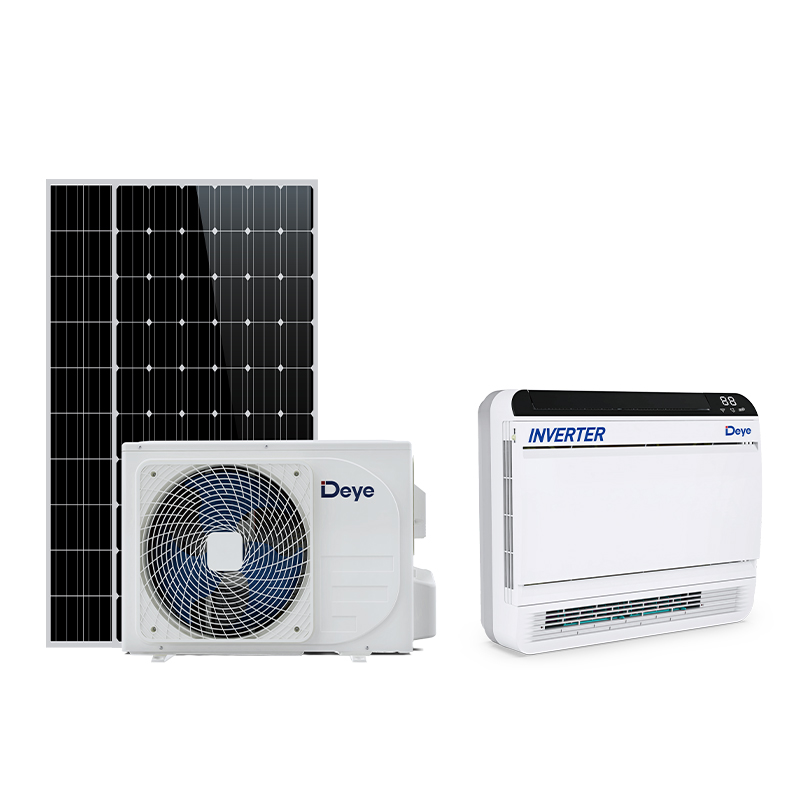
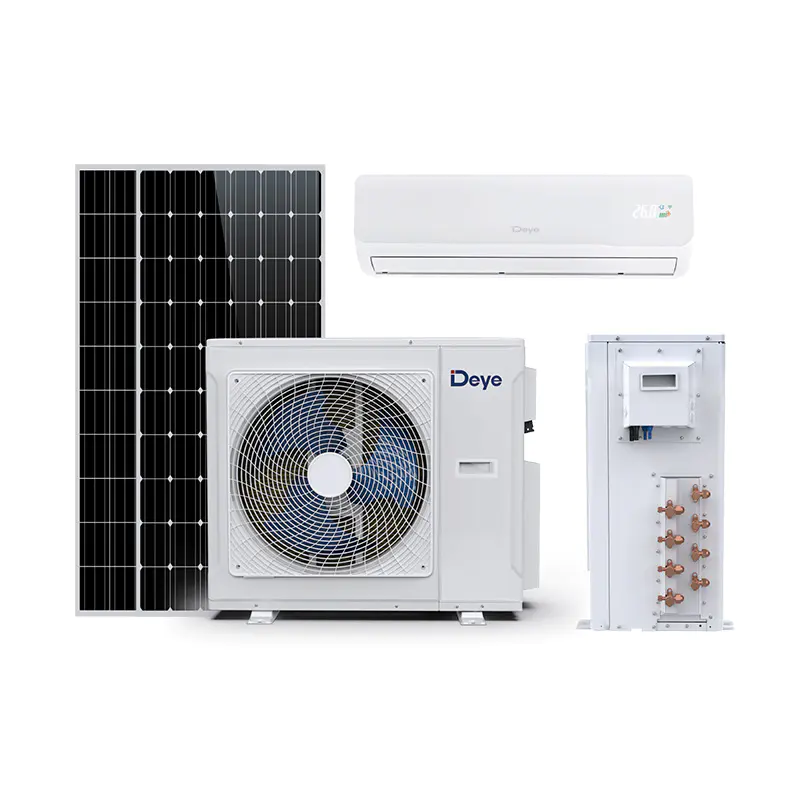
In many people's minds, air conditioners are "energy hogs" that consume massive amounts of electricity, while solar panels seem only capable of powering lights or fans. So, Do solar-powered air conditioners exist? The answer is a definitive yes. This technology is already quite mature and is moving from specialized industrial applications into mainstream residential use.
A modern solar air conditioner is not an experimental prototype but a finished appliance capable of converting sunlight directly into cooling. These systems collect solar energy via photovoltaic (PV) panels and drive the compressor using inverters or DC controllers. The core of this technology lies in solving the "energy density" challenge—generating enough current from limited roof space to power a high-wattage compressor.
With the widespread adoption of Inverter Technology, the startup current for air conditioners has dropped significantly, making the solar air conditioner much more viable. Modern systems no longer require massive battery banks to run during the day, marking a new era in clean energy cooling.
Technical Breakdown: Is It Possible to Run AC on Solar?
For most users, the most pressing technical question is: Is it possible to run AC on solar? Not only is it possible, but there are three main architectures based on how the energy is utilized.
Off-Grid DC Systems
These systems use direct current (DC) generated by solar panels to drive specialized DC compressors. Because there is no need to convert DC to AC through an inverter, energy loss is reduced by approximately 15%-20%.
Best For: Remote areas without grid access, RVs, and mobile cabins.
Core Advantage: Extremely high conversion efficiency.
AC/DC Hybrid Systems
This is currently the most popular type of solar air conditioner on the market. It connects to both solar panels and the utility grid (AC) simultaneously.
How It Works: On sunny days, the system prioritizes solar power. When clouds block the sun or solar energy is insufficient, the system automatically draws the deficit from the grid without manual switching.
Core Advantage: Extremely stable operation; the AC won't stop running just because a cloud passes by.
Grid-Tied Systems
This approach involves a standard photovoltaic system integrated into the home's electrical panel rather than a specialized unit.
How It Works: Solar power feeds the entire house, including standard air conditioning units.
Core Advantage: High flexibility; it powers all appliances, and excess electricity can often be sold back to the grid.
Core Parameter Comparison Table
| Dimension | Off-Grid DC | Hybrid AC/DC | Standard AC + Whole Home Solar |
| Power Input | Solar Panels only (+Battery) | Solar Panels + Direct Grid | Inverted Home Grid |
| Conversion Loss | Very Low (<5%) | Moderate (~10%) | Higher (15-25%) |
| Installation Difficulty | Moderate (Voltage matching) | Low (Plug & Play) | High (Full Solar System) |
| 24/7 Operation | Battery dependent (Expensive) | Auto-switch to Grid (Stable) | Grid or Large Storage dependent |
| Typical Application | No-grid areas / Temp builds | Energy-efficient home retrofits | Total green energy solutions |
The Financial Equation: Are Solar Air Conditioners Worth It?
When considering a purchase, users often struggle with the return on investment: Are solar air conditioners worth it? To answer this, we must look at both initial investment and long-term gains.
Initial Cost vs. Operating Cost
The initial purchase price of a high-quality solar air conditioner and its accompanying panels is typically 2 to 3 times that of a standard inverter AC. However, air conditioning often accounts for over 60% of summer electricity bills.
Payback Period: In sun-drenched regions (with over 1,000 sun hours per year), the savings on electricity bills usually allow for a full recovery of the extra hardware costs within 3 to 5 years.
Equipment Lifespan: Solar panels typically last over 25 years, while the AC unit itself has a design life of 10-15 years. This means after the payback period, users enjoy over a decade of "free cooling."
Environment and Property Value
Beyond direct financial savings, installing a solar air conditioner significantly improves a home's energy rating. In today's real estate market, homes with self-sufficient energy capabilities often command a higher premium.
The Challenges: What Are the Disadvantages of Solar Air Conditioners?
Despite the clear benefits, every technology has its limits. Understanding What are the disadvantages of solar air conditioners? helps in making a rational decision.
High Upfront Barrier: While they save money in the long run, the initial outlay (panels, racks, cables, labor, and the unit) is a significant burden for many households.
Space Constraints: A 1.5 HP (approx. 12,000 BTU) unit usually requires 3 to 5 large solar panels. If roof space is limited or shaded by trees or neighboring buildings, the system cannot reach peak efficiency.
Nighttime Operation: Once the sun sets, a pure solar system will stop working unless equipped with an expensive battery bank. While hybrid systems switch to the grid, the cost-saving advantage disappears during those hours.
Maintenance Complexity: You must maintain the solar panels (cleaning and checking wiring) in addition to standard AC maintenance like cleaning filters and outdoor coils.
System Components and Sizing Your Setup
Answering Is it possible to run AC on solar? depends on hardware matching. An efficient solar air conditioner system consists of the PV array, a controller, the AC unit, and optional batteries.
Sizing the System
Air conditioning capacity is measured in BTU or "Tons," while solar panels are measured in Watts (W). To keep a solar air conditioner running at full power during the day, you should configure a PV capacity 20%-30% higher than the AC's rated power to offset line losses and weather fluctuations.
1.0 Ton (approx. 9,000 BTU): Rated at ~800W. Recommended: 1000W - 1200W of panels.
1.5 Ton (approx. 12,000 BTU): Rated at ~1100W. Recommended: 1400W - 1600W of panels.
2.0 Ton (approx. 18,000 BTU): Rated at ~1600W. Recommended: 2000W+ of panels.
Storage Options for Night Cooling
This addresses a major point in What are the disadvantages of solar air conditioners?: the nighttime power gap.
Battery-free (Hybrid): Switches to grid power at night. Low cost, but no savings after dark.
Battery-backed (Off-grid): Requires deep-cycle lead-acid or Lithium batteries.
Reference: To run a 1.5 Ton AC for 8 hours at night, you typically need at least 10kWh of storage, which can double the initial installation cost.
Installation Scenarios: Where Solar AC Shines
Do solar-powered air conditioners exist? They do, but not every home is a perfect candidate.
Roof Area: Using a standard 450W monocrystalline panel as an example, each panel takes up about 2 square meters. A 1.5 Ton solar air conditioner needs at least 8-10 square meters of unshaded, south-facing (in the Northern Hemisphere) roof space.
Orientation and Tilt: The ideal angle should match the local latitude to ensure maximum radiation at noon.
Wiring Distance: The distance from the panels to the outdoor unit should ideally be under 10 meters to prevent significant DC voltage drops.
Comparative Analysis: Solar AC vs. Traditional AC + Home Solar
When asking Are solar air conditioners worth it?, users often compare specialized units with traditional setups.
| Technical Metric | Specialized DC Solar AC | Standard AC + Inverter |
| Startup Current | Soft start, no surge | Surge can be 3-5x running current |
| Energy Path | Panels -> Unit (Direct) | Panels -> Inverter -> Unit (Multiple conversions) |
| Min. Voltage | Often starts at 80V DC | Requires stable 110V/220V AC |
| Overall EER | Very high (Low-power optimized) | Depends on unit's original SEER rating |
| Expandability | Highly specialized | High (Powers the whole house) |
Frequently Asked Questions (FAQ) & Consumer Knowledge Base
Q1: Will solar AC work on rainy days?
A: For "Hybrid" systems, it automatically draws from the grid to supplement power, and the AC continues to cool normally. For pure "Off-grid" systems, output drops to 10%-20%, which might only sustain the fan mode rather than the compressor.
Q2: Why don't solar air conditioners use "water cooling"?
A: This is a common misconception. Most solar air conditioners are Photovoltaic (PV), meaning they use light to generate electricity. Units that use water evaporation are called "evaporative coolers" or "swamp coolers," which operate on a different principle and are ineffective in humid climates.
Q3: How do I convert "Tons" to Watts for solar?
A: 1 Ton (HP) is roughly 735W of electrical power (though cooling capacity is ~2500W). When buying a solar air conditioner, always look at the rated input power (W) rather than vague "Tons" to match your panels accurately.
Q4: What is the typical lifespan of these components?
A: Solar Panels: 25 years (with less than 20% power degradation). Compressor: 10-12 years. Electronic Controller: 5-8 years (often the most vulnerable part; check the warranty).
A: When calculating Are solar air conditioners worth it?, don't ignore maintenance. Panel Cleaning: Dust can reduce power output by 15%-25%. Lightning Protection: Solar systems require dedicated DC surge protectors. Structural Reinforcement: In typhoon-prone areas, roof mounts must be rated for high wind speeds.
