

 Español
 русский
 Français
 Português
 Deutsch
 عربى
عربى italiano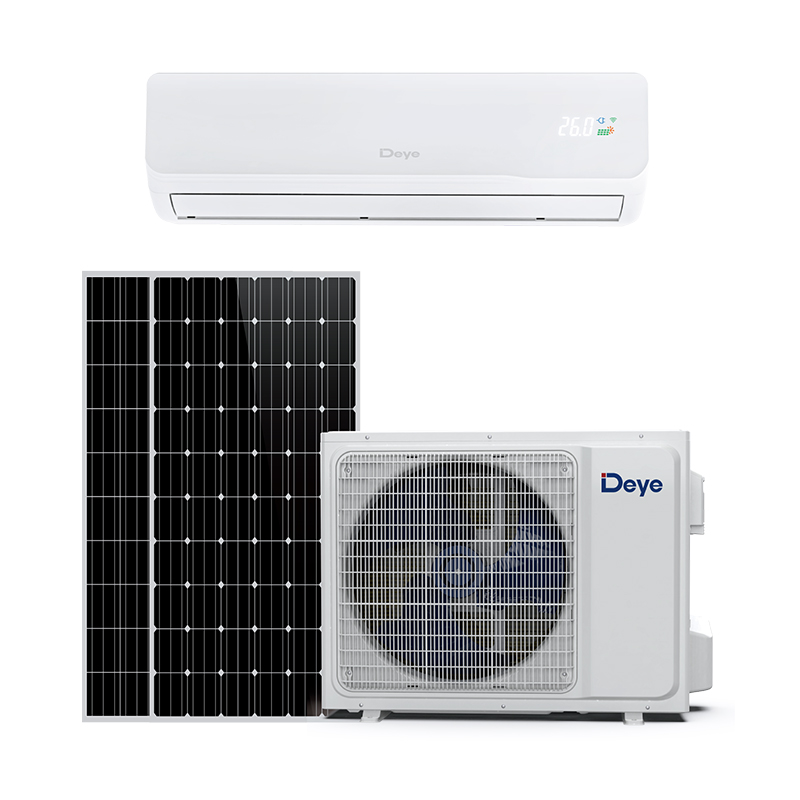
-1.jpg)

Content
- 1 Traditional Solar Inverter Basic Functions and Limitations
- 2 Wall mounted Solar AC-Hybrid ACDC Innovative Architecture
- 3 Fundamental Functional Integration Differences
- 4 Installation Form and Space Occupation
- 5 Input Power Supply Flexibility
- 6 Energy Storage and Backup Power Functions
- 7 Grid-Connected and Off-Grid Mode Switching Capability
- 8 Conversion Efficiency and Energy Management
- 9 DC Output Capability Unique Advantages
- 10 Remote Monitoring and Intelligent Management
- 11 Environmental Adaptation Capability
- 12 System Scalability
- 13 Maintenance and Troubleshooting
- 14 Cost-Effectiveness Long-Term Considerations
- 15 Future Technology Trends
Traditional Solar Inverter Basic Functions and Limitations
Traditional solar inverter core functionality converts direct current produced by solar panels into alternating current supplying household or commercial power consumption. Such unidirectional function design satisfied basic energy requirements over past decades. Traditional solar inverters typically employ independent box or cabinet designs requiring separate installation on building exteriors or indoor equipment rooms.
Wall mounted Solar AC-Hybrid ACDC Innovative Architecture
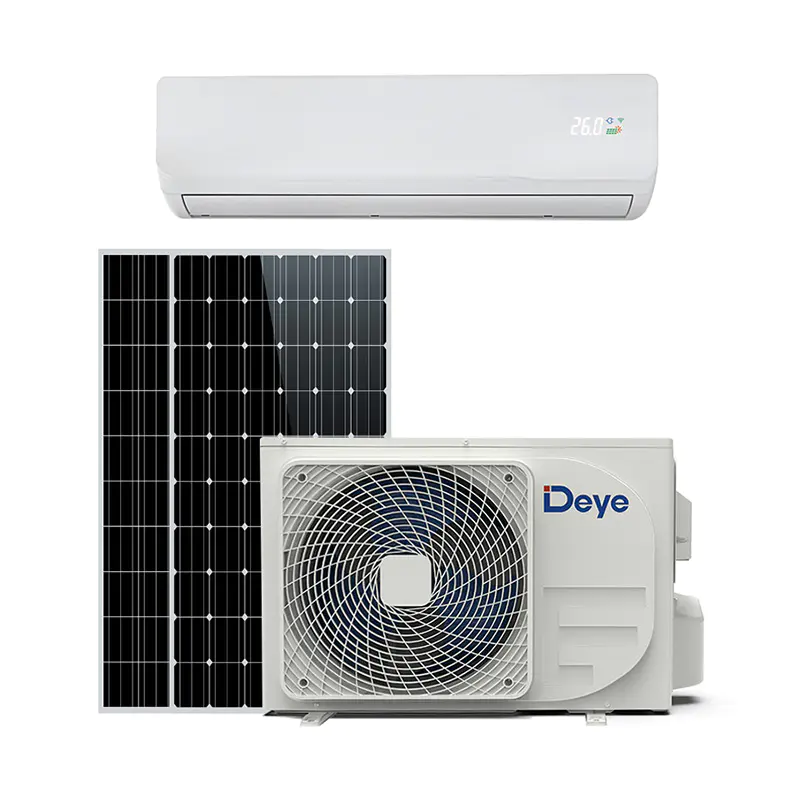
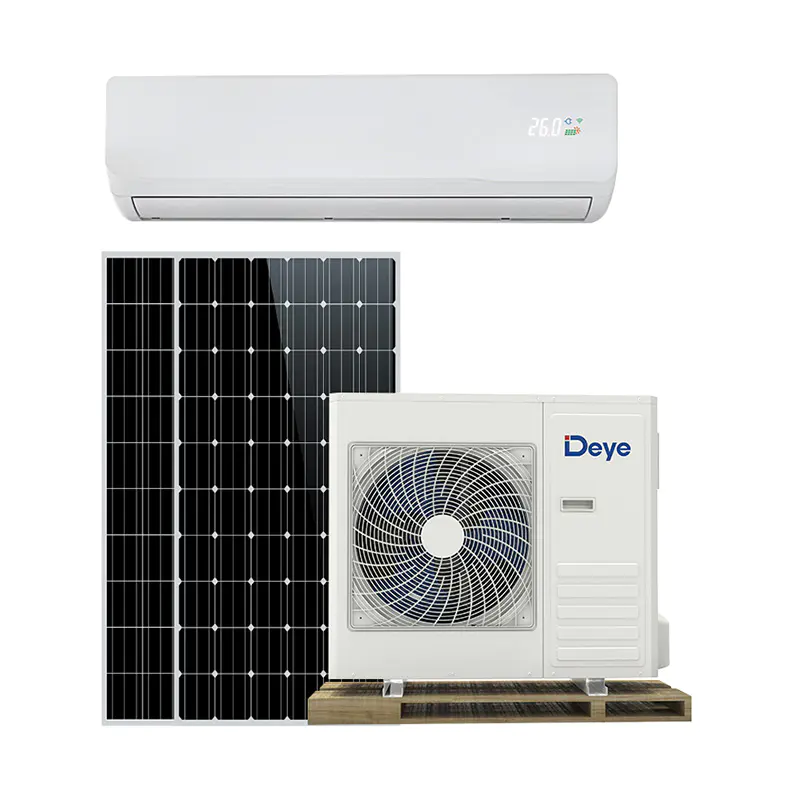
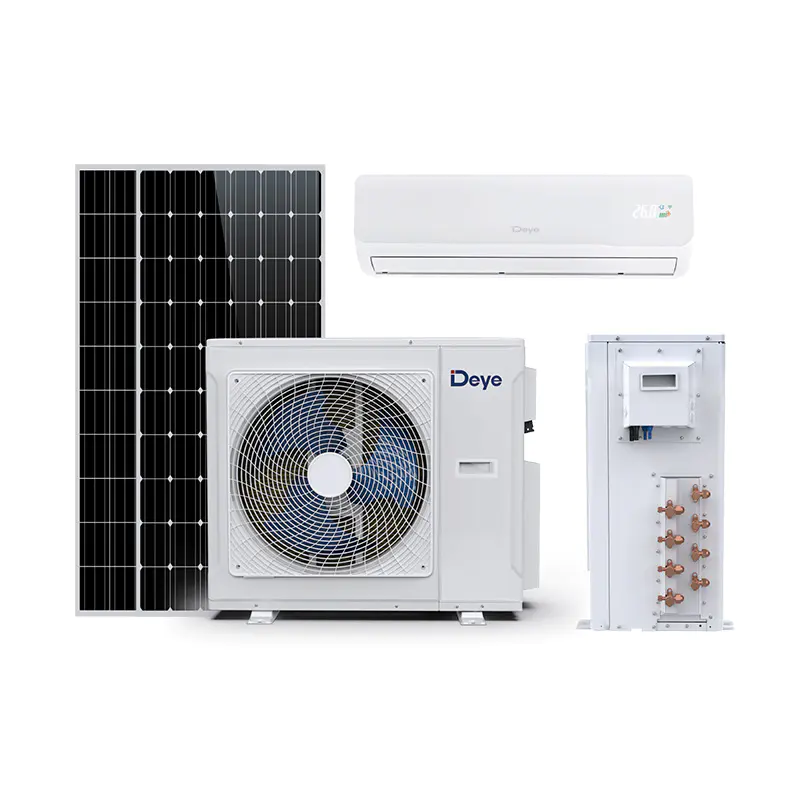
Wall mounted Solar AC-Hybrid ACDC represents next-generation solar inverter technology development direction. This equipment's greatest innovation integrates AC and DC mixed output functionality. Wall mounted Solar AC-Hybrid ACDC not only performs DC-to-AC inversion while maintaining DC output interfaces allowing direct DC device operation. Such dual-output architecture provides users greater flexibility.
Fundamental Functional Integration Differences
Traditional solar inverters focus on single functionality, namely DC-to-AC conversion. Should users require DC power for LED lighting or other DC devices, typically additional DC-DC converters or rectification prove necessary. Wall mounted Solar AC-Hybrid ACDC integrates multiple functions within single devices including MPPT control, DC output, AC output, battery management. Such integrated design reduces external component requirements simplifying system complexity.
Installation Form and Space Occupation
Traditional solar inverters typically demonstrate larger volumes requiring ground space or dedicated equipment room locations. Wall mounted Solar AC-Hybrid ACDC employs wall-mounted design directly installing on building exterior walls conserving precious indoor space. Such design proves particularly beneficial for space-limited households or commercial establishments. Wall-mounted installation facilitates heat dissipation and maintenance access.
Input Power Supply Flexibility
Wall mounted Solar AC-Hybrid ACDC supports multiple input power supply methods. Beyond solar panel inputs, such equipment typically supports grid input and backup power input. Certain premium models support three-path simultaneous input operation automatically prioritizing lowest-cost or cleanest power sources. Traditional solar inverters typically accept only solar panel input requiring additional controller configuration for multi-power scenarios.
Energy Storage and Backup Power Functions
Wall mounted Solar AC-Hybrid ACDC typically integrates battery management systems and energy storage functionality. Users can connect lithium batteries or other storage devices achieving energy storage and backup power functionality. This enables systems continuing power supply during blackouts or insufficient solar generation. Traditional solar inverters require independent battery management system coordination demonstrating higher system complexity.
Grid-Connected and Off-Grid Mode Switching Capability
Wall mounted Solar AC-Hybrid ACDC supports automatic switching between grid-connected and off-grid working modes. During normal grid operation, systems can feed power back to grids; during grid faults, systems automatically switch to off-grid mode supplying local loads. Traditional solar inverters typically support single modes requiring external controllers for coordination. Such automatic switching significantly enhances system reliability.
Conversion Efficiency and Energy Management
Wall mounted Solar AC-Hybrid ACDC achieves higher overall efficiency through advanced power management algorithms. Systems automatically adjust working status based on real-time loads and generation maximizing energy utilization rates. Certain models employ multi-stage conversion and intelligent routing technology reducing unnecessary energy conversion. Traditional solar inverter conversion efficiency though high lacks intelligent energy management capabilities.
DC Output Capability Unique Advantages
Wall mounted Solar AC-Hybrid ACDC DC output interfaces allow direct DC voltage-level device power supply avoiding second-conversion energy losses. Modern buildings contain substantial DC device quantities including LED lighting, televisions, computer power supplies. DC output power supply reduces energy losses and heat generation. Traditional solar inverters lack such functionality requiring all device AC power usage.
Remote Monitoring and Intelligent Management
Wall mounted Solar AC-Hybrid ACDC typically features advanced Internet-of-Things functionality supporting remote monitoring and management. Users can view real-time generation, consumption, storage status information through mobile applications. Certain models support intelligent scheduling allowing remote work mode control. Traditional solar inverter intelligence levels prove relatively lower with many models displaying only basic values.
Environmental Adaptation Capability
Wall mounted Solar AC-Hybrid ACDC typically demonstrates stronger protection grades adapting to various harsh environmental conditions. Such equipment employs superior waterproof, dustproof, corrosion-resistant designs. Wall-mounted design avoids ground water accumulation and contamination. Traditional solar inverter protection grades though respectable may prove less reliable than purposefully-designed Wall mounted Solar AC-Hybrid ACDC in extreme environments.
System Scalability
Wall mounted Solar AC-Hybrid ACDC design facilitates system expansion. Users can increase solar panel quantities or storage capacity according requirements. System modular design makes such expansions relatively simple. Traditional solar inverter system expansion typically requires additional external devices and complex reconfiguration.
Maintenance and Troubleshooting
Wall mounted Solar AC-Hybrid ACDC integrated design simplifies system maintenance. Most functions integrate within single devices rendering fault troubleshooting relatively straightforward. System real-time diagnostic functions quickly identify problems. Traditional solar inverter systems require separate component inspection increasing maintenance complexity.
Cost-Effectiveness Long-Term Considerations
Though Wall mounted Solar AC-Hybrid ACDC unit costs may prove slightly higher, considering high integration, reduced component requirements, simplified maintenance, actual long-term total ownership costs prove lower. Traditional solar inverter systems though potentially lower initial costs require additional component configuration with higher maintenance costs.
Future Technology Trends
Wall mounted Solar AC-Hybrid ACDC represents solar inverter technology development direction. Energy internet and smart building development trends make such integrated, intelligent solutions increasingly popular. Though traditional solar inverters retain markets, new applications and projects increasingly prefer next-generation hybrid inverter solutions.
