

 Español
 русский
 Français
 Português
 Deutsch
 عربى
عربى italiano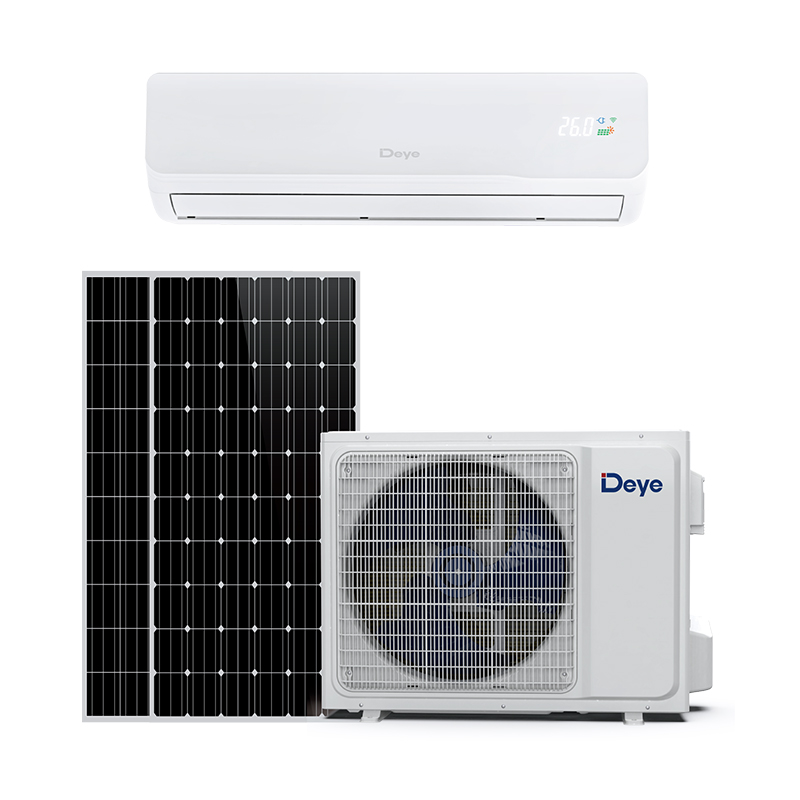
-1.jpg)

Content
- 1 Step 1: Identify Your Window AC's Real Power Draw
- 2 Step 2: Calculate Solar Panel Array Size
- 3 Step 3: Battery Bank Sizing for Overnight Cooling
- 4 Step 4: Inverter Selection and Surge Handling
- 5 Step 5: Practical Setup Options
- 6 Common Sizing Mistakes
- 7 Does the Window AC Compressor Cycle Affect Solar Sizing?
- 8 Can You Run a Window AC from a Portable Solar Generator?
- 9 FAQs
- 9.1 How many solar panels do I need for a 5,000 BTU window AC?
- 9.2 Can I run a window AC without a battery?
- 9.3 Will a 100W solar panel run a window AC?
- 9.4 What size inverter do I need for a 10,000 BTU window AC?
- 9.5 Do I need a pure sine wave inverter?
- 9.6 How long will a 48V 100Ah battery run a window AC?
- 9.7 Can a solar air conditioner run at night?
You want to run a window air conditioner on solar power. The short answer is yes, but only if you match three things: the AC's running wattage, the solar panel array's daily energy production, and the battery storage capacity. Most 5,000 BTU window units draw 450 to 550 watts while running, but they surge to 1,200–1,500 watts at startup. That surge is often the piece that trips up DIY setups. The correct approach is to size your solar system for the locked rotor amps, not just the running watts.
Step 1: Identify Your Window AC's Real Power Draw
Manufacturers list BTU ratings, but BTUs do not tell you watts. A 5,000 BTU unit from one brand might draw 480 watts, while another draws 540 watts. The only reliable number is on the nameplate sticker attached to the side of the AC. Look for "amperes" at 115V or 120V. Multiply volts by amperes to get running watts, then multiply running watts by 3 to 5 for the startup surge estimate.
Here is a quick reference based on real-world measurements of typical window units:
| AC Capacity | Running Watts | Startup Surge (approx.) | Daily kWh (8 hours run) |
| 5,000 BTU | 450–550 | 1,200–1,500 | 3.6–4.4 |
| 8,000 BTU | 700–850 | 2,000–2,500 | 5.6–6.8 |
| 10,000 BTU | 900–1,100 | 2,500–3,500 | 7.2–8.8 |
| 12,000 BTU | 1,050–1,350 | 3,000–4,500 | 8.4–10.8 |
Use an inexpensive plug-in watt meter (like a Kill-A-Watt) to confirm your specific unit. Without that measurement, you are guessing, and guessing leads to undersized inverters or insufficient battery capacity on the first hot afternoon.
Step 2: Calculate Solar Panel Array Size
Solar panels are rated at standard test conditions (1,000 W/m² irradiance at 25°C). In real installations, you lose about 20–25% due to heat, wiring losses, inverter efficiency, and dust. Use a derate factor of 0.75 for practical sizing.
Formula for Daily Production
Array size (kW) = (Daily AC kWh × 1.25 derate margin) ÷ (Peak sun hours × 0.75 system efficiency)
Example: 5,000 BTU AC uses 4 kWh per day. Location receives 5 peak sun hours. Required array = (4 × 1.25) ÷ (5 × 0.75) = 5 ÷ 375 = 1.33 kW. That is three to four 400W panels.
5,000 BTU Window AC
Panels needed: 3–4 x 400W
Daily production: ~5–6 kWh
Battery: 2–3 kWh usable
8,000 BTU Window AC
Panels needed: 5–6 x 400W
Daily production: ~8–10 kWh
Battery: 4–5 kWh usable
10,000 BTU Window AC
Panels needed: 7–8 x 400W
Daily production: ~11–13 kWh
Battery: 5–7 kWh usable
Where peak sun hours are low (under 4 hours), add one extra panel to compensate for morning clouds or winter sun angles.
Step 3: Battery Bank Sizing for Overnight Cooling
Without batteries, your AC runs only when the sun shines. If you need cooling after sunset or during a passing cloud bank, you need storage. Flooded lead-acid batteries should only be discharged to 50% depth of discharge. Lithium-ion batteries (LiFePO₄) can discharge to 80–90% safely.
Battery Capacity Formula
Usable battery capacity (kWh) = Daily AC kWh × Hours of battery runtime ÷ Total daily runtime
Example: You want 4 hours of AC time after sunset. The AC draws 550 watts. 550W × 4h = 2.2 kWh. Using a LiFePO₄ battery at 80% DoD, you need 2.2 ÷ 0.8 = 2.75 kWh of total battery capacity. That translates to roughly a 48V 60Ah battery bank.
For lead-acid at 50% DoD, the same 2.2 kWh usable requires 2.2 ÷ 0.5 = 440 kWh total. That is a much heavier, larger, and shorter-lived bank.
Step 4: Inverter Selection and Surge Handling
A 500-watt running load might seem small, but the inverter must handle the startup surge. A 5,000 BTU unit can hit 1,500 watts for 100–200 milliseconds. A 1,000-watt inverter with a 2,000-watt surge rating is the minimum. For an 8,000 BTU unit with a 2,500-watt surge, choose a 1,500-watt continuous inverter with at least 3,000-watt surge capability.
Pure sine wave inverters are mandatory for compressor motors. Modified sine wave can cause overheating, reduced efficiency, and eventual motor failure. A solar-specific hybrid inverter, like the ones built into some systems, can manage both panel input and battery charging simultaneously, which simplifies wiring and reduces points of failure.
Step 5: Practical Setup Options
Option A: Dedicated off-grid system for one window AC
This is the most straightforward route. Install a dedicated solar array, a charge controller, a battery bank, and an inverter sized specifically for that one AC unit. No interaction with house wiring. Cost typically ranges from $1,200 to $2,800 depending on panel count and battery chemistry. This setup works well for a workshop, shed, cabin, or a single bedroom window unit.
Option B: Hybrid system with grid backup
If the window AC is in a home already connected to the grid, a hybrid inverter with battery storage lets you run the AC from solar during the day and from the battery at night, with the grid as a fallback. This avoids the complexity of full off-grid sizing while still reducing your peak demand and electricity bill. Many hybrid units allow you to set a "solar priority" mode, so the AC draws only from solar and battery until the battery drops below a set threshold.
Option C: All-in-one solar air conditioner
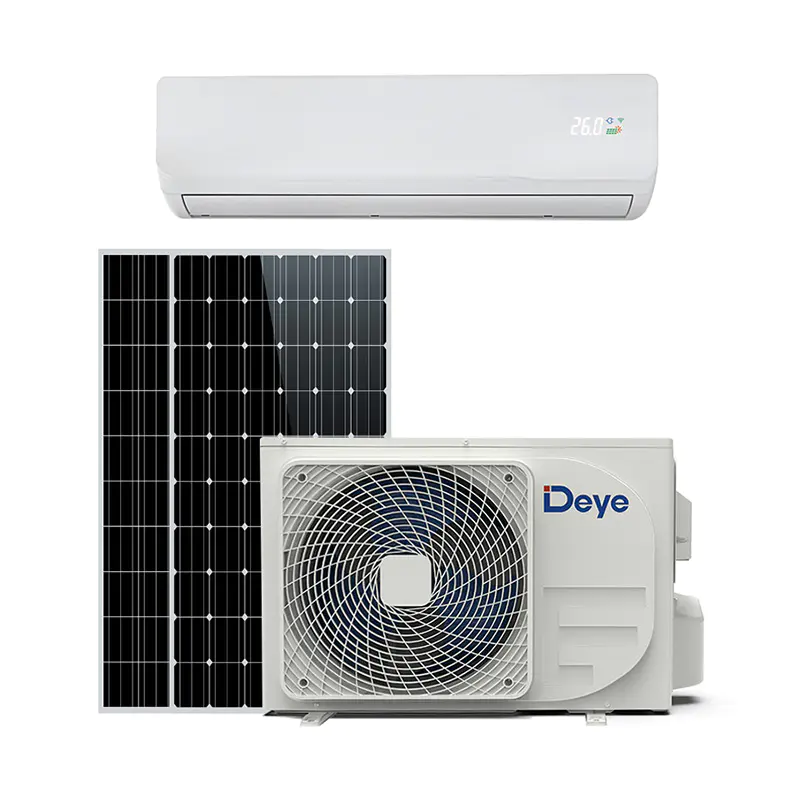
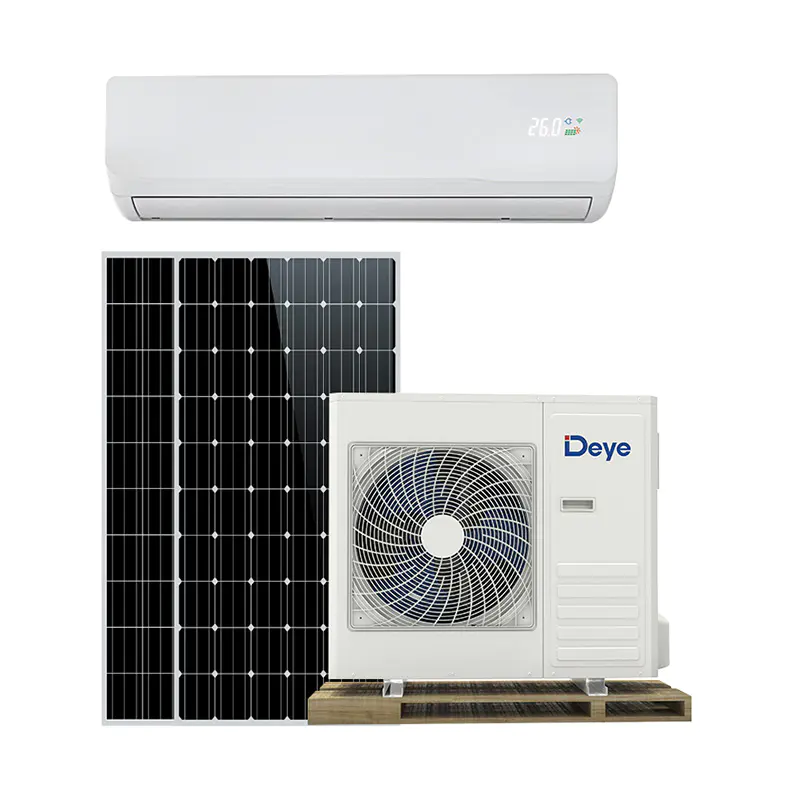
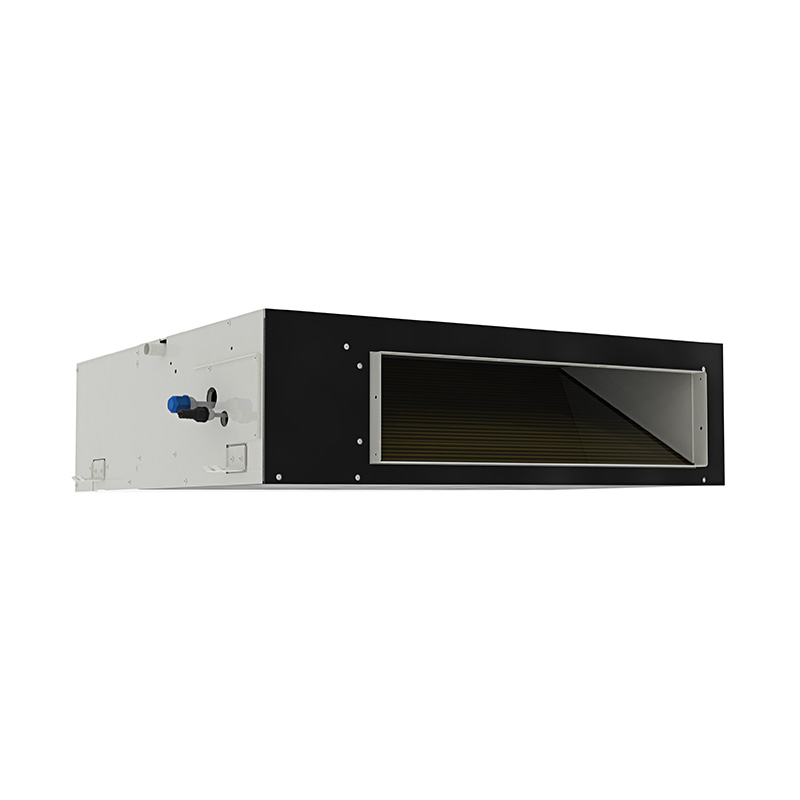
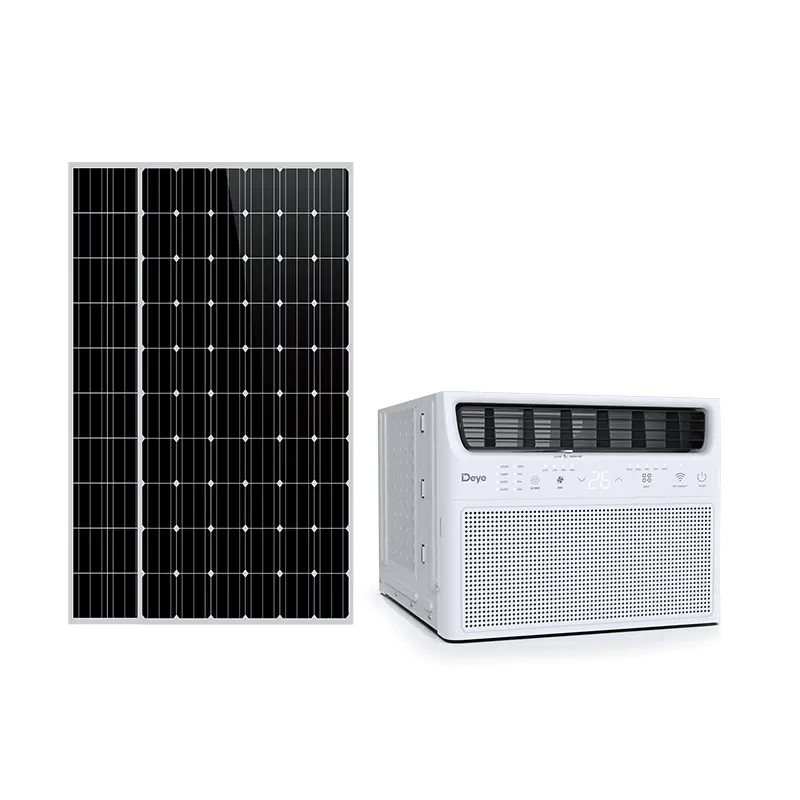
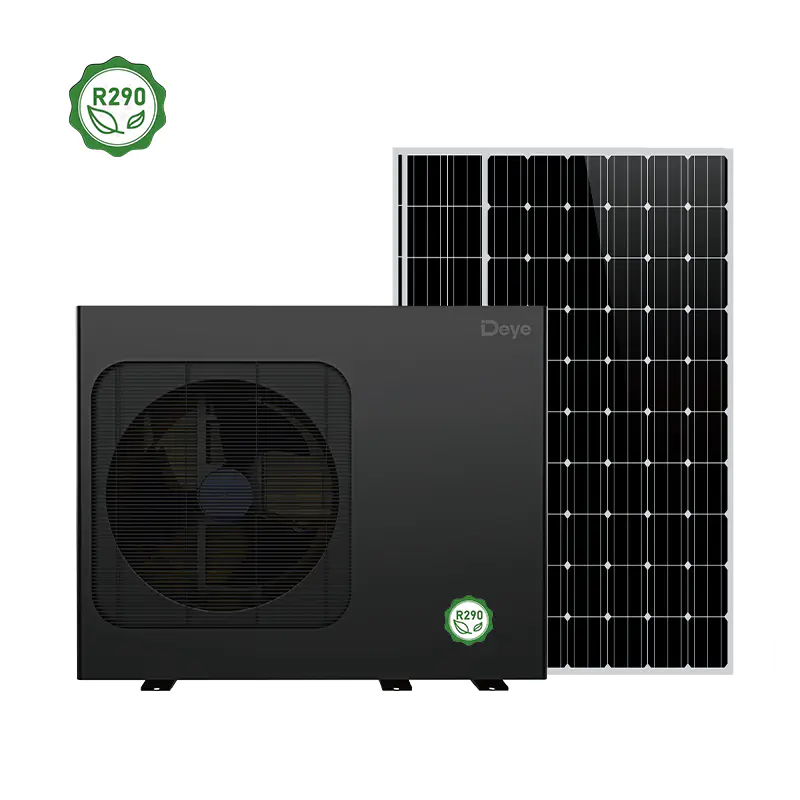
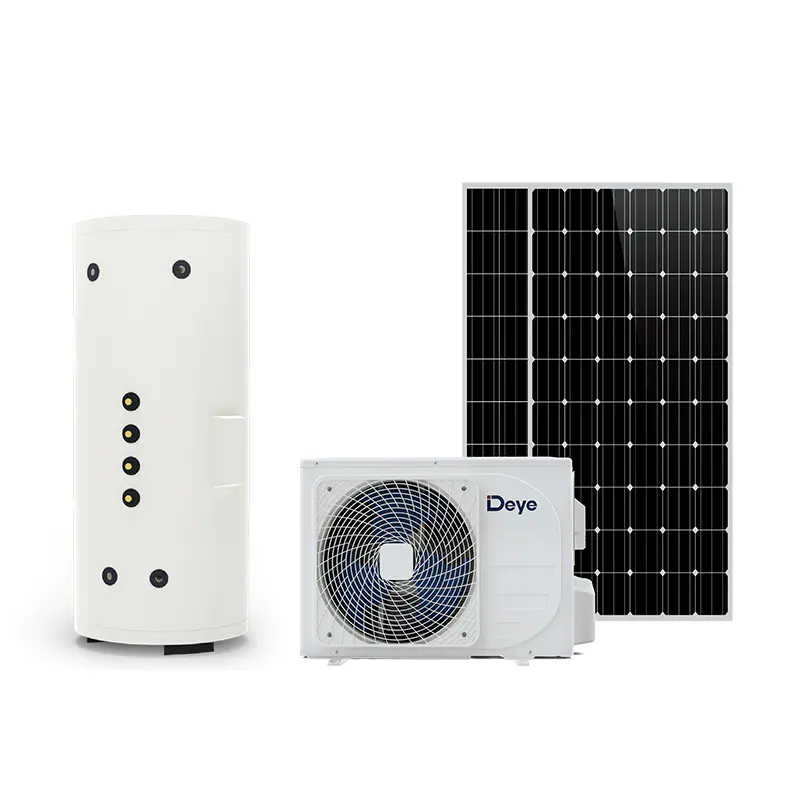
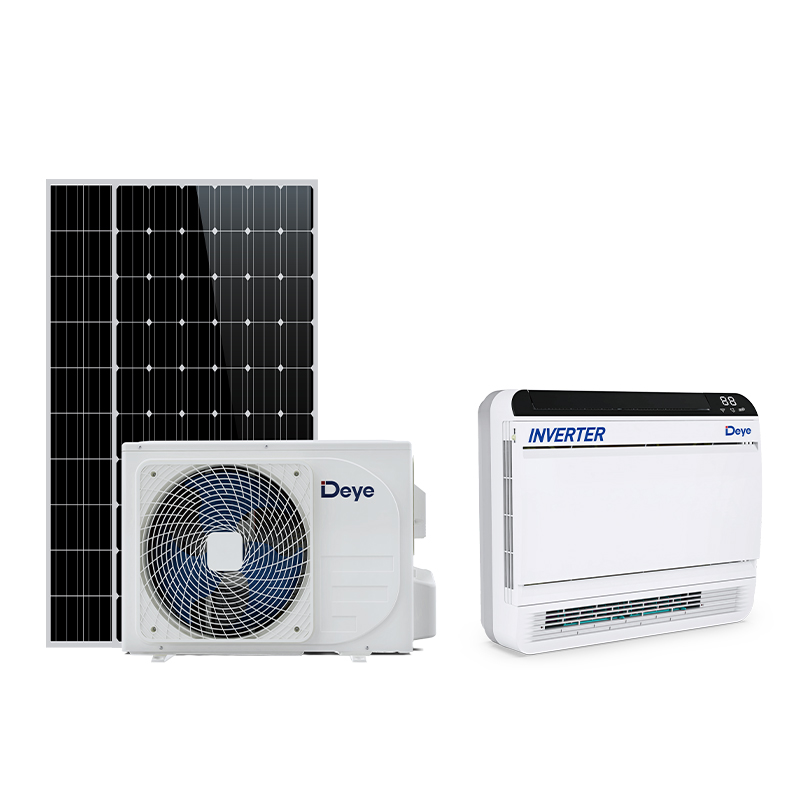
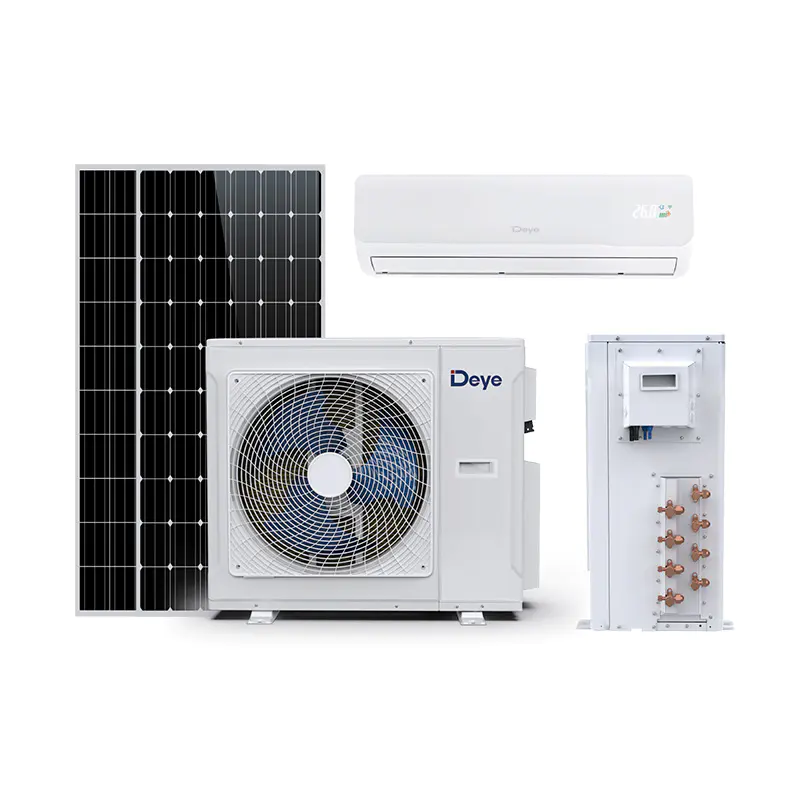
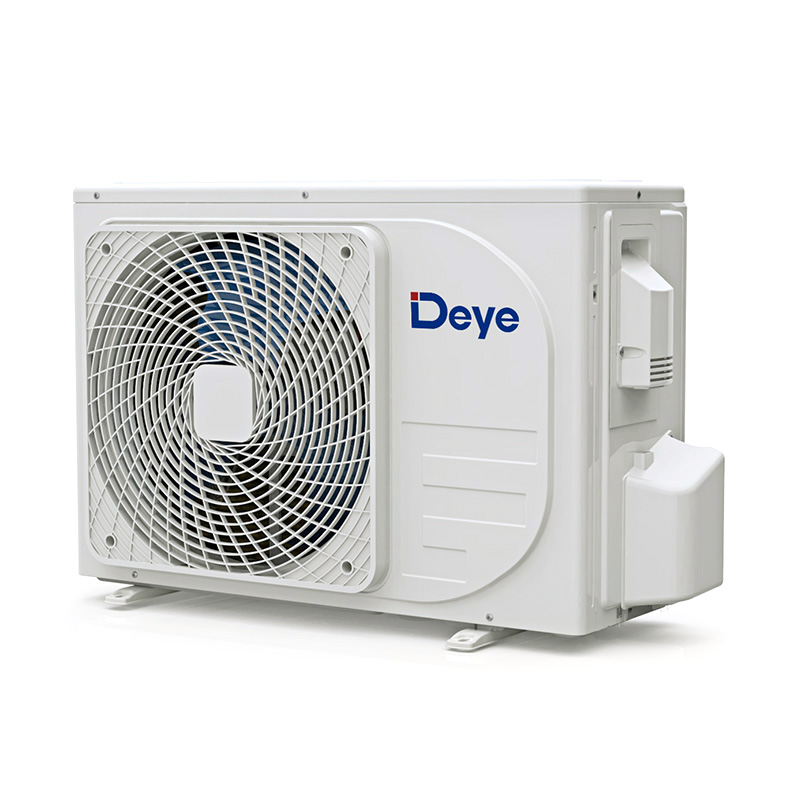 Deye Hybrid ACDC Wall Mounted Solar Air ConditionerThis Deye hybrid ACDC solar air conditioner integrates an MPPT booster and inverter in the outdoor unit, eliminating separate components. It operates directly from solar panels and automatically switches to grid power, offering a simplified, cost-efficient cooling solution.View Product →
Some manufacturers, including Deye, produce window-style or mini-split units with built-in DC input ports that connect directly to solar panels. These hybrid ACDC air conditioners eliminate the need for a separate inverter. The unit automatically switches between solar DC power and grid AC power based on availability. This reduces component count and upfront cost while improving overall system efficiency because there is no DC-to-AC-to-compressor conversion loss.
Common Sizing Mistakes
| Mistake | Why It Fails | Fix |
| Using BTU to estimate watts | EER varies widely; a 5,000 BTU unit may draw 430W or 580W | Read nameplate amps or use a watt meter |
| Ignoring startup surge | Inverter shuts down on overload at first compressor start | Size inverter for 3–5x running watts |
| Underestimating daily run time | Battery goes empty before the sun goes down | Assume 8–10 hours of actual compressor runtime |
| Using lead-acid at 50% DoD | Needs double the capacity of lithium; heavy and short-lived | Switch to LiFePO₄ for 80% usable capacity |
| Skipping a battery temperature sensor | Overcharging in hot weather reduces battery life | Install BMS with temperature compensation |
Does the Window AC Compressor Cycle Affect Solar Sizing?
Yes, significantly. A window AC does not run continuously. The compressor cycles on and off based on the thermostat setting and ambient temperature. On a 95°F day, a properly sized unit might run 70–80% of the time. On a milder 80°F day, that duty cycle drops to 40–50%. Your solar and battery sizing must account for worst-case duty cycle during the hottest part of the year.
For sizing purposes, assume a duty cycle of 75% during peak cooling season. That means an 8-hour cooling session with a 5,000 BTU unit (550W running) becomes 550W × 8h × 0.75 = 3.3 kWh, not 4.4 kWh. That 25% reduction can make a marginal system workable.
Can You Run a Window AC from a Portable Solar Generator?
Yes, but with limits. A portable solar generator rated at 1,500W continuous with a 3,000W surge can handle a 5,000 or 8,000 BTU window unit. The limiting factor is battery capacity. Most portable generators offer 1,000–2,000 Wh of storage. At a 550W load, a 1,500 Wh generator gives just 2.7 hours of runtime before the battery is dead. To run through the night, you need either a much larger generator (5,000+ Wh) or a setup that recharges the battery during the day while the AC runs.
FAQs
How many solar panels do I need for a 5,000 BTU window AC?
Three to four 400W panels, assuming 5 peak sun hours and a battery backup for evening use. If you run the AC only during daylight, two panels may be enough.
Can I run a window AC without a battery?
Yes, but only when the sun is shining. The instant a cloud passes, the compressor may stall and fail to restart. A small battery buffer of at least 500 Wh is strongly recommended.
Will a 100W solar panel run a window AC?
No. A 100W panel produces at most 80W in real conditions. Even the smallest 5,000 BTU unit needs 450W running and 1,200W to start.
What size inverter do I need for a 10,000 BTU window AC?
Minimum 1,500W continuous with 3,500W surge capability. A 2,000W inverter is safer and leaves room for other small loads.
Do I need a pure sine wave inverter?
Yes. Compressor motors rely on clean sine wave power. Modified sine wave can cause audible hum, overheating, and eventual compressor damage.
How long will a 48V 100Ah battery run a window AC?
A 48V 100Ah battery holds 4.8 kWh. At 80% usable (LiFePO₄), that is 3.84 kWh. A 550W AC would run for about 7 hours continuously, or longer with compressor cycling.
Can a solar air conditioner run at night?
Only if it has battery storage or a grid connection. Pure solar-direct units stop when the sun sets. Hybrid ACDC models with built-in battery ports can store daytime energy for nighttime use.
