

 Español
 русский
 Français
 Português
 Deutsch
 عربى
عربى italiano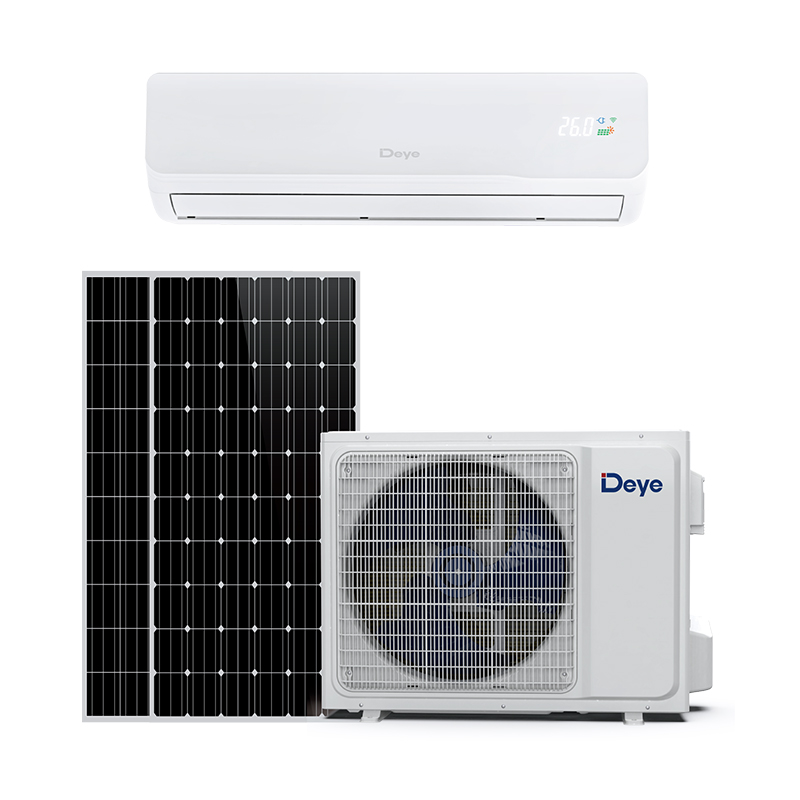
-1.jpg)

Content
- 1 Introduction to Solar Air Conditioning
- 2 How Solar Air Conditioners Work
- 3 Types of Solar Air Conditioners
- 4 Benefits of Solar Air Conditioning
- 5 Factors to Consider When Choosing a Solar Air Conditioner
- 6 Installation and Maintenance
- 7 Case Studies and Real-World Examples
- 8 The Future of Solar Air Conditioning
Introduction to Solar Air Conditioning
Traditional air conditioning (AC) systems, while essential for comfort, have a significant environmental impact. They consume a vast amount of electricity, which is often generated by burning fossil fuels, contributing to greenhouse gas emissions and climate change. The refrigerants used in older units, like hydrofluorocarbons (HFCs), are also potent greenhouse gases. This high energy consumption strains power grids, especially during peak usage on hot days.
Solar air conditioning offers a sustainable alternative by harnessing the power of the sun to cool homes and buildings. It directly addresses the environmental and energy-related issues of conventional AC by reducing reliance on the grid and lowering carbon footprints. As global temperatures rise and the demand for cooling solutions increases, the need for energy-efficient and eco-friendly options like solar AC becomes more critical than ever. The market for energy-efficient cooling solutions is experiencing a major surge, driven by both environmental concerns and the desire for cost savings.
How Solar Air Conditioners Work
Solar air conditioners use solar energy to power the cooling process. This energy can be captured and converted in a couple of ways.
The Power of Photovoltaics (PV)
Most commonly, solar ACs use photovoltaic (PV) panels, which are the same panels used for residential solar power. These panels contain photovoltaic cells that convert sunlight directly into direct current (DC) electricity. This DC power can then be used in one of two ways:
-
It can be converted into alternating current (AC) electricity using an inverter to power a standard AC unit.
-
More efficiently, it can directly power a special AC unit designed to run on DC electricity.
The Solar Thermal Approach
Another, less common method involves solar thermal collectors. These collectors use the sun's heat to power a different kind of cooling system. A fluid inside the collector is heated by the sun, and this heat is then used in a process called absorption chilling to create a cooling effect. This system is more common in large commercial applications but is less suitable for residential use.
In both cases, the basic principle is to use the abundant energy from the sun to offset or completely replace the electricity needed to run the compressor and fans in an air conditioning unit. This means the system works best when it's needed most—on hot, sunny days.
Types of Solar Air Conditioners
There are three primary types of solar air conditioners, each with its own technology and applications.
Photovoltaic (PV) Solar Air Conditioners
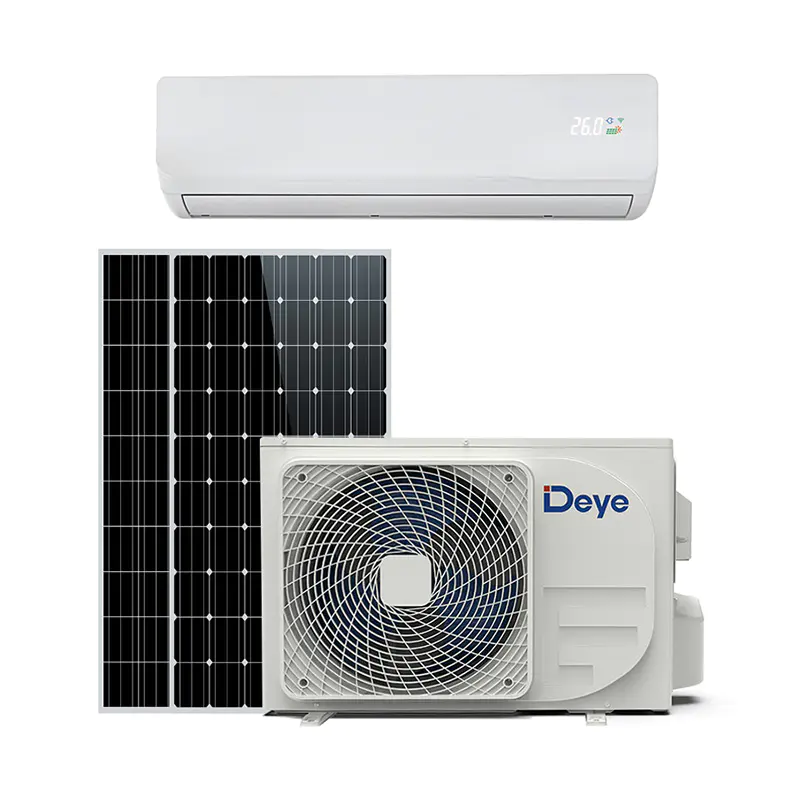
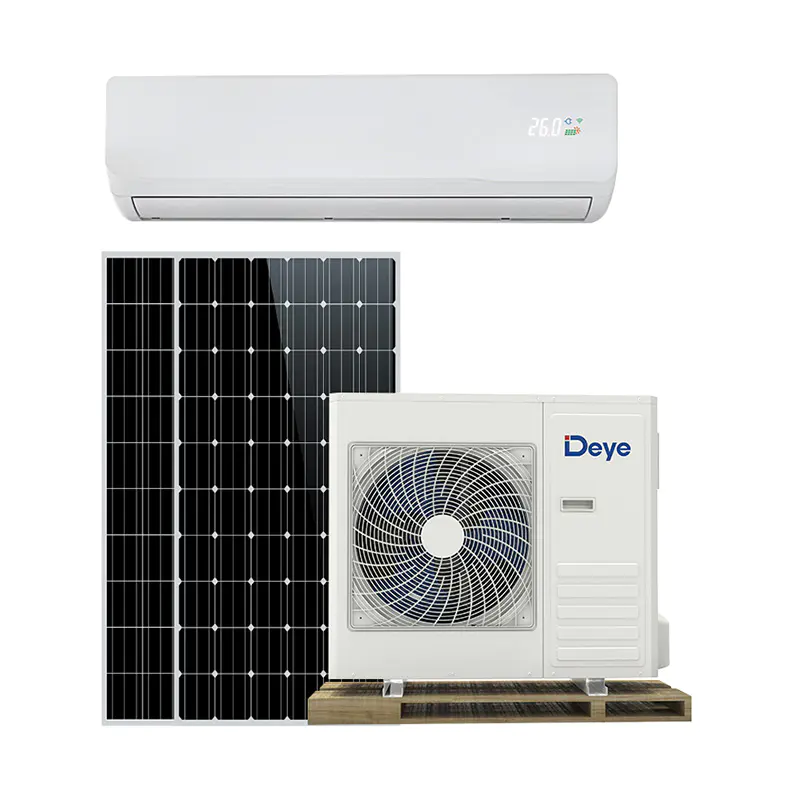
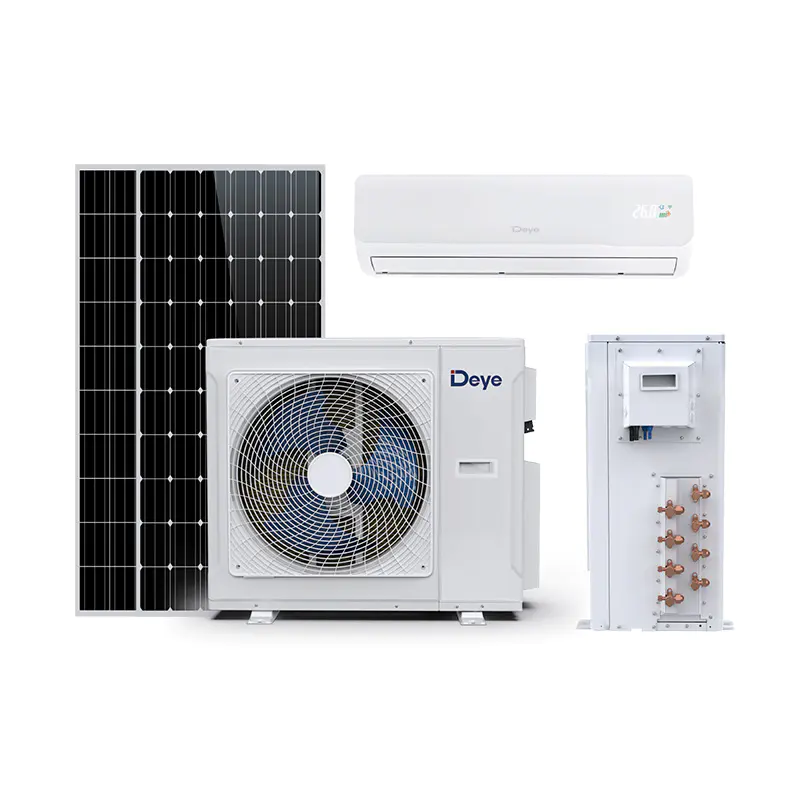
These are the most popular and widely available type. They use photovoltaic (PV) panels to generate electricity, which then powers a traditional air conditioner.
-
How they work: The PV panels produce DC electricity. This is either fed directly to a DC-compatible AC unit or sent through an inverter to be converted into AC electricity for a standard unit.
-
Advantages: They are versatile and can be integrated into existing solar power systems. The excess energy generated can often be sold back to the grid through net metering, providing a return on your investment.
-
Disadvantages: A completely off-grid system requires a battery bank to store energy for use at night or on cloudy days, which can be expensive. Without a battery, the system relies on grid power when solar production is low.
Solar Thermal Air Conditioners
These systems use the sun's heat, rather than its light, to create a cooling effect.
-
How they work: Solar thermal collectors, which look similar to solar water heaters, heat a fluid. This hot fluid drives a process known as absorption chilling, where a refrigerant is boiled, condensed, and expanded to cool the air. Another variation is desiccant cooling, which uses a moisture-absorbing material (desiccant) regenerated by solar heat to dehumidify and cool the air.
-
Advantages: They use a direct, thermal process that can be highly efficient for cooling and can even provide hot water. They don't rely on electricity from the grid.
-
Disadvantages: These systems are complex, bulky, and generally more expensive to install. They are also less common for residential applications.
Hybrid Solar Air Conditioners
These systems combine the best of both worlds, offering flexibility and enhanced efficiency.
-
How they work: Hybrid systems can operate on solar power (either PV or thermal) during the day and seamlessly switch to grid electricity when the sun isn't shining.
-
Benefits: This setup provides energy independence during peak sun hours, significantly reducing electricity bills, while ensuring continuous cooling, even at night. Many hybrid units feature smart technology that prioritizes solar power and only draws from the grid as a backup. This makes them ideal for climates where nighttime cooling is also a necessity.
Benefits of Solar Air Conditioning
Solar air conditioning provides a range of advantages that extend beyond simply cooling a space.
-
Cost Savings: The most immediate and tangible benefit is a significant reduction in electricity bills. During the hottest, sunniest parts of the day when a conventional AC unit draws the most power and utility rates are often at their highest, a solar AC system can operate with little to no cost. In some cases, with a grid-tied system, you can even sell excess energy back to the grid through net metering, creating a credit on your utility bill. This leads to a long-term return on investment (ROI), often paying for itself over a period of several years.
-
Environmental Impact: By using renewable solar energy, these systems dramatically reduce reliance on fossil fuels. This directly lowers your home's carbon footprint and contributes to a decrease in overall greenhouse gas emissions. It's a key step toward promoting a more sustainable and cleaner energy future.
-
Energy Independence: Solar AC reduces your dependence on the public utility grid. This not only provides a sense of self-sufficiency but also increases your resilience during power outages. With a battery backup system, you can maintain cooling even when the rest of the neighborhood is without power.
-
Government Incentives and Rebates: Many governments at the federal, state, and local levels offer financial incentives to encourage the adoption of renewable energy technologies. These can include tax credits, rebates, and grants that significantly offset the initial cost of installation. These programs make solar air conditioning more accessible and affordable.
Factors to Consider When Choosing a Solar Air Conditioner
Selecting the right solar AC system requires careful consideration of several key factors to ensure optimal performance and maximum savings.
-
Climate: The local climate is a crucial factor. In hot and sunny regions, a solar AC unit will operate at its highest efficiency. For areas with a lot of cloud cover or extreme humidity, a hybrid system with a grid backup or one that uses a desiccant cooling method might be more effective.
-
Energy Efficiency: Just like with traditional AC, it's important to understand a solar unit's efficiency rating. The Seasonal Energy Efficiency Ratio (SEER) is a standard measure for air conditioners. A higher SEER rating indicates a more efficient unit, which means it will require less power from the solar panels to operate, leading to greater cost savings and better performance.
-
System Size: Sizing the system correctly is critical. An undersized unit will struggle to cool the space, while an oversized unit will cycle on and off too frequently, leading to inefficiency and potential discomfort.
-
To determine the right size, you need to calculate the BTU (British Thermal Unit) requirement for the space you want to cool. A general rule of thumb is 20 BTU per square foot. For example, a 1,000-square-foot room would require a 20,000 BTU unit.
-
The size of the PV array is also determined by the AC unit's wattage and the amount of peak sun hours in your area.
-
-
Budget: While the initial cost of a solar AC system is higher than a conventional unit, it's important to look at the long-term savings. Consider the total cost of the equipment, installation, and any potential financing options or government incentives. The long-term reduction in utility bills can often make the initial investment worthwhile.
Installation and Maintenance
Proper installation and routine maintenance are essential to ensure the longevity and peak performance of your solar air conditioning system.
-
Installation Process: The installation of a solar AC system is a multi-step process that should be handled by a qualified solar AC installer. It typically involves:
-
A site assessment to determine the best location for solar panels, considering sun exposure and roof space.
-
Mounting the photovoltaic panels on the roof or on a ground-mounted rack.
-
Installing the indoor and outdoor AC units.
-
Connecting the solar panels to the AC unit, which may involve an inverter and a battery bank depending on the system type.
-
Completing all necessary electrical wiring and a final system test to ensure everything is operating correctly.
-
-
Maintenance Tips: Solar AC systems are generally low-maintenance, but regular upkeep is necessary.
-
Solar Panels: Keep the panels clean. Dust, pollen, and debris can reduce their efficiency. A simple rinse with a hose is often sufficient.
-
Air Filters: Clean or replace the air filters every 1-3 months, just as you would with a traditional AC unit, to ensure optimal airflow and performance.
-
Outdoor Unit: Keep the outdoor compressor unit free of leaves, grass, and other blockages.
-
Professional Checks: An annual professional inspection is recommended to check electrical connections, refrigerant levels, and overall system health.
-
Case Studies and Real-World Examples
Across the globe, solar air conditioning systems are proving their value in both residential and commercial settings, showcasing significant energy savings and environmental benefits.
Residential Homes
In a home in a hot climate, a hybrid solar mini-split system was installed to cool a new extension. During peak summer days, the homeowners reported that the AC unit ran entirely on solar power, resulting in a dramatic drop in their monthly electricity bills. The system’s ability to draw from the grid on cloudy days or at night provided continuous comfort without the need for a costly battery bank.
Off-Grid Cabins
An off-grid cabin in a remote location used a fully self-sufficient solar AC system. The system, powered by a bank of solar panels and a battery storage system, provided reliable cooling during the day and evening. This allowed the owners to enjoy modern comfort without any connection to a traditional power grid, highlighting the system's potential for true energy independence.
Commercial Applications
A small office building installed a solar thermal absorption chiller system. By using the sun's heat to power the cooling system, the building drastically reduced its cooling-related electricity consumption, leading to a substantial decrease in operating costs and a reduction in its environmental impact. This example demonstrates the scalability and effectiveness of solar AC for larger, non-residential buildings.
The Future of Solar Air Conditioning
The solar air conditioning industry is rapidly evolving, with new technologies and innovations promising even greater efficiency and accessibility.
-
Emerging Technologies: The future of solar AC includes advancements in a variety of areas.
-
Next-Generation PV Panels: More efficient photovoltaic panels are being developed, which will allow systems to generate more power from a smaller surface area.
-
Advanced Hybrid Systems: Hybrid units are becoming smarter, with inverter technology that can seamlessly blend solar and grid power for maximum efficiency.
-
Thermal Storage: Innovations in thermal storage materials are making it possible to store solar heat more effectively for nighttime cooling without the need for large battery banks.
-
Smart Controls and AI Integration: Future systems will likely incorporate more sophisticated smart controls and AI, allowing them to learn user habits and adjust operations to optimize comfort and energy savings automatically.
-
-
Role in Global Sustainability: As the world looks for ways to combat climate change, solar air conditioning is poised to play a crucial role. The International Energy Agency has highlighted the massive growth in global AC demand, projecting a significant increase in energy consumption. By providing a clean, energy-efficient cooling solution, solar AC can help meet this demand without exacerbating climate issues. It is a key component in the broader transition to renewable energy and the global effort to achieve sustainability goals.
