

 Español
 русский
 Français
 Português
 Deutsch
 عربى
عربى italiano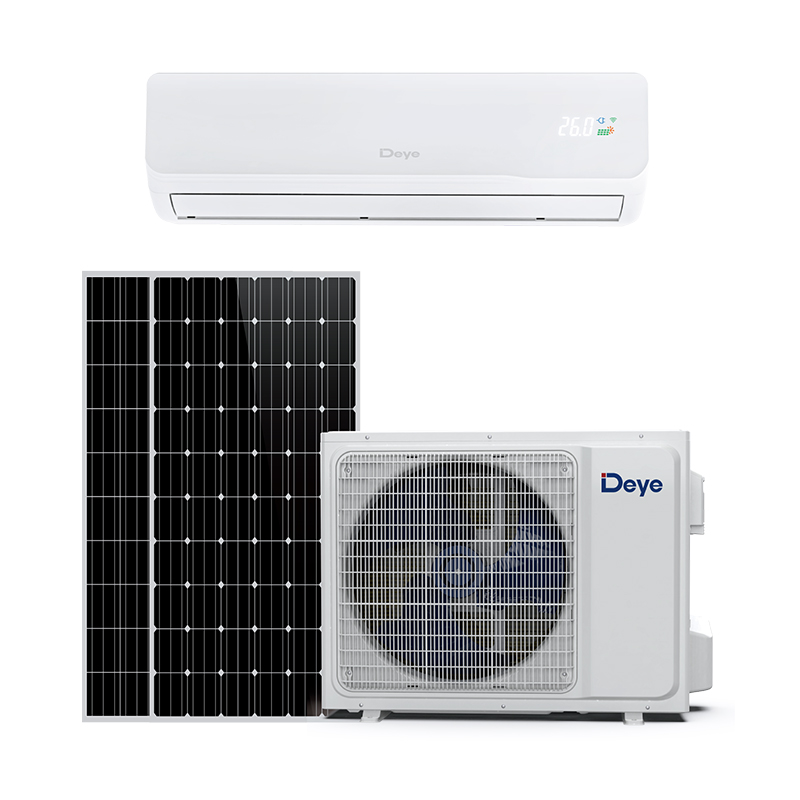
-1.jpg)

Content
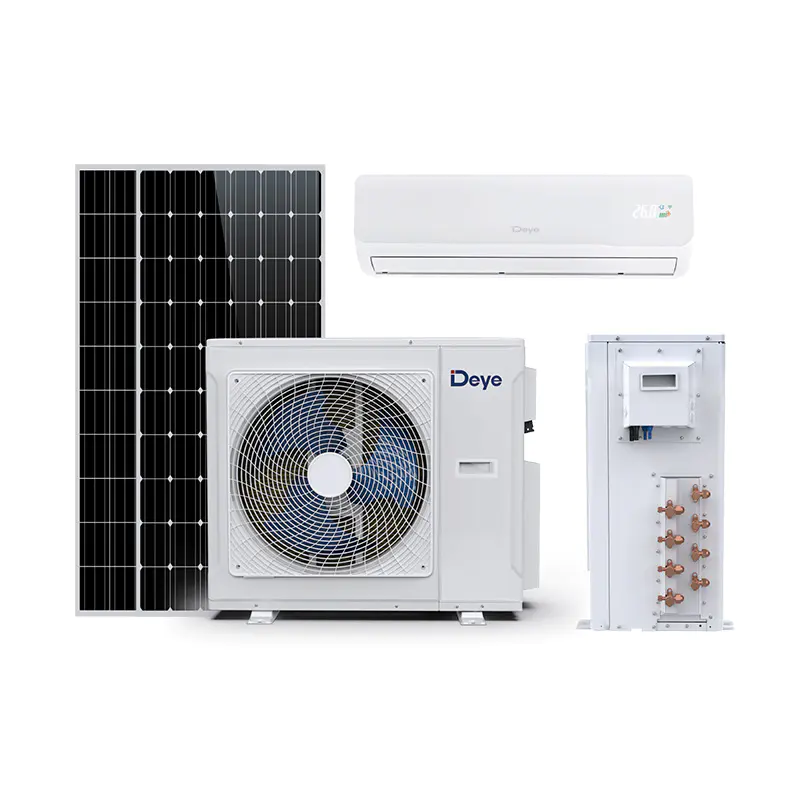
Solar air conditioners convert solar energy into the power needed to drive a refrigeration cycle. Depending on the energy conversion pathway, drive methods fall into three primary categories: photovoltaic (PV) electric drive, solar thermal drive, and photovoltaic-thermal (PVT) hybrid drive. Each category follows a distinct technical logic, serves different application scenarios, and involves unique system components.
1. Photovoltaic Electric Drive Solar Air Conditioners
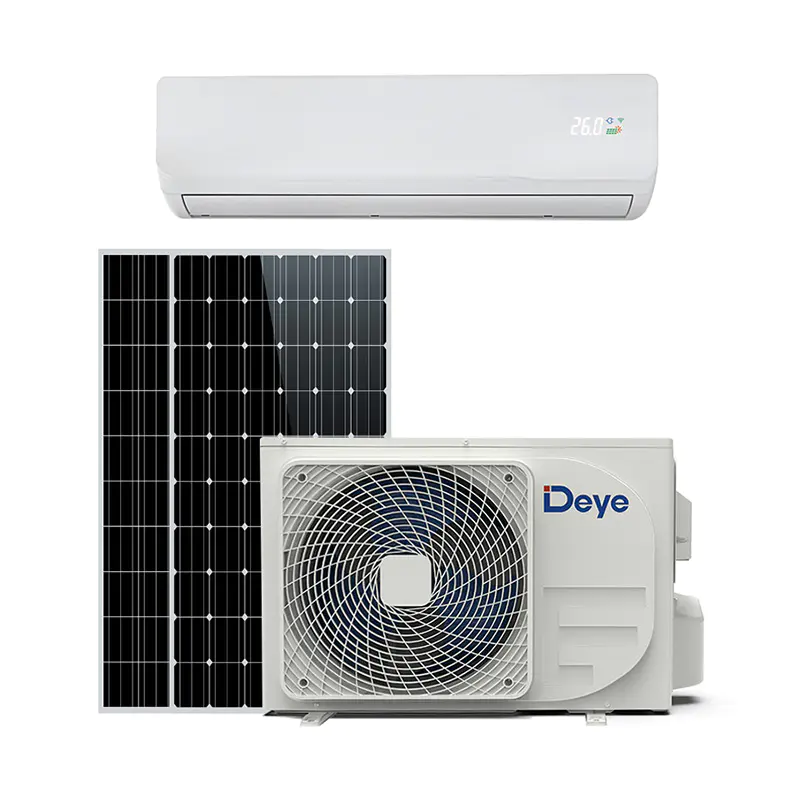
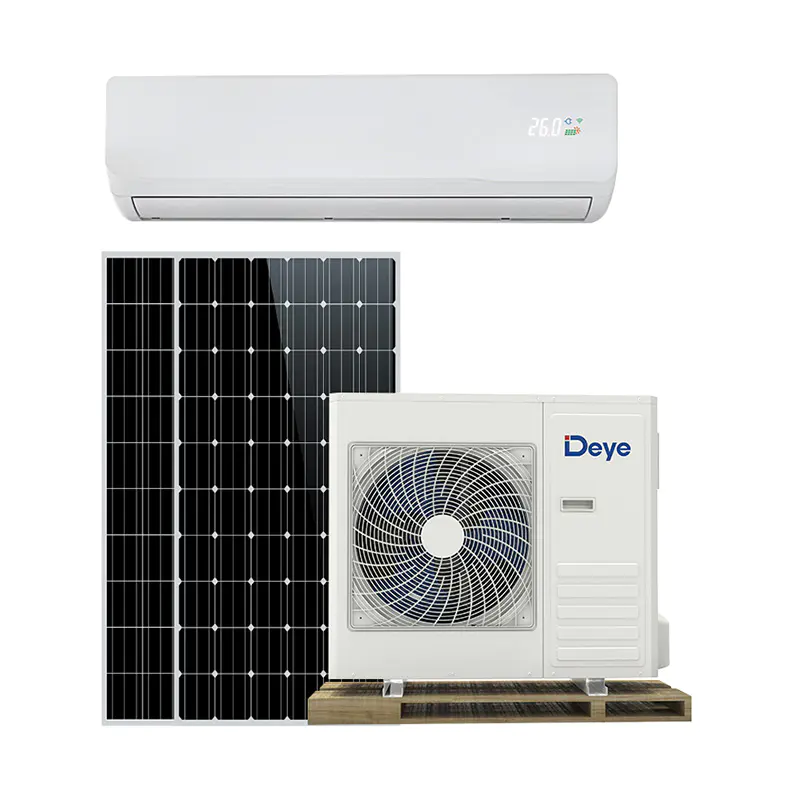
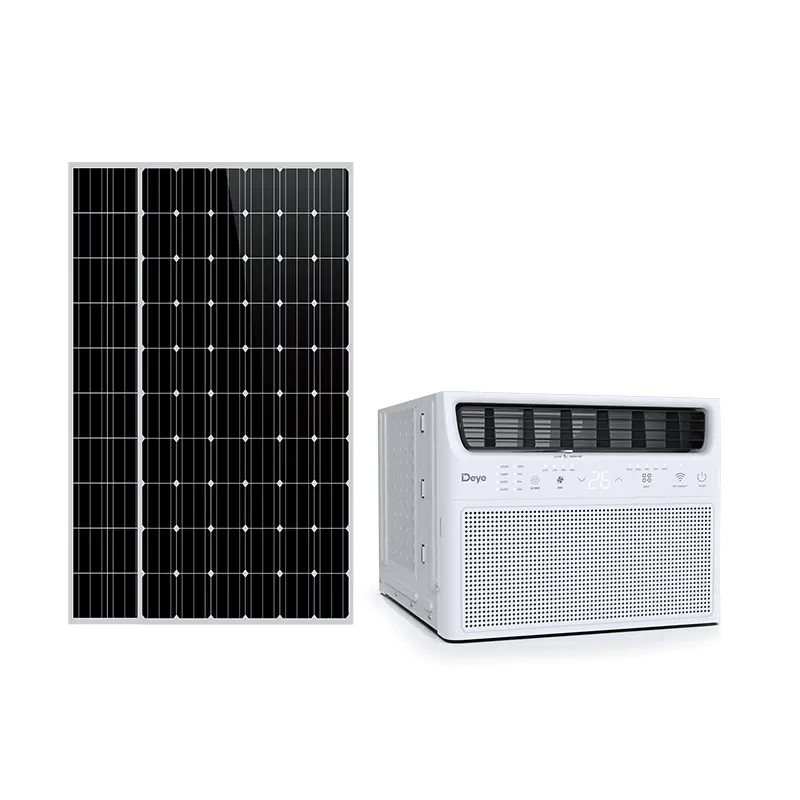
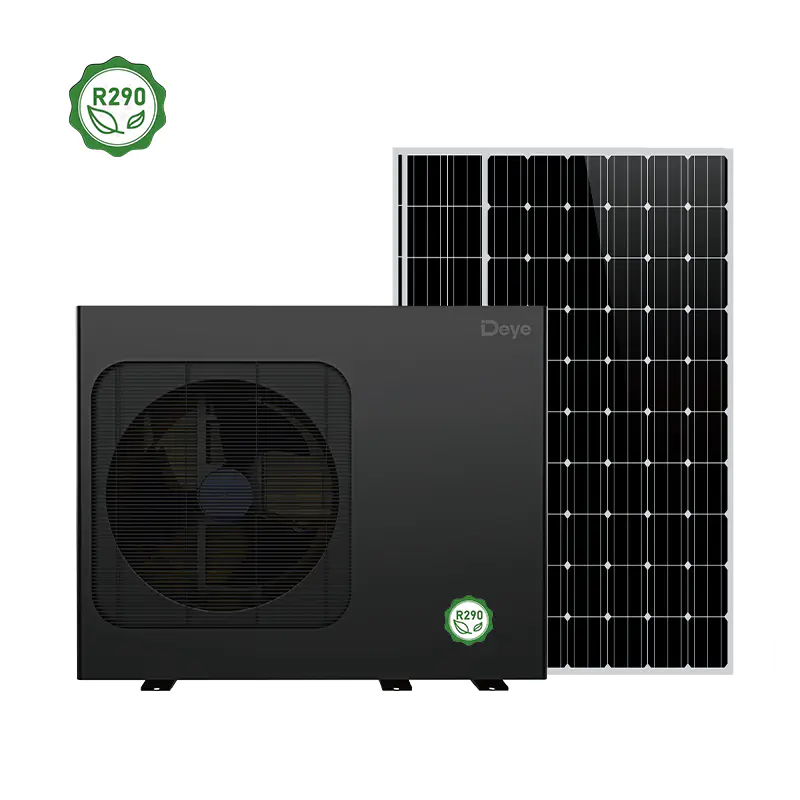
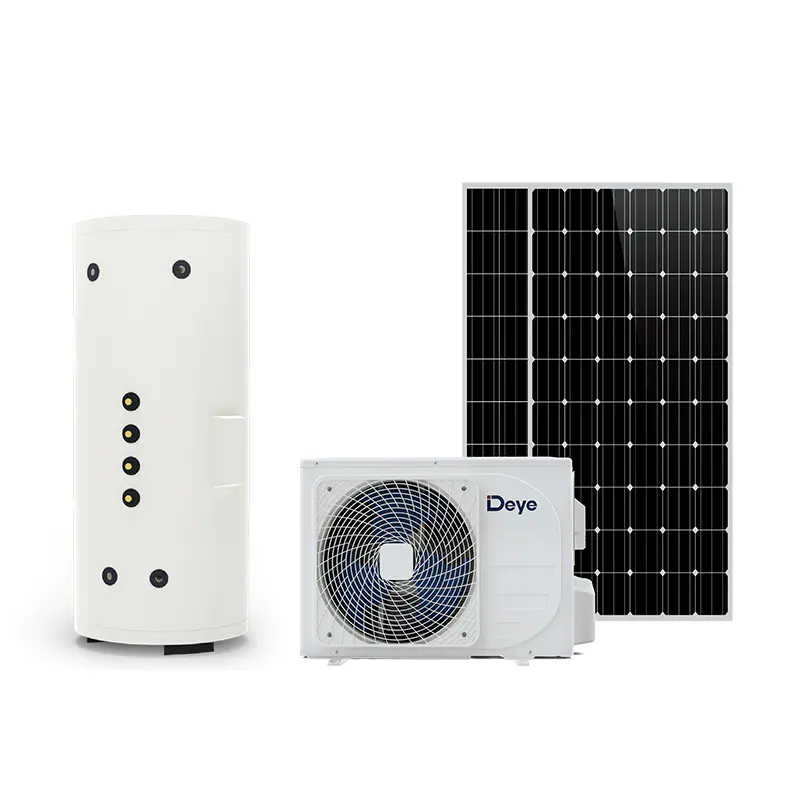
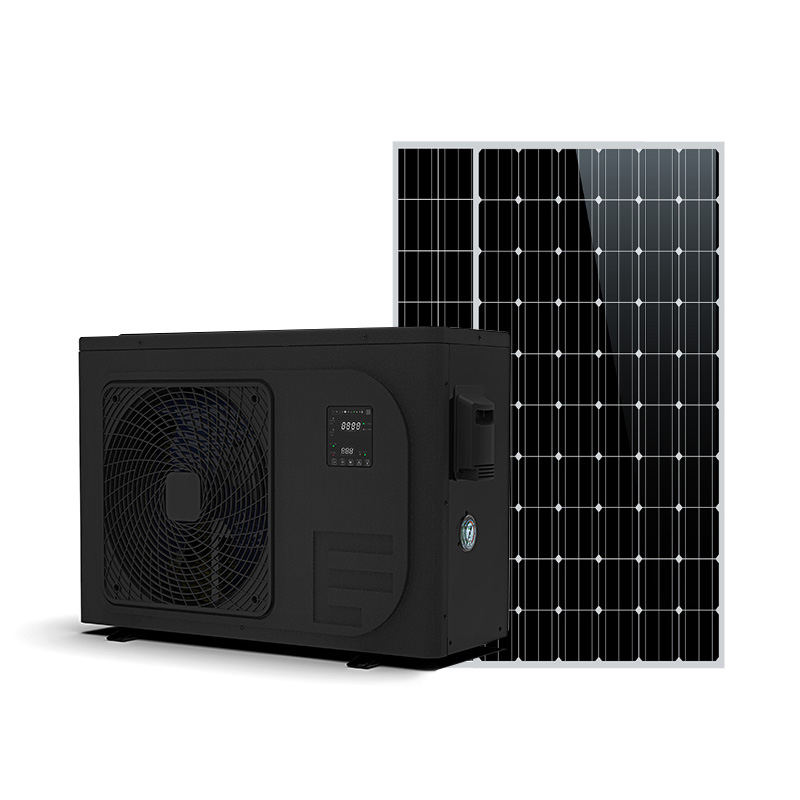
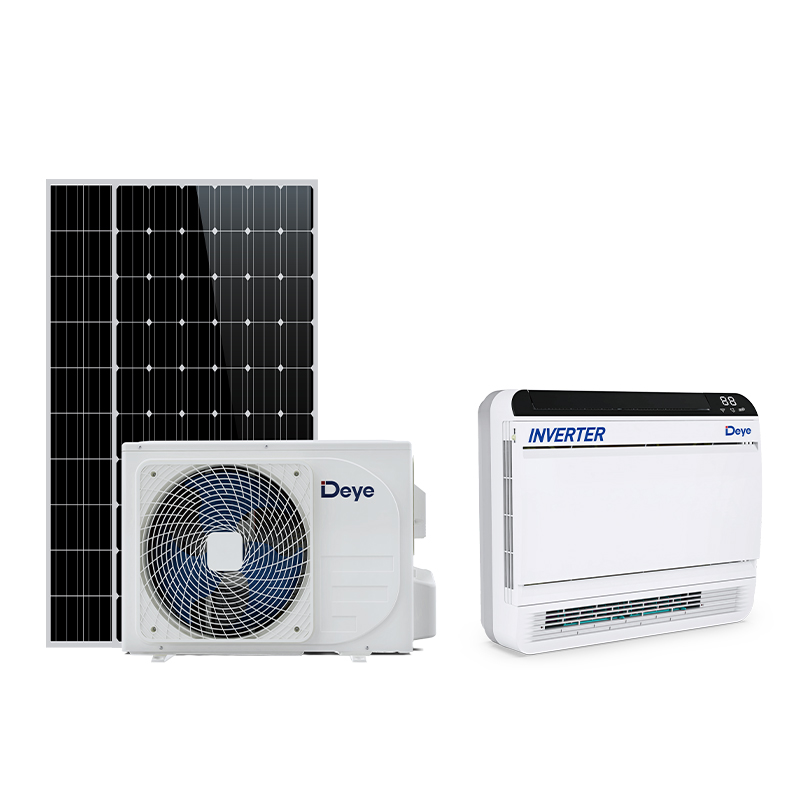
PV-driven solar air conditioners represent the most commercially widespread technology route available today. The system consists of solar panels, an MPPT (Maximum Power Point Tracking) controller, an inverter, and a variable-speed compressor. Solar cells convert sunlight into direct current, which is then regulated and used to drive the compressor for cooling.
Depending on grid connectivity, PV-driven systems are configured in three modes:
Off-Grid Systems
Off-grid solar air conditioners rely on battery storage to operate independently of any utility grid. This configuration is well suited to remote areas without grid access. The main limitations are the high upfront cost of battery banks and relatively short maintenance cycles for the storage units.
Grid-Tied Systems
Grid-tied systems prioritize solar-generated electricity for air conditioning use, export surplus power to the utility grid, and draw from the grid when solar output is insufficient. This configuration delivers the best overall economics and is the dominant choice for commercial buildings and residential projects.
DC Direct-Drive Systems
Direct-drive systems power the compressor directly from photovoltaic DC output, eliminating the inverter stage and improving system efficiency by 5% to 10%. Cooling capacity scales naturally with solar irradiance intensity, making this configuration particularly effective in locations where cooling demand is concentrated during daylight hours, such as schools and office buildings.
The overall system COP of a PV-driven solar air conditioner is determined by the combined effect of panel conversion efficiency, inverter losses, and compressor variable-frequency control precision. Current mainstream monocrystalline silicon panels achieve efficiencies between 22% and 24%. Paired with high-efficiency DC inverter compressors, annual energy performance remains consistently stable.
2. Solar Thermal Drive Solar Air Conditioners
Solar thermal drive systems use heat collected by solar collectors to directly power a thermodynamic refrigeration cycle, bypassing the photovoltaic conversion stage entirely. This approach eliminates photoelectric conversion losses and delivers strong energy utilization value in high-irradiance, high-cooling-load regions.
Thermal drive systems operate through two principal refrigeration cycle branches:
Absorption Refrigeration
Absorption systems use working fluid pairs — most commonly lithium bromide-water (H₂O/LiBr) or ammonia-water (NH₃/H₂O) — and are driven by hot water at 80°C to 180°C generated by solar collectors. The heat drives a generator that separates the refrigerant from the absorbent. The refrigerant then passes through condensation, expansion, evaporation, and re-absorption to complete the cooling cycle.
Lithium bromide absorption chillers are widely used in large central air conditioning projects. Single-effect units require a driving temperature of approximately 80°C to 100°C, while double-effect units demand 150°C or above. These are typically paired with evacuated tube collectors or flat-plate collectors. Ammonia-water systems can achieve sub-zero cooling and are better suited to industrial cold chain applications.
Adsorption Refrigeration
Adsorption systems exploit the physical adsorption and desorption properties of solid adsorbents — such as silica gel, zeolite, or activated carbon — to drive a refrigeration cycle. The required driving temperature typically falls between 60°C and 120°C, which can be supplied directly by medium-to-low-temperature flat-plate collectors. Systems have no moving parts, are structurally simple, and carry low maintenance costs.
The silica gel-water working pair performs reliably at driving temperatures between 60°C and 85°C, achieving a COP of approximately 0.4 to 0.6. This combination is well matched to small and medium-scale building solar air conditioning applications. Metal-organic framework (MOF) materials are entering applied research as next-generation adsorbents, with their exceptionally high specific surface areas and tunable pore structures delivering significantly increased adsorption capacity.
Desiccant Cooling
Desiccant cooling systems use solid or liquid desiccants to dehumidify and pre-cool incoming air, with solar thermal energy regenerating the spent desiccant. Combined with evaporative cooling, this approach achieves effective temperature reduction. In hot-arid climates — such as the Middle East and northwestern China — desiccant cooling performs with high efficiency and simultaneously provides humidity control. The technology has strong application prospects in temperature-humidity independent control (THIC) air conditioning systems.
3. Photovoltaic-Thermal (PVT) Hybrid Drive Solar Air Conditioners
PVT systems integrate photovoltaic panels and solar thermal collectors into a single unit, simultaneously generating electricity and heat. During operation, PV cells generate heat as a byproduct, which reduces their electrical conversion efficiency. PVT systems recover this waste heat through rear-panel flow channels, raising thermal collection efficiency while keeping cell operating temperatures lower — sustaining electrical output at higher levels than conventional PV modules alone.
The electrical output from a PVT system drives a vapor-compression air conditioner, while the thermal output simultaneously drives an absorption or adsorption chiller, or supplements the heat source in a heat pump circuit. This coordinated electrical and thermal supply enables the overall solar energy utilization rate of a PVT solar air conditioner to reach 60% to 75% — substantially higher than standalone PV systems at approximately 20% or standalone thermal collectors at approximately 45%.
The primary engineering challenge in PVT systems lies in dynamic matching of electrical and thermal outputs and designing effective control strategies. Coordinating variable-frequency compressor control with thermodynamic cycle operating parameters — particularly under part-load conditions — is a critical issue in real-world project implementation.
4. Comparative Overview of the Three Drive Categories
| Comparison Dimension | PV Electric Drive | Solar Thermal Drive | PVT Hybrid Drive |
|---|---|---|---|
| Energy Input Form | Electrical energy | Thermal energy | Electrical + Thermal energy |
| System Complexity | Low | Medium to High | High |
| Applicable Cooling Capacity | Small to Large | Medium to Large | Medium to Large |
| Suitable Climate Zones | Broad | High-irradiance regions | High-irradiance regions |
| Initial Investment Level | Medium | Relatively High | High |
| Overall Solar Utilization Rate | ~18%–22% | ~35%–50% | ~60%–75% |
5. Key Considerations for Drive Type Selection
At the project planning stage, the selection of a solar air conditioner drive type requires a comprehensive evaluation of local solar irradiance resources — including annual global horizontal irradiance and peak sun hours — alongside building cooling and heating load profiles, grid infrastructure conditions, and full life-cycle economics.
PV electric drive systems are well suited to projects with reliable grid access where cooling demand closely aligns with peak daylight hours. Solar thermal drive systems offer irreplaceable advantages in large-scale buildings, industrial cooling applications, and high-irradiance off-grid locations. PVT hybrid drive represents the high-integration direction of solar air conditioning technology development and is most appropriate for green building projects and zero-carbon developments where maximum solar energy utilization is a core requirement.
As photovoltaic module costs continue to decline and adsorption material performance advances, all three solar air conditioner drive technology routes are undergoing accelerated iteration. System-level economics and operational reliability are progressively approaching the threshold required for large-scale commercial deployment.
