

 Español
 русский
 Français
 Português
 Deutsch
 عربى
عربى italiano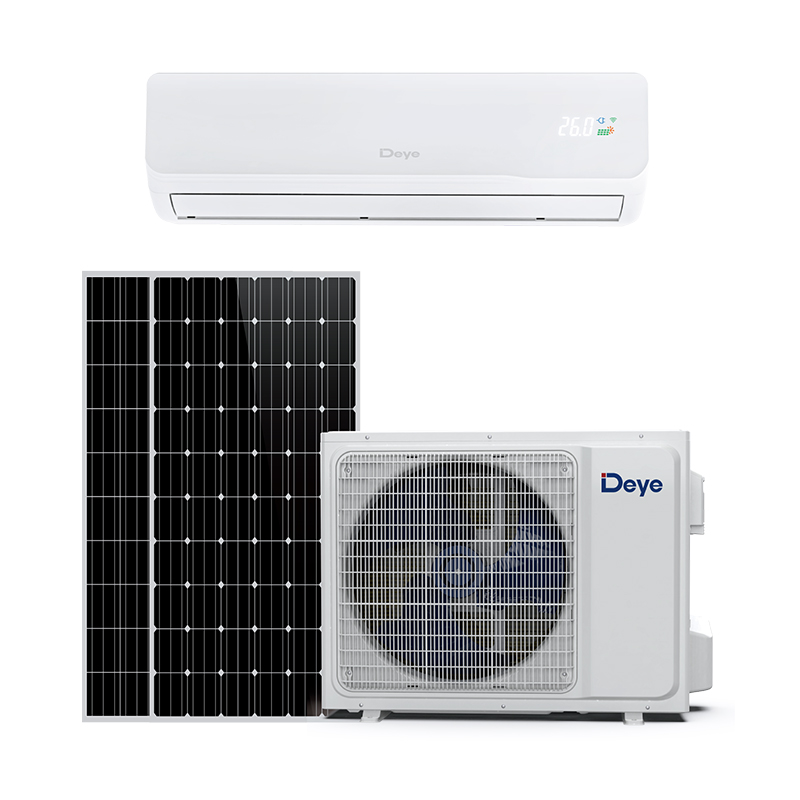
-1.jpg)

Content
- 1 The Rise of Low TEMP Solar AC-Hybrid ACDC: A Temperature Control Revolution in Extreme Climates
- 2 Deep Analysis of the Core Architecture of Low TEMP Solar AC-Hybrid ACDC
- 3 Why Low-Temperature Environments Need Specialized Low TEMP Solutions
- 4 Global Application Scenarios: From High-Latitude Housing to Off-Grid Cabins
- 5 Performance Comparison: Energy Efficiency at Different Temperatures
- 6 Economic Analysis: Investment Return of Low TEMP Solar AC-Hybrid ACDC
- 7 Technical Specifications and Selection Guide
- 8 Frequently Asked Questions (FAQ)
- 9 Industry Knowledge and Purchasing Guide
The Rise of Low TEMP Solar AC-Hybrid ACDC: A Temperature Control Revolution in Extreme Climates
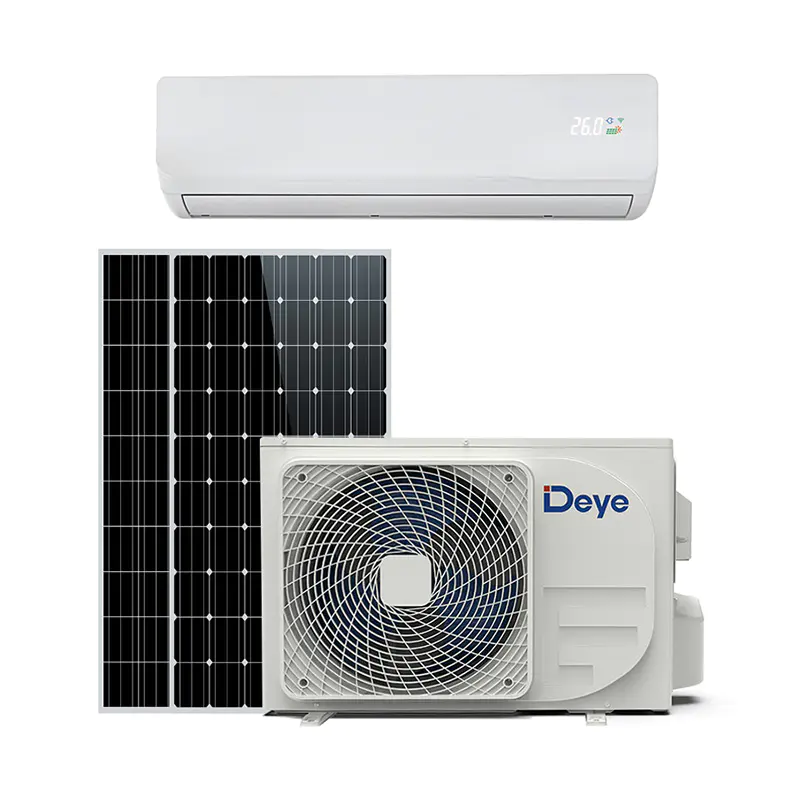
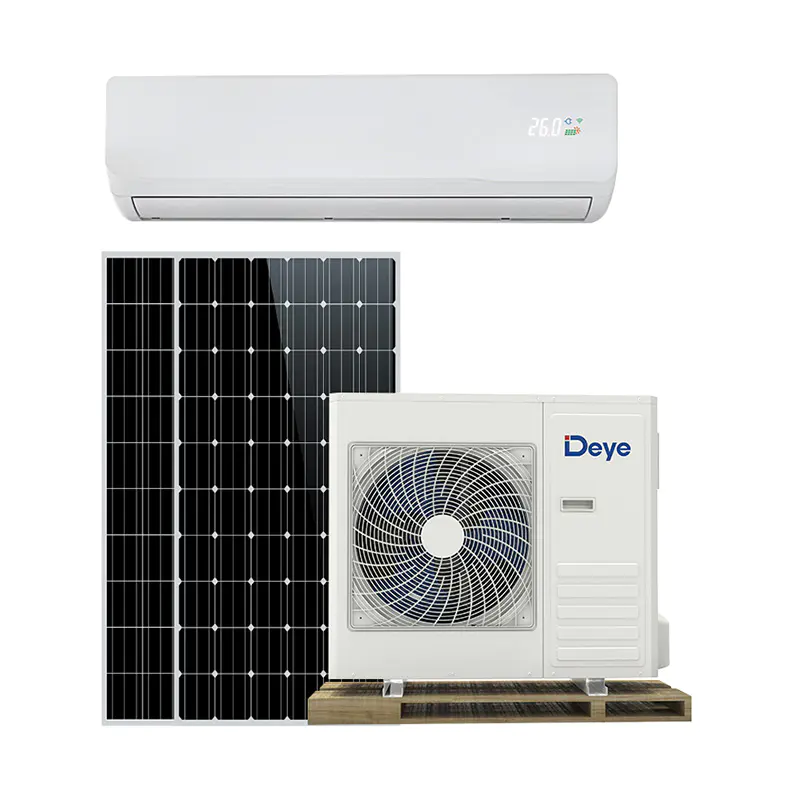
In the human pursuit of sustainable building and energy self-sufficiency, extreme climates have always posed a significant challenge. Especially in high-latitude regions or high-altitude areas where winter temperatures often drop below -20°C, traditional air-source heat pumps frequently fall into dilemmas such as performance decay, frequent frosting, or even failure to start due to physical limits. Against this backdrop, the Low TEMP Solar AC-Hybrid ACDC (Low-Temperature Solar AC/DC Hybrid Air Conditioner) emerged. It is not just a cooling and heating device but an intelligent energy distribution terminal.
Traditional air conditioning systems rely on electric auxiliary heating in low-temperature environments, leading to surges in grid load and low energy efficiency. The Low TEMP Solar AC-Hybrid ACDC utilizes an innovative dual-power input architecture, injecting Direct Current (DC) from solar panels directly into the compressor drive circuit. This achieves sub-millisecond seamless integration with the Alternating Current (AC) from the municipal grid. This design not only solves energy consumption issues but also grants the machine a frost-resistant gene for stable operation in freezing conditions through hardware reinforcement.
1.1 Core Logic of Breaking Low-Temperature Limits
Low TEMP is not just a label; it represents a deep optimization of the thermodynamic cycle. In environments of -25°C or lower, the evaporation pressure of conventional refrigerants is extremely low, leading to insufficient suction volume, compressor overheating, and a sharp drop in heating capacity. The Low TEMP Solar AC-Hybrid ACDC employs compressors specifically designed for low temperatures and an enhanced heat exchange system.
When sunlight is sufficient, the system prioritizes the consumption of DC power generated by the photovoltaic array. On sunny but freezing winter days, the power generation efficiency of PV modules actually increases slightly due to lower temperatures, providing strong power support for the Low TEMP Solar AC-Hybrid ACDC. Even in the early morning after a snowstorm, as long as there is sunlight, the system can initiate powerful heating with minimal grid dependence.
1.2 Synergistic Effect of the Dual Energy Engine
The core charm of this system lies in its Hybrid nature. Unlike traditional off-grid systems that require expensive and heavy lead-acid or lithium battery packs, the Low TEMP Solar AC-Hybrid ACDC adopts a strategy of Solar Direct Supply + Grid Supplement.
Daytime Mode: Solar DC power directly drives the DC inverter compressor without inverter loss.
Cloudy/Night Mode: The system automatically detects DC voltage. When voltage is insufficient to support the load, AC power cuts in seamlessly to ensure constant indoor temperature.
Hybrid Mode: When solar power can only provide 60% of the power demand, the system automatically draws the remaining 40% from the grid to achieve precise energy balance.
Deep Analysis of the Core Architecture of Low TEMP Solar AC-Hybrid ACDC
To support high efficiency in extreme environments, the internal architecture must surpass the scope of ordinary household air conditioners. The design essence of the Low TEMP Solar AC-Hybrid ACDC lies in its direct management of DC energy and precise adjustment of the refrigerant cycle.
2.1 AC/DC Lossless Switching and Dynamic Power Allocation
In traditional Solar + AC solutions, DC power must first be converted to AC via an inverter, then converted back to DC by the AC rectifier bridge to drive the compressor—a process usually accompanied by 15% to 20% energy loss. The Low TEMP Solar AC-Hybrid ACDC eliminates this intermediate step.
Its internal high-performance DC controller can receive a wide range of DC voltage inputs (usually between 80V and 380V). This means 3 to 8 solar panels can drive the system directly. Through advanced MPPT (Maximum Power Point Tracking) algorithms, the system adjusts the working point multiple times per second to ensure every watt of PV power is extracted, regardless of cloud movement.
2.2 EVI Technology: The Secret Weapon for Low-Temperature Heating
For Low TEMP environments, this system is typically equipped with an EVI (Enhanced Vapor Injection) compressor. This acts like a turbocharger for the compressor.
Under severe cold conditions, the system uses an Economizer to bypass a portion of the liquid refrigerant, depressurize it, absorb heat, and inject it directly into the middle chamber of the compressor. This action effectively reduces discharge temperature and increases refrigerant circulation, allowing the Low TEMP Solar AC-Hybrid ACDC to maintain over 80% of its rated heating capacity even when ambient temperatures drop to -30°C, far higher than the 50% or lower of ordinary units.
2.3 Core Parameter Comparison Table
| Parameter Index | Ordinary Inverter AC (AC Only) | Ordinary Solar AC (DC/AC Hybrid) | Low TEMP Solar AC-Hybrid ACDC |
| DC Voltage Range | N/A | 150V - 300V | 80V - 380V (Ultra-Wide) |
| Lowest Heating Temp | -10°C to -15°C | -15°C | -30°C to -35°C |
| Low Temp Technology | Standard Cycle | Standard Cycle | EVI Tech + Smart Trace Heating |
| PV Utilization Efficiency | Inverter Loss (~82%) | Direct Use (~95%) | Direct Use + MPPT (~98%) |
| Outdoor Unit Protection | No Special Design | Basic Drainage | Base Pan Heater + Anti-frost Logic |
| Grid Dependency | 100% | High/Medium | Ultra-Low (DC Priority) |
| Starting Current | High | Low (Soft Start) | Ultra-Low (DC Soft Start, No Surge) |
Why Low-Temperature Environments Need Specialized Low TEMP Solutions
In thermodynamics, for every 1°C the ambient temperature drops, the difficulty for an air-source heat pump to absorb heat from the outdoors increases exponentially. Ordinary ACs or basic solar ACs often face severe performance issues when entering environments below -5°C.
3.1 Physical Limits and Hardware Redundancy Design
The Low TEMP Solar AC-Hybrid ACDC is not just an update in software logic; its hardware specifications are specifically enhanced during production.
Large-Area Heat Exchanger: To capture sufficient heat from thin thermal energy, these systems are equipped with double or triple-row thickened condensers coated with special blue/gold anti-corrosion hydrophilic coatings to accelerate defrost drainage.
Smart Trace Heating System: In freezing nights, accumulated water in the outdoor unit chassis can easily freeze and jam the fan. The Low TEMP Solar AC-Hybrid ACDC features a built-in DC heating belt that automatically uses minimal energy to heat the compressor crankcase and chassis when temperatures are extremely low, ensuring a successful hot start.
3.2 Unexpected Gains of PV Panels in Low Temperatures
A commonly overlooked scientific fact: Solar panels are more efficient at low temperatures. PV modules have a negative temperature coefficient, meaning output voltage (Voc) rises as temperature decreases. In cold regions, the Low TEMP Solar AC-Hybrid ACDC can capture more stable peak voltage than in summer.
Global Application Scenarios: From High-Latitude Housing to Off-Grid Cabins
Due to its independence from expensive storage batteries and its ability to adapt to harsh climates, the Low TEMP Solar AC-Hybrid ACDC has become a strategic solution for various fields.
4.1 High-Latitude Net Zero Energy Buildings (NZEB)
In Northern Europe, North America, and high-latitude Asian regions, winters are long and heating costs are rising. This system serves as a primary or auxiliary heat source. Daytime solar supply almost offsets all tiered electricity expenses, while the grid supplements at night.
4.2 Off-Grid Research Stations and Telecom Towers
Many telecom stations are located in high-altitude areas with high maintenance costs. The reliability of the Low TEMP Solar AC-Hybrid ACDC allows it to operate unattended for long periods, utilizing solar energy to provide constant temperature protection for expensive electronic equipment.
4.3 Emergency Rescue and Field Shelters
In winter rescue operations, temperature control is a lifeline. Compared to traditional ACs relying on diesel generators, the Low TEMP Solar AC-Hybrid ACDC significantly reduces fuel dependence and is friendly to small generators due to its lack of start-up surge current.
Performance Comparison: Energy Efficiency at Different Temperatures
Reference performance for a 12,000 BTU model:
| Ambient Temp | Running Mode | Heating Capacity | Typical COP | Solar Contribution (Sunny Day) |
| 7°C (Standard) | Hybrid/DC | 100% (4.0kW) | 4.2 - 4.8 | 100% (Surplus possible) |
| -7°C (Cold) | Hybrid Mode | 95% (3.8kW) | 2.8 - 3.2 | 80% - 90% |
| -20°C (Severe) | EVI Active | 82% (3.3kW) | 2.1 - 2.4 | 60% - 70% |
| -30°C (Extreme) | Strong Hybrid | 65% (2.6kW) | 1.6 - 1.8 | 40% - 50% |
Economic Analysis: Investment Return of Low TEMP Solar AC-Hybrid ACDC
5.1 Drastic Reduction in Operating Costs
In a typical winter heating season, traditional ACs often run at high frequencies at -15°C. The Low TEMP Solar AC-Hybrid ACDC reduces daytime grid consumption to nearly 0.
Peak Shaving: By heating at full capacity using DC power during sunny hours, it reduces grid expenditure during expensive evening peak hours.
Maintenance-Free Inverter: By adopting AC/DC hybrid direct supply technology, the system eliminates the complex inverter stage, reducing total lifecycle maintenance costs.
5.2 ROI and Energy Efficiency Comparison
| Cost Dimension | Electric Heater/Boiler | Traditional Inverter AC | Low TEMP Solar AC-Hybrid ACDC |
| Avg. Daily Power (kWh) | 45 - 60 | 20 - 30 | 4 - 8 (Daytime DC coverage) |
| Grid Dependency | 100% | 100% | 20% - 30% (Night/Cloudy only) |
| Return on Investment | N/A (Pure Expense) | 4 - 6 Years | 2 - 3 Years |
| Lifespan | 5 - 10 Years | 8 - 12 Years | 15+ Years (High Redundancy) |
Technical Specifications and Selection Guide
6.1 Power Matching and PV Array Configuration
| Suggested Model | Area (-20°C) | Recommended Solar Panels | Running Current (DC Side) |
| 9,000 BTU | 15 - 20 m² | 3 x 330W - 450W | 8 - 12A |
| 12,000 BTU | 20 - 30 m² | 4 x 330W - 450W | 10 - 15A |
| 18,000 BTU | 35 - 50 m² | 6 x 330W - 450W | 12 - 20A |
| 24,000 BTU | 50 - 70 m² | 8 x 330W - 450W | 15 - 25A |
Frequently Asked Questions (FAQ)
Q: Can the system work at night without any sun?
The Low TEMP Solar AC-Hybrid ACDC is equipped with an intelligent dual-power management module. When solar energy disappears, the system automatically detects and switches seamlessly to AC mode, ensuring 24-hour constant temperature.
Q: What is the Low Temp limit? What happens if it is exceeded?
Our systems are typically designed for a limit of -30°C. If temperatures drop further, built-in protection logic will limit compressor frequency or start a special electric defrost mode to prevent structural damage.
Q: Does installing this system require large battery banks?
No. This is a core advantage. It is driven directly by solar power; excess energy is not stored in batteries but converted into thermal energy (heating or cooling) stored within the building structure.
Industry Knowledge and Purchasing Guide
8.1 What is EVI (Enhanced Vapor Injection)?
By adding medium-pressure refrigerant gas during the compression process, the discharge temperature is significantly reduced. In extreme cold, this protects the compressor from damage while providing approximately 30% more heat output than ordinary compressors.
8.2 The Truth About AC/DC Hybrid Efficiency
The Low TEMP Solar AC-Hybrid ACDC uses busbar convergence technology. Solar DC power acts directly on the DC bus of the inverter, avoiding heat and energy losses caused by multiple AC/DC conversions.
8.3 How to Identify a Real Low-Temperature Unit?
Check Compressor Brand/Series: It must be labeled as supporting EVI technology.
Check Throttling Components: High-quality units use Electronic Expansion Valves (EEV) to precisely control flow at different temperatures.
Check Weight: Low-temperature units have thicker heat exchangers and more rows; thus, the outdoor unit is usually heavier.
