

 Español
 русский
 Français
 Português
 Deutsch
 عربى
عربى italiano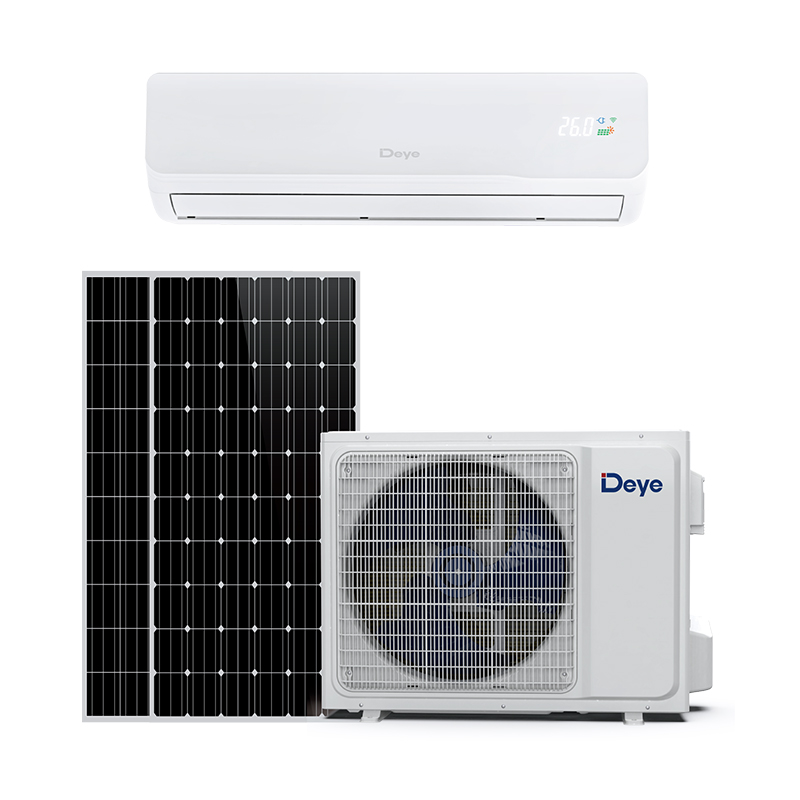
-1.jpg)

Content
Under the dual challenges of global energy transition and high electricity prices, searching for more efficient and stable temperature control solutions has become a core demand for commercial and industrial facilities. Traditional grid-powered cooling systems not only face exorbitant electricity bills but are also vulnerable to grid voltage fluctuations or power rationing policies during peak demand periods. As an innovative technical solution, the Wall mounted Solar AC- Hybrid (Wall-mounted Solar Hybrid Air Conditioner) is becoming a critical equipment for increasing energy self-sufficiency and lowering long-term operational costs, thanks to its unique dual-source power seamless switching technology. From professional perspectives including technical architecture, operational mechanisms, and actual application parameters, this article deeply analyzes how this system helps solve high energy consumption pain points.
Core Operational Mechanism of Wall mounted Solar AC- Hybrid
The core advantage of the Wall mounted Solar AC- Hybrid system lies in its intelligent management logic of "solar priority, grid supplement". The system is directly and simultaneously connected to both the photovoltaic DC array and the AC power grid. The built-in PV controller and inverter compressor management system monitor the status of the input power sources in real time.
When sunlight is sufficient, the DC power generated by the photovoltaic array acts as the primary driving force, directly supplying power to the wall-mounted indoor unit and the outdoor inverter compressor. This process eliminates the secondary conversion of traditional inverters, thereby reducing intermediate energy loss by at least 10% to 15%. When photovoltaic output is insufficient during cloudy days or at night, the system automatically and smoothly introduces the AC grid to compensate for the shortage. This dynamic balancing technology ensures that the compressor always operates at the optimal inverter frequency, which avoids frequent startups and shutdowns that damage the equipment, while maximizing solar energy consumption.
Key Technical Parameters and Electrical Specifications Comparison
To provide a clearer understanding of the performance of the Wall mounted Solar AC- Hybrid system in terms of efficiency and technical indicators, the core parameters and electrical characteristics of the system under different working modes are listed below:
| Parameter Item | Pure DC / Solar Prior Mode | Wall mounted Solar AC- Hybrid Mode | Pure AC Grid Mode |
| Input Voltage Range | DC 80V - 380V | Simultaneous DC and AC input | AC 208V - 240V, 50/60Hz |
| Compressor Working Type | Full DC Inverter | Full DC Inverter | Inverter Speed Regulation Mode |
| Comprehensive Energy Efficiency Ratio (APF/CSPF) | Extremely High (Consumes renewable energy primarily) | Significantly higher than conventional inverter AC | Complies with national standard energy efficiency levels |
| System Switching Delay | 0 ms (Seamless hardware-level fusion) | 0 ms (Microsecond-level dynamic compensation) | No switching required |
| Grid Power Factor (PF) | Not Applicable (No grid consumption) | Greater than or equal to 0.95 (Depending on grid compensation ratio) | Greater than or equal to 0.97 |
| Maximum Cooling/Heating Capacity | 12000 BTU / 18000 BTU / 24000 BTU | Full load output (Not limited by sunlight intensity) | Full load output |
Solving Power High-Load Challenges Under Extreme Working Conditions
For many locations that have limited space but extremely high requirements for environmental temperature control (such as modular server rooms, automated control rooms, modern production workshops, and offices in remote areas), conventional temperature control equipment often encounters voltage drops or power outage risks during peak summer usage.
The Wall mounted Solar AC- Hybrid system utilizes a wide-voltage design, and its DC input terminal usually features an extremely wide voltage adaptability range (for example, 80V to 380V). This means that even in the early morning or evening when sunlight is weak and the PV string voltage is low, the system can still extract and utilize this portion of green electricity. At the same time, the Wall mounted design effectively saves ground space, and the high-position air supply helps the airflow form a more uniform convection circulation indoors, eliminating temperature dead zones, greatly improving the accuracy of environmental temperature control, and avoiding sensitive production equipment failures caused by temperature fluctuations.
System Structural Design and Supply Chain Compliance Advantages
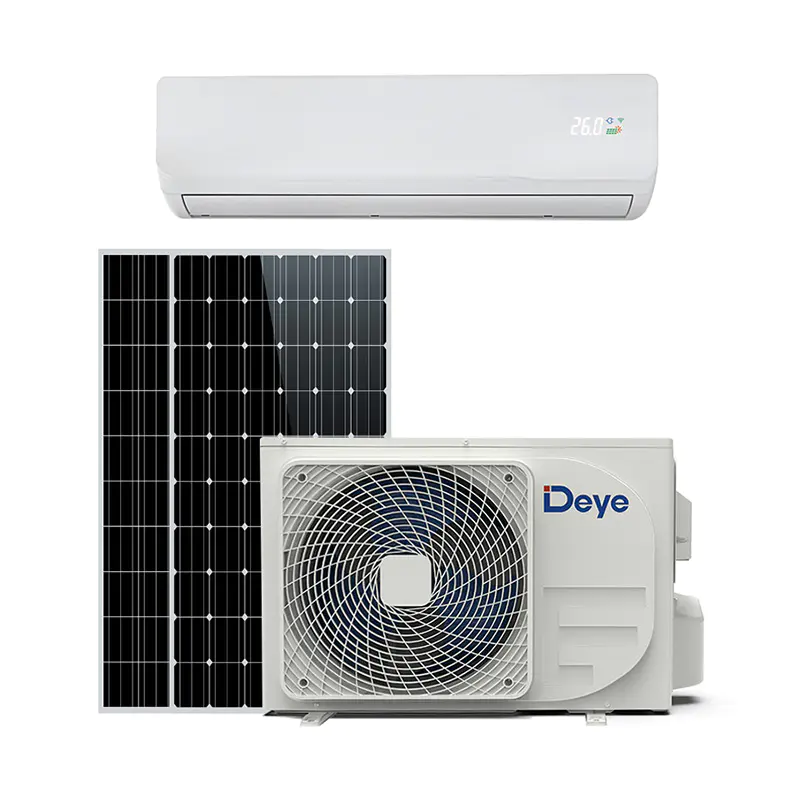
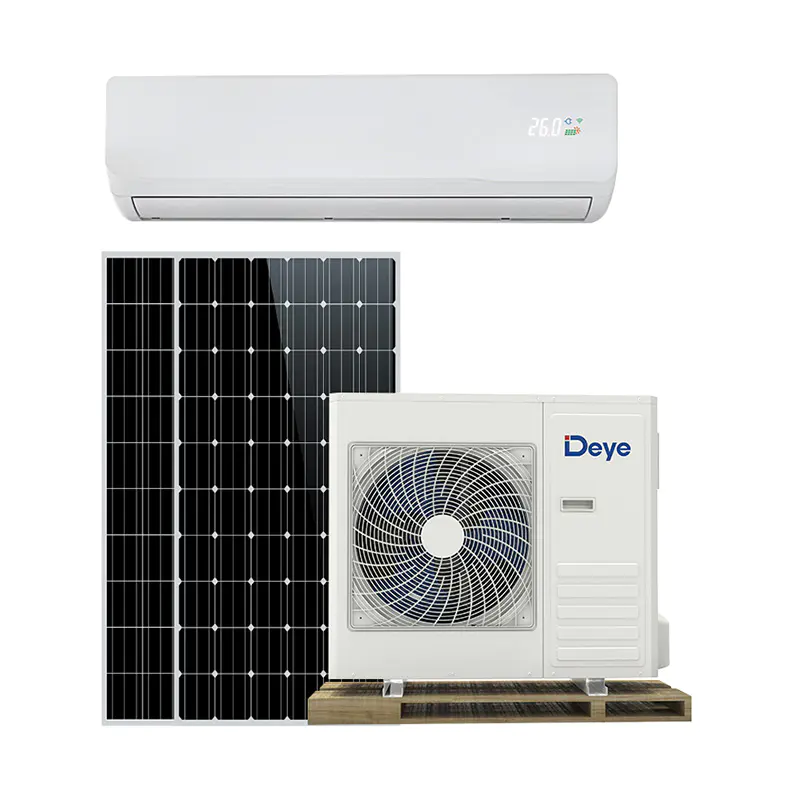
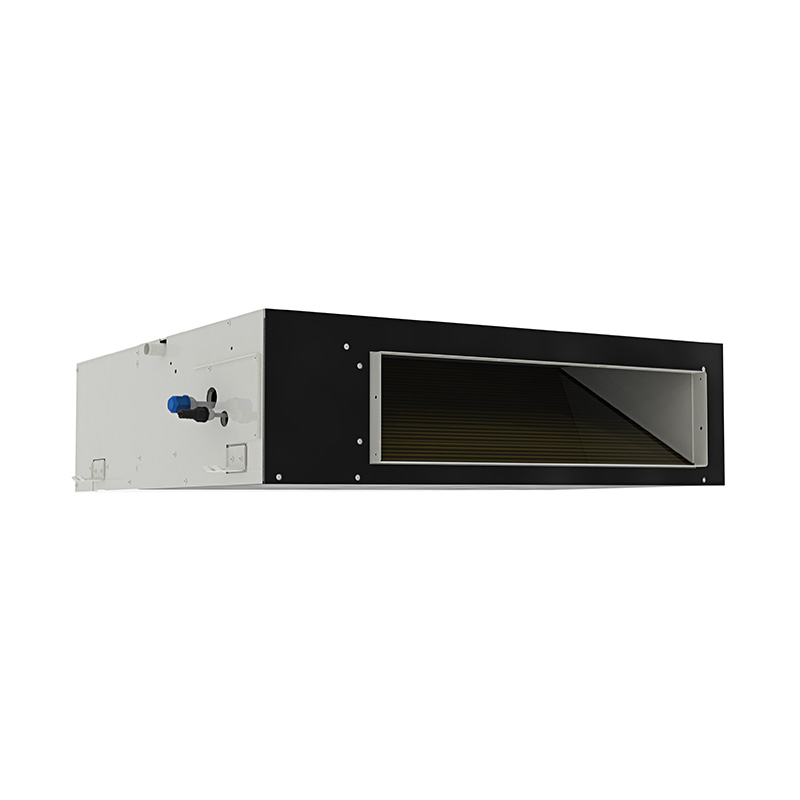
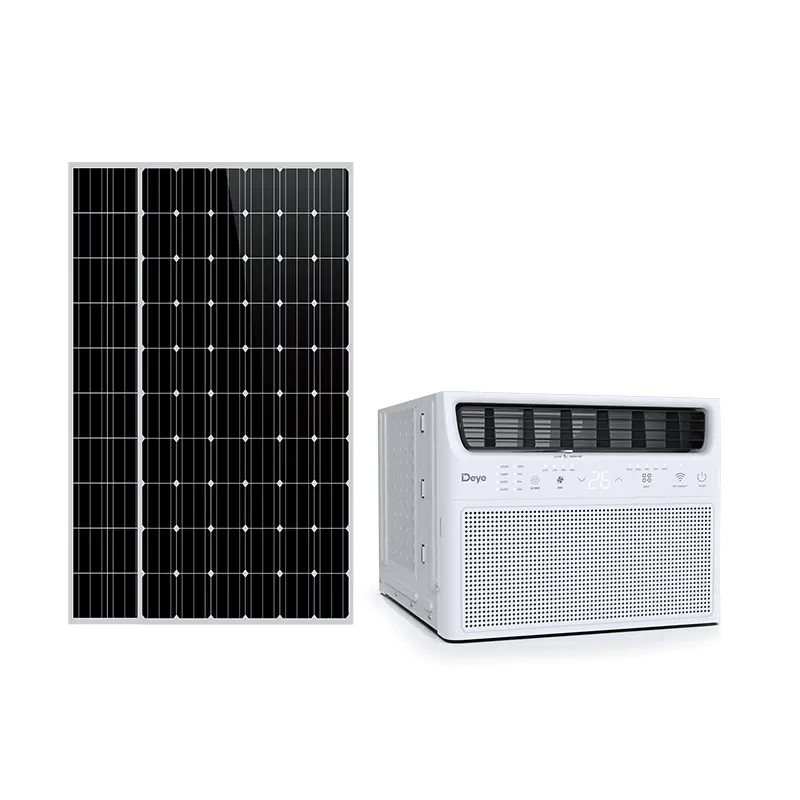
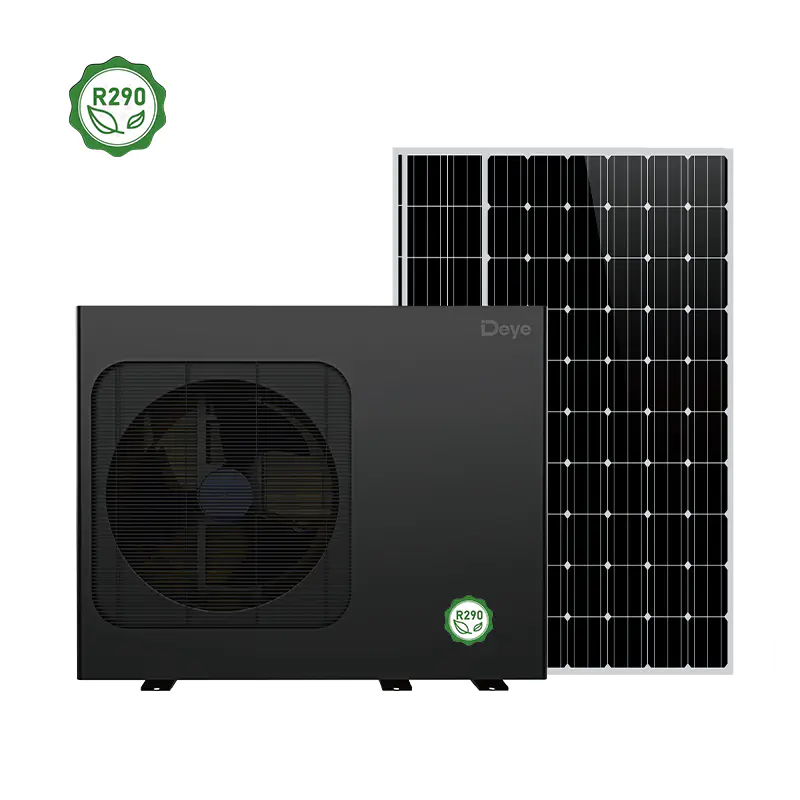
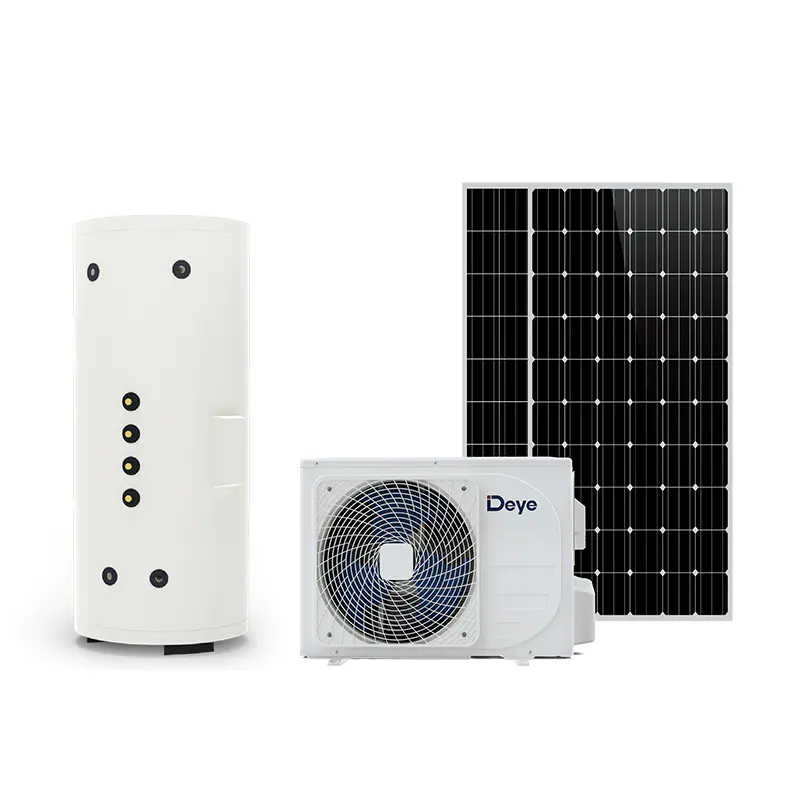
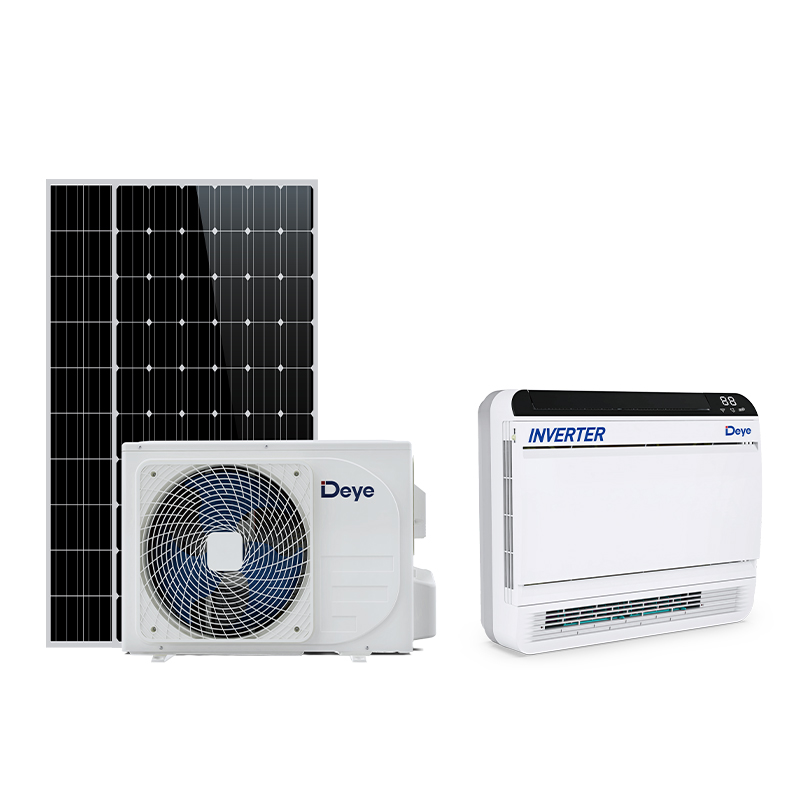
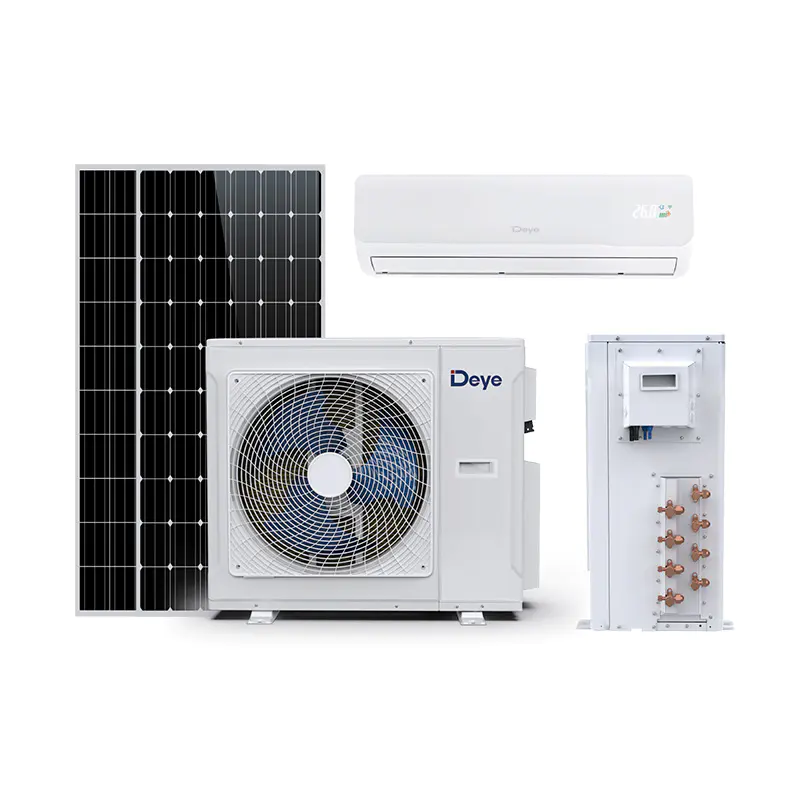
A complete Wall mounted Solar AC- Hybrid system is mainly composed of high-efficiency photovoltaic modules, a dedicated DC/AC dual-input wall-mounted air conditioner unit, and a system-level protective distribution box. To ensure long-term stable operation in volatile environments, the system strictly follows rigorous technical standards in hardware selection and structural design:
Compressor Anti-Liquid Hammer and Inverter Control: Utilizing a highly integrated IPM inverter module paired with a sensitive electronic expansion valve, the system can adjust compressor displacement within a few milliseconds based on instantaneous changes in PV input power, ensuring the system never trips under severely fluctuating lighting conditions.
Condenser and Evaporator Anti-Corrosion: Aiming at industrial zones with high humidity or coastal areas, the surface of the heat exchanger generally adopts hydrophilic golden fin or special anti-corrosion coatings to ensure the equipment maintains high heat exchange efficiency for over 10 years.
Electrical Safety Protection: Equipped with comprehensive protection against overvoltage, undervoltage, overcurrent, overheating, and lightning strikes (SPD). Dedicated DC circuit breakers and fuses are installed at the DC end, fully complying with international electrical safety construction and acceptance standards.
By implementing the Wall mounted Solar AC- Hybrid system, enterprises can not only significantly cut down peak electricity expenses during the day, but also effectively reduce their reliance on overall power transformer capacity. This solution, which closely integrates green energy technology with high-precision inverter control, provides a stable, controllable, and highly economically valuable fine temperature control option for various industries worldwide.
