

 Español
 русский
 Français
 Português
 Deutsch
 عربى
 italiano


Content
- 1 Is a solar heat pump worth it? Start with the daily hot water load
- 2 It is not a PV panel bolted to a normal heat pump
- 3 Where the savings actually come from: COP versus direct solar
- 4 Three payback calculations you can copy
- 5 Four water heating options compared side by side
- 6 When a solar heat pump is clearly the right purchase
- 7 Monoblock or split? The choice that shapes installation cost
- 8 Eight specifications to confirm before you order
- 9 The five installation mistakes that eat the savings
- 10 How performance shifts across climates
- 11 Swimming pools change the calculation entirely
- 12 Lifetime, maintenance and the cost nobody budgets for
- 13 Six assumptions that lead buyers astray
- 14 Frequently asked questions
- 14.1 How long does a solar heat pump actually take to pay back?
- 14.2 Can it run without any grid connection at all?
- 14.3 Does it still work in winter?
- 14.4 How many PV modules does it need?
- 14.5 Is it louder than a conventional heat pump?
- 14.6 What happens if the tank fails before the compressor?
- 14.7 Does it qualify for any incentive?
- 14.8 How does it compare with adding a battery instead?
Is a solar heat pump worth it? Start with the daily hot water load
For a household drawing roughly 200 litres of hot water a day and paying more than USD 0.15 per kWh, a solar heat pump normally pays for itself in four to six years. Below that level of demand, or where grid electricity costs only a few cents per kWh, it becomes a comfort and carbon decision rather than a financial one.
The reasoning is simple arithmetic. Lifting one kilogram of water by one degree takes about 1.163 Wh. A 200 litre tank raised from 15 °C to 55 °C therefore absorbs around 9.3 kWh of heat every single day. A resistance element running at roughly 95 percent efficiency burns about 9.8 kWh of grid electricity to deliver that heat. A heat pump working at an annual average COP of 3.0 needs only about 3.1 kWh, and if part of that 3.1 kWh arrives directly from a PV array during daylight, the metered figure drops further.
Three variables decide the outcome: litres per day, the local electricity tariff, and how many usable sun hours the site actually receives. Everything else — refrigerant choice, tank size, compressor type — only shifts those three numbers a little.
Quick reference: 150 litres/day with a 0.18 USD tariff gives a payback near six years. 200 litres/day at 0.28 USD lands near three to four years. 250 litres/day at 0.40 USD can be under three years. Under 80 litres/day, the payback stretches past ten years and the economics stop working.
It is not a PV panel bolted to a normal heat pump
The confusion is common, so it is worth clearing up early. A solar heat pump is a heat pump whose electrical input can come from a DC bus fed by photovoltaic modules, while still accepting alternating current from the grid or a generator on the same terminal block. That dual-input architecture is usually described as hybrid ACDC.
Inside the unit, the PV string feeds an MPPT stage that tracks the maximum power point of the array, then delivers DC directly to the inverter-driven compressor. Skipping the DC-to-AC-to-DC conversion chain avoids a double conversion loss that typically sits between 5 and 10 percent. On a cloudy afternoon the controller slides the load back to the AC supply without user intervention.
- Solar thermal collector: sunlight becomes heat directly in an absorber. Effective only in strong direct radiation, prone to stagnation and overheating in summer, and usually backed by an electric element in winter.
- Air source heat pump: moves heat from ambient air using a vapour compression cycle. Delivers two to four units of heat per unit of electricity, but every unit of that electricity is purchased.
- Hybrid ACDC solar heat pump: the same vapour compression cycle, but part of the compressor input is supplied by on-site PV. Efficiency gain comes from both the COP and the reduced metered energy.
That distinction matters when you compare quotations. A cheap "solar assisted" package is sometimes nothing more than a standard air source unit with a solar thermal preheat coil strapped to the tank. It works, but the solar contribution is limited to preheating and disappears entirely when the tank is already warm.
Where the savings actually come from: COP versus direct solar
Two separate effects stack up, and buyers often credit the wrong one. The heat pump multiplier does most of the heavy lifting; PV direct drive does the rest. If you size the array badly, the second effect shrinks toward zero while the first stays intact.
| System | Assumed efficiency | Grid electricity drawn | Share from on-site PV | Metered kWh per year |
|---|---|---|---|---|
| Electric resistance tank | 0.95 | 3,790 kWh | 0 percent | 3,790 |
| Standard air source heat pump | COP 2.9 | 1,241 kWh | 0 percent | 1,241 |
| Hybrid ACDC solar heat pump, small array | COP 2.9 | 1,241 kWh | 30 percent | 869 |
| Hybrid ACDC solar heat pump, matched array | COP 2.9 | 1,241 kWh | 55 percent | 558 |
| Hybrid ACDC solar heat pump, oversized array | COP 2.9 | 1,241 kWh | 62 percent, plus curtailment | 471 |
Notice the flattening at the bottom of that table. Once the array produces more than the compressor can absorb during daylight hours, extra panels stop earning money unless there is a battery or a dump load such as a pool pump. Oversizing past roughly 60 percent coverage is where budgets quietly go wrong.
Typical solar contribution to annual heat demand
Values assume a south-facing array at a 30 to 45 degree tilt, no battery storage, and hot water drawn mainly in the evening.
Three payback calculations you can copy
Abstract percentages do not persuade anybody. Here are three worked examples using real tariff levels, with hardware cost including the tank, the compressor unit, mounting and commissioning.
| Parameter | Case A: family of four, coastal city | Case B: couple, temperate inland | Case C: small guesthouse, high tariff |
|---|---|---|---|
| Daily hot water draw | 200 litres | 150 litres | 400 litres |
| Electricity tariff | USD 0.28 / kWh | USD 0.18 / kWh | USD 0.40 / kWh |
| Solar share achieved | 50 percent | 40 percent | 55 percent |
| Annual cost, resistance tank | USD 1,001 | USD 486 | USD 2,860 |
| Annual cost, solar heat pump | USD 158 | USD 98 | USD 724 |
| Annual saving | USD 843 | USD 388 | USD 2,136 |
| Installed cost | USD 2,900 | USD 2,400 | USD 5,600 |
| Simple payback | 3.4 years | 6.2 years | 2.6 years |
Case B is the interesting one. Nothing is wrong with the equipment; the tariff is simply too low and the load too small for the capital outlay to be recovered quickly. If that household also needs space heating in winter, the picture changes completely because the same compressor now runs for more hours per year and absorbs far more free solar input.
Use this formula before signing anything: payback in years = installed cost ÷ (annual resistance-tank cost − annual solar heat pump cost). If the answer exceeds about eight years, the equipment will likely reach end of life before it repays itself.
Four water heating options compared side by side
Buyers rarely evaluate a solar heat pump in isolation. It is chosen against a resistance tank, a plain air source heat pump, or a flat plate solar thermal system. The comparison below is the one that matters at the quotation stage.
| Criterion | Resistance tank | Air source heat pump | Hybrid ACDC solar heat pump | Flat plate solar thermal |
|---|---|---|---|---|
| Upfront cost index | 100 | 220-260 | 270-330 | 200-250 |
| Running cost index | 100 | 32-38 | 14-22 | 25-45 depending on backup |
| Output on an overcast day | Full | Full, COP drops | Full, COP drops but PV still contributes | Near zero |
| Summer overheating risk | None | None | None | High without a dump load |
| Roof or ground area needed | None | None | 4-8 m2 of PV | 3-6 m2 of collector |
| Typical service life | 6-10 years | 10-15 years | 12-15 years | 15-20 years for collector, less for tank |
| Best fit | Low demand, backup only | Cool climates, space heating priority | High sun hours plus high tariff | Very sunny, low frost, large roof |
The solar thermal column is where most disappointment originates. Collectors are efficient in direct sun but produce almost nothing under cloud, and the electric element that covers the gap is exactly the component the buyer was trying to escape. A heat pump backed by PV keeps working in both conditions, just at different contribution levels.
When a solar heat pump is clearly the right purchase
Buy it when hot water demand is steady
Households of three or more people, guesthouses, small restaurants, staff showers, and any site where hot water is drawn every day of the year. Consistent daily draw is what makes the payback clock run.
Buy it when the tariff is above 0.15 USD
Every cent above that line shortens payback. In markets where electricity has climbed steadily for a decade, the case is even stronger because the alternative gets more expensive over time.
Buy it when the roof is already there
If PV modules are installed or planned for another reason, the marginal cost of connecting them to the heat pump is small. The economics of the pump improve dramatically once the array is treated as a shared asset.
Buy it when grid supply is unreliable
Hybrid units that accept DC input can keep producing hot water during daytime outages without a battery, provided the array is live. For clinics, farms and remote lodges, that continuity has a value beyond the energy bill.
When it is better to wait or choose something else
- Daily draw under 80 litres with no space heating requirement.
- Electricity tariff below 0.08 USD per kWh, where the capital rarely returns within the equipment life.
- A roof that is shaded for most of the morning or faces away from the sun path, with no ground-mount alternative.
- Buildings where the hot water demand peaks in winter and the site has very low winter irradiation without space heating demand to compensate.
- Very tight capital budgets where a plain air source heat pump delivers most of the saving at noticeably lower upfront cost.
Monoblock or split? The choice that shapes installation cost
A monoblock solar heat pump packs the compressor, evaporator and control electronics into one factory-sealed casing, with the refrigerant circuit closed and tested before shipping. Only water pipes and electrical connections are made on site. Split systems separate the outdoor unit from an indoor cylinder, which suits tight plant rooms but adds refrigerant work, vacuuming and a licensed technician to the labour line.
For most residential and light commercial retrofits, monoblock wins on total installed cost. There is no refrigerant handling on site, no risk of a poor flare joint leaking years later, and commissioning takes hours rather than a full day. The trade-off is that the water circuit must be protected against frost, which means either a glycol mix, a drain-back arrangement, or a unit with built-in freeze protection.
Refrigerant choice follows the same logic. R290 monoblock units carry a small charge and reach higher flow temperatures, which matters when retrofitting onto existing radiators or a high-demand cylinder. R32 units sit in the middle of the market. R410A remains widely supported and is still the pragmatic choice where service technicians in the region know it best.
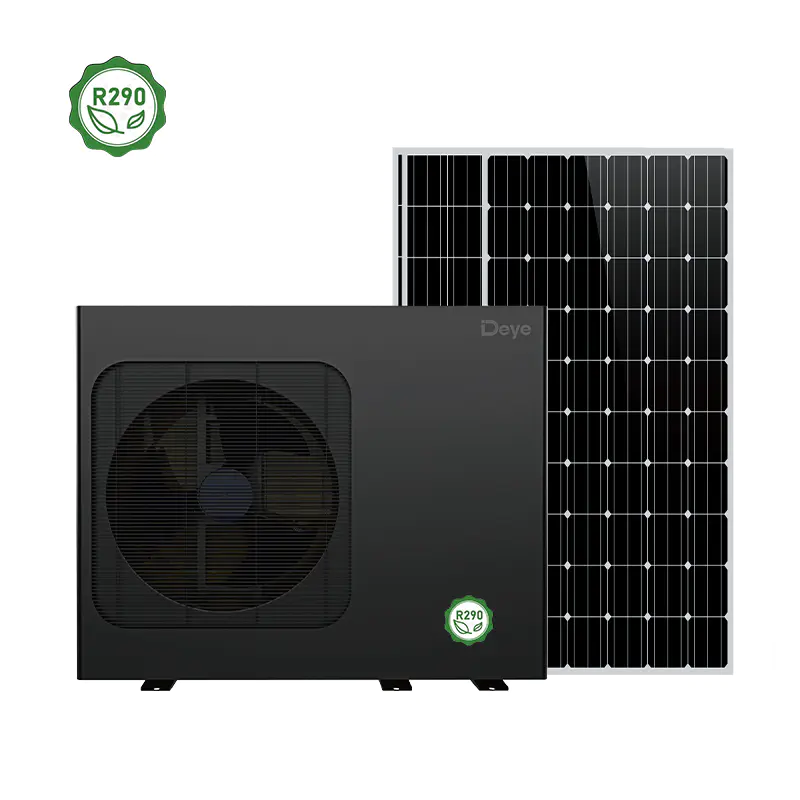
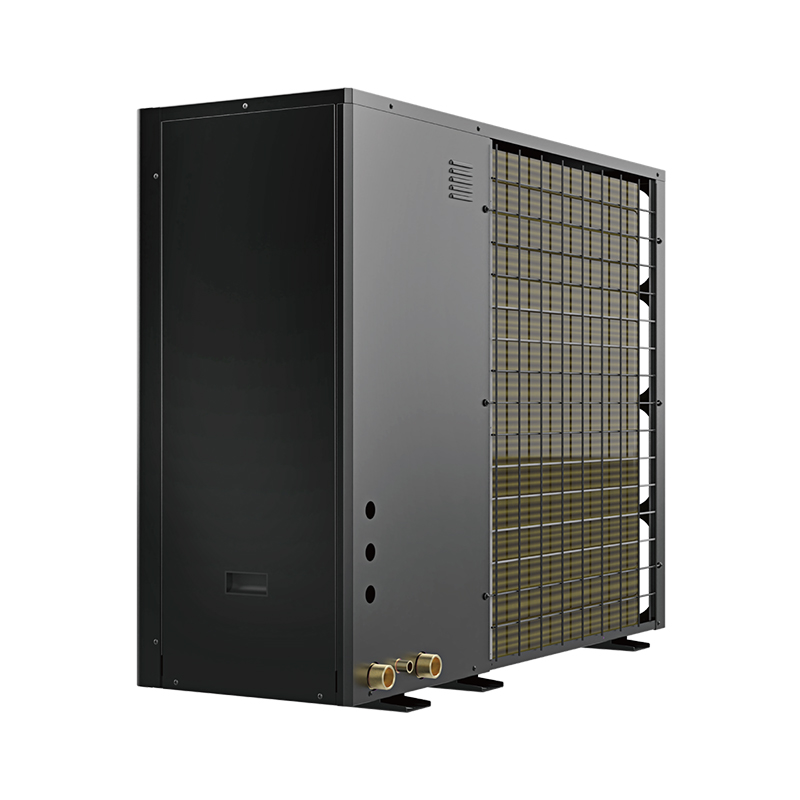 R290 Hybrid AC/DC Solar Monoblock Heat PumpIntegrated R290 monoblock combines solar and AC power for heating, cooling, and hot water, simplifying installation and keeping the system within one warranty boundary.View Product →
The integrated monoblock format above is the one most households end up choosing, because it removes refrigerant work from the installation programme and keeps the whole system inside a single warranty boundary.
Eight specifications to confirm before you order
Quotations in this category are not standardised, and two offers that look identical on price often differ on four or five of the points below. Ask for each one in writing.
| Specification | What to look for | Why it matters |
|---|---|---|
| Heating capacity at low ambient | Rated output at 2 °C and at minus 7 °C, not only at 20 °C | Winter performance collapses on units rated only at mild conditions |
| COP at two reference points | One at 20 °C ambient, one at 7 °C ambient | A single headline COP hides cold-weather penalties |
| PV input range | Open-circuit voltage window and maximum DC current | Determines how many modules can be connected directly |
| Compressor type | DC inverter, twin rotary or scroll | Affects modulation range, noise and service life |
| Refrigerant | R290, R32 or R410A with stated charge weight | Drives maximum flow temperature and future serviceability |
| Tank material and insulation | Stainless steel grade or enamel coating, foam thickness | Standing losses and corrosion dominate long-term cost |
| Freeze protection | Glycol loop, drain-back, or electric trace heating | Prevents the most common warranty dispute in cold markets |
| Controller and monitoring | Timer, legionella cycle, PV priority mode, remote access | Determines whether the array is used well or wasted |
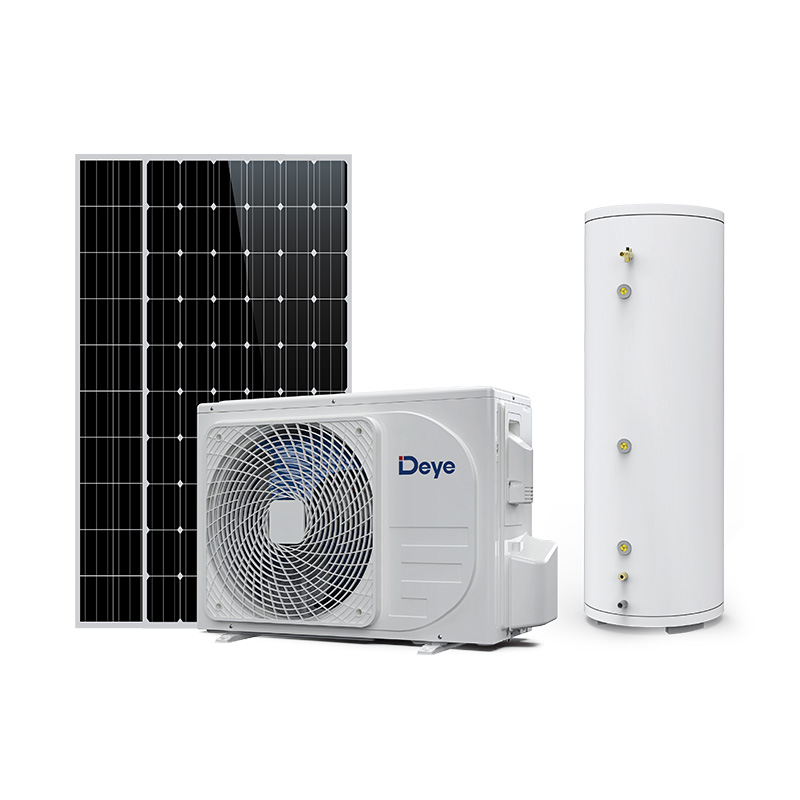
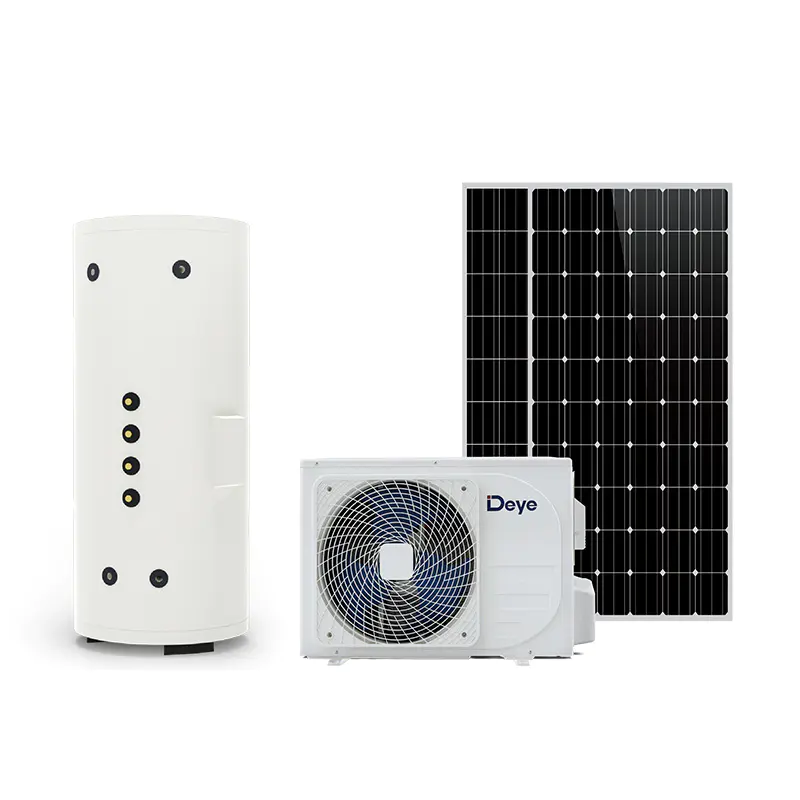 Hybrid AC/DC Solar Air Source Water HeaterSplit-design hybrid water heater uses solar DC and grid AC power with smart controls, suited to retrofit projects where cylinder and compressor are supplied together.View Product →
Where the cylinder and the compressor are supplied as one package, the hybrid AC/DC water heater above is the format to compare against a monoblock — it simplifies commissioning on retrofit projects where the plant room already exists.
The five installation mistakes that eat the savings
- Array facing the wrong way. A north-facing roof in the northern hemisphere can cut solar contribution by half. If the roof is not suitable, ground mount or a wall bracket often solves it for less than a larger array costs.
- Undersized tank. A cylinder that is too small forces the backup element to run in the evening, exactly when PV output has gone. Sizing the tank to cover one full day of demand is the single cheapest improvement available.
- Long uninsulated pipe runs. Heat loss between the outdoor unit and the cylinder is paid for twice — once in electricity, once in reduced capacity. Insulate every metre and keep the run under ten metres where possible.
- No legionella cycle configured. Domestic hot water stored below 60 °C needs a periodic pasteurisation cycle. Units ship with this disabled or unset, and installers frequently leave it that way.
- Oversized array without a sink for excess. Surplus PV production in summer has nowhere to go. Either accept curtailment deliberately, or add a pool pump, a space cooling load, or storage to absorb it.
Commissioning check: after the first week, log the metered kWh and the PV kWh side by side. If the PV contribution is below 20 percent in a sunny month, something in the configuration is wrong — tilt, shading, MPPT settings, or a controller still running in grid-priority mode.
How performance shifts across climates
Tropical and subtropical
High irradiation and warm ambient air push COP above 4 for much of the year, and solar coverage can exceed 65 percent. The main engineering concern is not heating but scaling and corrosion on the water side, so tank material matters more than compressor specification.
Mediterranean and semi-arid
Strong summer sun with mild winters produces the best overall economics. Solar coverage near 55 percent is realistic, and units rarely need low-temperature ratings. Dust on the modules is the most common cause of underperformance and is fixed with a hose.
Temperate with mixed sky
Solar contribution settles around 40 percent, and the heat pump must handle defrost cycles in winter. Look for units with a documented low-ambient rating and a defrost strategy that does not dump hot water down the drain.
Cold continental
Solar coverage can fall to 25 percent in December, but annual demand is high, so total savings often still beat warmer markets. Frost protection, pipe insulation and a correctly sized backup element become the deciding factors.
Swimming pools change the calculation entirely
Pool heating is where solar heat pumps deliver the fastest returns, because the load is enormous, seasonal, and concentrated in exactly the hours when PV generation peaks. A 40 m3 pool held at 28 °C in a sunny climate can absorb more energy in one season than a domestic hot water cylinder uses in five years.
The sizing rule is roughly 0.6 to 0.8 kW of heating capacity per cubic metre of pool volume in a well-covered pool, and more without a thermal blanket. Covering the pool at night matters more than adding panels: an uncovered pool loses most of its heat to evaporation and radiation, which no amount of solar input compensates for.
For pools with an existing filtration pump, the heat pump's hydraulic circuit is plumbed in series and the controller ties heating to filtration hours so the compressor runs only when water is moving. That interlock is often the difference between a system that performs as specified and one that trips on high pressure in the first week.
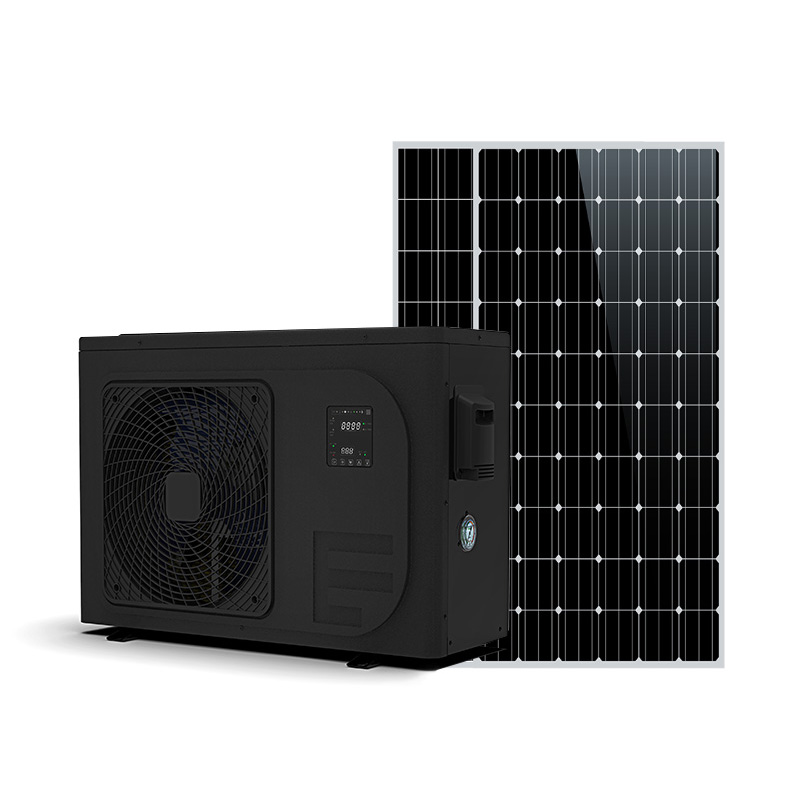
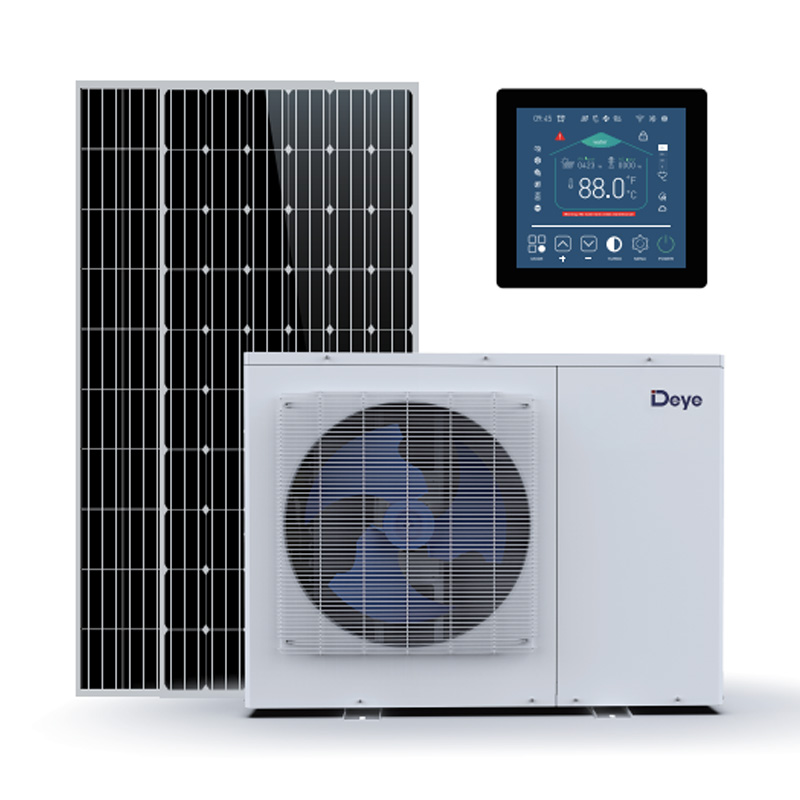
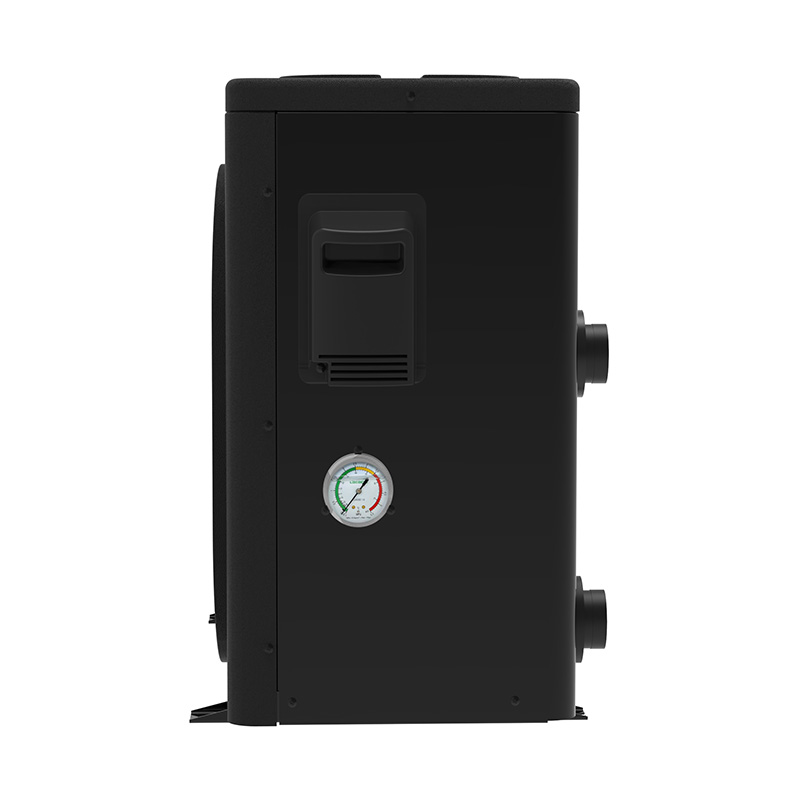 Hybrid AC/DC Solar Swimming Pool Heat PumpPool heat pump uses hybrid solar DC and grid AC input with WiFi control and programmable settings, sharing a solar array with household hot water.View Product →
The pool heating format above uses the same hybrid AC/DC input stage as the domestic units, which lets a single array serve both the pool and the household hot water load across the year.
Lifetime, maintenance and the cost nobody budgets for
| Component | Typical service life | Routine action | Replacement cost index |
|---|---|---|---|
| Compressor unit | 12-15 years | Annual coil clean, refrigerant check at year 5 | 100 |
| Hot water cylinder | 8-12 years | Anode inspection every two years on steel tanks | 35-50 |
| PV modules | 20-25 years | Cleaning twice a year in dusty regions | 40-60 |
| Controller board | 8-12 years | Firmware update and connection check | 10-15 |
| Circulation pump | 6-10 years | Strainer clean, check for cavitation noise | 5-8 |
The neglected line item is the cylinder. Many buyers compare compressor brands while the tank, which typically fails first, goes unexamined. A stainless steel cylinder with a 20-year warranty changes the lifecycle maths more than a marginal COP difference between two compressor units.
Maintenance itself is modest: clean the evaporator coil once a year, keep the condensate drain clear, verify the anode if the tank is steel, and check that the controller still runs its pasteurisation cycle. In dusty regions, module cleaning twice a year recovers far more output than any setting change.
Six assumptions that lead buyers astray
- "The sun heats the water directly." It does not. Photovoltaic output drives a compressor that moves heat from air to water. Understanding this prevents unrealistic expectations about cloudy days.
- "A bigger array is always better." Beyond about 60 percent coverage, surplus production has nowhere to go without storage or an additional load.
- "COP is a fixed number." It varies with ambient temperature, water temperature and flow rate. A unit rated at COP 4.5 at 20 °C may deliver 2.4 at minus 5 °C.
- "It works like a battery." Without storage, the system uses solar only while the compressor runs. Shifting draw to daytime — a timer on the circulation pump, for example — is worth more than extra panels.
- "Any installer can commission it." Hybrid units need the PV open-circuit voltage matched to the controller window. A mismatch either derates the system or damages the input stage.
- "It replaces space heating too." It can, but only with a correctly sized emitter circuit. Retrofitting onto undersized radiators produces lukewarm rooms and a disappointed owner.
Frequently asked questions
How long does a solar heat pump actually take to pay back?
Between four and six years for a household using 200 litres a day at a tariff above 0.15 USD per kWh. Under 80 litres a day, expect ten years or more, at which point the equipment may not outlive the investment.
Can it run without any grid connection at all?
Partially. A hybrid unit with DC input will run from the array during daylight without grid power, but hot water production after sunset needs either storage or a backup supply. Fully off-grid operation requires a battery or a generator interlock.
Does it still work in winter?
Yes. Air source heat pumps extract heat from ambient air well below freezing, though capacity and COP both fall. Solar contribution drops in winter, so the backup element or grid supply covers more of the load — which is why the annual figure matters more than the winter figure.
How many PV modules does it need?
For a 200 litre daily load, roughly four to eight 550 W modules, depending on climate and how much of the demand you want covered. The controller's input window is the hard limit, not the roof area.
Is it louder than a conventional heat pump?
Comparable. Monoblock units typically run at 45 to 55 dB at one metre. Siting the unit away from bedroom windows and avoiding wall brackets that transmit vibration solves most complaints.
What happens if the tank fails before the compressor?
The cylinder is replaced and the compressor unit stays. This is why buying a system with a separately serviceable cylinder, rather than a fully sealed integrated unit, sometimes makes sense on long-horizon projects.
Does it qualify for any incentive?
In many markets, yes — heat pump grants and renewable heat incentives frequently apply, and some programmes add a bonus for solar-assisted systems. Confirm the eligibility rules with the local authority before ordering, because paperwork usually has to be filed before installation, not after.
How does it compare with adding a battery instead?
They solve different problems. A battery shifts electricity to evening use and is priced per kWh of storage; a solar heat pump displaces the most energy-hungry load in the building at a lower cost per unit of energy saved. If hot water is the dominant load, the heat pump usually returns the money first.
The honest position is that a solar heat pump is one of the few renewable purchases where the arithmetic is transparent enough to check before you buy. Work out daily litres, multiply by 1.163 Wh per degree of lift, divide by your expected COP, apply the local tariff, and compare that annual figure with the quotation. If the gap between that number and your current hot water bill repays the installed cost inside eight years, the equipment is doing its job. If it does not, no amount of refrigerant optimisation will rescue the business case — and a smaller, better-sited system will almost always beat a larger, badly configured one.
