

 Español
 русский
 Français
 Português
 Deutsch
 عربى
عربى italiano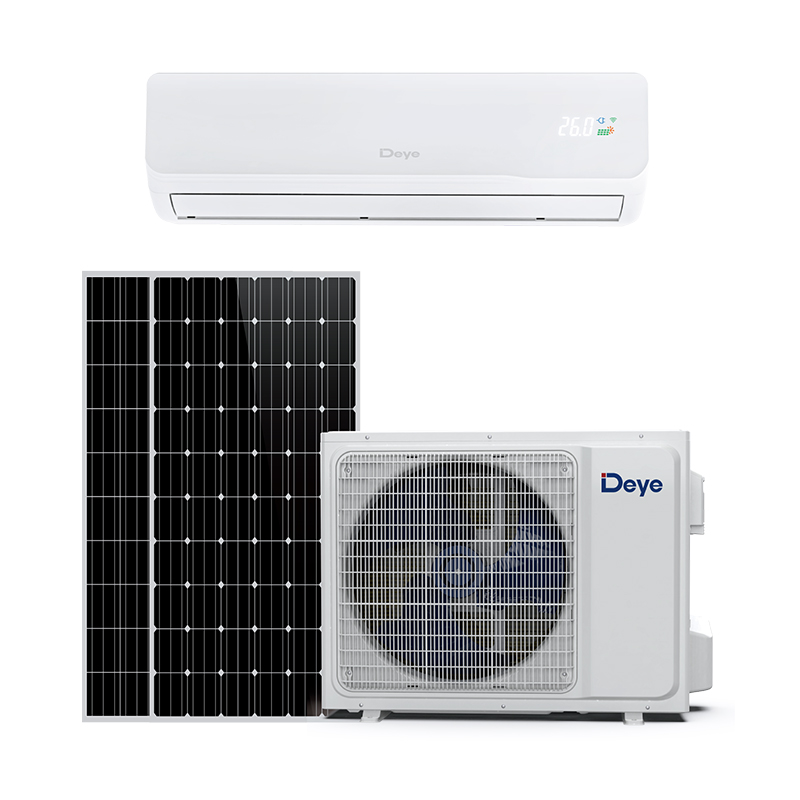
-1.jpg)

Content
In today's world, air conditioning isn't a luxury; it's a necessity, especially with rising global temperatures. Traditional air conditioners have long been the go-to solution for cooling homes and offices, but they come with a significant cost—both to your wallet and the environment. As people become more conscious of energy consumption and carbon footprints, solar air conditioning has emerged as a promising, eco-friendly alternative. This article will provide a comprehensive comparison between these two systems, exploring their inner workings, costs, efficiency, and environmental impact to help you decide which is the best fit for your needs.
How Traditional Air Conditioners Work
Traditional air conditioners operate on the principles of vapor-compression refrigeration, a process that moves heat from an indoor space to the outdoors. This cycle is powered by a significant amount of electricity and relies on four key components:
-
Compressor: Located in the outdoor unit, this is the powerhouse of the system. It pressurizes the refrigerant gas, raising its temperature and pressure before sending it to the condenser.
-
Condenser: Also in the outdoor unit, this component releases the heat absorbed from indoors. As the high-pressure, hot refrigerant gas flows through the condenser coils, it dissipates heat to the cooler outdoor air and condenses back into a high-pressure liquid.
-
Expansion Valve: This small, crucial device restricts the flow of the liquid refrigerant, causing its pressure and temperature to drop significantly as it enters the indoor unit.
-
Evaporator: Found in the indoor unit, this component is where the magic of cooling happens. The now-cold, low-pressure liquid refrigerant passes through the evaporator coils, absorbing heat from the warm indoor air blown over them. This causes the refrigerant to evaporate back into a gas, which is then sent back to the compressor to restart the cycle.
This continuous cycle is what provides the cool air you feel, and it's heavily dependent on a consistent supply of electricity to power the compressor, which is the system's biggest energy consumer.
How Solar Air Conditioners Work
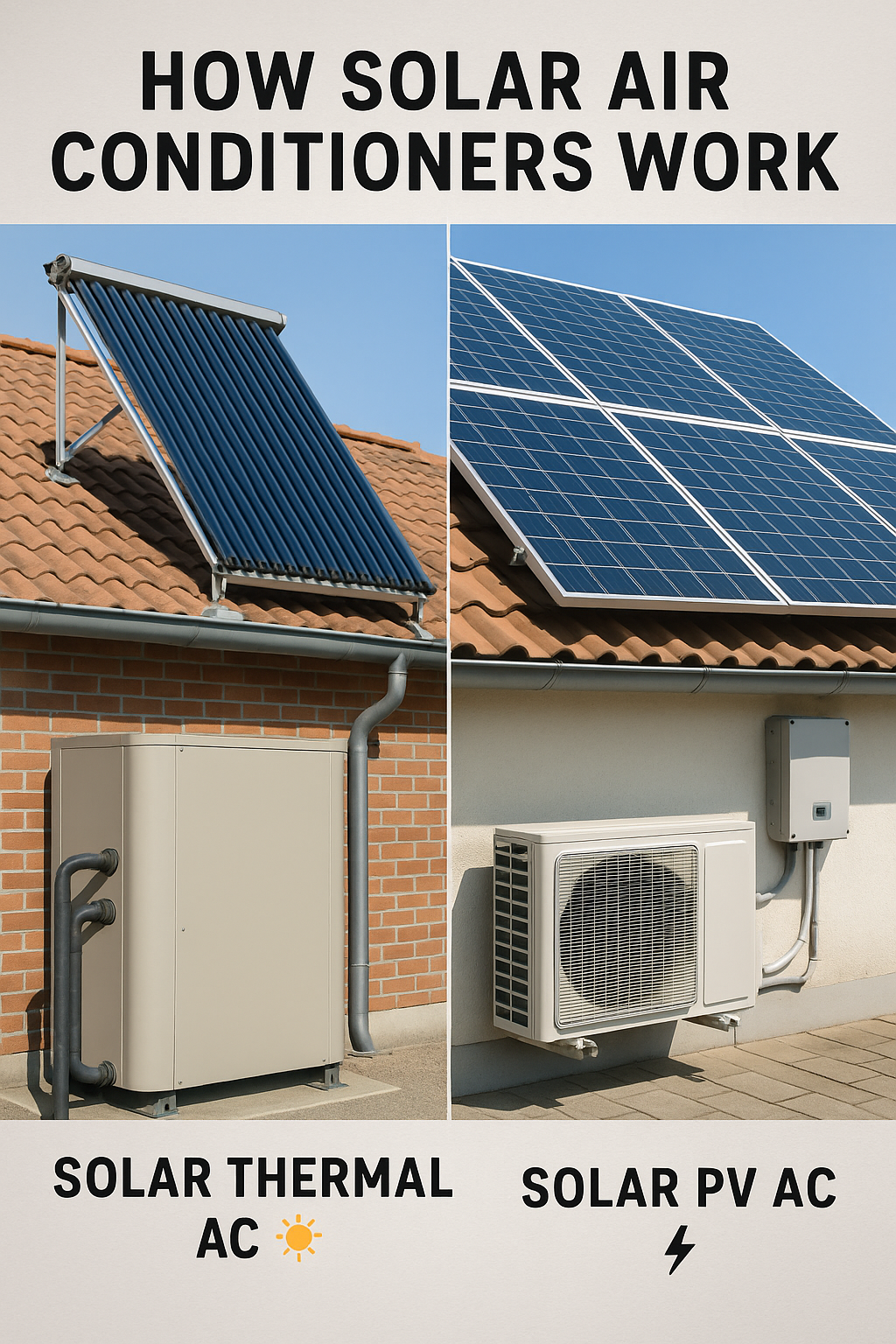
Solar air conditioners don't just rely on one technology; they encompass two primary types, each with a unique way of harnessing the sun's power.
Solar Thermal AC
This less common type uses solar thermal collectors to capture the sun's heat directly. Instead of using a compressor, it uses a thermally driven cycle. Solar collectors heat a fluid, which then powers a special type of chiller—either an absorption or an adsorption chiller—to create the cooling effect.
-
Absorption Chiller: Uses a heat source to separate a liquid refrigerant from an absorbent solution (e.g., water and lithium bromide). This process drives the cooling cycle.
-
Adsorption Chiller: Similar to an absorption chiller, but it uses a solid adsorbent material (like silica gel) to adsorb the refrigerant vapor, which is a key part of the cooling process.
Solar PV AC
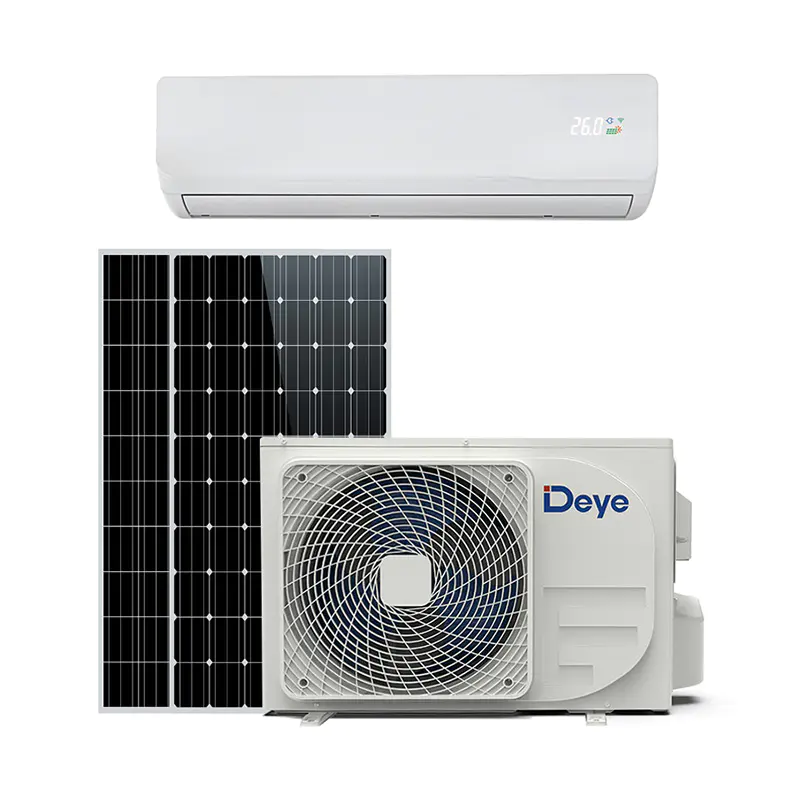
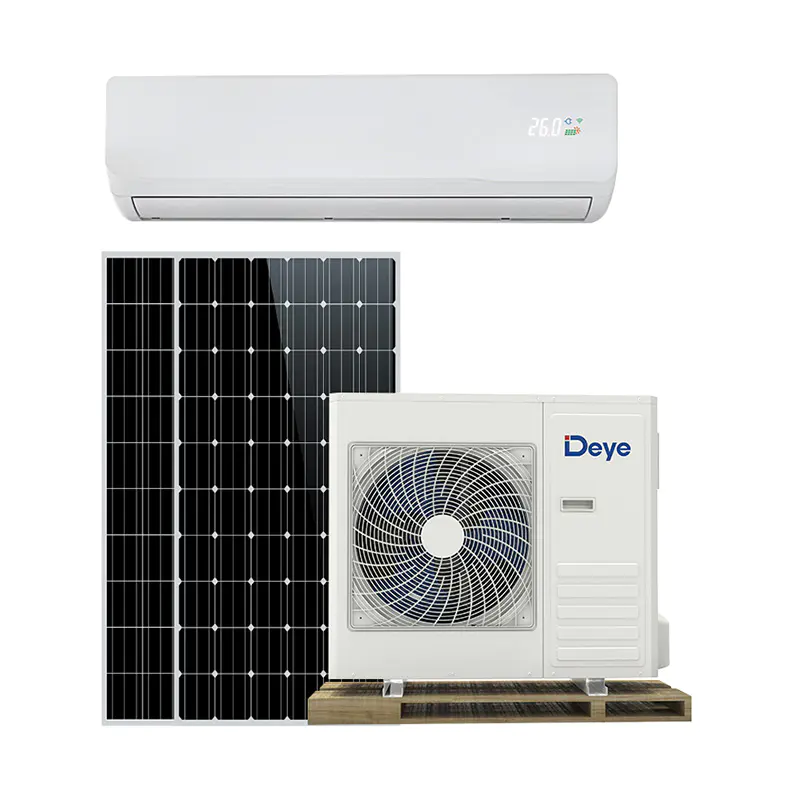
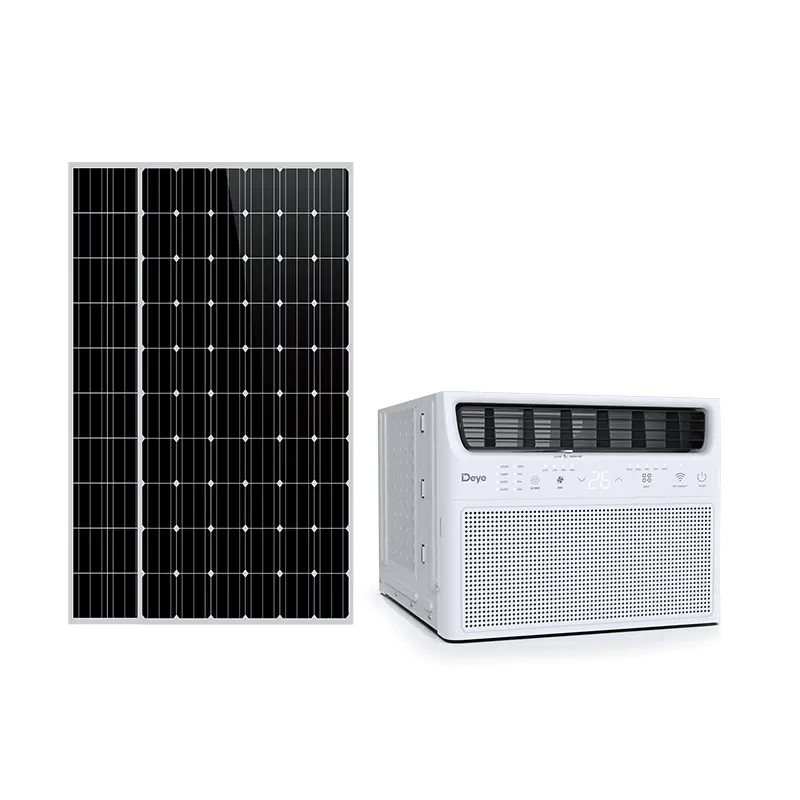
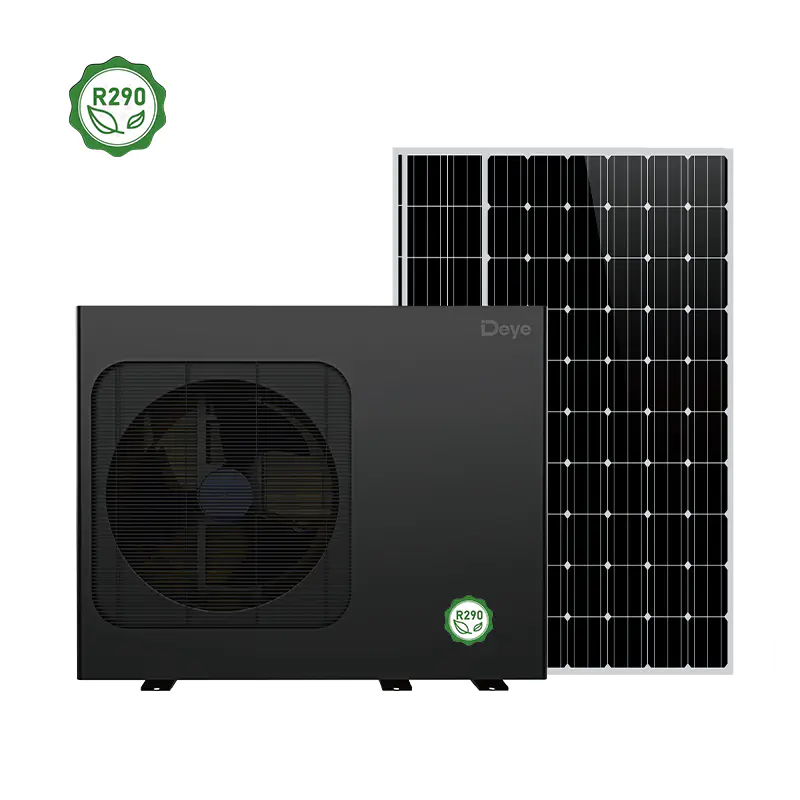
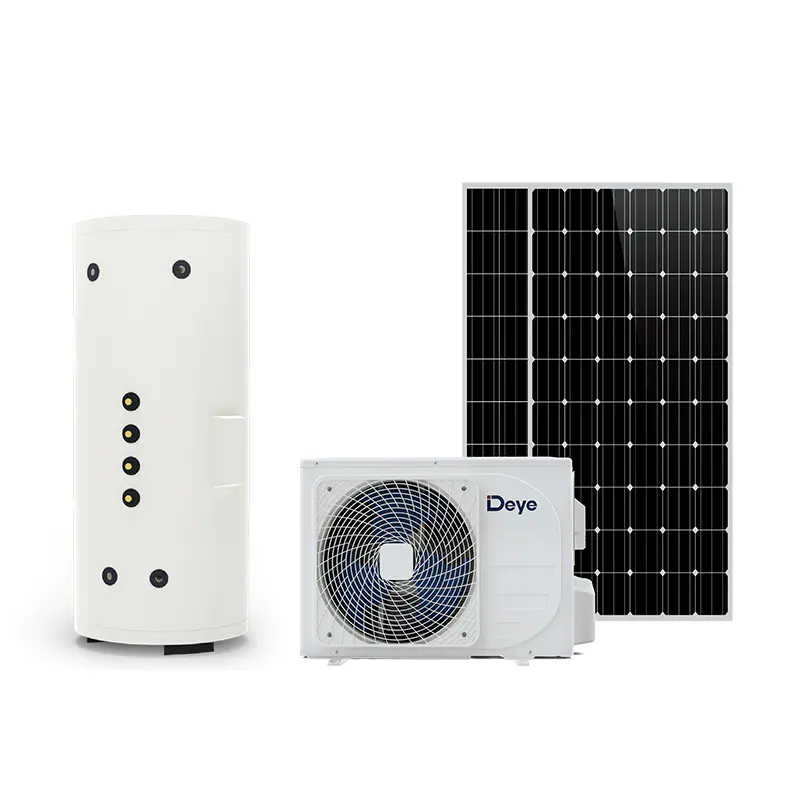
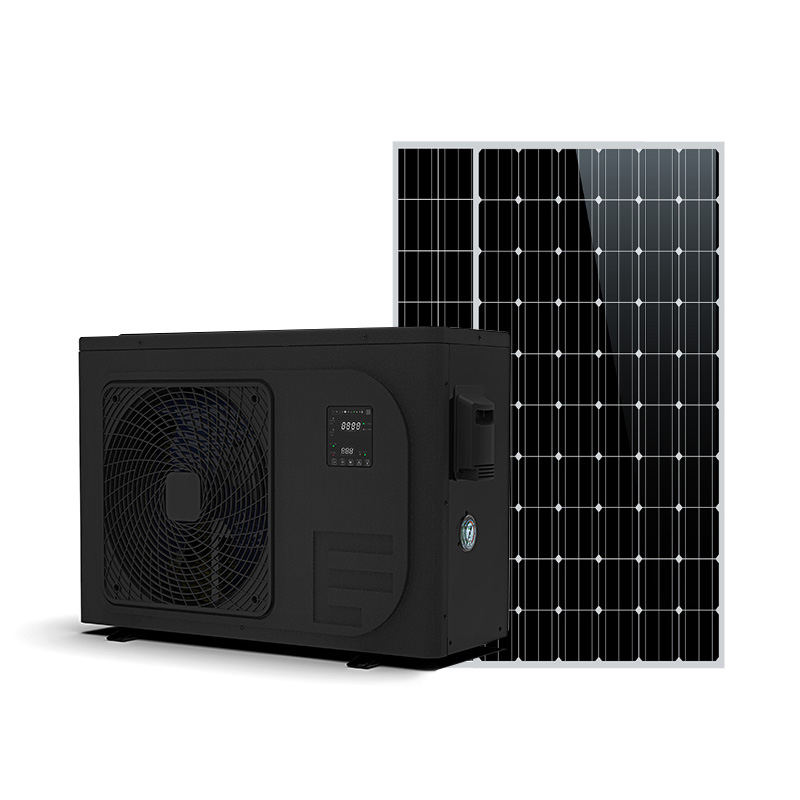
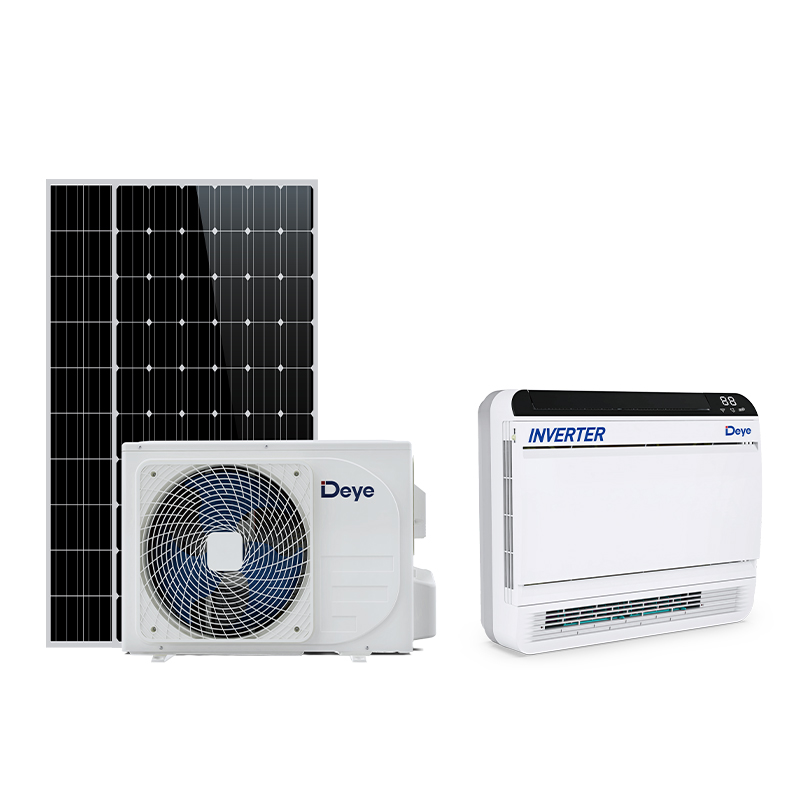
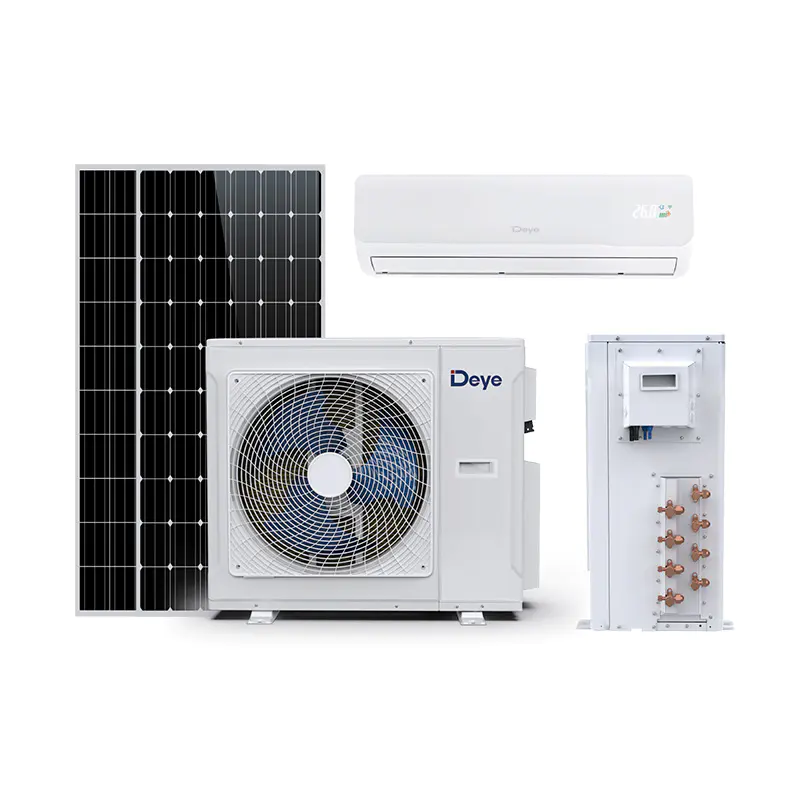
This is the more widely used type of solar air conditioner. It's essentially a standard air conditioning unit that is powered by electricity generated from photovoltaic (PV) solar panels. The solar panels convert sunlight directly into DC electricity, which is then converted into AC electricity via an inverter to power a conventional AC unit. Many solar PV AC units are hybrid systems that can seamlessly switch to grid electricity when sunlight is insufficient, ensuring uninterrupted cooling.
Key Differences Between Solar and Traditional AC
Energy Source
-
Traditional AC: Relies exclusively on grid electricity, which is often generated by non-renewable sources like coal, natural gas, or nuclear power. Its operation is dependent on a stable power grid.
-
Solar AC: Primarily uses solar energy captured by solar panels. In the case of a hybrid system, it can seamlessly switch to grid electricity at night or on cloudy days. This provides energy independence and reduces reliance on the public power grid.
Environmental Impact
-
Traditional AC: Contributes to a higher carbon footprint due to its dependence on grid electricity, which is often produced by burning fossil fuels. The refrigerants used in some older units can also be potent greenhouse gases.
-
Solar AC: Has a significantly lower carbon footprint during its operation because it runs on clean, renewable energy. While the manufacturing of solar panels has an environmental impact, the long-term benefits of zero emissions during use make it a much more sustainable option.
Cost
-
Traditional AC: Generally has a lower initial investment for the unit and installation. However, it incurs higher and ongoing operating costs through monthly electricity bills, especially during peak usage seasons.
-
Solar AC: Requires a higher upfront investment for the solar panels, equipment, and more complex installation. The long-term operating costs, however, are substantially lower, as the energy source is free.
Energy Efficiency
Energy efficiency for both systems is measured by two key ratings:
-
Energy Efficiency Ratio (EER): Measures an AC unit's efficiency at a single, standard operating condition (typically 95°F outdoor temperature). A higher EER indicates better efficiency.
-
Seasonal Energy Efficiency Ratio (SEER): Provides a more comprehensive measure of efficiency over a typical cooling season, taking into account a range of outdoor temperatures. A higher SEER rating signifies greater efficiency throughout the year.
-
Traditional AC: Efficiency ratings vary widely, with the minimum SEER rating in the U.S. being 14 for new central air conditioners. High-efficiency units can reach SEER ratings of 20 or more.
-
Solar AC: Many solar AC units are designed to be highly efficient, often featuring variable-speed compressors and other advanced technologies to maximize the use of available solar power. While their SEER ratings can be high, their true efficiency benefit lies in their ability to operate without drawing power from the grid, making their operational energy cost close to zero.
Installation
-
Traditional AC: The installation is relatively straightforward, involving the placement of an outdoor condenser unit and an indoor air handler unit (or evaporator coil). For central AC, this also includes connecting to the existing ductwork and electrical system.
-
Solar AC: The installation process is more complex. In addition to the indoor and outdoor AC units, it requires the mounting of solar panels on a rooftop or a ground-mounted rack. It also involves specialized wiring and, in some cases, the installation of batteries for energy storage and a charge controller, which can add significant complexity and cost.
Maintenance
-
Traditional AC: Requires standard maintenance such as regularly changing air filters, cleaning evaporator and condenser coils, and checking refrigerant levels.
-
Solar AC: Involves all the same maintenance as a traditional AC, plus the upkeep of the solar panel system. This includes periodically cleaning the panels to remove dust, dirt, or debris to ensure optimal energy production. However, solar panels are generally very durable and require minimal maintenance, often just an annual check-up.
A Detailed Comparison: Solar vs. Traditional Air Conditioners
| Feature | Traditional Air Conditioner | Solar Air Conditioner |
| Energy Source | Grid electricity (non-renewable) | Solar panels (renewable) with optional grid backup |
| Environmental Impact | Higher carbon footprint; contributes to greenhouse gas emissions | Very low carbon footprint during operation; promotes energy sustainability |
| Upfront Cost | Lower initial investment for the unit and installation | Higher initial investment for unit, solar panels, and specialized installation |
| Operating Cost | High and ongoing monthly electricity bills | Potentially very low or zero electricity bills during sunny periods |
| Efficiency Ratings | Measured by SEER and EER ratings (e.g., SEER 14-25+) | Varies by model, but often designed to be highly efficient to maximize solar power |
| Installation Complexity | Relatively straightforward; involves indoor/outdoor units and electrical wiring | More complex; requires roof space for panels, specialized wiring, and sometimes batteries |
| Maintenance | Standard upkeep like filter changes and coil cleaning | Requires standard AC maintenance plus periodic cleaning of solar panels |
| Dependence on Weather | No dependence on weather; provides consistent cooling day or night | Relies on sunlight for optimal operation; hybrid systems switch to the grid on cloudy days or at night |
| Long-Term Savings | None; ongoing costs remain high | Significant savings over time, with the potential for a return on investment (ROI) |
| Government Incentives | Generally none | Often eligible for federal, state, or local tax credits, rebates, or subsidies |
| Technology | Vapor-compression refrigeration | Solar PV (powering a traditional unit) or Solar Thermal (absorption/adsorption chillers) |
Advantages and Disadvantages
Solar Air Conditioners
-
Advantages:
-
Reduced Energy Bills: Because they use free solar energy, solar ACs can drastically lower or even eliminate the portion of your electricity bill dedicated to cooling, which is often the largest portion of a home's energy consumption.
-
Lower Carbon Footprint: By relying on a clean, renewable energy source, solar ACs help reduce greenhouse gas emissions and a home's overall environmental impact. This is a significant benefit for environmentally conscious consumers.
-
Potential for Government Incentives: Many governments and local authorities offer tax credits, rebates, and other financial incentives to encourage the adoption of solar energy. These programs can significantly offset the high initial cost, making solar AC more financially viable.
-
Energy Independence: Solar AC provides a degree of energy independence, protecting you from rising electricity costs and power outages, especially when paired with a battery storage system.
-
-
Disadvantages:
-
High Initial Cost: The most significant barrier to entry is the substantial upfront investment required for the solar panels, inverter, and specialized installation, which is often much higher than that of a traditional unit.
-
Dependence on Sunlight: Solar AC systems are dependent on the sun for power. While hybrid models can switch to grid electricity, their efficiency and effectiveness decrease on cloudy days or at night unless a battery backup is used.
-
Space Requirements: Solar panels require a significant amount of suitable roof or ground space, which may be a limitation for some homes, apartments, or properties with limited sun exposure.
-
Traditional Air Conditioners
-
Advantages:
-
Lower Upfront Cost: Traditional AC units are generally more affordable to purchase and install, making them a more accessible option for many consumers on a tighter budget.
-
Readily Available and Established Technology: The technology is mature, reliable, and widely understood. Replacement parts and professional service technicians are readily available, which can simplify maintenance and repairs.
-
Consistent Operation: Traditional AC units provide consistent, uninterrupted cooling regardless of weather conditions or time of day, as they are powered by the constant and reliable electrical grid.
-
-
Disadvantages:
-
High Energy Consumption: These systems are major electricity consumers, leading to high utility bills, especially during the hottest months.
-
Environmental Impact: Their reliance on grid electricity, often generated by fossil fuels, contributes to air pollution and a larger carbon footprint.
-
Reliance on Fossil Fuels: They are part of a larger energy infrastructure that is heavily dependent on non-renewable resources, contributing to long-term environmental and sustainability issues.
-
Cost Comparison
Initial Costs
-
Traditional AC: The upfront cost for a traditional central air conditioning system can range significantly depending on the size of the unit (measured in tons), the brand, and installation complexity. This cost typically includes the unit itself and the labor for installation. It is generally a lower initial investment compared to a solar-powered system.
-
Solar AC: The initial investment is substantially higher. This includes the cost of the AC unit, which may be a bit more specialized, and the much larger expense of a full solar panel system. The total cost is determined by the number of panels needed, the inverter, mounting hardware, and the labor for both the AC installation and the solar panel installation.
Operating Costs
-
Traditional AC: The primary operating cost is the monthly electricity bill. The cost per kilowatt-hour ($/kWh) varies by location and can fluctuate with energy market prices. A typical residential AC unit can consume between 1.5 kWh and 2.8 kWh per hour, with total monthly consumption often ranging from 360 kWh to over 650 kWh, depending on factors like climate, home insulation, and usage patterns.
-
Solar AC: Operating costs are dramatically lower. During periods of adequate sunlight, the system operates on self-generated power, essentially costing nothing. Any additional energy needs on cloudy days or at night are drawn from the grid, resulting in a significantly lower electricity bill.
Maintenance Costs
-
Traditional AC: Routine maintenance is essential and includes tasks like replacing air filters, cleaning coils, and checking refrigerant levels. These costs are relatively predictable and manageable.
-
Solar AC: Maintenance includes all the same tasks as a traditional AC unit, plus the additional upkeep of the solar array. This includes cleaning the panels periodically to ensure maximum efficiency. While solar panels are durable, a professional inspection of the system is recommended on a regular basis.
Long-Term Savings and ROI
-
Traditional AC: Offers no long-term savings beyond the initial purchase. The system is a consistent drain on financial resources through its energy consumption.
-
Solar AC: The high initial investment can be recouped over time through significant savings on electricity bills. The Return on Investment (ROI) and payback period for a solar AC system vary widely based on several factors, including:
-
The system's size and total cost
-
Local electricity rates (higher rates lead to a faster ROI)
-
Sunlight availability in your climate
-
Available government incentives
-
The system's overall efficiency
-
-
While payback periods can be long—often in the range of 5 to 15 years—the system continues to provide free energy for decades after the initial investment is recovered, leading to substantial long-term savings.
Government Incentives and Rebates
-
Traditional AC: There are very few government incentives or rebates available for standard AC units, though some programs may exist for specific high-efficiency models.
-
Solar AC: This is a major financial advantage. Solar installations are frequently eligible for significant incentives at the federal, state, and local levels. The most notable is the federal Investment Tax Credit (ITC), which allows you to claim a percentage of your total solar installation cost as a tax credit. Many states and utility companies also offer additional rebates, property tax exemptions, or performance-based incentives that can dramatically reduce the net cost of the system. These programs are key to making the higher upfront cost of solar AC a more attractive investment.
Environmental Impact
Carbon Footprint
-
Traditional AC: The carbon footprint of a traditional air conditioner is a direct result of the energy source used to power it. Since a significant portion of grid electricity is generated by burning fossil fuels like coal and natural gas, traditional ACs indirectly contribute to a high level of greenhouse gas (GHG) emissions.
-
Parameter Comparison: The amount of CO2 emitted per kWh of electricity varies by region and power grid. For example, a home in a region with a coal-heavy grid will have a much larger carbon footprint for the same amount of cooling than a home in a region powered by hydropower.
-
-
Solar AC: The operational carbon footprint is nearly zero. The electricity is generated from sunlight, a clean and renewable source that produces no direct emissions. While the manufacturing and transportation of solar panels have a carbon footprint, the long-term, decades-long use of the system with zero operational emissions makes it a far more sustainable choice.
Energy Source
-
Traditional AC: Relies on non-renewable resources. The constant demand for electricity, especially during peak summer hours, places a heavy burden on power plants, which can lead to increased reliance on older, less efficient, and more polluting "peaker plants."
-
Solar AC: Utilizes a renewable and abundant energy source: the sun. This reduces the overall strain on the electrical grid and helps to diversify the energy mix, moving away from fossil fuels.
Sustainability
-
Traditional AC: From a sustainability perspective, traditional AC units have a limited lifespan and contribute to a cycle of energy consumption tied to fossil fuels. The refrigerants used in some units can also be potent greenhouse gases if they leak into the atmosphere, though new regulations are phasing out the most harmful ones.
-
Solar AC: Represents a long-term, sustainable investment. The system promotes energy independence and contributes to a healthier environment by reducing air pollution and mitigating climate change. The durability and long lifespan of solar panels (typically 25+ years) mean the environmental benefits continue for decades, making them a key component in a transition to a greener future.
Factors to Consider When Choosing
Climate
-
Sunlight Availability: The most crucial factor for a solar AC is the amount of sunlight your location receives. Solar AC systems are most effective in sunny climates with long, hot summers, where the peak cooling demand coincides with the peak solar energy production. In regions with frequent cloud cover or long, dark winters, a solar-only system would be impractical without a large and expensive battery backup.
-
Temperature and Humidity: Your climate's temperature and humidity levels will determine the size and efficiency requirements of your system. In very hot climates, you may need a larger, more powerful system (measured in tons or BTUs), and in humid climates, the system will need to handle a significant latent heat load (removing moisture from the air).
Energy Consumption
-
Individual Energy Needs: Assess your household's current and future energy needs. Consider the size of your home, its insulation quality, the number of occupants, and your typical air conditioning usage. A home with high cooling demands and a high electricity rate will see a faster return on investment for a solar AC.
-
Usage Patterns: Your daily routines matter. Solar ACs are most beneficial when you run the air conditioner during the day when the sun is shining. If you primarily use your AC at night, a hybrid system with grid-tie capability or a battery storage system is a necessity.
Budget
-
Upfront Costs vs. Long-Term Savings: As highlighted in the cost comparison, this is the main trade-off. Can you afford the significant initial investment of a solar AC system, knowing it will pay for itself over time? Or is the lower upfront cost of a traditional AC a better fit for your immediate financial situation, despite the ongoing high energy bills?
-
Government Incentives: Research available incentives and rebates. These programs are a critical part of the financial calculation for a solar AC and can drastically reduce the total cost, making the investment much more attractive.
Space
-
Availability for Solar Panels: Solar PV systems require adequate, unshaded roof or ground space. A property with a large, south-facing, unshaded roof is ideal. If your roof is small, has a lot of obstructions (like chimneys or vents), or is heavily shaded by trees or neighboring buildings, installing a sufficient number of solar panels may be difficult or impossible.
-
Roof Condition: The age and condition of your roof are important. The solar panels will add weight, and they are a long-term installation, so it's a good idea to have a structurally sound roof.
Home Design
-
Compatibility: Your home's design can affect installation. This includes factors like the presence of existing ductwork for central AC systems, and the possibility of installing a mini-split system. For solar PV AC, the orientation of your roof relative to the sun is paramount.
-
Energy Efficiency: The overall energy efficiency of your home (e.g., insulation, window quality, air sealing) will determine how hard your AC system needs to work. An energy-efficient home will require a smaller, less powerful AC system, which in turn means fewer solar panels and a lower total cost for a solar AC setup.
