

 Español
 русский
 Français
 Português
 Deutsch
 عربى
 italiano


Content
- 1 What a Solar Air Source Heat Pump Water Heater Does
- 2 How the Heating Cycle Works Step by Step
- 3 Efficiency and Real-World Performance
- 4 Solar Air Source vs Electric, Gas, and Solar Thermal
- 5 Hybrid AC/DC Design and Solar Sizing
- 6 Sizing and Selection for Real Hot Water Loads
- 7 Installation and Commissioning Details That Affect Payback
- 8 Operating Cost and Payback Example
- 9 Maintenance and Troubleshooting
- 10 Is a Solar Air Source Heat Pump Water Heater Worth It?
- 11 Frequently Asked Questions
- 11.1 Does a solar air source heat pump water heater work at night?
- 11.2 How much roof space do I need for the solar panels?
- 11.3 Can it replace an existing electric water heater?
- 11.4 What maintenance does the tank need?
- 11.5 How do I know if the solar input is actually working?
- 11.6 Is a hybrid unit useful where the grid is unstable?
- 11.7 What is the right water temperature setpoint?
- 11.8 How long should the system last?
What a Solar Air Source Heat Pump Water Heater Does
A solar air source heat pump water heater is a hot water system that moves heat from outdoor air into a stored water tank instead of using a resistive element as its main heat source. The compressor and fan use electricity, but they do not create every kilowatt of heat directly. A well-matched unit can deliver two to four units of heat for each unit of electricity consumed, depending on ambient temperature, water temperature, and control strategy.
The “solar” part usually means photovoltaic panels supply DC power to the heat pump, or a hybrid AC/DC controller blends solar DC input with grid AC input. That distinction matters. Thermal solar collectors use sunlight to heat water directly. A solar air source heat pump uses sunlight to reduce the electricity needed by a heat pump. The two approaches solve different problems, and they have different installation requirements, maintenance needs, and performance curves.
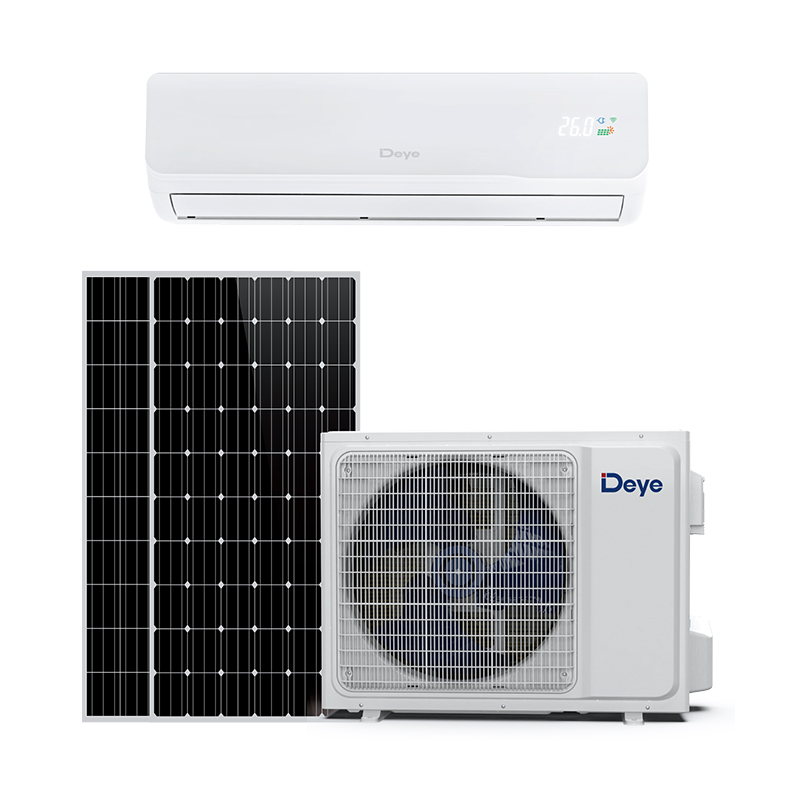
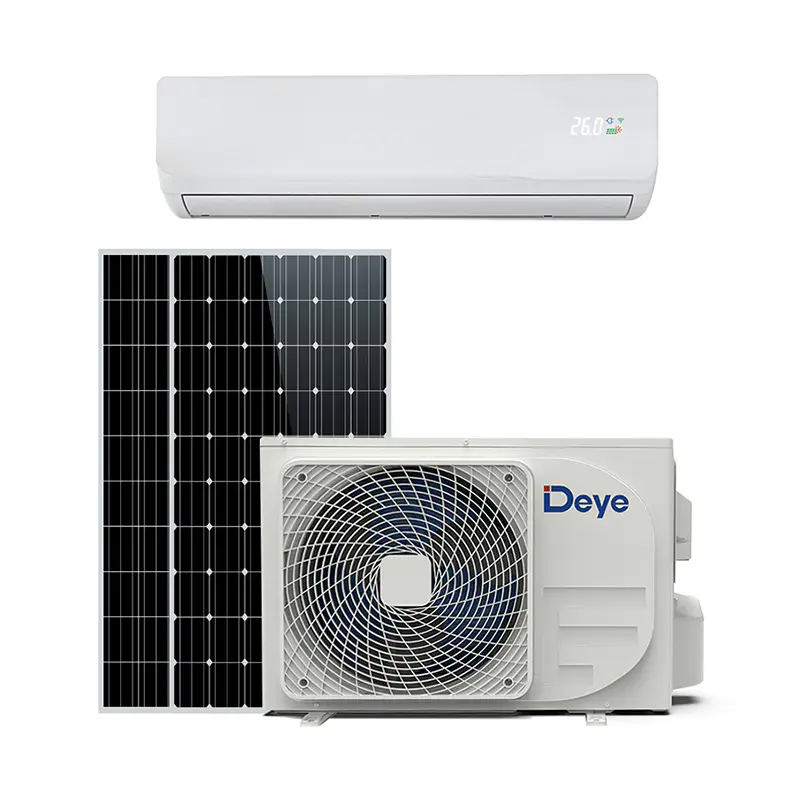
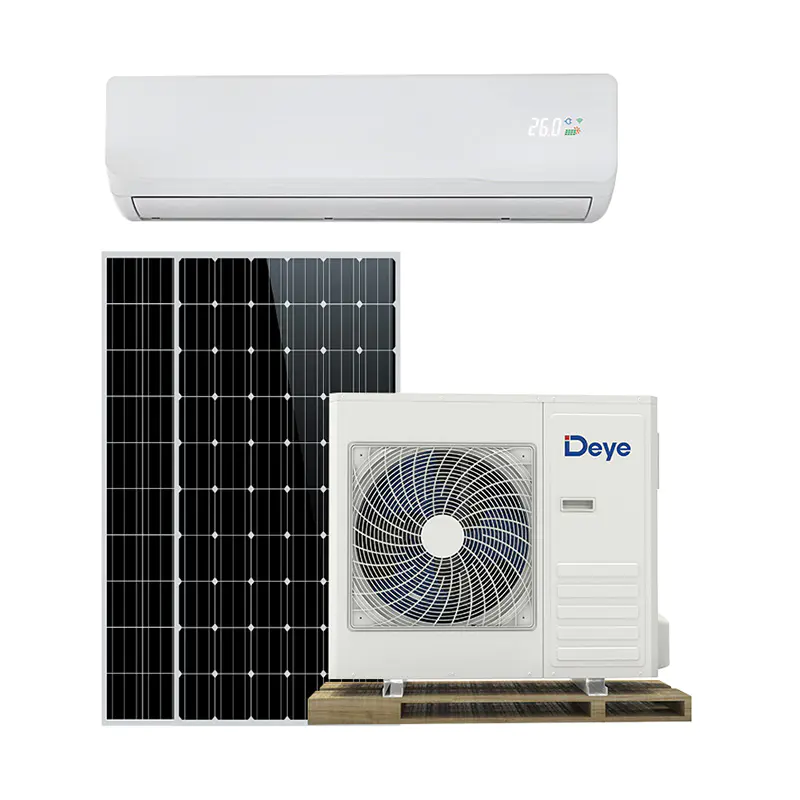
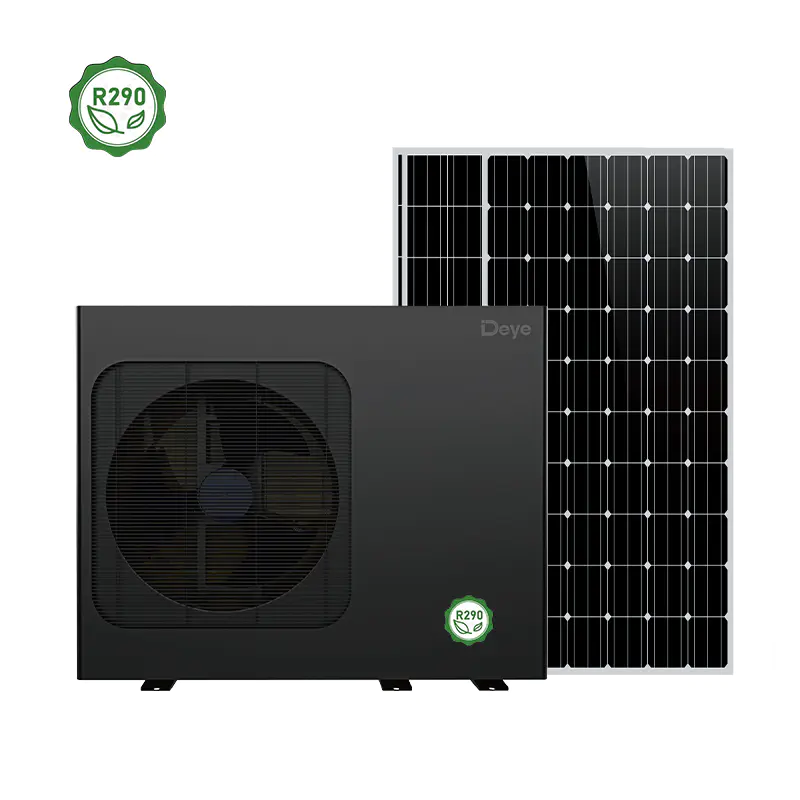
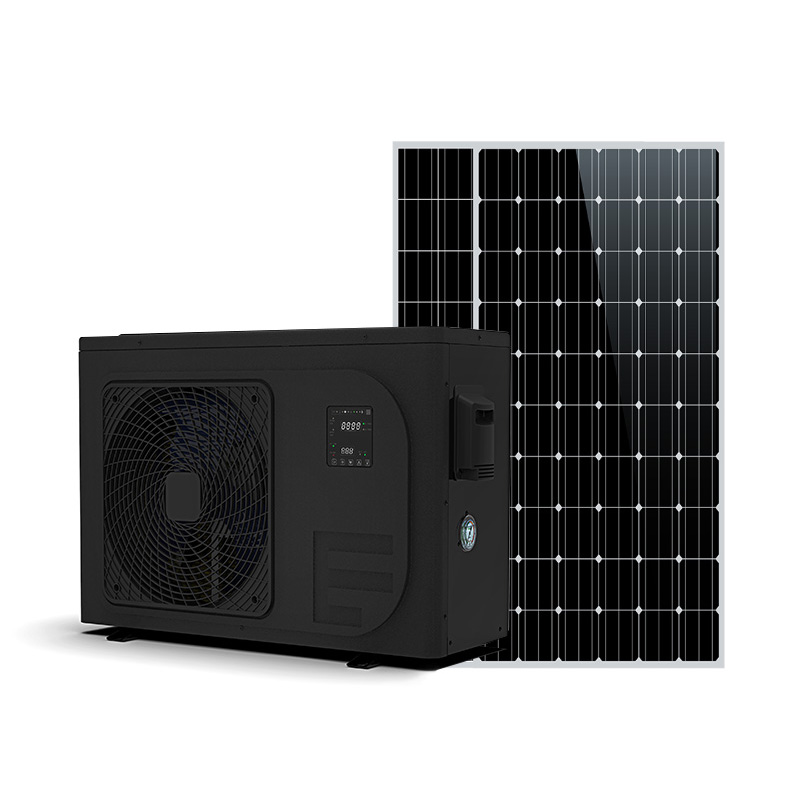
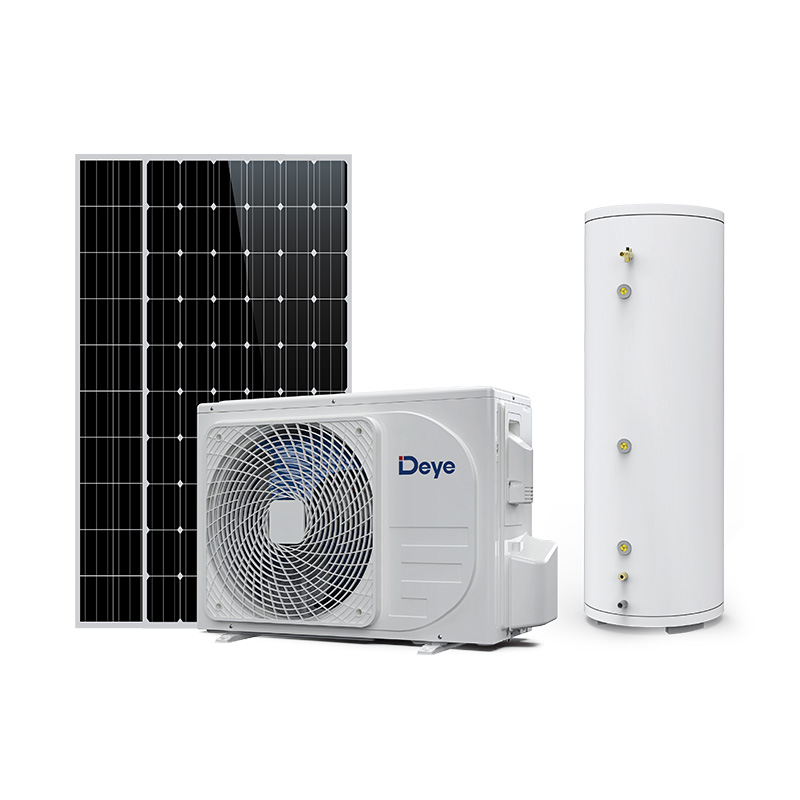
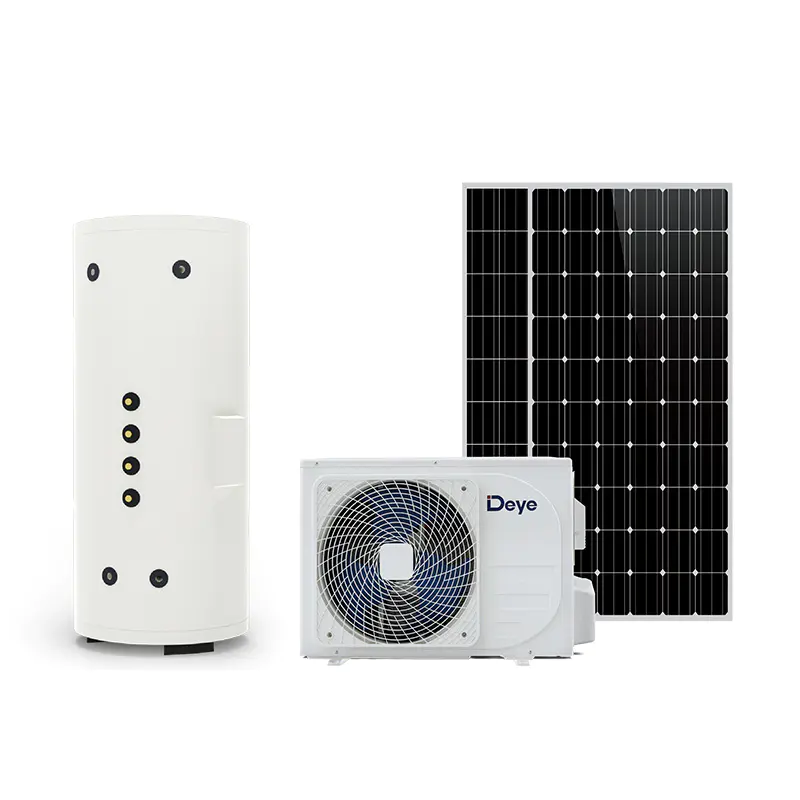 Hybrid AC/DC Solar Air Source Water HeaterSplit solar heat pump using grid AC and panel DC power for domestic hot water, with DC inverter, WiFi control, and wide-temperature operation.View Product →
For a household, hotel, clinic, or small commercial building, the practical question is not simply “does it save energy?” The better question is: under this climate, this hot water draw pattern, this roof area, and this electricity tariff, will the system recover its extra cost without creating reliability problems? The sections below use concrete operating conditions and selection checks to answer that question.
Heat Pump, Not Solar Thermal
A solar thermal water heater needs direct sunlight on collectors and usually needs a well-insulated storage tank, pump station, and freeze protection. On cloudy days, its output falls sharply. An air source heat pump can run day or night because it uses air temperature, not direct solar radiation, as its heat source. Solar PV can still charge the system during the day, but the heat pump itself is not limited to direct sunshine. This is why hybrid solar heat pump water heaters are often chosen where hot water demand continues after sunset.
There is also a space argument. PV panels can be placed on a roof, carport, or ground mount, and the heat pump can sit near the tank or on a service balcony. Solar thermal collectors are larger per unit of hot water output and often need a dedicated roof area with good orientation. For projects with limited roof space or mixed shading, PV plus a heat pump is usually easier to lay out.
Where the Solar Electricity Goes
In a DC-coupled design, PV power can feed the heat pump compressor through a controller or inverter stage. In a hybrid AC/DC design, the system can accept AC from the grid and DC from PV. The controller decides when solar input is strong enough to run the compressor, when to blend AC and DC, and when to fall back to AC only. This logic is important because hot water demand rarely matches solar generation exactly. A good controller prioritizes available solar, protects the compressor from unstable input, and keeps the tank within a usable temperature band.
The tank is not a passive accessory. It is a thermal battery. A larger tank can store more hot water and let the heat pump run when solar is available. A tank that is too small causes frequent cycling and can erase savings. A tank that is too large increases standing losses and takes up more space. The right balance depends on daily draw, recovery time, and whether the building needs hot water at a fixed time each morning.
How the Heating Cycle Works Step by Step
The heat pump does not burn gas and does not rely on a heating element as its normal heat source. It moves heat through a sealed refrigerant circuit. The steps are straightforward once you separate the refrigerant loop from the water loop.
- The fan draws outdoor air across the evaporator coil. The refrigerant inside the coil is colder than the air, so heat moves from the air into the refrigerant.
- The refrigerant evaporates and becomes a low-pressure gas. It carries the absorbed heat toward the compressor.
- The compressor raises the pressure and temperature of the gas. This is the main electrical load in normal operation.
- The hot gas enters the condenser, which is wrapped around or immersed in the water tank, or connected to a plate heat exchanger in a split system.
- Heat moves from the hot refrigerant into the water. The refrigerant condenses and gives up its heat.
- The expansion valve reduces refrigerant pressure and temperature, and the cycle repeats.
- The controller monitors tank temperature, ambient temperature, defrost conditions, and electrical input. It stops the compressor when the tank reaches setpoint and restarts it when hot water is drawn.
What COP Means in Hot Water
COP, or coefficient of performance, is the ratio of heat delivered to electricity consumed at a given moment. A COP of 3.0 means the unit delivers about 3 kWh of heat for 1 kWh of electricity. That number is not fixed. It falls as the air gets colder and as the tank water gets hotter. A unit that reaches COP 3.5 at 20°C ambient and 45°C water may drop to COP 2.0 at -5°C ambient and 55°C water. This is why a single COP figure on a brochure should not be used as the only selection basis.
For hot water, the useful measure is the seasonal performance under the local climate and draw profile. A mild coastal climate with warm daytime temperatures and a large tank can perform very differently from a cold inland climate with morning draws and a small tank. The control strategy also matters. Aggressive Legionella cycles, frequent tank reheating, and unnecessary high setpoints all reduce seasonal efficiency.
Hybrid AC/DC Switching Logic
A hybrid AC/DC solar heat pump water heater is designed to use solar DC power when it is available and grid AC power when it is not. The controller may follow a priority order: solar DC first, then AC assist, then AC only. Some controllers also limit compressor speed when solar input fluctuates. This avoids hard stops and starts that reduce compressor life.
The practical benefit is continuity. A cloudy morning does not mean no hot water. The system can use AC to maintain the tank while waiting for better solar conditions. The practical risk is poor commissioning. If the controller thresholds are set without checking the PV array voltage, cable length, and local grid stability, the unit may switch too often or fail to use available solar. The commissioning checklist should include PV open-circuit voltage, operating voltage under load, AC voltage range, and a full heating cycle from cold tank to setpoint.
Efficiency and Real-World Performance
Efficiency is best understood as a range, not a single number. The chart below shows an indicative COP range for an air source heat pump water heater at different ambient temperatures while heating water to a moderate setpoint. Actual values vary by model, refrigerant, compressor modulation, tank insulation, and defrost control.
These values are not a guarantee. They illustrate why climate matters. A system installed in a warm region may spend most of the year above COP 3.0, while a cold-climate installation may need a low-temperature package, a larger evaporator, and a more conservative tank setpoint. The gap between laboratory and site performance usually comes from four factors: defrost cycles, tank standing losses, hot water draw patterns, and incorrect charge or airflow.
What Changes Real Efficiency
- Ambient temperature: colder air contains less usable heat, and defrost may be required.
- Water setpoint: every extra degree of tank temperature raises compressor lift and reduces COP.
- Draw profile: many small draws can cause more reheating cycles than one large draw.
- Tank insulation: poor insulation creates standby loss that the heat pump must replace.
- Airflow: a restricted evaporator or dirty coil lowers heat absorption and can cause high discharge pressure.
- Pipe insulation: uninsulated hot water lines waste energy between the tank and the point of use.
- Defrost control: a poorly tuned defrost cycle can run too often in cold, humid weather.
A useful commissioning target is to record the actual heating time from a known tank temperature to setpoint, the ambient temperature, and the electricity consumed. That baseline lets a technician detect performance drift later. Without a baseline, a slow decline in hot water recovery may be blamed on the heat pump when the real issue is a scaled heat exchanger, a failed element in backup mode, or a circulation pump set too low.
Solar Air Source vs Electric, Gas, and Solar Thermal
The comparison below is written for hot water service, not space heating. It focuses on recovery, installation constraints, and operating characteristics that affect the decision.
| System | Primary heat source | Recovery and availability | Site requirements | Best fit |
|---|---|---|---|---|
| Electric resistance tank | Direct electrical heating | Fast recovery but high electricity use | Simple electrical and plumbing connection | Low hot water demand or backup-only use |
| Gas tank or gas continuous | Combustion | High recovery, continuous supply possible | Gas supply, flue, ventilation, safety clearances | Sites with low gas cost and no solar access |
| Solar thermal with tank | Direct solar radiation | Strong in sunshine, weak at night and in cloudy periods | Collector area, orientation, freeze protection, pump station | Sunny climates with daytime hot water demand |
| Air source heat pump water heater | Air heat moved by refrigerant cycle | Works day and night; output falls in cold ambient | Airflow clearance, condensate drainage, electrical supply | Year-round hot water with moderate climate |
| Solar air source heat pump water heater | Air heat plus PV-assisted electricity | Good continuity with hybrid AC/DC control | Heat pump clearance plus PV mounting and cable route | Sites with solar access and a desire to cut grid demand |
The solar air source heat pump is not automatically better than solar thermal. Solar thermal can be very efficient when direct sunlight is strong and hot water is used during the day. Its weakness is the mismatch between sunshine and evening demand, plus the maintenance needs of pumps, glycol, and collectors. The heat pump’s weakness is compressor complexity and colder-weather performance. A hybrid PV-assisted heat pump sits between the two: it uses a proven heat pump cycle and reduces grid electricity through solar DC input.
For a building with a steady daily hot water load, such as a small hotel, staff kitchen, clinic, or sports facility, the decision usually comes down to load profile and service access. If the plant room has good airflow and the roof has space for PV, a solar heat pump water heater can be a practical fit. If the site has no airflow clearance or the tank would be far from the point of use, a different configuration may be better.
Hybrid AC/DC Design and Solar Sizing
Hybrid AC/DC does not mean the unit can run without a grid or generator in every case. It means the unit can accept both AC and DC inputs according to its control design. Some systems are designed for grid-assisted operation; others support off-grid or weak-grid operation with specific controller settings. The datasheet must be read closely. A common mistake is to assume that any “solar” heat pump can run directly from a PV array without a battery, inverter, or grid reference. That depends on the controller topology.
PV sizing should start with the daily hot water energy demand, not the compressor nameplate. A 200 L daily draw with a 40 K temperature rise requires roughly 9.3 kWh of thermal energy before losses. At a seasonal COP of 2.8, that is about 3.3 kWh of electricity per day. If the solar fraction target is 60%, the PV array and controller must deliver roughly 2 kWh per day under site conditions, accounting for conversion losses. This is a simplified example, but it shows why array sizing should follow the load calculation rather than a rule of thumb.
What to Check in the Solar Circuit
- PV array open-circuit voltage at the lowest expected temperature must stay within controller limits.
- Operating voltage under load must remain above the controller’s minimum startup voltage.
- Cable voltage drop should be calculated for the actual DC current and cable length.
- DC isolators, fuses, and surge protection must match the PV array and local code.
- The controller should have a clear priority strategy for solar, AC assist, and AC-only operation.
- The system should record or display solar input, compressor power, and tank temperature for commissioning.
Do not size the PV array only for a clear summer noon. A hot water tank needs energy in the morning and evening as well. If the tank is large enough, the heat pump can store solar heat during the day and use it later. If the tank is small, the system may export or waste solar potential while still buying AC power at night. The tank-to-array relationship is therefore a design decision, not a product accessory choice.
Grid, Generator, and Backup Logic
Many projects keep an AC connection for reliability. The controller may use AC when solar is insufficient or when the tank needs a fast recovery. This is useful in clinics, guesthouses, and food service where hot water cannot be interrupted. The trade-off is that poor priority settings can erase solar savings. A system that switches to AC as soon as the tank drops two degrees will use more grid power than a system that waits for a wider temperature band and a longer solar window.
The backup element also needs scrutiny. A resistive backup can be useful for Legionella cycles or emergency recovery, but if it runs daily, the heat pump’s advantage shrinks. The control setpoint, dead band, and backup lockout should be configured during commissioning. A clear handover note should explain what the owner can adjust and what should remain locked.
Sizing and Selection for Real Hot Water Loads
Sizing is where many projects lose their expected savings. A unit that is too small runs continuously and may rely on the backup element. A unit that is too large cycles on and off, costs more upfront, and may not dehumidify or control as intended. The correct size depends on daily volume, peak hour demand, inlet water temperature, target storage temperature, and recovery window.
| Input | Why it matters | Example check |
|---|---|---|
| Daily hot water volume | Sets the thermal energy demand and tank size. | Count showers, kitchen use, laundry, and cleaning loads separately. |
| Peak hour demand | Determines whether storage or recovery must carry the load. | A 20-room guesthouse may need most hot water between 07:00 and 09:00. |
| Inlet water temperature | Cold groundwater increases the temperature lift and reduces COP. | A 10°C inlet needs more energy than a 20°C inlet for the same setpoint. |
| Ambient air temperature | Controls evaporator performance and defrost frequency. | Check the lowest weekly average, not only the coldest night. |
| Available airflow | Restricted air causes lower capacity and higher power draw. | Keep the installation clear of walls, shrubs, and recirculating exhaust air. |
| Solar access and cable route | Determines practical PV yield and installation cost. | Check shading between 09:00 and 15:00 across seasons. |
| Service access | Affects maintenance time and long-term reliability. | Leave room for coil cleaning, filter access, and controller diagnostics. |
A Practical Sizing Sequence
- Calculate daily thermal energy: litres per day × 4.186 × temperature rise ÷ 3600.
- Estimate the heat pump contribution using a conservative seasonal COP, not the best laboratory COP.
- Add standing losses and pipe losses, especially if the tank is outdoors or the pipe run is long.
- Check recovery time against the morning peak. If recovery is too slow, increase tank volume or capacity.
- Size the PV array and controller for the target solar fraction after conversion and cable losses.
- Confirm electrical supply, breaker size, cable gauge, and surge protection with a qualified electrician.
- Set the control strategy for normal operation, Legionella cycle, backup element lockout, and holiday mode.
A 300 L tank with a small compressor may store enough water for a family but recover too slowly for a guesthouse. A 500 L tank with a larger compressor may recover quickly but lose more heat if insulation is poor. The numbers must be read together. The manufacturer’s performance table should state the test conditions, and the proposal should show the assumed ambient temperature, water setpoint, and daily draw.
Installation and Commissioning Details That Affect Payback
Most heat pump water heater problems are installation problems, not product failures. Airflow, condensate, water quality, electrical protection, and control settings all influence reliability. A clean installation also protects the owner’s savings because a restricted evaporator or a short-cycling compressor can turn a good unit into an expensive one.
Site Checks Before Mounting
- Confirm structural support for the tank and heat pump, including seismic or wind restraint where required.
- Keep the evaporator clear of enclosed spaces that recirculate cold exhaust air.
- Provide a drain route for condensate with freeze protection in cold climates.
- Keep the tank close to the point of use to reduce hot water pipe losses.
- Check that the electrical supply matches the unit’s rated voltage, current, and phase.
- Route PV DC cables away from sharp edges and water paths, with correct isolation and labelling.
- Leave service space for coil cleaning, controller access, and temperature sensor replacement.
Commissioning Checklist
- Record ambient temperature, inlet water temperature, and starting tank temperature.
- Run a full heating cycle and record time to setpoint and electricity consumed.
- Check compressor current against the nameplate and confirm no phase imbalance on three-phase units.
- Verify defrost operation if the ambient condition requires it.
- Confirm the solar controller starts, blends, and stops according to the design sequence.
- Set the dead band and backup element lockout to avoid unnecessary AC use.
- Explain the display codes and the owner’s maintenance checks in plain language.
Commissioning records are valuable later. If the owner reports “less hot water than before,” the technician can compare the original heating time and power draw against current values. A 15% increase in heating time may indicate a scaled heat exchanger, a dirty evaporator, a failing sensor, or a change in draw pattern. Without baseline data, diagnosis becomes guesswork.
Operating Cost and Payback Example
Payback depends on local tariffs, solar yield, equipment cost, and how the system is controlled. The example below uses a 200 L daily draw, a 40 K temperature rise, and a moderate climate. It is not a quotation. It shows how to structure the calculation so a buyer can replace the assumptions with local numbers.
| Item | Electric resistance | Heat pump at COP 2.8 | Hybrid solar heat pump, 60% solar fraction |
|---|---|---|---|
| Useful heat demand | 9.3 kWh/day | 9.3 kWh/day | 9.3 kWh/day |
| Electricity input | 9.3 kWh/day | 3.3 kWh/day | 3.3 kWh/day before solar |
| Grid electricity after solar | 9.3 kWh/day | 3.3 kWh/day | about 1.3 kWh/day |
| Annual grid use | 3,395 kWh | 1,205 kWh | about 475 kWh |
| Annual cost at 0.20 per kWh | 679 | 241 | about 95 |
In this example, the heat pump alone reduces annual electricity use by about 2,190 kWh. The hybrid solar input reduces it further, but the exact solar fraction depends on array size, location, and controller priority. The owner should compare the incremental cost of the heat pump and PV against the annual savings, not against the total energy bill. A system that saves 500 per year with a 2,000 premium has a simple payback of about four years before maintenance and financing costs. A system that saves 200 per year with the same premium takes ten years.
Use a conservative COP for payback. If the sales proposal uses COP 3.8 and the site operates at COP 2.4 for much of the year, the financial case weakens. Also include standing losses, backup element use, and maintenance. A realistic calculation is better than an optimistic one because it protects the owner from disappointment and protects the installer from service disputes.
What Moves Payback Most
Electricity price
Higher grid tariffs shorten payback, especially where hot water demand is steady across the year.
Solar fraction
A well-sized PV array and a tank that can store daytime heat reduce grid input more than a small array with a small tank.
Hot water demand
A predictable daily load uses the equipment efficiently. Oversized systems with low demand rarely recover their premium.
Installation quality
Clear airflow, insulated pipes, and correct control settings protect the calculated savings in daily operation.
Maintenance and Troubleshooting
An air source heat pump water heater needs less routine work than a combustion boiler, but it is not maintenance-free. The evaporator coil, condensate drain, water-side heat exchanger, anode rod if fitted, and controller settings should be checked on a schedule. In coastal or dusty areas, coil cleaning may be needed more often.
| Symptom | Likely cause | First check |
|---|---|---|
| Longer heating time | Dirty coil, low refrigerant charge, scaled heat exchanger, or cold ambient | Compare current heating time with commissioning baseline; inspect airflow and water quality. |
| Frequent defrost | Cold humid air, faulty sensor, or incorrect defrost board setting | Check sensor readings and defrost termination; confirm the unit is rated for the climate. |
| Backup element runs often | Control dead band too narrow, undersized heat pump, or high demand | Review tank setpoint, recovery window, and backup lockout settings. |
| Solar input low | Shading, cable loss, controller limit, or PV voltage below startup range | Record PV voltage and current at midday; check isolation and cable connections. |
| Water not hot enough | Sensor error, mixing valve setting, high draw, or compressor fault | Check tank temperature at the sensor and at the outlet; verify mixing valve adjustment. |
Preventive Maintenance Schedule
- Monthly: check for alarms, unusual noise, and condensate drainage.
- Quarterly: clean or inspect the evaporator coil and confirm airflow clearance.
- Every six to twelve months: check electrical connections, controller settings, and hot water pipe insulation.
- Annually: inspect the water-side heat exchanger, safety valves, and anode rod where applicable.
- Before each heating season: verify defrost operation and low-temperature settings.
Do not ignore small leaks. A slow condensate or water leak can damage insulation, corrode electrical parts, or create a slip hazard. In cold climates, a blocked condensate drain can freeze and back up into the unit. The service plan should include a freeze-protection check before winter.
Is a Solar Air Source Heat Pump Water Heater Worth It?
It is worth it when three conditions line up: the site has a steady hot water demand, the climate is within the unit’s efficient operating range, and the installation allows good airflow and solar access. It is less attractive when hot water demand is very low, the tank would be far from the point of use, or the project cannot support proper commissioning and service.
Strong fit
Daily hot water use is predictable, electricity is expensive, the roof has solar access, and there is space for a correctly sized tank and heat pump.
Conditional fit
The climate is cold but the unit has a low-temperature package, or the site has limited roof area but can use a smaller PV array with AC backup.
Poor fit
Hot water demand is occasional, the plant room restricts airflow, or the owner expects zero maintenance and no control adjustments.
A simple decision rule is to compare the annual grid electricity saved against the installed premium, then apply a safety margin. If the payback is longer than the owner’s expected holding period, the system may still be justified by comfort, capacity, or environmental goals, but it should not be sold on savings alone. If the payback is short and the site conditions are good, the technology is a practical way to cut hot water energy use without giving up night-time availability.
For projects that need a complete solar HVAC package, the hot water unit should be selected alongside the building’s cooling, heating, and pumping loads, not in isolation. A single well-designed solar energy strategy usually performs better than several unrelated products added at the end of the project. Share the daily draw, climate data, roof layout, and electrical supply through the contact page so the selection can be checked against real operating conditions.
Frequently Asked Questions
Does a solar air source heat pump water heater work at night?
Yes, an air source heat pump can heat water at night because it uses air temperature rather than direct sunlight. The solar PV portion produces no power at night, so the unit uses grid AC or stored thermal energy in the tank. A well-insulated tank and a sensible setpoint determine how much hot water is available in the evening.
How much roof space do I need for the solar panels?
Roof area depends on the target solar fraction, panel wattage, and local yield. A small system may use two to four panels for partial solar assist, while a larger solar fraction needs more. The PV array should be sized after the daily hot water energy demand is known. Shading, tilt, and cable length also affect the practical result.
Can it replace an existing electric water heater?
Often it can, but the electrical supply, tank location, pipe route, and structural support must be checked. A heat pump water heater may need more airflow clearance than a simple electric tank. The existing breaker and cable may not match the new unit. A site survey should confirm the available space and electrical capacity before removal.
What maintenance does the tank need?
The tank should be checked for leaks, insulation damage, and safety valve operation. If an anode rod is fitted, it should be inspected periodically and replaced when consumed. Water quality affects scale and corrosion, so hard water areas may need more frequent inspection of the heat exchanger and heating elements.
How do I know if the solar input is actually working?
Check the controller display or monitoring data at midday. PV voltage should be within the operating range, and compressor power should reflect solar assist when conditions allow. A clamp meter can confirm DC current on the PV circuit. If the unit runs on AC all day despite good sunshine, the controller thresholds, cable loss, or array voltage may be wrong.
Is a hybrid unit useful where the grid is unstable?
It can be, but the product must be designed for that operating mode. Some hybrid controllers tolerate weak grids or generator input; others require a stable AC reference. The project should confirm the acceptable voltage and frequency range, surge protection, and backup strategy. Do not assume that a grid-tied hybrid unit will operate without a grid unless the datasheet explicitly states it.
What is the right water temperature setpoint?
A common balance is 55°C to 60°C for storage, with a mixing valve to reduce scalding risk at the outlet. Higher setpoints increase heat loss and reduce COP. Lower setpoints save energy but require careful Legionella management. The correct setting depends on local regulations, tank volume, and draw pattern.
How long should the system last?
The compressor and refrigerant circuit can last many years if the unit is correctly installed and maintained. Tank life depends on water quality, anode protection, and pressure conditions. Coastal salt air, dust, and poor drainage can shorten equipment life. A service schedule and genuine spare parts support are more useful than a single expected-life figure.
