

 Español
 русский
 Français
 Português
 Deutsch
 عربى
عربى italiano
-1.jpg)

Content
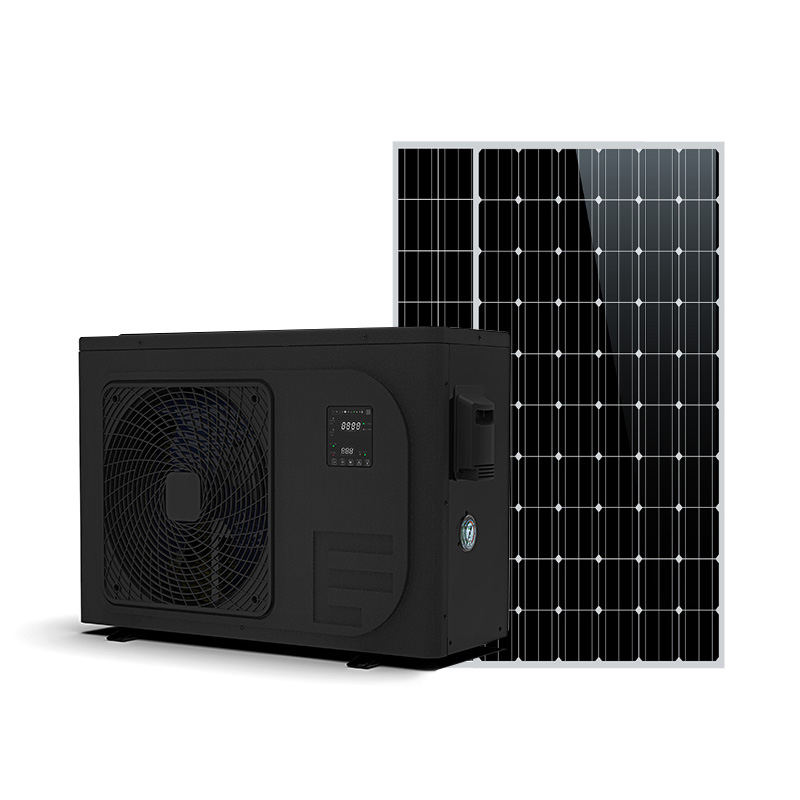
Solar swimming pool heat pumps are widely used in commercial and residential pools due to their energy efficiency and environmentally friendly operation. Despite their advantages, these systems can experience a variety of faults during long-term operation, affecting water temperature control and overall pool comfort. Understanding the common faults helps with timely maintenance, prolongs equipment life, and ensures reliable operation.
Compressor Faults
The compressor is the core component of a heat pump, and its performance directly affects heating efficiency. Common issues include failure to start, abnormal operation, or excessive noise. Startup failure may be caused by power supply issues, a faulty control board, or internal overheating protection activation. Abnormal operation or loud noise is often related to refrigerant leaks, bearing wear, or internal mechanical defects. Compressor faults can significantly reduce heating efficiency or even stop operation entirely, requiring professional inspection and repair.
Refrigerant Leaks
Refrigerant plays a key role in heat transfer within the heat pump system. Leaks lead to decreased heating capacity, slower water temperature rise, and potential compressor damage. Leaks typically occur at pipe joints, welds, or inside the heat exchanger. Operating with insufficient refrigerant increases compressor load and accelerates component wear. Regular inspection of piping and pressure gauges can help detect leaks early and prevent major damage.
Heat Exchanger Scaling or Blockage
The heat exchanger facilitates heat transfer between pool water and refrigerant. Minerals in pool water, such as calcium and magnesium, can accumulate inside the heat exchanger, forming scale. Scaling reduces heat transfer efficiency, slows water heating, and may trigger overheat protection. Partial blockages in the exchanger due to poor water flow can increase pump load or trigger system alarms. Routine cleaning and controlling water hardness are essential for maintaining efficient heat pump performance.
Pump and Circulation System Issues
Heat pump operation relies on a stable flow from the pool circulation system. Pump failure, pipe blockage, or closed valves can result in insufficient water flow, activating flow protection switches and preventing the heat pump from starting. Circulation issues can also lead to localized overheating in the heat exchanger, accelerating wear. Checking pump operation, clearing debris from pipes, and adjusting valve positions are crucial maintenance tasks.
Electrical Control System Problems
The electrical control system includes the control board, sensors, relays, and power wiring. Electrical faults can cause the heat pump to fail to start, display panel errors, or automatically shut down during heating. Sensor malfunctions may cause inaccurate water temperature readings, while faulty relays or control boards can interrupt compressor and fan operation. Regular inspection of wiring and sensor condition helps prevent control system failures.
Fan and Airflow Issues
Air-source heat pumps rely on a fan to draw in air for heat exchange. Fan faults or blocked air passages reduce heating efficiency and may trigger high-pressure or low-pressure protection. Common fan problems include irregular rotation, increased noise, or complete stoppage. Dust, leaves, or ice in the air pathway can also restrict airflow and reduce system performance. Regular cleaning of fans and air passages ensures normal operation.
Freeze Protection and Low-Temperature Operation
In cold environments, heat pumps may frequently trigger freeze protection or fail to deliver sufficient heating. Freeze protection depends on water temperature sensors and automatic circulation control. Sensor failure or insufficient water flow can cause false activation of the protection system. Reduced efficiency in low temperatures may lead to user perception of inadequate heating. Selecting a heat pump suitable for the ambient temperature and regularly inspecting the freeze protection system minimizes such issues.
