

 Español
 русский
 Français
 Português
 Deutsch
 عربى
عربى italiano
-1.jpg)

R32 Refrigerant: A New Benchmark in Environmental Protection and Efficiency
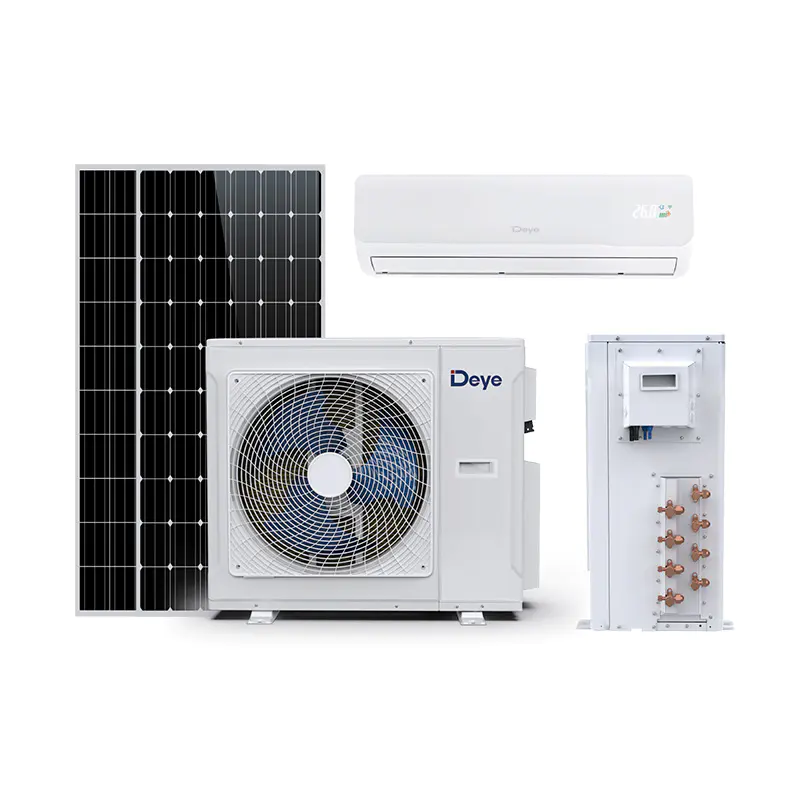
In hybrid ACDC solar window air conditioners, the choice of refrigerant is not arbitrary; it is the result of rigorous professional consideration. Currently, R32 has become the preferred refrigerant due to its superior performance and environmental profile. Compared to the traditional R410A refrigerant, R32's global warming potential (GWP) is significantly lower, at only one-third that of R410A. This means that R32 has a lower impact on global warming in the event of a leak.
In addition to its environmental advantages, R32 also excels in thermodynamic performance. Its higher cooling capacity allows for a smaller charge volume to achieve the same cooling effect. This not only reduces costs but also further mitigates potential environmental risks. For hybrid air conditioners using DC inverter compressors, R32's characteristics make it better suited to variable frequency operation, ensuring high system efficiency under varying loads. However, R32 is a flammable refrigerant, which places higher safety requirements on equipment design, manufacturing, and installation. Explosion-proof electrical design, leak detection systems, and ventilation management are key elements in ensuring safe operation.
R290 Refrigerant: The Ultimate Environmentally Friendly and Energy-Efficient Future
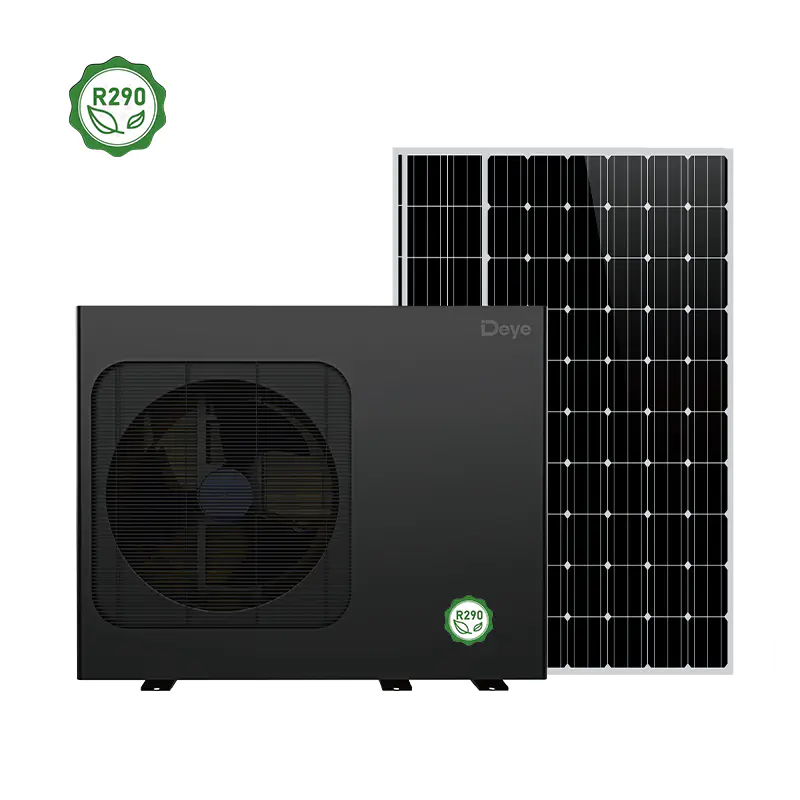
Although R32 has become widely popular, the industry is actively exploring more forward-thinking refrigerant solutions. R290 refrigerant (also known as propane) is considered the "ultimate" environmentally friendly option for hybrid solar air conditioners due to its extremely low GWP (GWP=3) and excellent cooling performance. With a negligible GWP, R290 has one of the lowest environmental impacts among commercial refrigerants currently available.
R290 also boasts exceptionally high cooling efficiency. Its thermodynamic properties enable it to deliver greater cooling capacity under the same operating conditions, further improving the energy efficiency ratio (EER) of air conditioners. This is a significant advantage for hybrid AC/DC air conditioners, which prioritize energy efficiency. However, R290's flammability is significantly higher than that of R32, posing extremely stringent safety challenges for its use.
To safely use R290, manufacturers must employ a range of specialized technologies, including micro-charging technology, to keep the refrigerant charge within a minimal, safe range. Explosion-proof fan motors, sealed electrical components, and an intelligent leak alarm system are essential safety features. These technologies ensure that the R290 air conditioner delivers on its exceptional environmental and energy efficiency advantages while maintaining safety.
Refrigerant Selection and Hybrid System Synergy
Refrigerant selection for hybrid ACDC solar window air conditioners goes beyond simply environmental or performance considerations; it must be coordinated with the overall system operating mode, compressor characteristics, and energy management strategy.
In pure solar (DC) mode, the compressor operates on a DC power source, with its speed and power dynamically adjusted with changes in solar radiation intensity. Choosing a refrigerant with a wide operating range and efficient variable speed characteristics, such as R32 and R290, is crucial. These refrigerants ensure stable compressor operation at varying speeds and maintain high energy efficiency.
When the system operates in hybrid mode, seamless AC/DC switching is required. The refrigerant's stability and wide operating range ensure that the system's cooling capacity and operating status do not fluctuate drastically during power switching. This provides users with a consistent, stable cooling experience, avoiding comfort issues caused by power switching.
Furthermore, the choice of refrigerant directly impacts the design of the system's thermodynamic cycle. High-efficiency refrigerants can reduce the size of the evaporator and condenser, making window air conditioners more compact while maintaining excellent heat exchange performance.
