

 Español
 русский
 Français
 Português
 Deutsch
 عربى
عربى italiano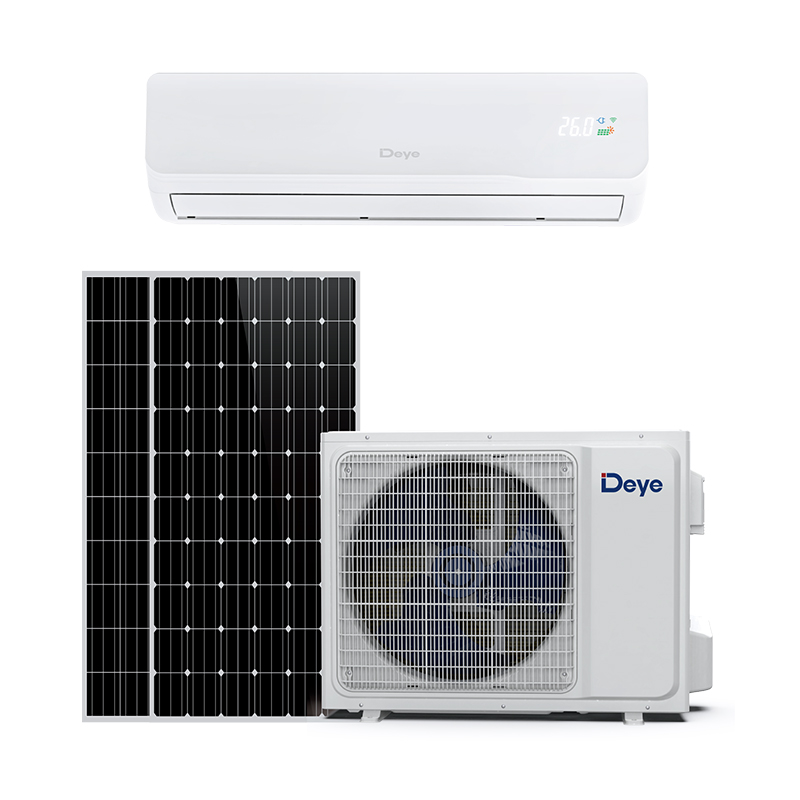
-1.jpg)

Content
- 1 What aircon dc Means in Practice
- 2 How an aircon dc System Regulates Capacity
- 3 Part-Load Performance and Why It Decides Running Cost
- 4 Compressor and Motor Technology Compared
- 5 Core Specifications of Our aircon dc Range
- 6 Power Supply Options and Solar Sizing
- 7 Choosing aircon dc Equipment for Specific Spaces
- 8 Annual Electricity Use by Climate Type
- 9 Refrigerants and Efficiency Standards
- 10 How We Build and Test Each aircon dc Unit
- 11 Custom Configuration Options
- 12 Installation Checklist for aircon dc Systems
- 13 Troubleshooting Guide
- 14 Maintenance Routine
- 15 Frequently Asked Questions about aircon dc
- 15.1 What is an aircon dc unit?
- 15.2 How much electricity does an aircon dc machine save compared with a fixed-speed air conditioner?
- 15.3 Can an aircon dc unit run directly from solar panels?
- 15.4 What size aircon dc unit does a 20 square metre room need?
- 15.5 Is an aircon dc compressor louder or quieter than a fixed-speed compressor?
- 15.6 Does an aircon dc unit work during voltage fluctuations?
- 15.7 How long does an aircon dc air conditioner last?
- 15.8 Which refrigerant is best for a new aircon dc installation?
- 16 Sizing Support for Your Project
Cooling demand keeps rising in apartments, shops, clinics, workshops and remote sites, and the electricity bill that comes with it now shapes how people choose equipment. An aircon dc unit answers that pressure directly. A direct-current motor drive lets the compressor and fans run at the speed a room actually needs, rather than switching fully on and fully off all day. This page explains how aircon dc technology works, which specifications deserve attention, how to size and power a system, and what a well-built unit looks like from the factory floor.
Typical capacity modulation range of a DC inverter compressor, rated cooling output being 100%
Lower seasonal electricity use than a fixed-speed unit of equal capacity under part-load conditions
Typical room temperature stability once the set point is reached
Lowest indoor sound pressure level reached by quiet wall-mounted models at minimum fan speed
What aircon dc Means in Practice
The phrase aircon dc covers two related ideas, and mixing them up leads to wrong purchasing and design decisions. The first idea is the DC inverter air conditioner, the most common meaning. Mains alternating current is converted to direct current inside the outdoor unit, then converted again into a three-phase supply whose frequency the controller can change at will. That supply feeds a brushless direct-current or permanent-magnet synchronous motor, and the motor turns the compressor at any speed between a low idle and a high boost.
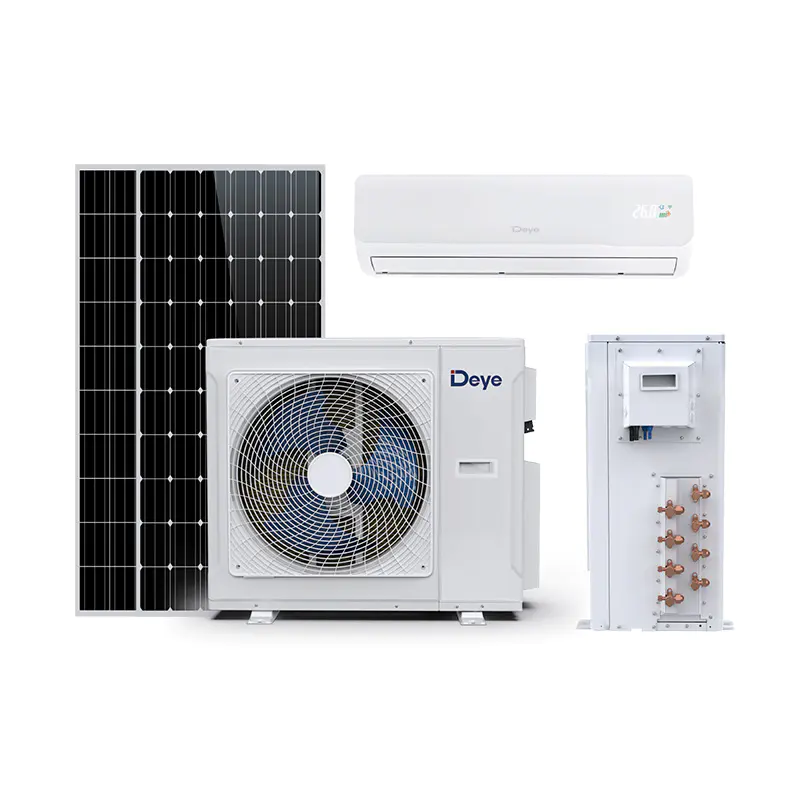
The second idea is an air conditioner that accepts a direct-current input directly, usually from a photovoltaic array, a battery bank or a 48V telecom-style power plant. In these machines the grid-side rectifier is reduced or removed, and the drive electronics take power straight from the DC bus. Many modern units combine both ideas, running on solar power during daylight and switching to the grid when sunshine fades.
DC Inverter Compressor Systems
Grid-connected, single-phase or three-phase supply. Efficiency gains come from variable speed operation, a permanent-magnet rotor with no induction losses, and electronic expansion control. Best suited to homes, offices, shops and clinics with stable mains power.
DC-Powered and Hybrid Systems
Direct connection to a photovoltaic array or battery bus, often with automatic grid backup. Best suited to farms, remote cabins, telecom shelters, mountain lodges and sites where mains power is weak or expensive.
How an aircon dc System Regulates Capacity
A fixed-speed unit has only two states, running at full output or stopped. Every cycle starts with a heavy current surge, and the room temperature swings above and below the set point on every cycle. An aircon dc controller replaces that crude on-off pattern with a continuous feedback loop, which runs through five stages.
Measure
Room, coil, discharge and outdoor temperature sensors report to the main board several times per second. The difference between room temperature and set point defines the cooling demand.
Calculate
The controller converts that difference, together with its rate of change, into a target compressor frequency. A large gap on start-up produces a high frequency, and a small gap near the set point produces a low one.
Drive
The inverter module shapes a three-phase waveform at the target frequency, and the compressor follows within a few seconds. Current rises smoothly instead of spiking.
Match the Refrigerant Flow
The electronic expansion valve opens or closes to hold the correct superheat at the evaporator outlet. Without that matching step, a slow compressor would flood the evaporator and waste capacity.
Protect
Discharge temperature, coil temperature, bus voltage and phase current are monitored continuously. Frequency is limited or the unit stops when any value leaves its safe envelope.
Part-Load Performance and Why It Decides Running Cost
Air conditioners rarely operate at their rated capacity. A unit sized for the hottest afternoon of the year spends most of its life facing a load far smaller than that peak. Seasonal performance is therefore governed by efficiency at 25% to 75% load, not by the single rated point printed on the nameplate. The chart below compares electrical input at different load levels for a fixed-speed machine and an aircon dc machine of equal rated capacity.
Electrical Input versus Cooling Load (percent of rated input)
At 25% load the aircon dc curve sits near 18% of rated input, while the fixed-speed curve sits near 40%, because the fixed-speed machine still pays for start-up surges, off-cycle pressure equalisation and temperature overshoot. At full load the two curves meet. All figures are representative values drawn from typical test results and vary with model and conditions.
Compressor and Motor Technology Compared
Not every compressor sold under the aircon dc label performs the same. Motor type, compressor mechanism and drive strategy each change efficiency, noise and service life. The table sets out the main combinations found in the market.
| Technology | Motor Type | Speed Control | Typical Efficiency at Part Load | Sound and Vibration |
| Fixed-speed rotary | Single-phase induction | None | Low | Noticeable start-up thump |
| AC inverter rotary | Induction motor on variable frequency | Frequency only | Medium | Smooth, but rotor losses remain |
| DC inverter rotary | Permanent-magnet synchronous | Frequency and vector control | High | Low, with torque compensation |
| DC inverter twin-rotary | Permanent-magnet synchronous | Frequency and vector control | High, with very low vibration | Lowest in the rotary family |
| DC inverter scroll | Permanent-magnet synchronous | Frequency and vector control | High at larger capacities | Low, favoured above 5 kW |
Vector control deserves special mention. By tracking rotor position through current feedback, the drive keeps the magnetic field aligned with the rotor at every instant. That alignment lets the compressor start smoothly even against high refrigerant pressure and run quietly at 15 Hz, a speed at which cheaper drives would stall or vibrate.
Core Specifications of Our aircon dc Range
Our factory builds aircon dc units in several formats, each tuned for a different type of space. The table lists the main families and their typical technical data.
| Series | Cooling Capacity | Rated Input Power | Power Supply | Refrigerant | Typical Space |
| Wall-Mounted DC Inverter Split | 2.6 – 7.0 kW | 0.65 – 1.9 kW | 220–240 V, 50/60 Hz | R32 | Bedrooms, offices, small shops |
| Floor-Standing DC Inverter Split | 7.0 – 14.0 kW | 1.9 – 4.2 kW | 220–240 V or 380–415 V three-phase | R32 | Showrooms, halls, restaurants |
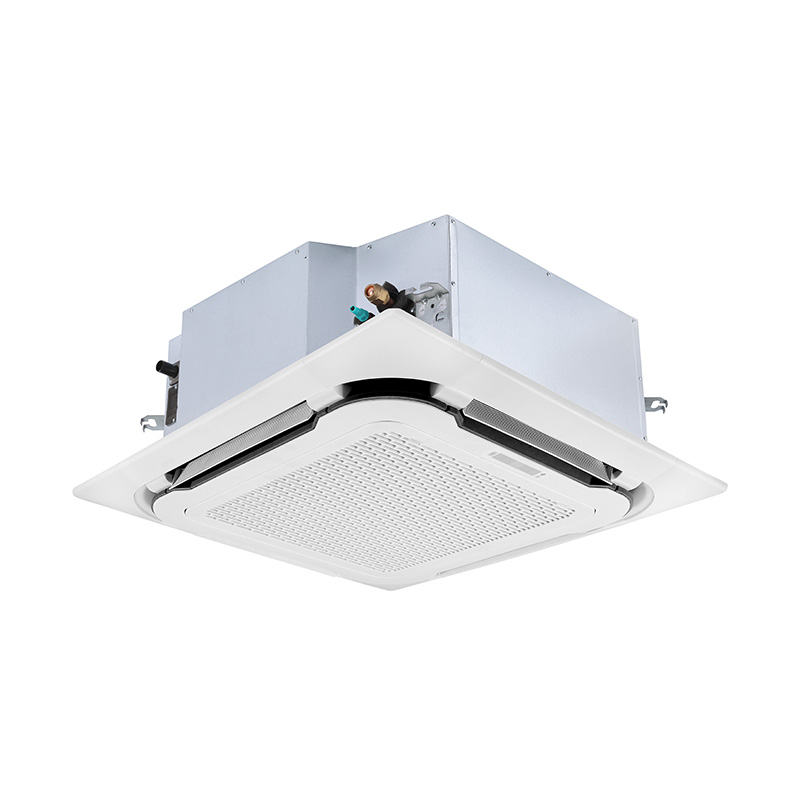
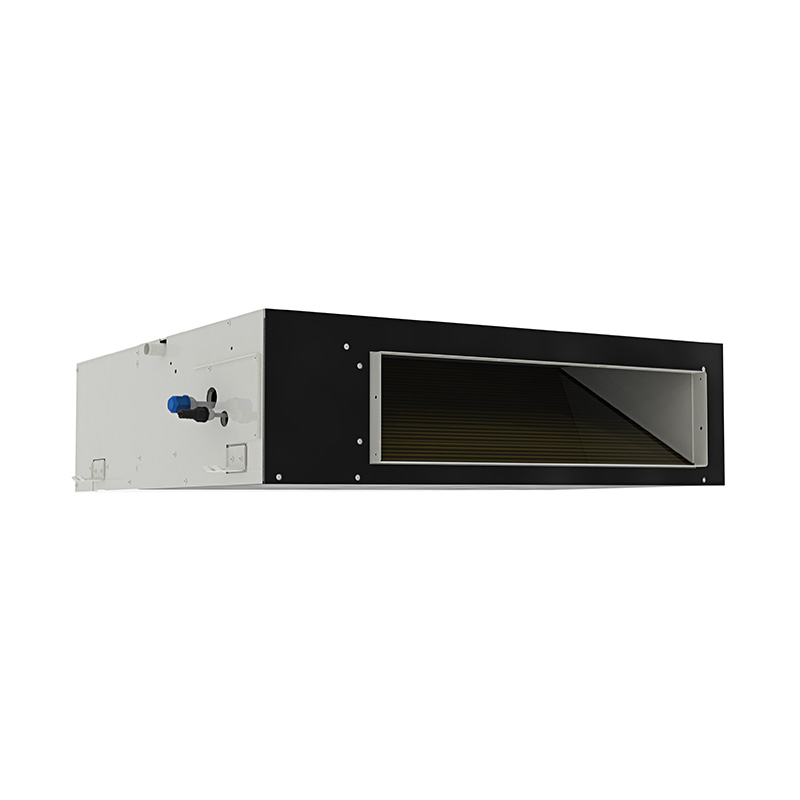
| Ceiling Cassette DC Inverter | 3.5 – 14.0 kW | 0.9 – 4.2 kW | 220–240 V or 380–415 V three-phase | R32 | Open offices, clinics, retail floors |
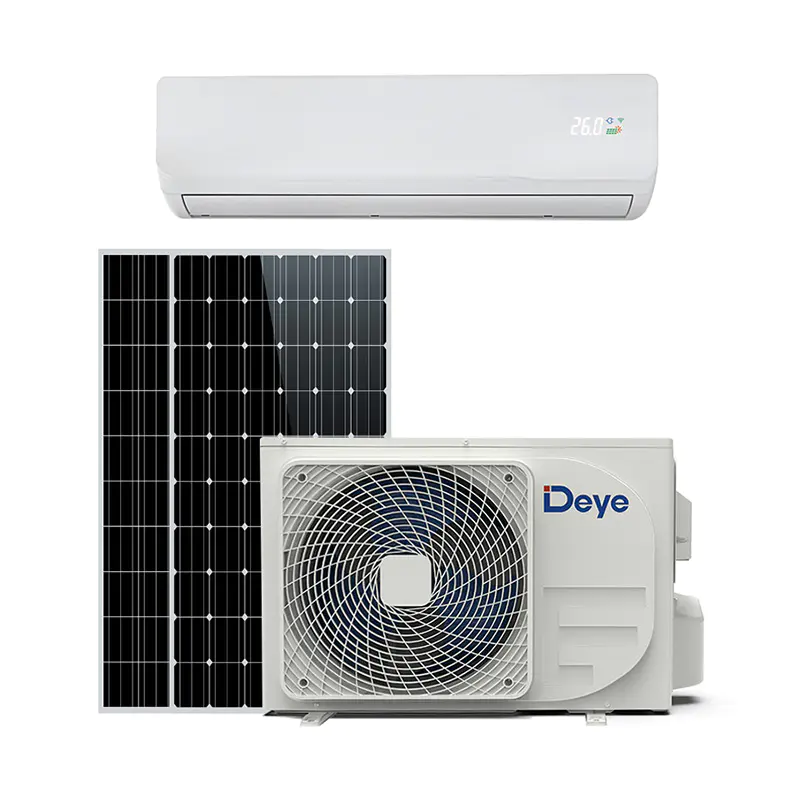
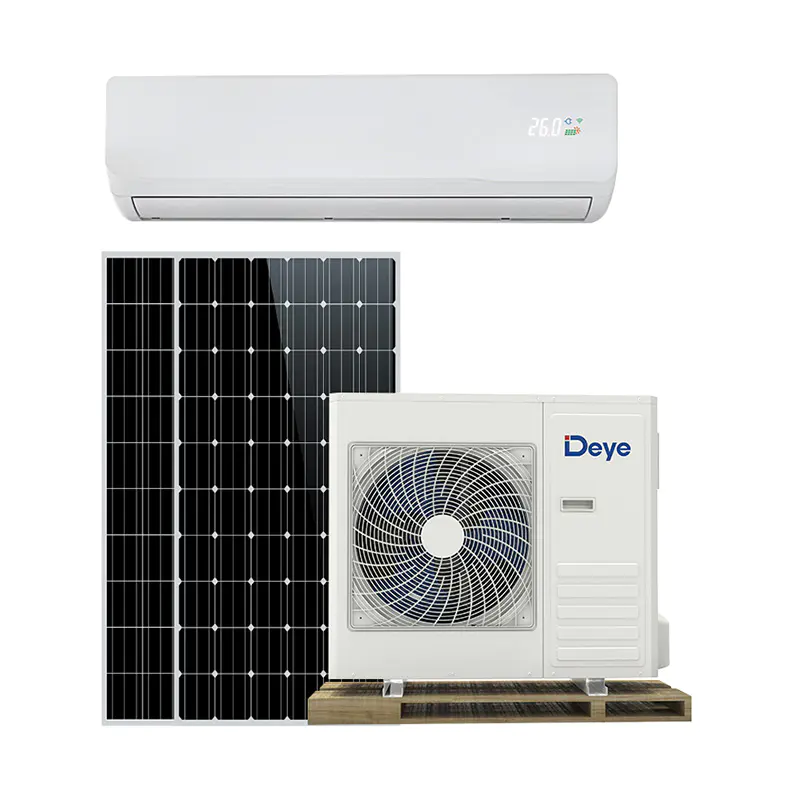
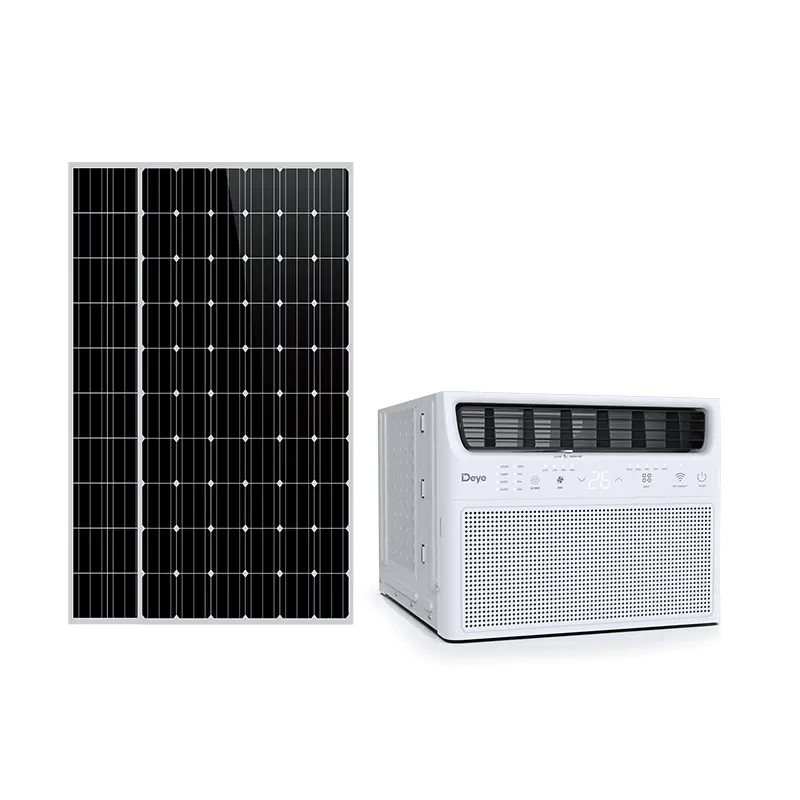
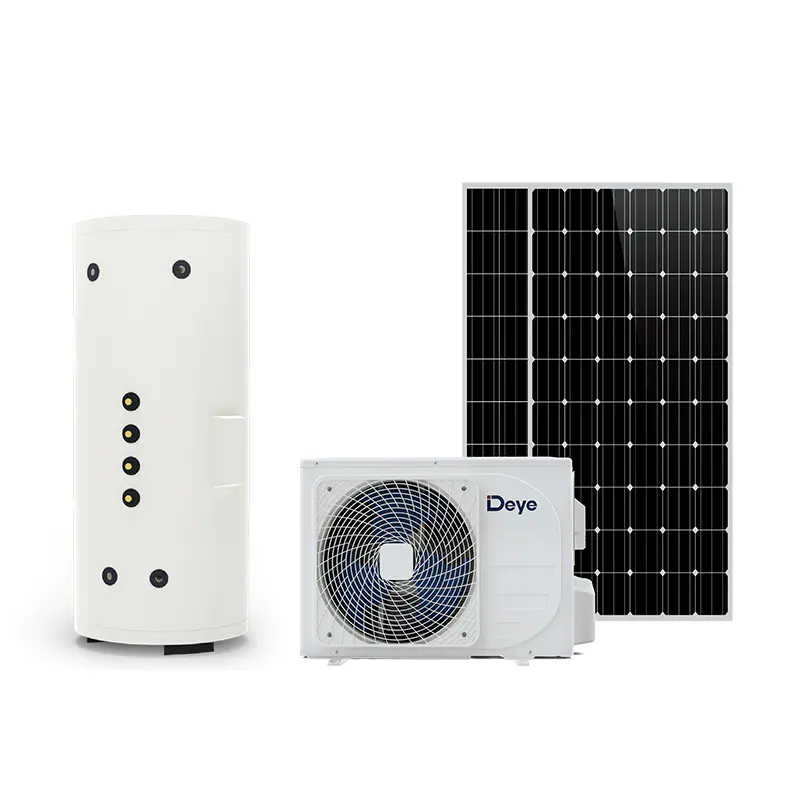
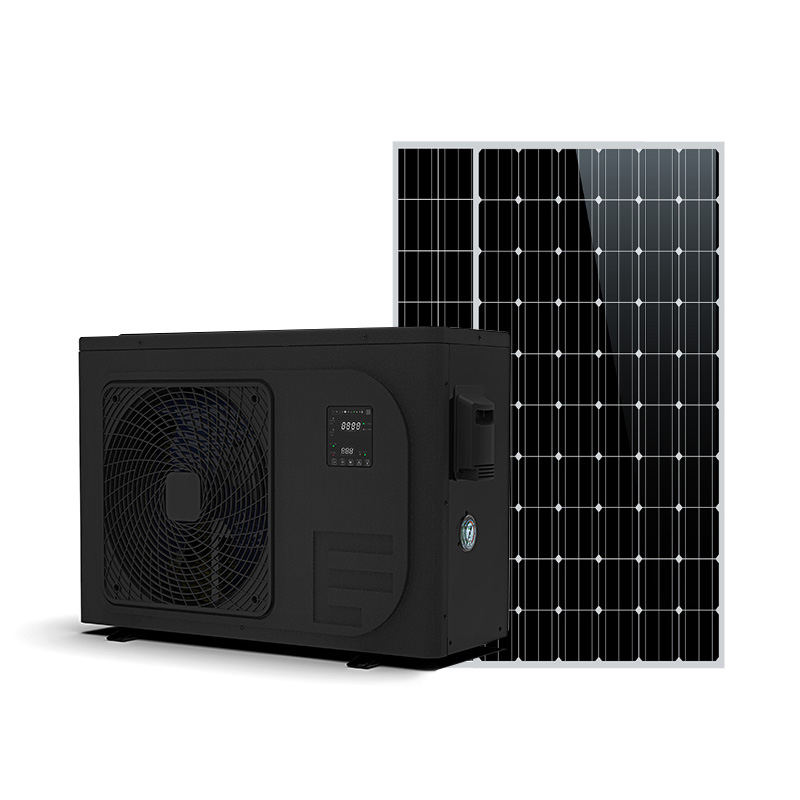
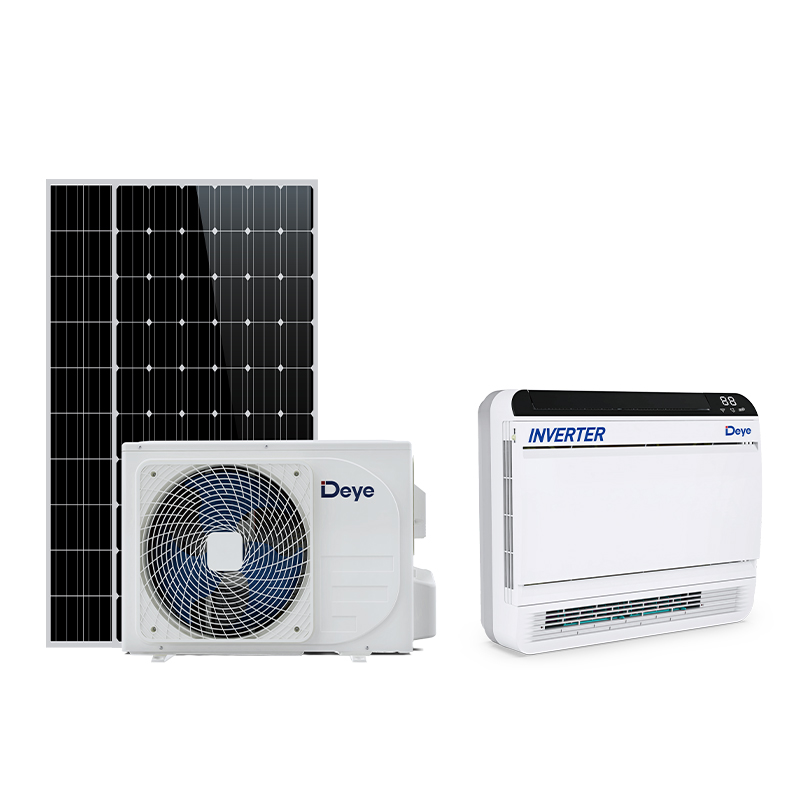
| Solar Hybrid DC Split | 2.6 – 7.0 kW | 0.65 – 1.9 kW | PV input 100–400 V DC plus grid | R32 | Farms, lodges, sites with unreliable mains |
| 48V DC Telecom-Style Split | 3.5 – 5.0 kW | 0.9 – 1.35 kW | 40–58 V DC | R410A or R32 | Equipment shelters, battery rooms, control cabins |
Operating Envelope
Cooling mode from −15 °C to 52 °C outdoor temperature on tropical-rated models. Heating mode from −20 °C on cold-climate models fitted with enhanced vapour injection.
Voltage Tolerance
Stable operation across a wide input window, typically 150 V to 260 V single-phase. Weak rural grids and long cable runs cause far fewer nuisance trips than on fixed-speed machines.
Air Delivery
DC brushless indoor fans with 5 to 9 speed steps plus an automatic mode. Fan power at low speed falls below 15 W on small wall units.
Power Supply Options and Solar Sizing
An aircon dc machine adapts well to varied electrical environments, and the correct choice depends on how reliable the local grid is and how much sunshine the site receives. Three configurations cover almost every project.
Grid Only
The standard arrangement. A wide voltage window and soft start keep the unit running even on unstable supply, and low inrush current allows smaller circuit breakers and thinner cable.
Grid and Solar Hybrid
Photovoltaic panels feed the DC bus first, and the grid fills any shortfall automatically. Daytime cooling, when demand and sunshine coincide, runs largely free of grid energy.
Solar and Battery
A battery bank extends operation into the evening. Suited to locations where the grid is absent or where outages happen daily.
The next table provides starting values for a photovoltaic array and an evening battery bank. It assumes direct daytime operation and six hours of evening operation at an average 55% compressor load.
| Cooling Capacity | Rated Input | Suggested PV Array | Usable Battery for 6 Evening Hours |
| 2.6 kW | 650 W | 1.2 kWp | 2.1 kWh |
| 3.5 kW | 900 W | 1.6 kWp | 3.0 kWh |
| 5.0 kW | 1,350 W | 2.4 kWp | 4.5 kWh |
| 7.0 kW | 1,900 W | 3.2 kWp | 6.3 kWh |
Panel orientation, shading, dust and ambient temperature change real output, so a site survey should confirm the array size before installation. Lithium iron phosphate batteries accept deeper daily discharge than lead-acid batteries, which reduces the nominal capacity required for the same usable energy.
Choosing aircon dc Equipment for Specific Spaces
Room type changes the ideal specification more than most people expect. Heat gain, humidity, occupancy and operating hours each push the selection in a different direction.
Bedrooms
Sound level and temperature stability matter most. Choose a wall-mounted model with indoor sound below 22 dB(A) at minimum speed and a sleep curve that raises the set point gradually through the night.
Shops and Showrooms
Door openings add moisture and heat in bursts. A floor-standing or cassette unit with a wide modulation range recovers quickly and holds humidity under control.
Clinics and Laboratories
Stable temperature and filtered air matter more than headline efficiency. Select units with multi-stage filtration and set-point accuracy of ±0.5 °C.
Workshops and Kitchens
Dust, grease and radiant heat shorten coil life. Choose corrosion-protected coils, washable filters and an outdoor unit placed away from exhaust discharge.
Equipment Rooms
Continuous operation requires 24-hour duty rating, low-ambient cooling capability and automatic restart after power interruption. DC-powered models avoid conversion losses where a battery plant already exists.
Off-Grid Cabins and Farm Buildings
Solar hybrid units reduce generator running hours and avoid the large starting current that causes small generators to stall.
Annual Electricity Use by Climate Type
Climate changes how much benefit an aircon dc machine delivers. Regions with long cooling seasons and high humidity create more operating hours at moderate load, which is exactly where variable-speed operation saves the most energy. The comparison below uses a 3.5 kW unit running eight hours per day in a room of 20 square metres.
Estimated Annual Electricity Consumption (kWh per year)
The saving per year grows with electricity price and operating hours. A shop running twelve hours daily in a humid region can recover the price difference between a fixed-speed and a DC inverter machine within two cooling seasons.
Refrigerants and Efficiency Standards
Choosing an aircon dc unit involves reading three kinds of document: the efficiency rating, the safety standard and the refrigerant data. The tables below explain what each one means for the user.
| Standard | Subject | What It Tells You |
| ISO 5151 | Rating of non-ducted air conditioners | Cooling capacity and input power under defined indoor and outdoor test conditions |
| ISO 16358 | Seasonal performance of cooling | Cooling seasonal performance factor, a weighted value reflecting part-load operation |
| EN 14825 | Part-load testing | Seasonal energy efficiency ratio (SEER) based on measurements at four load points |
| IEC 60335-2-40 | Safety of air conditioners | Electrical, mechanical and refrigerant safety requirements, including flammable refrigerant limits |
| Refrigerant | Global Warming Potential | Safety Class | Notes |
| R410A | 2,088 | A1, non-flammable | Long-established, higher system pressure, being phased down in many regions |
| R32 | 675 | A2L, mildly flammable | Higher efficiency, reduced charge, now the main choice for new aircon dc designs |
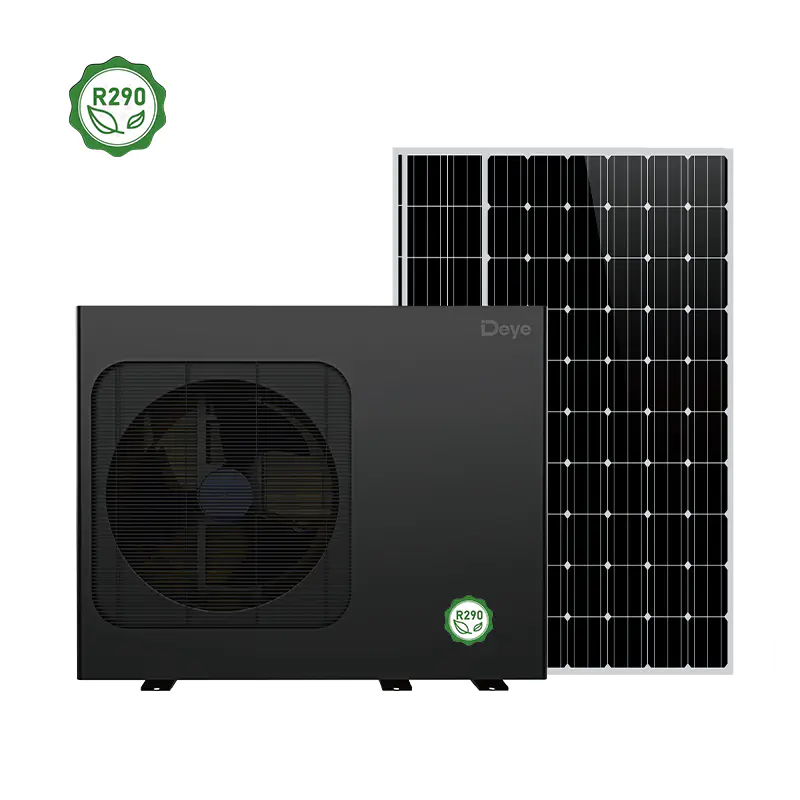
| R290 | About 3 | A3, flammable | Very low warming impact, charge size strictly limited, used mainly in small units |
R32 allows a smaller refrigerant charge for the same capacity, which lowers the risk if a leak occurs and shortens refrigerant pipe length requirements. Installers working with R32 should use tools rated for A2L refrigerants and follow the minimum room area rules in the unit manual.
How We Build and Test Each aircon dc Unit
An inverter air conditioner contains more electronics than a fixed-speed unit, and electronics fail early if the factory process is weak. Our production line applies a fixed sequence of checks to every machine before it leaves the building.
Incoming Component Inspection
Compressors, power modules, capacitors, copper tube and aluminium fin stock are sampled and tested on arrival. Compressor windings are checked for insulation resistance and balance before they reach the line.
Brazing and Leak Control
Heat exchangers and refrigerant circuits are brazed under nitrogen flow to prevent internal oxide. Every circuit then passes a pressure hold test and a helium or high-sensitivity leak test.
Control Board Burn-In
Drive boards run through thermal cycling between −10 °C and 70 °C while carrying load, which exposes weak solder joints and marginal components early.
Full Functional Run Test
Each finished unit operates in both cooling and heating modes while the line records current, pressure, discharge temperature and sound level against stored limits.
Laboratory Sampling
Units drawn from each production batch go to a psychrometric room for capacity and efficiency measurement, and to an environmental chamber for salt-spray, vibration and drop tests on packaging.
Custom Configuration Options
Projects differ in voltage, climate and appearance, and our engineering team adjusts the specification to fit. The most requested adjustments are listed below.
Electrical
Voltage and frequency variants for 110 V, 220 V and 230 V grids, plus extended input windows for weak supply, surge protection upgrades and DC input stages for solar projects.
Mechanical
Coating options for coastal and industrial air, including blue-fin and gold-fin hydrophilic coatings, stainless steel fasteners and reinforced base pans.
Control and Appearance
Wireless and wired controller choices, language packs for display panels and remote-app connectivity, plus panel colours and front-cover finishes to suit the interior.
Installation Checklist for aircon dc Systems
Even the best compressor loses efficiency when installation is careless. The table lists the checks that most often separate a smooth commissioning from a callback.
| Item | Requirement | Reason |
| Pipe length | Up to 15 m standard, 25 m on extended-pipe models, with additional charge as specified | Excess length reduces capacity and complicates oil return |
| Height difference | Not above 7 m for standard models | Large drops stress oil return at low compressor speed |
| Evacuation | 500 microns or lower, held for 15 minutes | Moisture and air degrade oil and shorten compressor life |
| Earth resistance | 4 ohms or lower | Controls electromagnetic noise and leakage current on the drive |
| Signal cable routing | Separate from power cable, with shielding where required | Prevents communication faults between indoor and outdoor boards |
| Outdoor unit clearance | At least 60 cm in front of the discharge side and 30 cm behind | Prevents hot-air recirculation and high condensing pressure |
| Condensate drain | Continuous fall of at least 1 in 100 with no trapped section | Avoids overflow and indoor water damage |
Troubleshooting Guide
Most aircon dc service calls have simple causes. The table lists common symptoms with likely causes and practical corrective action.
| Symptom | Likely Cause | Action |
| Weak cooling | Dirty filter or coil, low refrigerant charge, blocked outdoor unit | Clean filter and coils, check for leaks, clear obstructions |
| Outdoor unit starts and stops repeatedly | Unstable supply, faulty sensor, overcharge | Measure supply voltage, test sensor resistance, verify refrigerant charge by weight |
| Communication error code | Loose signal wiring or electrical interference | Reseat terminals, separate signal and power cables |
| Compressor overload protection | Poor condenser airflow or high ambient temperature | Clean outdoor coil, remove shading panels that trap heat, check fan motor |
| Water dripping from indoor unit | Blocked or flat drain line | Clear the drain, restore the fall, check the pan seal |
| Unusual noise at low speed | Loose panel, pipe contacting a surface, fan imbalance | Tighten fittings, add isolators on pipework, inspect fan blades |
Maintenance Routine
Every 2 to 4 Weeks
Rinse the indoor filter under running water and let it dry fully before refitting. Dust on the filter raises fan power and lowers cooling output.
Every Cooling Season
Wash the indoor and outdoor coils, test the drain, check wiring terminals for heat marks and confirm that refrigerant pressures match the unit data plate.
After Long Idle Periods
Run the unit in fan mode for thirty minutes before cooling to dry the indoor coil, then verify that the outdoor fan turns freely.
Frequently Asked Questions about aircon dc
What is an aircon dc unit?
An aircon dc unit is an air conditioner whose compressor and fan motors are driven by direct-current electronics, allowing continuous speed control. The same term also describes machines that connect directly to a photovoltaic array or battery supply.
How much electricity does an aircon dc machine save compared with a fixed-speed air conditioner?
Seasonal savings between 30% and 60% are common, depending on climate, load profile and installation quality. The largest savings appear in homes and small commercial spaces that run for many hours at moderate load.
Can an aircon dc unit run directly from solar panels?
Solar hybrid models accept photovoltaic input on a DC bus and use the grid as backup. Standard grid-connected inverter units cannot be connected directly to panels, because their drive stage expects an AC supply.
What size aircon dc unit does a 20 square metre room need?
A room of 20 square metres with average insulation generally needs about 2.6 to 3.5 kW, using 120 to 150 W per square metre as a starting estimate. Add 10% to 20% for west-facing walls, top-floor rooms, glass walls or ceilings above 2.8 m.
Is an aircon dc compressor louder or quieter than a fixed-speed compressor?
An aircon dc compressor is generally quieter, particularly at part load, because it operates at a low speed and avoids the sudden start-up of a fixed-speed machine. Indoor sound levels of 19 to 24 dB(A) at minimum speed are typical for wall-mounted models.
Does an aircon dc unit work during voltage fluctuations?
Wide-window models operate in a range from about 150 V to 260 V on a nominal 230 V supply. The controller reduces frequency or pauses operation if voltage falls outside the permitted window, then restarts automatically once voltage returns.
How long does an aircon dc air conditioner last?
With regular cleaning and correct installation, a well-built aircon dc unit commonly operates for 10 to 15 years. Coastal and industrial locations shorten that figure unless coated coils and protective fasteners are used.
Which refrigerant is best for a new aircon dc installation?
R32 is the most widely selected option for new equipment, as it offers high efficiency, a small charge and a moderate global warming potential. Installers need A2L-rated tools and must follow minimum room area rules.
Sizing Support for Your Project
Our engineering team prepares a sizing recommendation when it receives a few basic facts about the space. Send the floor area, ceiling height, wall and window orientation, operating hours, local grid voltage and frequency, and the average and peak outdoor temperatures. For solar projects, add the site latitude and the roof or ground area available for panels. The team returns a capacity calculation, a recommended series, a power supply plan and an installation drawing for pipe routing and outdoor unit placement.
