

 Español
 русский
 Français
 Português
 Deutsch
 عربى
عربى italiano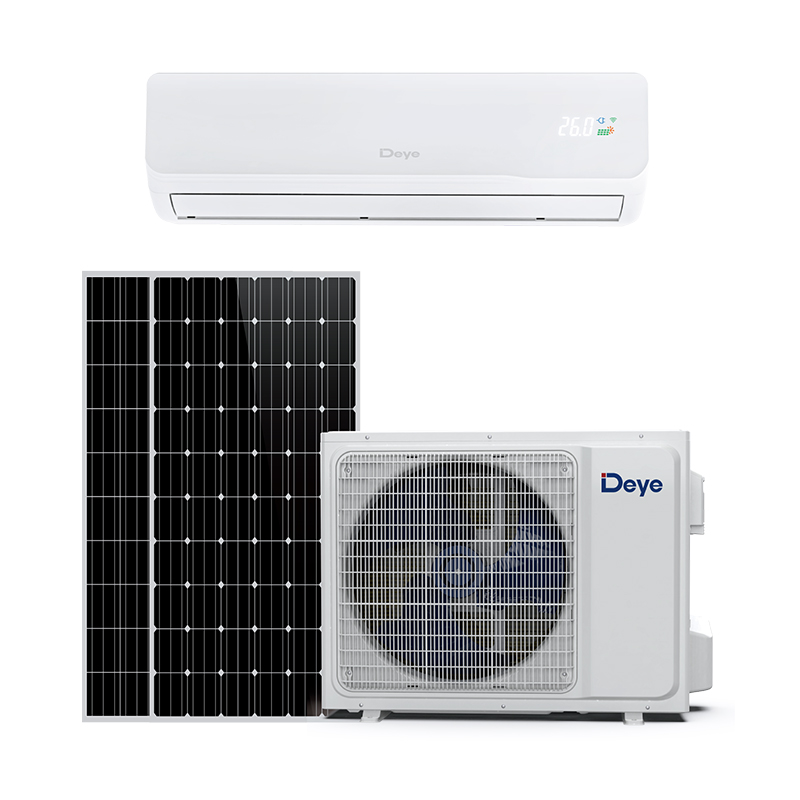
-1.jpg)

Content
- 1 How a solar-powered air conditioner actually works
- 2 How many solar panels do you need to run an air conditioner?
- 3 Hybrid ACDC, off-grid DC, or grid-tied: which system fits your situation?
- 4 What affects real-world solar AC performance?
- 5 Solar-ready air conditioner options to consider
- 6 What about batteries and nighttime cooling?
- 7 Cost and payback considerations
- 8 Frequently asked questions about solar-powered air conditioning
- 8.1 Can a single solar panel run an air conditioner?
- 8.2 How many solar panels do I need for a 1.5-ton AC?
- 8.3 Can solar panels run an AC at night?
- 8.4 What is the difference between a hybrid ACDC solar AC and an off-grid DC solar AC?
- 8.5 Do solar air conditioners require a separate inverter?
- 8.6 Will a solar AC work on cloudy days?
- 9 The bottom line
Yes, you can run an air conditioner off solar panels. Whether the system is practical for your home or business depends on three things: the air conditioner's power draw, the solar array's output, and the amount of battery or grid backup you include. A dedicated solar air conditioner with an internal DC inverter typically needs fewer panels and suffers less conversion loss than a conventional AC paired with a separate solar inverter.
Key facts before you start:
- A 1.5-ton inverter air conditioner typically needs six to nine 400W solar panels.
- Hybrid ACDC systems draw solar DC first and automatically switch to grid AC when PV power drops, so no battery is mandatory for daytime cooling.
- Off-grid DC 48V installations need roughly 7 kWh of usable battery capacity to run a 1.5-ton unit for five hours after sunset.
How a solar-powered air conditioner actually works
A conventional air conditioner converts AC supply into DC power internally, then uses an inverter board to drive a variable-speed compressor. A solar air conditioner changes the input side: instead of accepting only grid AC, it takes DC electricity directly from photovoltaic panels. The compressor still runs on DC, but the source of that power becomes the solar array rather than the grid.
Deye approaches this with a 180-degree sine wave DC inverter controller, a technology the company has refined since 2007. That controller lets the compressor start softly and modulate across a wide speed range, which is exactly what makes a solar-powered unit run smoothly when irradiance changes as clouds pass overhead.
In practice you will meet three main arrangements:
- Hybrid ACDC: the unit uses solar DC first, then draws backup AC from the grid automatically when PV output is insufficient. This is the most common choice for residential and light commercial installations.
- Off-grid DC 48V: the air conditioner runs from a 48V battery bank charged by solar panels. No grid connection is required, making it the standard for remote construction sites, farms, and cabins.
- Grid-tied whole-house solar: a conventional rooftop array powers all appliances through a solar inverter, and the AC consumes solar electricity like any other load. This works, but it is less efficient for running one large AC load than a unit built for direct PV input.
The distinction matters because a hybrid ACDC solar air conditioner eliminates double conversion: solar DC goes straight into the compressor driver instead of being inverted to AC and then converted back to DC. Less conversion means more cooling from the same panel area.
How many solar panels do you need to run an air conditioner?
Start with the air conditioner's rated running power, not its cooling capacity. A 1-ton unit might produce 3.5 kW of cooling while drawing only 700-900W of electricity. Multiply running watts by the hours of daily operation, then divide by the number of peak sun hours at your location and by a system efficiency factor of about 0.8.
PV watts needed = (AC running watts × daily run hours) ÷ (peak sun hours × 0.8)
For a 1.5-ton inverter AC that draws 1400W and runs 6 hours a day, with 5 peak sun hours, the result is (1400 × 6) ÷ (5 × 0.8) = 2100W of PV capacity. Using 400W panels, that is 5-6 panels for the air conditioner alone. If you add a battery for overnight running, multiply the battery size by the same logic.
| Air conditioner type | Running power (W) | Energy used in 6 h (kWh) | Estimated PV needed (W) | 400W panel count |
|---|---|---|---|---|
| Window AC, 0.75 ton | 550-750 | 3.3-4.5 | 1100-1500 | 3-4 |
| Wall-mounted, 1 ton | 750-1000 | 4.5-6.0 | 1500-2000 | 4-5 |
| Wall-mounted, 1.5 ton | 1200-1800 | 7.2-10.8 | 2400-3600 | 6-9 |
| Light commercial cassette, 2 ton | 2000-2800 | 12.0-16.8 | 4000-5600 | 10-14 |
The chart below compares the average PV capacity required for each category so you can estimate the size of the roof area and the inverter budget before contacting a supplier.
The figures above are planning guides, not guarantees. Actual numbers shift with indoor setpoint temperature, outdoor temperature, insulation quality, and the energy-efficiency rating of the unit. A hybrid solar AC with a high-efficiency DC compressor will often sit at the lower end of these ranges.
Hybrid ACDC, off-grid DC, or grid-tied: which system fits your situation?
Each architecture solves a different problem. Choose based on grid reliability, installation budget, and whether you plan to run the AC after sunset.
Hybrid ACDC solar AC
A hybrid unit takes DC from the panel array and automatically switches to grid AC when clouds reduce PV output. No battery is strictly required for daytime operation, which keeps the initial cost low. This is the most popular choice for homes and offices that already have a stable grid but want to cut electricity bills.
Off-grid DC 48V air conditioner
Designed for cabins, farms, mobile homes, and any location without reliable electricity. The 48V DC unit connects directly to a battery bank, and solar panels charge the batteries through an MPPT controller. The system works entirely independently of the grid, but it needs enough battery capacity to handle cloudy days.
Grid-tied whole-house solar
A conventional rooftop solar array, a standard inverter, and net metering allow all home appliances, including a normal AC, to run on solar electricity during the day. The grid absorbs surplus production and supplies power at night. This approach is simple, but it will not keep the AC running during a grid outage and is less efficient when the goal is to power a single heavy load like an air conditioner.
What affects real-world solar AC performance?
Average daily watt-hours from a datasheet will not match what you experience on your roof. These variables matter more than panel wattage alone:
- Peak sun hours vary from 3.5 in cloudy climates to 6.5 in desert regions. Design for the worst month, not the annual average.
- Panel orientation and shading. Rooftop obstructions, soiling, and high temperatures can reduce PV output by 10-25%.
- Compressor start-up surge. Even with soft-start inverter technology, a compressor draws 1.5-2 times its running power for a moment at start-up. Hybrid systems with grid backup cover this automatically.
- Refrigerant choice. Units using R32 operate with better energy efficiency than older R410A designs, especially at high ambient temperatures.
- Cooling load. A shaded, well-insulated room needs far less cooling energy than a glass-walled space with west-facing windows.
- Inverter efficiency. A 180-degree sine wave controller avoids the torque ripple found in older square-wave drives, cutting electrical loss during partial load.
- Dust and maintenance. Dirty condenser coils and clogged filters can increase AC power draw by 10-15% over a single season.
Solar-ready air conditioner options to consider
Deye manufactures a range of solar air conditioners with built-in MPPT controllers that accept PV input directly. Here are three configurations that match the sizing scenarios above.
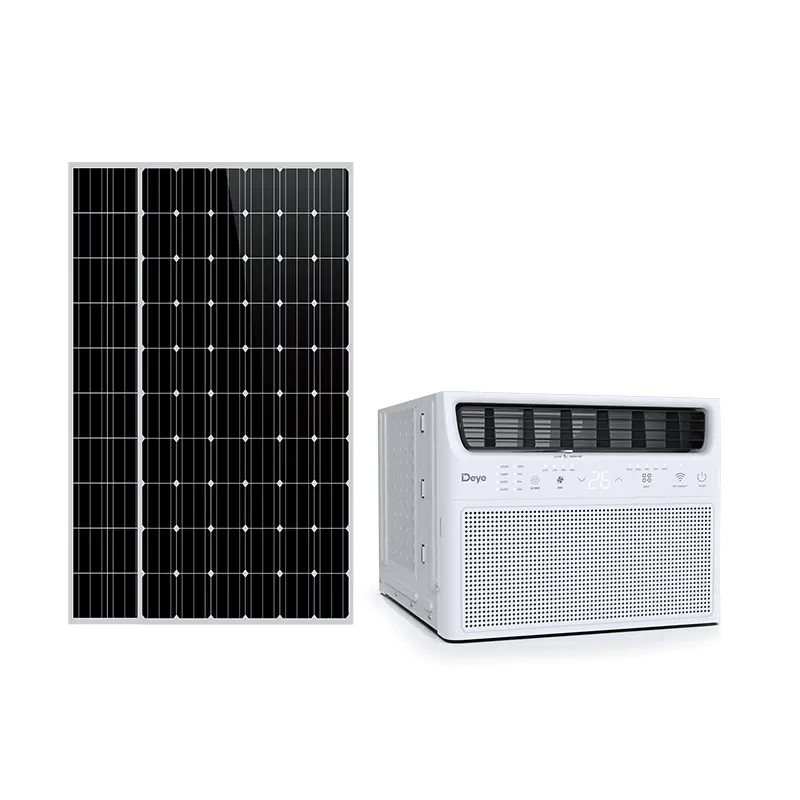
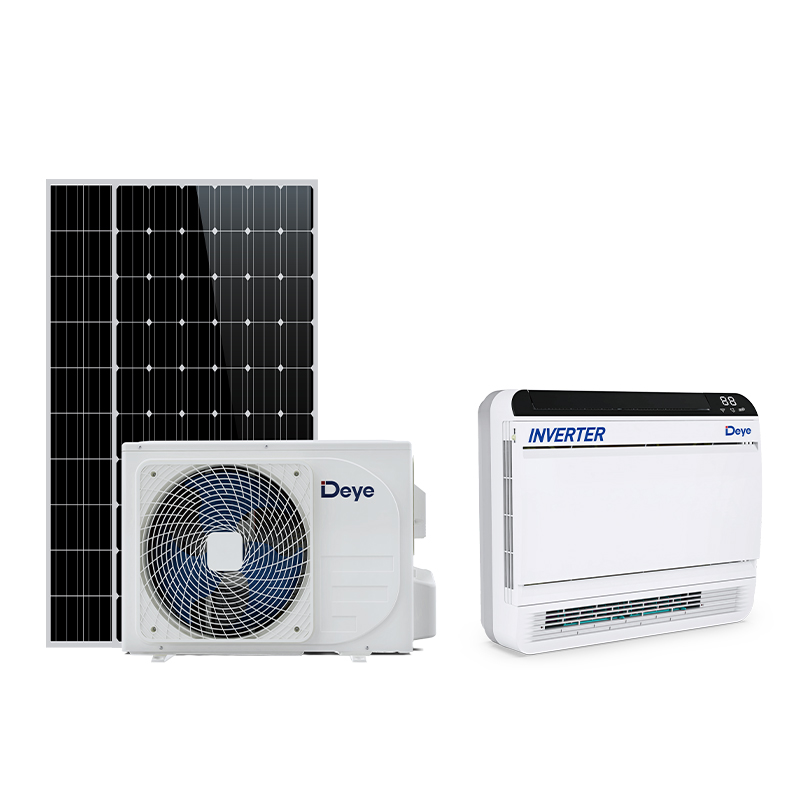
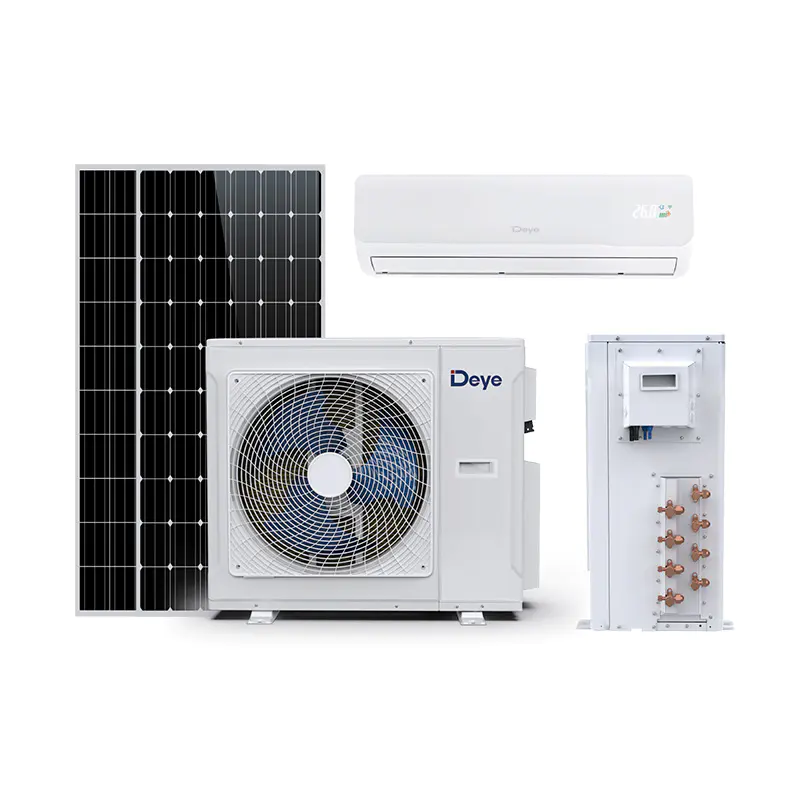
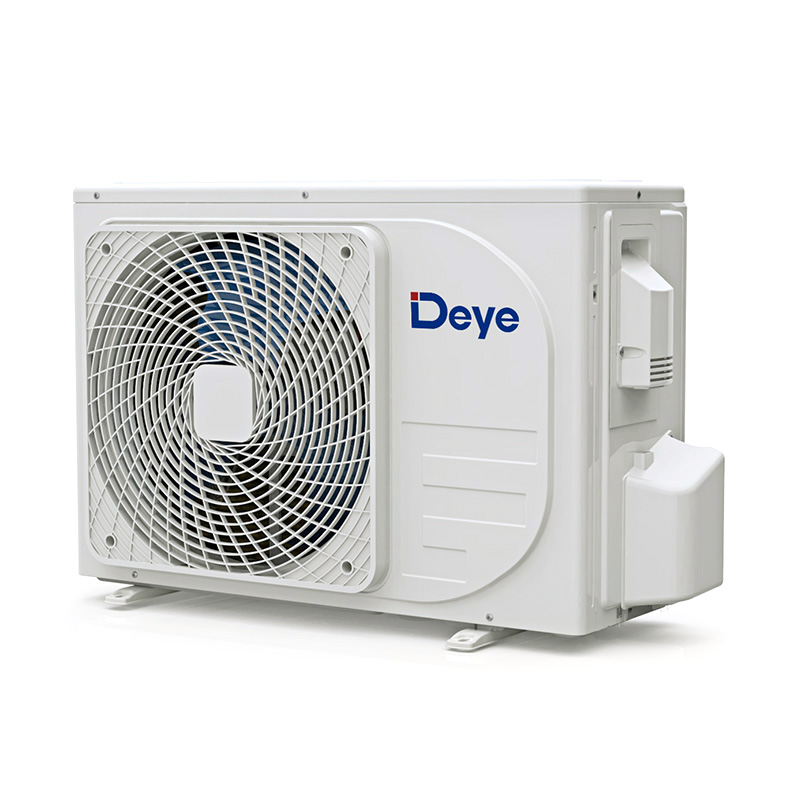 Deye Wall-Mounted Hybrid ACDC Solar Air ConditionerThis wall-mounted hybrid unit accepts direct PV input through a built-in MPPT controller and offers grid backup, making it a practical choice for residential users seeking lower installation costs and reliable cooling.View Product →
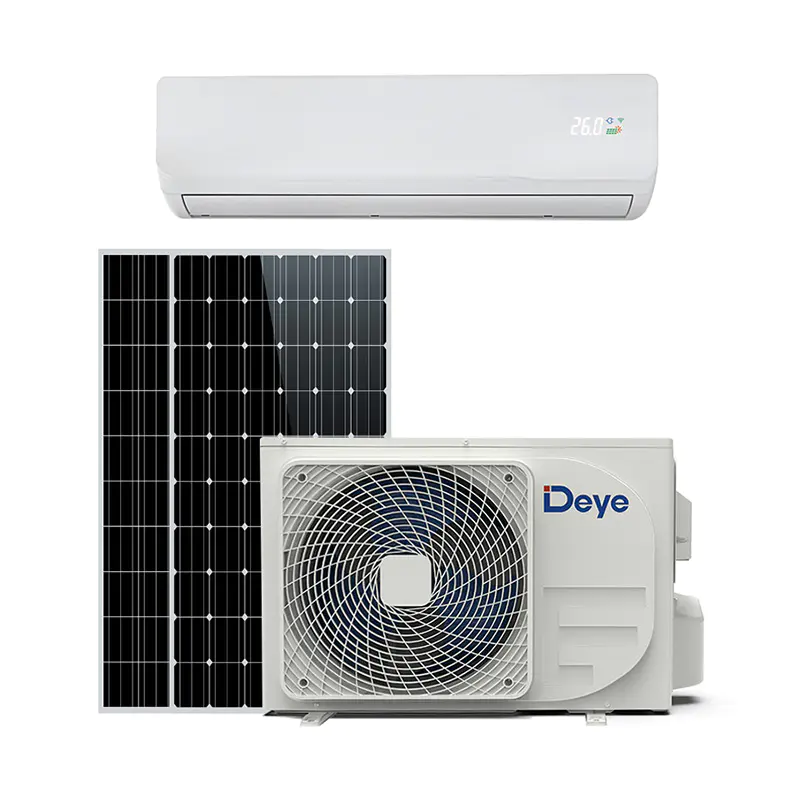
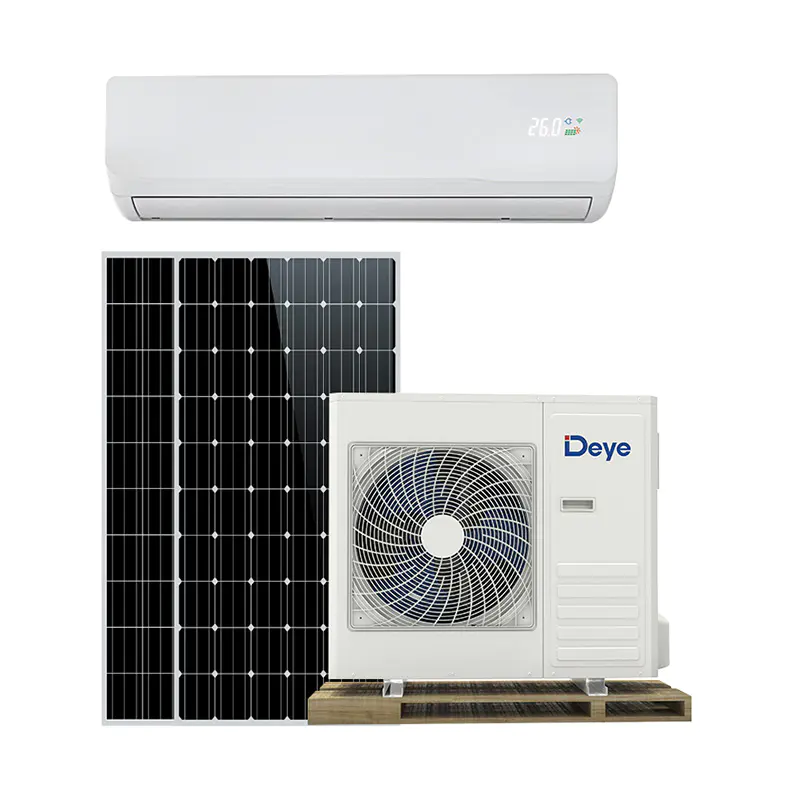
 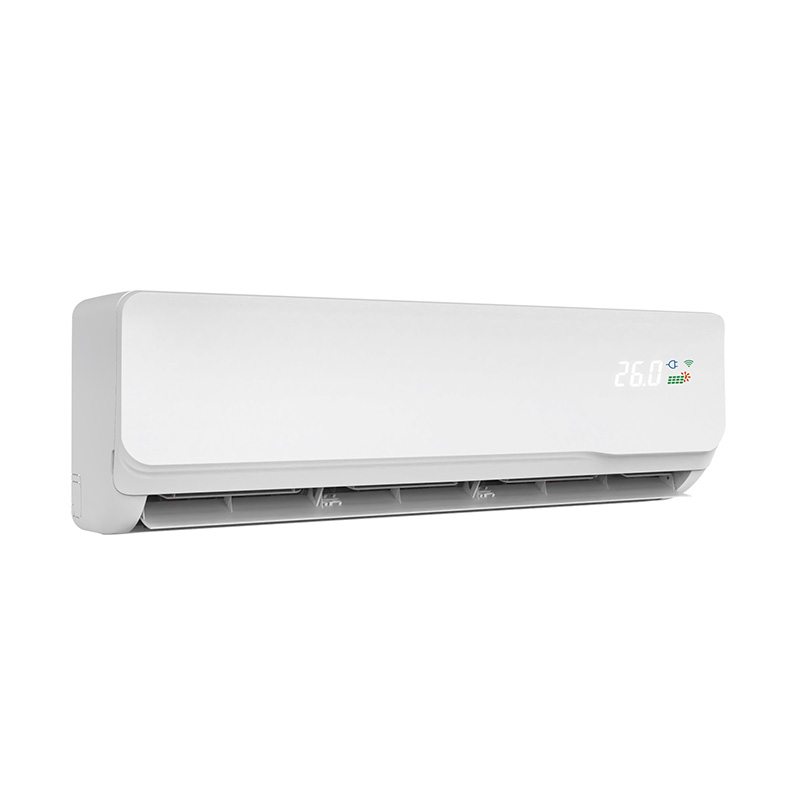 Deye Wall-Mounted Off-Grid DC 48V Solar Air ConditionerDesigned for remote buildings and emergency cooling, this off-grid DC 48V unit runs on a battery bank instead of the grid, suiting locations where grid power is unavailable or unreliable.View Product →
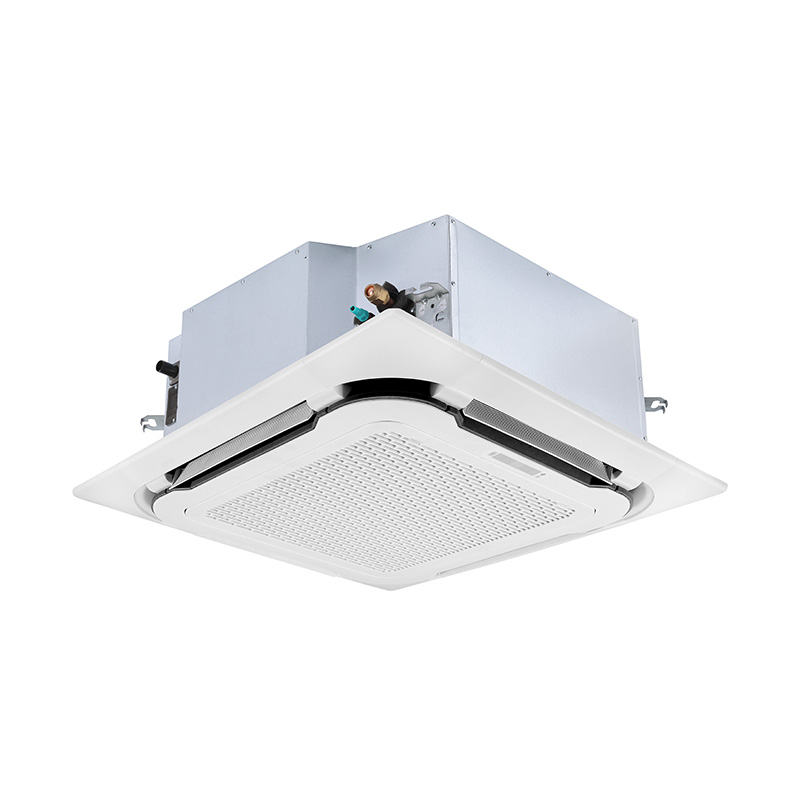
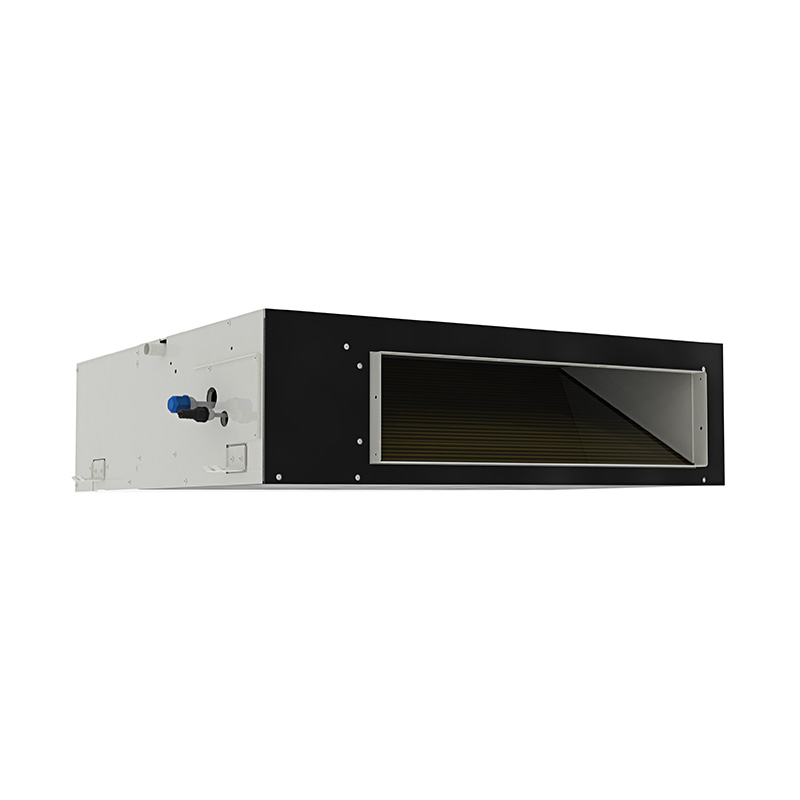
  Deye Light Commercial Cassette Solar Air ConditionerThis ceiling-mounted cassette type provides even four-direction air distribution for small offices and shops, operating in hybrid solar-plus-grid mode without needing extra inverters or batteries.View Product →
The wall-mounted hybrid ACDC model is the go-to solution for residential users who want grid backup and a low installation cost. The off-grid DC 48V version replaces the grid with a battery bank, making it suitable for remote buildings and emergency cooling. For small offices, shops, and multi-room spaces, the light commercial cassette type provides ceiling-mounted cooling with the same hybrid ACDC logic.
What about batteries and nighttime cooling?
A solar array without batteries cannot run an air conditioner at night. If you expect cooling after sunset, you need either a hybrid ACDC system with grid backup or an off-grid system with battery storage.
To size a battery, multiply the AC's running power by the evening hours you need to cover. A 1.5-ton wall-mounted unit drawing 1400W for 5 hours needs about 7 kWh of usable battery capacity. Because batteries should not be discharged below 20% of rated capacity, the installed battery bank should be roughly 8.5-9 kWh for a lithium model, or larger for sealed lead-acid chemistry.
Hybrid systems give you the freedom to run on solar during daylight and draw grid electricity at night, avoiding battery cost entirely. Off-grid users, on the other hand, must treat the battery bank as a core operating cost, comparable to the air conditioner itself. In either case, an MPPT controller that tracks the PV array maximum power point will recover 10-20% more energy than a simple PWM regulator.
Cost and payback considerations
The decision to install a solar air conditioner should be driven by local electricity tariffs, sunlight availability, and the price of a comparable standard AC plus a separate solar installation.
- A hybrid ACDC solar AC typically costs 30-50% more than a conventional inverter AC of equal cooling capacity.
- Adding a dedicated PV array of 2-4 kW costs several thousand dollars depending on region, mounting complexity, and the cost of racking.
- Off-grid installations add battery cost, which can double the total investment compared with a hybrid system.
- Payback periods in high-insolation regions with elevated electricity prices are usually between three and six years. In lower-sun or low-tariff areas, payback stretches beyond seven years and may not justify the premium.
Deye began shipping solar air conditioners in the early 2010s, and by 2020 the fourth-generation units had been sold to more than 20 countries, including the United States, Australia, Pakistan, India, the Philippines, and markets across the Middle East, South Asia, and Europe. That field history matters: a solar AC is not a niche experiment when utility-scale solar programs and off-grid electrification projects keep selecting the same technology generation after generation.
Frequently asked questions about solar-powered air conditioning
Can a single solar panel run an air conditioner?
A single 400W panel produces roughly 1.6-2.4 kWh per day under 4-6 peak sun hours. Most room air conditioners draw at least 500W, so one panel is insufficient unless the AC is a tiny 12V portable unit operating for short periods.
How many solar panels do I need for a 1.5-ton AC?
With a hybrid ACDC unit drawing about 1400W during steady operation, plan for six 400W panels in a region with 5 peak sun hours. Add battery capacity if the unit must also run at night in an off-grid situation.
Can solar panels run an AC at night?
No. Solar panels generate nothing at night. To cool after sunset, you need either a battery bank or grid backup that switches in automatically, as hybrid ACDC systems do.
What is the difference between a hybrid ACDC solar AC and an off-grid DC solar AC?
A hybrid ACDC unit accepts both DC from the PV array and AC from the grid, mixing the two sources as needed. An off-grid DC 48V unit operates purely on a solar-charged battery bank and cannot connect to the grid. Hybrid is simpler for urban users, while off-grid is the only option where no utility connection exists.
Do solar air conditioners require a separate inverter?
Most solar-ready units have a built-in DC inverter controller and MPPT function. The wall-mounted Deye hybrid ACDC models, for example, integrate the controller into the outdoor unit, so you do not need a separate house inverter for the AC circuit.
Will a solar AC work on cloudy days?
Yes, with reduced output. A hybrid unit compensates by drawing more grid AC when PV generation drops, while an off-grid system relies on stored battery energy. Oversizing the array by 15-20% is the most common way to maintain comfort through overcast weather.
The bottom line
Running an air conditioner off solar panels is not only possible, it is often the right solution when electricity prices are high and sunlight is plentiful. The key is to choose an AC designed for direct PV input, size the array for the season with the least sunshine, and be honest about whether you need nocturnal cooling and therefore a battery or grid backup.
Hybrid ACDC models offer the best balance for most residential and light commercial installations, because the grid handles surge currents and overnight loads while solar covers the main cooling cost. For completely off-grid locations, a 48V DC system is the proven route. Check the specifications of the solar-ready AC before you buy, confirm the running power and MPPT voltage range with your installer, and the math will tell you exactly how many panels and batteries you need.
