

 Español
 русский
 Français
 Português
 Deutsch
 عربى
عربى italiano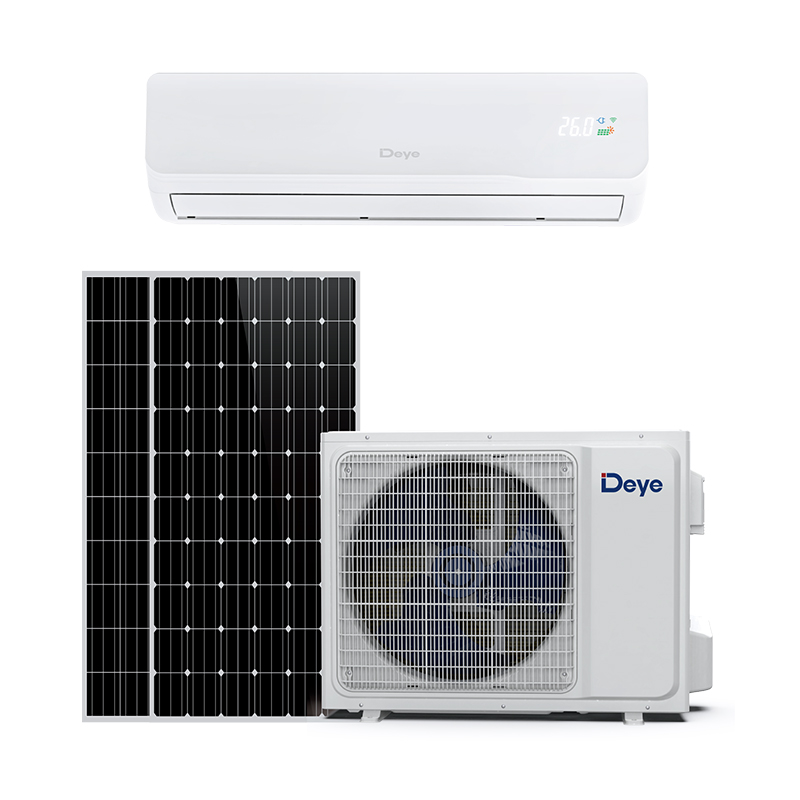
-1.jpg)

Content
- 1 Introduction: The Real Question Behind "Does Solar AC Actually Work?"
- 2 How Solar-Powered Air Conditioners Actually Work
- 3 The Factors That Determine Whether Solar AC Works for You
- 4 Hybrid AC/DC vs. Off-Grid DC: Which Solar AC Setup Works Better?
- 5 How Much Can You Actually Save? (And What It Costs)
- 6 Common Concerns: Do Solar ACs Work at Night, in Winter, or in Heat Waves?
- 7 Do Solar-Powered Air Conditioners Work? The Bottom Line
Introduction: The Real Question Behind "Does Solar AC Actually Work?"
Your summer electricity bill climbs every year, the grid keeps getting less predictable, and the term "solar air conditioning" shows up in nearly every search result. The practical question behind all that noise is simple: do solar-powered air conditioners actually work, or are they just ordinary AC units with a panel bolted on?
The direct answer is yes. Solar-powered air conditioners work, and the technology is mature enough that Deye has been developing the enabling inverter technology since 2007, has focused on solar AC since 2015, and shipped its fourth-generation units to more than 20 countries in 2020, including the United States, Australia, Pakistan, and India. The more honest answer is that real-world performance depends on which technical route you use and how well it matches your building, climate, and usage pattern.
There are also two different things called solar air conditioning. The common route is a normal AC connected to a rooftop solar system through an external inverter. It works, but it pays energy penalties in the conversion process. The route that matters more for cooling costs is the integrated solar air conditioner — a hybrid AC/DC or off-grid DC unit that accepts DC electricity directly from solar panels. This article focuses on that route.
How Solar-Powered Air Conditioners Actually Work
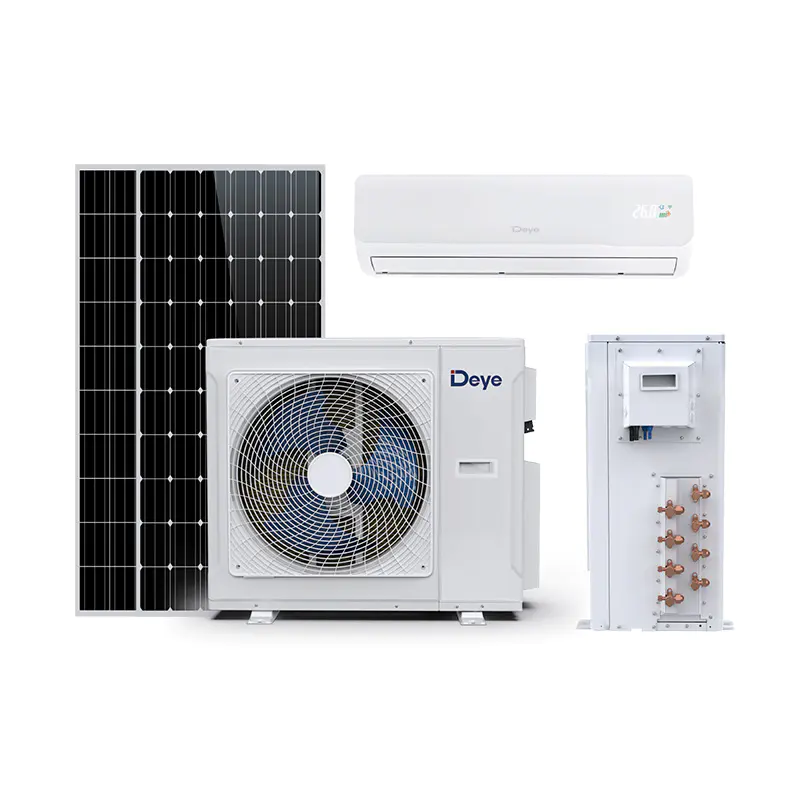
An integrated solar air conditioner runs on a simple principle: photovoltaic panels generate DC electricity, and the compressor inside a solar AC runs on DC power. Instead of sending panel DC power through an external inverter to become AC, then letting the air conditioner convert it back to DC internally, a hybrid AC/DC unit feeds the solar DC power directly into the compressor drive. Removing that conversion step cuts electrical losses and turns more of every panel watt into cooling.
The operating sequence in a hybrid AC/DC unit follows three steps:
- Solar panels generate DC power, and the system prioritizes that power for the compressor during daylight hours.
- If solar output falls below what the unit needs, the AC automatically draws on grid power or battery DC, depending on the model.
- When the sun returns, the unit switches back to solar-first operation without any manual intervention.
Off-grid DC systems work the same way, except the backup source is a battery bank instead of a utility grid.
A central component inside these units is the inverter controller. The 180° sine wave DC inverter controller Deye developed in 2007 smooths the power delivered to the compressor, allowing it to run efficiently at partial load. That matters because an air conditioner spends most of its life running below full capacity, and clean waveform control directly affects both efficiency and durability.
There is also a separate technology called the solar heat pump, which uses solar energy to heat a fluid that drives the cooling cycle. It can be the right answer for specific projects, but it is structurally different from the photovoltaic direct-drive units covered here. For homes and small businesses, hybrid AC/DC and off-grid DC equipment is generally the more practical choice.
The Factors That Determine Whether Solar AC Works for You
Whether an integrated solar air conditioner performs well is not a theoretical question. Four variables control the outcome, and each one can be evaluated before you commit to a purchase.
| Factor | Why it decides the outcome | Best conditions |
|---|---|---|
| Solar resource | The number of peak sun hours per day sets a hard limit on how much energy the panels can deliver. | Four or more peak sun hours daily, common across the American Southwest, the Middle East, and South Asia. |
| Usage pattern | The bigger your daytime cooling load, the more solar power you use directly instead of buying from the grid. | High daytime occupancy, afternoon heat gains, and cooling demand centered between late morning and early evening. |
| Grid conditions | Electricity price determines savings, while reliability determines whether cooling can count on a backup source. | Expensive power, time-of-use rates, or frequent outages. |
| Equipment selection | Rated cooling capacity, efficiency, and refrigerant affect real-world output and suitability for the local climate. | Correctly sized units with matched panel input, and low-temperature models where winters are harsh. |
Most complaints about solar AC come from a mismatch in one of these four factors, not from a flaw in the technology itself.
Hybrid AC/DC vs. Off-Grid DC: Which Solar AC Setup Works Better?
The integrated solar AC category has two dominant design routes. Neither is universally superior. The right one depends on what you are trying to solve: lowering a high electricity bill or getting cooling in a place the grid cannot cover.
Hybrid AC/DC — the pick for expensive but reliable grid power
When the grid is stable but the rates hurt, a hybrid AC/DC unit is the most direct solution. The air conditioner consumes solar DC power during the day, automatically switches to grid power whenever the sun is not producing enough, and does not require a battery to function. The grid acts as an unlimited backup, so the building stays cool around the clock without manual switching.
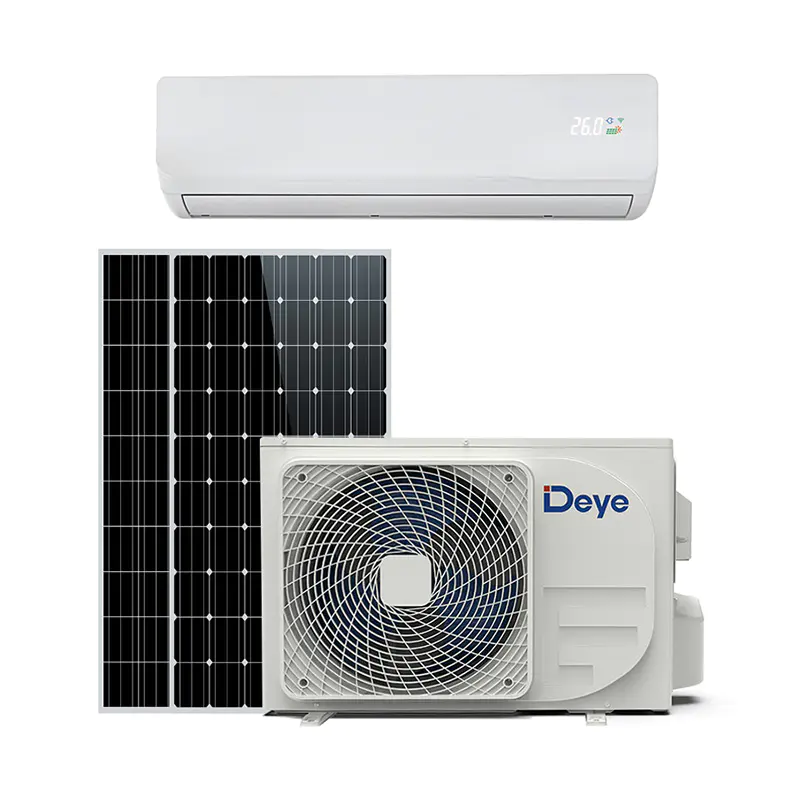
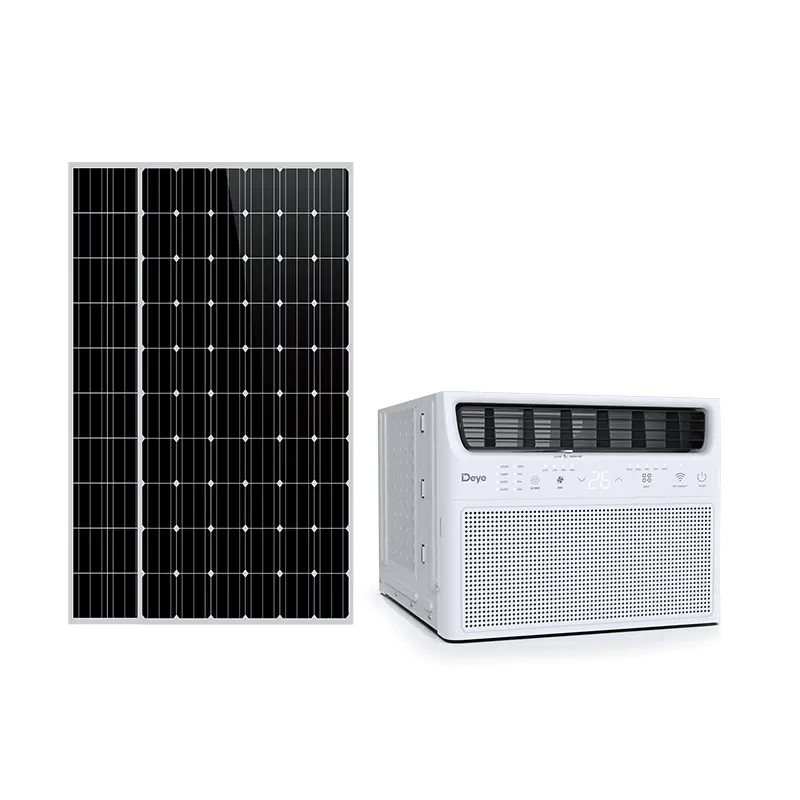
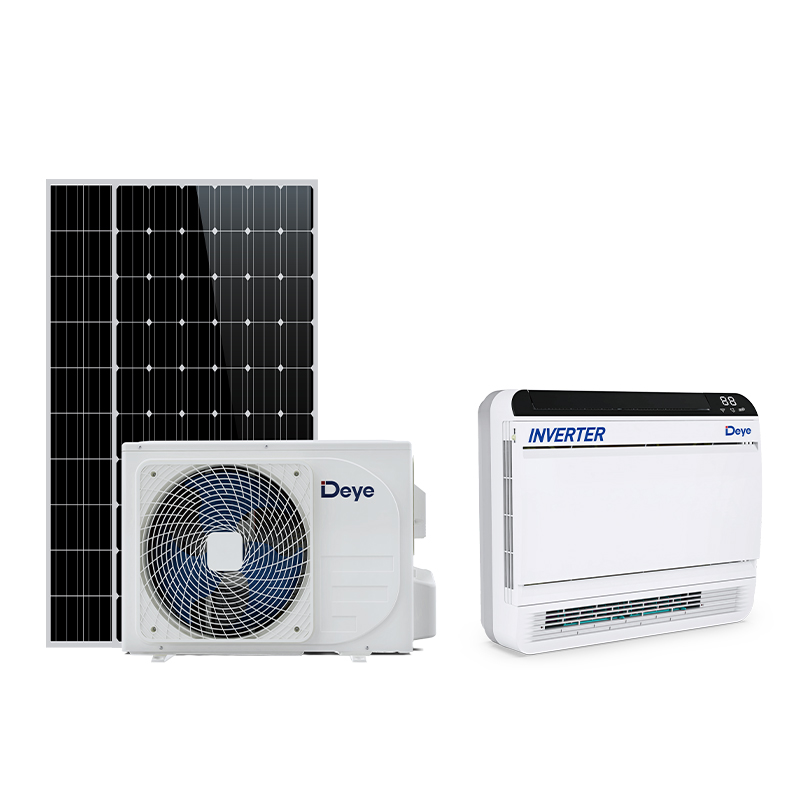
Most owners evaluating solar AC for the first time should compare against this design. If you would otherwise install a conventional mini split, wall-mounted hybrid AC/DC solar air conditioners cover the classic residential form factor and are worth including in the shortlist before you make a decision.
Off-grid DC — the pick for no grid or unreliable grid
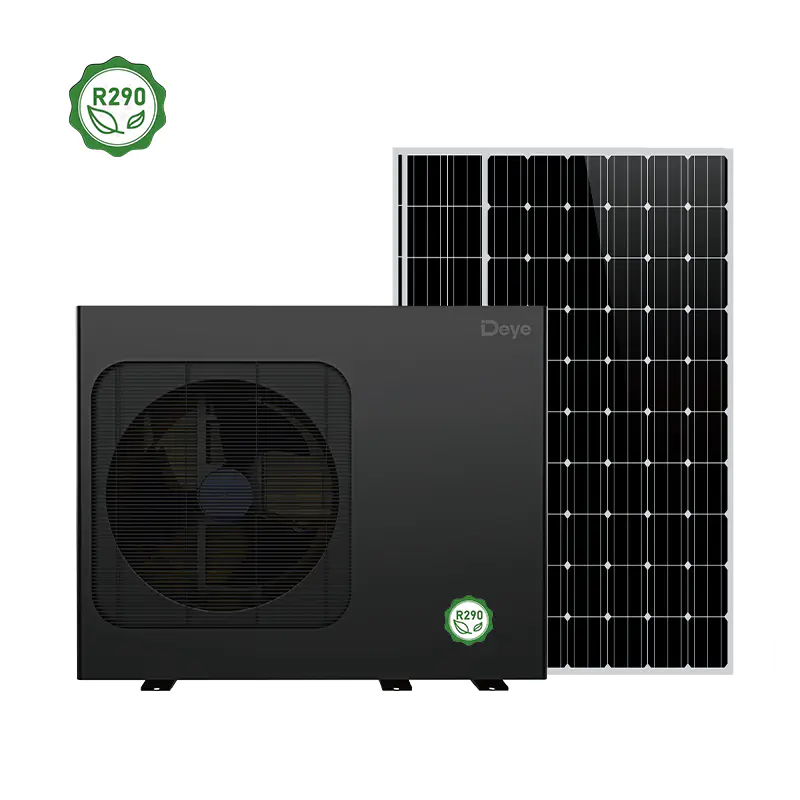
Where the grid is absent or cuts out frequently, an off-grid DC 48V system is the correct category. The unit runs directly from panel DC input, and a battery bank supplies the load at night or during long cloudy stretches. The 48V standard is common in solar storage, which keeps battery sourcing simple and expandable over time.
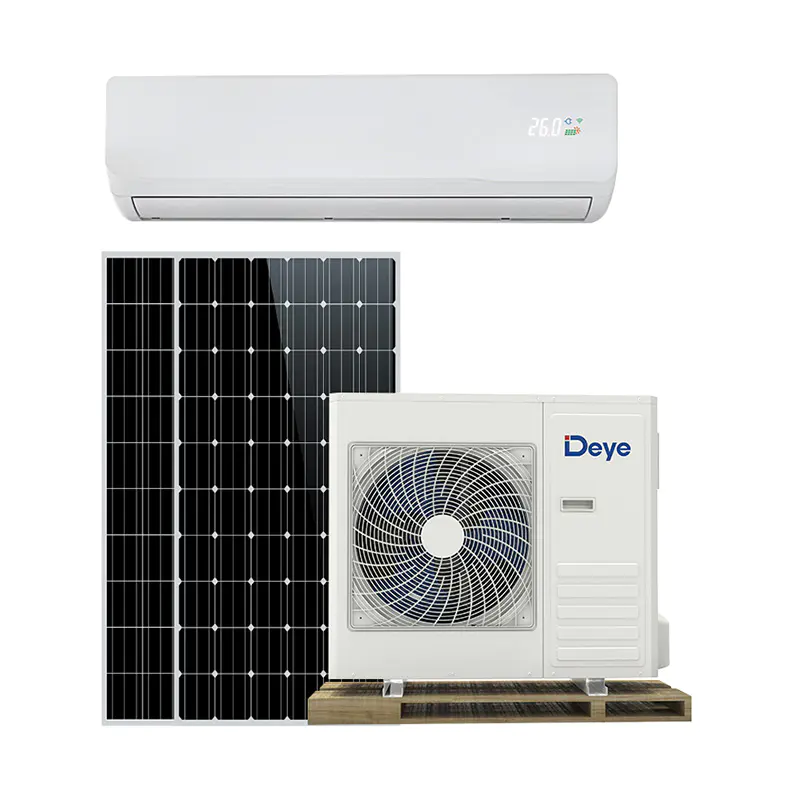
For rural homes, farm buildings, remote worksites, and telecom shelters, off-grid DC 48V solar air conditioners are the field-proven answer. The trade-off is honest: battery capacity adds to the upfront system cost and requires proper sizing, and in return you get cooling that does not depend on the utility at all.
Light commercial installations add a third form factor
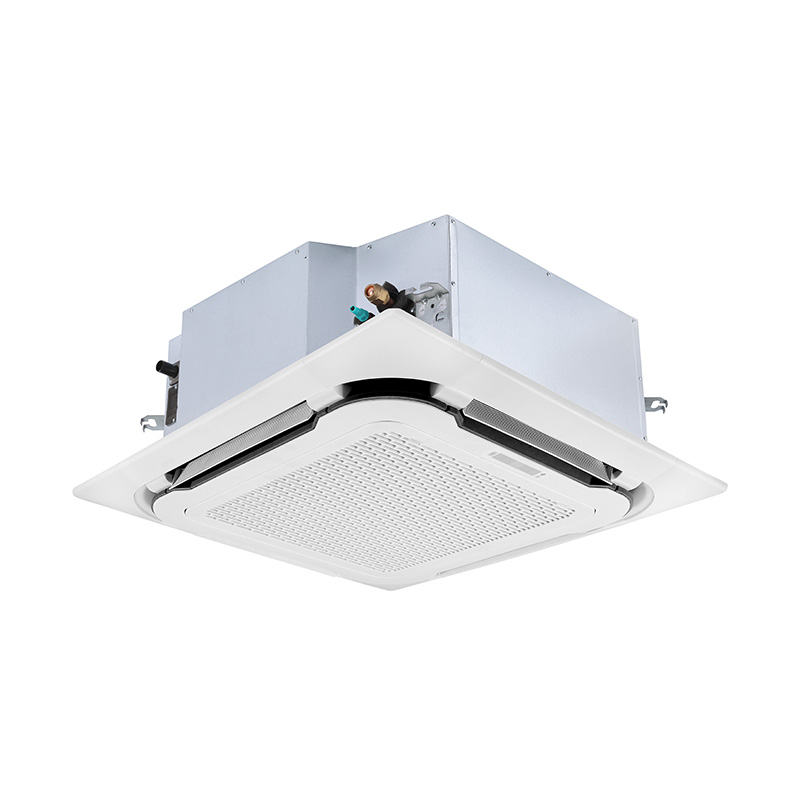
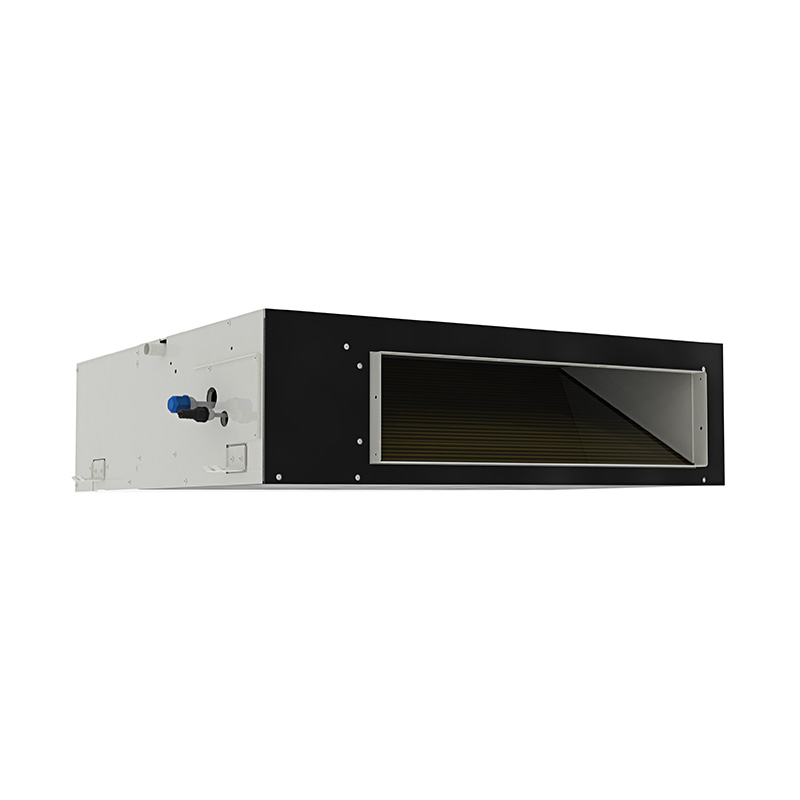
Small shops, offices, and retail spaces need a different airflow pattern than a bedroom. A light commercial cassette-type solar AC fits into the ceiling, spreads air evenly, and frees up wall and floor space for shelving. The evaluation logic remains the same — daytime cooling demand, site sun exposure, and grid reliability — but the equipment form follows the room layout.
| Dimension | Hybrid AC/DC | Off-grid DC |
|---|---|---|
| Backup source | Grid power automatically fills gaps | Battery bank covers night and cloudy periods |
| Battery required | Optional | Yes, essential for night operation |
| Best for | High electricity rates with a stable grid | Absent or unreliable grid |
| Installation complexity | Moderate: solar DC plus existing AC wiring | Higher: battery sizing, protection, and DC wiring |
How Much Can You Actually Save? (And What It Costs)
Honest starting point: a solar-powered air conditioner costs more than a conventional mini split. You are paying for a smarter controller, solar panels, mounting hardware, and in some cases batteries and installation labor. Anyone who promises a fixed savings percentage is oversimplifying the math.
Build your own estimate instead. Four inputs are needed:
- Electricity rate: total per-kWh cost including fees.
- Annual cooling consumption: the kWh the cooling system uses across a typical season.
- Solar direct-use ratio: the fraction of consumption covered directly by panel power, which improves when daytime cooling demand is high.
- Backup cost: grid energy or battery cycling for the hours without sun.
The simplified annual savings formula is: electricity rate × annual cooling kWh × solar direct-use ratio.
Compare that outcome with the extra cost of the solar equipment and installation, and you have a payback estimate grounded in your own numbers. In high-sun, high-rate markets the recovery time is meaningfully shorter. In cheap-power regions with average sun it takes much longer, and in those cases a standard high-efficiency AC may make better financial sense.
For sites without a reliable grid, the calculation changes completely. The solar unit is not competing with cheap grid power; it is competing with no cooling at all. There, the value is measured in usable hours of operation, not dollars on a utility bill.
A system that reduces grid consumption also has a longer-term benefit: it leans less on a price structure you do not control. That is a structural advantage, not a guaranteed payback number.
Common Concerns: Do Solar ACs Work at Night, in Winter, or in Heat Waves?
Nighttime operation
No solar panels generate at night, so every solar AC runs on its backup source after sundown. Hybrid AC/DC units switch to grid power automatically, which keeps the room cool but charges the night usage at the standard rate. Off-grid systems draw from batteries, and the number of nights they can cover depends on battery capacity. If you need eight hours of cooling every night away from the grid, size the bank for that load.
Winter and low outdoor temperatures
Cooling is rarely the problem in cold weather; heating efficiency takes the hit. In heat-pump mode, output drops as outdoor temperature falls. If the unit also serves winter heating, choose a low-temperature model rated for cold climates. Refrigerant choice matters here too, and R32 generally handles low ambient conditions better than older refrigerants, which is why current hybrid and off-grid units increasingly ship with R32.
Heat waves and strong sun
This is the most favorable window for solar AC. Peak cooling demand and peak solar generation overlap in the afternoon. Panels lose a little efficiency as their own temperature rises, but the practical effect is small because midday irradiance remains strong. Locate the outdoor unit in partial shade with open airflow, as you would with any mini split, and the system stays close to rated performance.
Do Solar-Powered Air Conditioners Work? The Bottom Line
Yes, solar-powered air conditioners work, and the integrated hybrid AC/DC and off-grid DC designs have solid field history across more than 20 countries. They are not experimental, and the efficiency advantage of DC direct drive is real. The honest qualification is that value depends on your site.
Solar AC deserves serious consideration when you face one or more of these situations:
- High electricity rates with substantial daytime cooling demand
- An unreliable or absent grid that limits conventional comfort cooling
- A small business with heavy daytime cooling loads and available roof space for panels
If your power is unusually cheap, the grid is dependable, and most cooling happens at night, a conventional high-efficiency mini split may be the better purchase. The smart move is choosing the equipment format that fits your actual conditions, not chasing the solar label for its own sake.
If you want a realistic assessment for your building, contact the Deye sales team with your location, room or floor area, and utility rate. They will help match a solar AC configuration to your site.
