

 Español
 русский
 Français
 Português
 Deutsch
 عربى
عربى italiano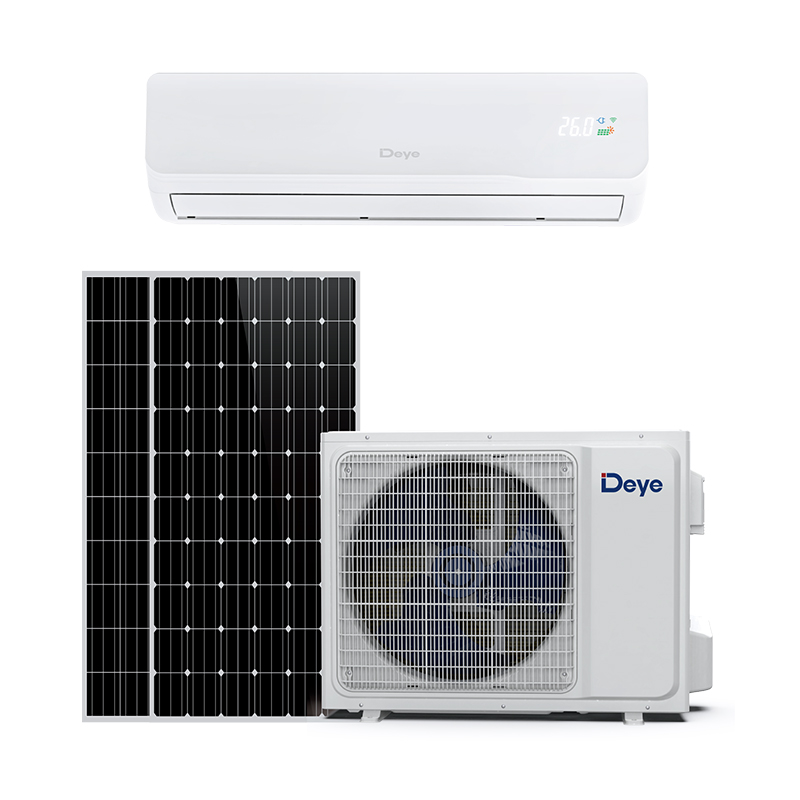
-1.jpg)

Content
- 1 How Many Solar Panels Do You Need for an Air Conditioner? (Quick Reference)
- 2 Step 1: Find Your AC's Real Power Draw
- 3 Step 2: Estimate Daily Cooling Hours and Sun Hours
- 4 Step 3: The Solar Panel Calculation Formula
- 5 Why a Solar-Ready AC Needs Fewer Panels Than a Standard AC
- 6 What If You Don't Have Enough Roof Space for That Many Panels?
- 7 Final Thoughts: Size Your Solar Array Around the AC, or Choose a Better AC
Before you buy a single solar panel, run one calculation. A 12,000 BTU mini-split draws about 1,000 watts at full load. Run it for 8 hours a day, and you need 8,000 watt-hours of solar production. In a location with 5 peak sun hours, that works out to about five 400W panels before losses. Change the AC size, the run time, or the latitude, and the answer changes too.
This guide answers that practical question: how many solar panels to power an air conditioner. You will get a quick reference range, a three-step calculation you can complete with your own nameplate data, and one insight that most sizing guides miss—the air conditioner itself is the biggest lever in the equation.
According to U.S. Energy Information Administration estimates, the average American home uses about 10,812 kilowatt-hours per year, and air conditioning consumes roughly 20% of that total. That makes cooling the single most attractive load to move onto solar, and it is why the sizing math deserves to be done carefully.
How Many Solar Panels Do You Need for an Air Conditioner? (Quick Reference)
If you only want a ballpark figure, start here. The table assumes 400W solar panels, roughly 5 peak sun hours per day, and a realistic 80% system efficiency factor—the standard planning assumptions for residential solar in the United States.
| Air Conditioner Type | Typical Running Power | Panels Needed |
|---|---|---|
| 5,000 BTU window AC | 450–600 W | 2–3 panels |
| 12,000 BTU mini-split | 900–1,200 W | 4–6 panels |
| 18,000 BTU mini-split | 1,400–1,600 W | 6–8 panels |
| 3-ton central AC | About 3,000 W | 10–14 panels |
| 4-ton central AC | About 3,500 W | 14–18 panels |
Actual numbers depend on your location's sun hours, your AC's efficiency, and whether you cool during peak sunlight or into the evening. The rest of this guide replaces those estimates with your own figures.
Step 1: Find Your AC's Real Power Draw
Your AC's nameplate is the starting point. Look for the electrical ratings section, where you will find amperage (amps) and voltage (volts). Multiply them to get running power in watts:
Watts = Amps × Volts
A 12,000 BTU mini-split rated at 10 amps and 115 volts, for example, draws roughly 1,150 watts at full cooling. If the nameplate lists only the cooling capacity in BTU, use these running-power ranges for modern inverter units:
- 5,000 BTU window AC: 450–600 W
- 9,000 BTU mini-split: 700–900 W
- 12,000 BTU mini-split: 900–1,200 W
- 18,000 BTU mini-split: 1,400–1,600 W
- 24,000 BTU mini-split or 2-ton central: 2,000–2,500 W
- 36,000 BTU (3-ton) central: about 3,000 W
- 48,000 BTU (4-ton) central: about 3,500 W
Two numbers on that nameplate matter for solar sizing. The first is the running power you just calculated. The second is start-up surge. A fixed-speed compressor can draw two to three times its running power during the first moments of startup, enough to trip a smaller inverter or force you to oversize your battery bank. A variable-frequency inverter compressor avoids this because it ramps up smoothly instead of jerking to full speed.
This surge issue is one reason solar AC systems sized only for running power fail in the field. Whether you are choosing a standard high-efficiency AC or a solar-ready unit, an inverter-driven compressor removes that failure risk.
Step 2: Estimate Daily Cooling Hours and Sun Hours
Your AC's daily run time and your location's solar resource are the next two inputs. For planning, use these cooling-hour figures:
- Mild climate or light use: 4–6 hours per day
- Hot climate or full-day cooling: 8–12 hours per day
- Small commercial spaces: 8–10 hours per day
The second input is peak sun hours. One peak sun hour equals one hour of sunlight at an intensity of 1,000W per square meter—the exact condition under which solar panels are rated. A 400W panel in a location with 5 peak sun hours therefore produces about 2,000 watt-hours per day before system losses.
For U.S. readers, these reference values help: the Southwest sees 5.5–6 peak sun hours; the Southeast gets 4.5–5; the Midwest averages 4–4.5; and the Northeast sits around 3.5–4.5. Notice the seasonal match: the regions with the longest cooling seasons also have the most sunlight. That alignment is why solar-powered cooling works so well across most of the country.
Cold climates are the exception. There, cooling loads are modest, heating dominates, and you need a system that extracts heat efficiently from cold outdoor air. In that case, a low-temp solar air conditioner for cold climates extends the same solar benefit into winter without sacrificing output when temperatures drop.
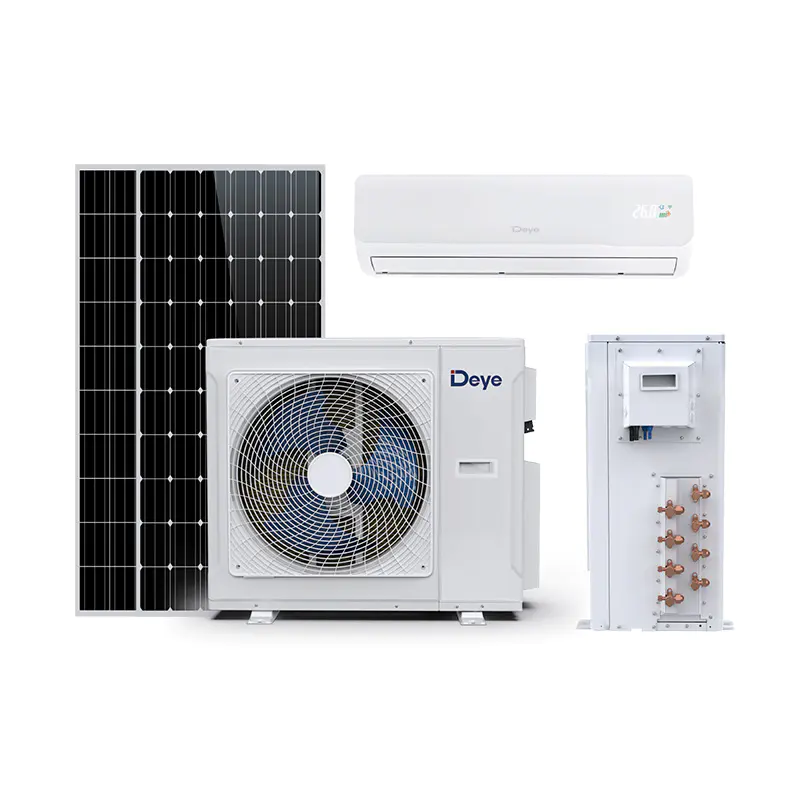
 OEM/ODM Low TEMP Solar AC-Hybrid ACDC R32 Manufacturers, Suppliers, FactoryZhejiang Deye HVAC Technology Co., Ltd. is China OEM/ODM Low TEMP Solar AC-Hybrid ACDC R32 suppliers and Low TEMP Solar AC-Hybrid ACDC R3...View Product →
Step 3: The Solar Panel Calculation Formula
With four numbers—AC wattage, daily cooling hours, panel wattage, and peak sun hours—the formula is simple:
Solar Panels Needed = (AC Wattage × Daily Cooling Hours) ÷ (Panel Wattage × Peak Sun Hours × 0.8)
Each variable is straightforward. AC wattage comes from Step 1. Daily cooling hours and peak sun hours come from Step 2. Panel wattage is the rating of the modules you plan to buy; 400W is the common baseline, but 550W panels are increasingly available and reduce the count. The 0.8 efficiency factor absorbs temperature-related output loss, wiring resistance, dirt on the panels, and inverter conversion losses. Many professional designers use 0.75 to be conservative; 0.8 is the standard planning value.
Here is a full example with a 12,000 BTU mini-split:
- AC wattage: 1,000 W
- Daily cooling hours: 8 hours
- Daily energy need: 1,000 × 8 = 8,000 Wh
- Panel output per day: 400 × 5 × 0.8 = 1,600 Wh
- Panels needed: 8,000 ÷ 1,600 = 5 panels
If you live in Seattle with 3.5 peak sun hours, that same AC needs about 7 panels. In Phoenix with 6 peak sun hours, it needs 4. This is why the answer is never a single number, and why any contractor who quotes a panel count without asking about your location is guessing.
System Type Matters: Grid-Tied vs. Hybrid vs. Off-Grid
Your system architecture changes the result more than any other decision.
- Grid-tied: No battery. Panels power the AC during the day, and the grid covers anything the panels do not supply. The formula works directly because you only need to cover daytime running hours.
- Hybrid: Solar charges a battery first, then powers the AC, with the grid as backup. Panel count stays similar for daytime use, but you add battery capacity for evening cooling.
- Off-grid: Full independence. Plan on 30–50% more panels than the grid-tied number, plus a battery bank sized for an entire night and for consecutive cloudy days. Off-grid systems are sized for the worst week of the year, not the average day.
For properties with no grid connection or unreliable supply, an off-grid DC 48V solar air conditioner is a cleaner fit, because it runs directly from the battery bank without the extra conversion step that adds cost and losses.
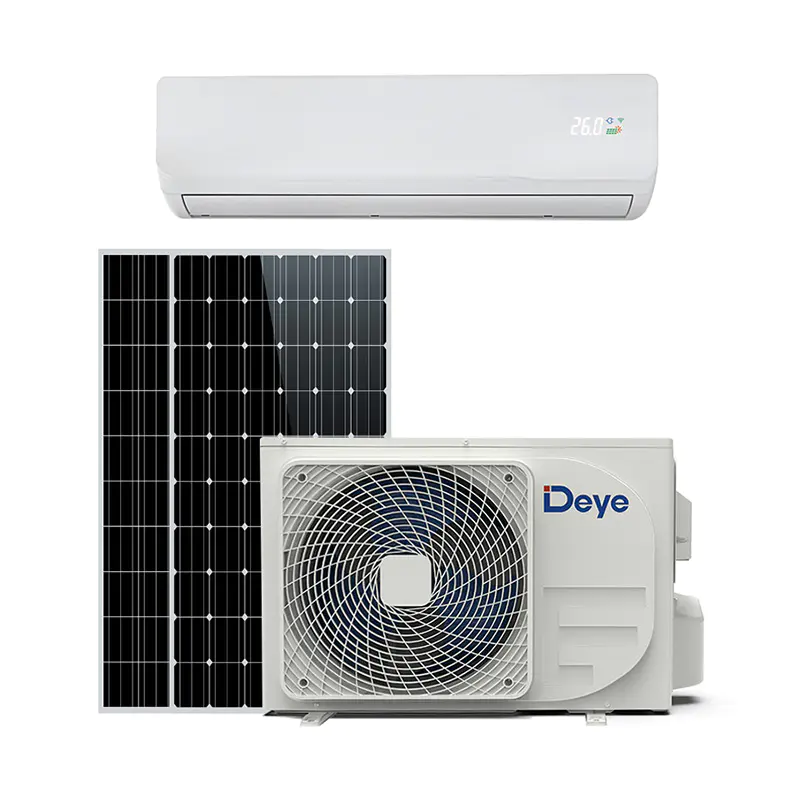
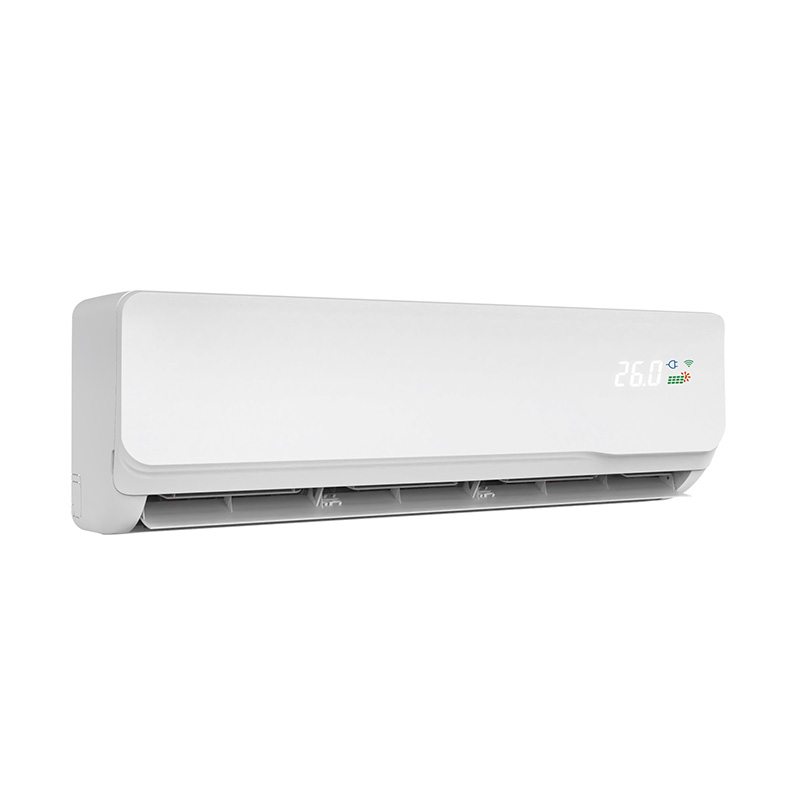 OEM/ODM Wall mounted Solar AC-Off grid DC 48V R410A Manufacturers, Suppliers, FaZhejiang Deye HVAC Technology Co., Ltd. is China OEM/ODM Wall mounted Solar AC-Off grid DC 48V R410A suppliers and Wall mounted Solar AC-...View Product →
Why a Solar-Ready AC Needs Fewer Panels Than a Standard AC
Every standard AC plus solar installation pays a hidden tax. The panels produce DC power, the inverter converts it to AC, and the AC converts it back to DC internally to drive the compressor. Each conversion wastes energy. To see why the architecture matters, it helps to read how hybrid AC/DC solar air conditioners work. In short, a solar-ready AC skips the round-trip conversion.
Three design choices explain the panel count difference:
- Direct DC operation. A hybrid AC/DC unit can take DC power straight from the solar array, bypassing the inverter entirely. Typical inverter losses run about 8–15% of output power, so eliminating that step lets the same array deliver more usable energy to the compressor.
- Variable-frequency compressor control. Instead of starting and stopping at full power, a DC inverter compressor modulates speed continuously. It uses only the power the current cooling load demands, and it tolerates passing clouds by dropping to low power rather than shutting down—so it never triggers the surge current of a fixed-speed unit.
- High-efficiency refrigerant cycles. Solar-ready designs use R410A, R32, or R290 refrigerants with efficient heat exchangers, lowering the wattage required to move the same amount of heat.
The practical result is that a standard 12,000 BTU AC might need 5–6 panels, while a solar-ready hybrid AC/DC air conditioner can handle the same cooling job with fewer panels, because less energy is wasted and less power is needed in the first place.
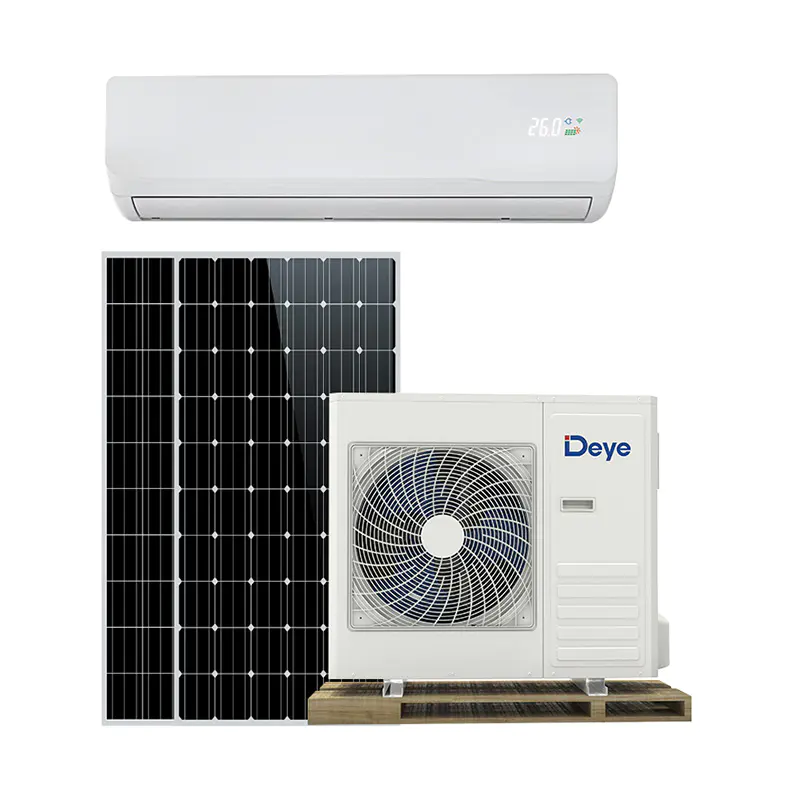
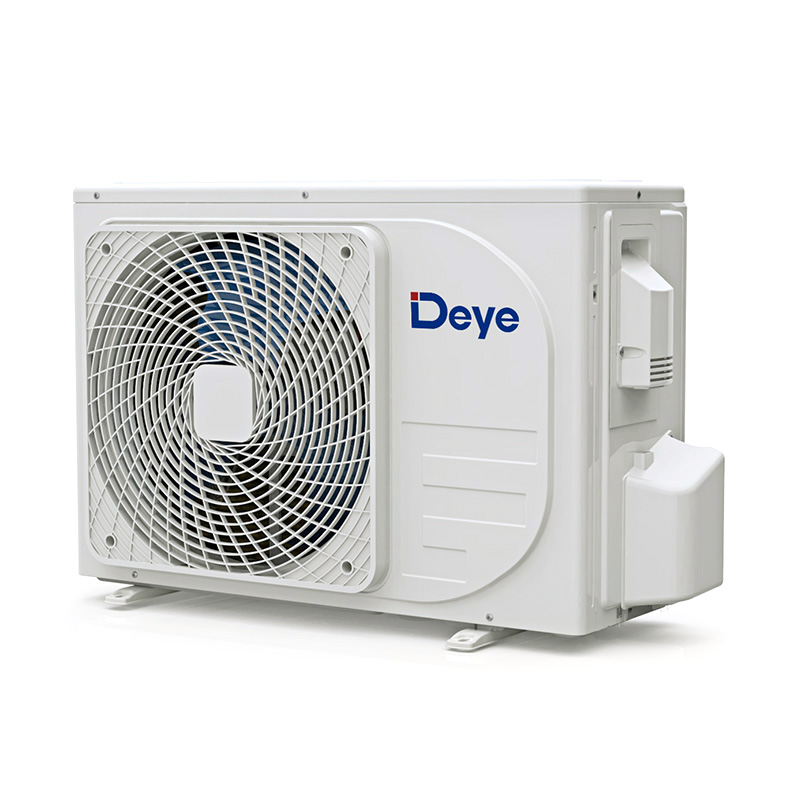 Dga2-Acdcblw-12k Wall Mounted Solar AC-Hybrid ACDC Solar Air Conditioner R410A/ Zhejiang Deye HVAC Technology Co., Ltd. is China Dga2-Acdcblw-12k hybrid ACDC solar air conditioner manufacturers and suppliers, our fact...View Product →
| Factor | Standard AC + Inverter | Hybrid AC/DC Solar AC |
|---|---|---|
| Power path | DC panels to inverter to AC compressor | DC panels directly to DC compressor |
| Conversion losses | 8–15% typical | Near zero in DC mode |
| Start-up surge | Present; needs oversized inverter | Eliminated by smooth ramp-up |
| Panel demand | Higher for the same cooling load | Lower |
What If You Don't Have Enough Roof Space for That Many Panels?
This is the most common real-world problem. You run the formula, it says 8 panels, and your roof realistically fits 5. You have four options, in order of practicality:
- Switch to higher-wattage panels. Replacing 400W modules with 550W modules cuts the required roof area by more than 25% without changing the rest of the system.
- Upgrade the AC itself. Swapping a fixed-speed window unit for an inverter mini-split often cuts running wattage by 30–40%. Every watt saved reduces the panel count.
- Accept partial solar coverage. In a grid-tied or hybrid system, the AC can run on solar during the day and draw the remaining 10–20% from the grid. This works far better than forcing a full offset onto an undersized roof.
- Choose a solar-ready AC. As the previous section showed, a hybrid AC/DC unit lowers panel demand from the start, which can bring the number back under your roof-space limit.
Final Thoughts: Size Your Solar Array Around the AC, or Choose a Better AC
The traditional approach is to treat your AC as a fixed load and add panels until the formula balances. That works when you already own the AC. But if you are planning a new system—or replacing an old unit—there is a smarter path: choose an air conditioner designed to run on solar in the first place.
Deye has specialized in solar air conditioners and solar heat pumps since 2015, and its fourth-generation hybrid AC/DC and off-grid DC 48V product lines are now installed in more than 20 countries. The engineering foundation is a 180° sine-wave DC inverter controller refined through years of field experience. That controller is what allows the compressors to start gently, modulate with available sunlight, and ask fewer panels to do the same cooling work.
Run the formula once with your own numbers. If the panel count fits your roof and budget, you have your answer. If it does not, the solution is usually not more panels—it is a different air conditioner.
