

 Español
 русский
 Français
 Português
 Deutsch
 عربى
عربى italiano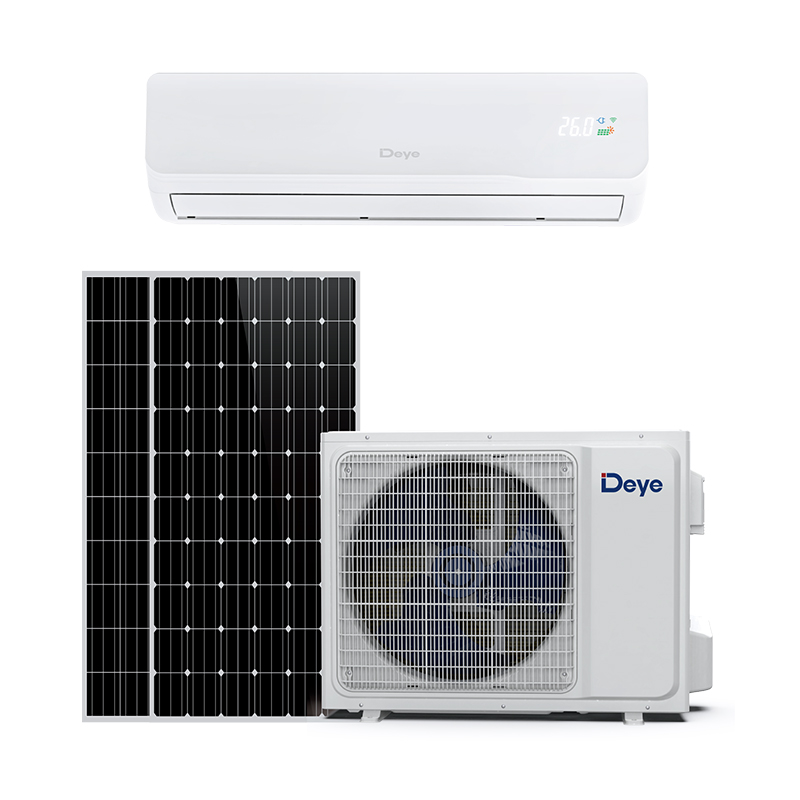
-1.jpg)

Content
- 1 How An ACDC Hybrid Solar Air Conditioner Is Engineered
- 2 Is A Hybrid AC Or DC System? Understanding The Real Answer
- 3 What Is A Hybrid AC/DC Microgrid — And How It Applies To A Single Air Conditioner
- 4 Comparison: Standard AC-Only Unit vs. ACDC Hybrid Solar Unit
- 5 What Are The Benefits Of Hybrid AC Systems For Real Installations
- 6 What Does ACDC Stand For In Electricity — And Why It Matters Here
- 7 Technical Specification Reference
- 8 Where ACDC Hybrid Systems Are Typically Deployed
- 9 Manufacturing And Quality Control Considerations
- 10 Sizing And Configuration Guidance
- 11 Maintenance Profile Compared To Conventional Units
- 12 Frequently Raised Technical Questions
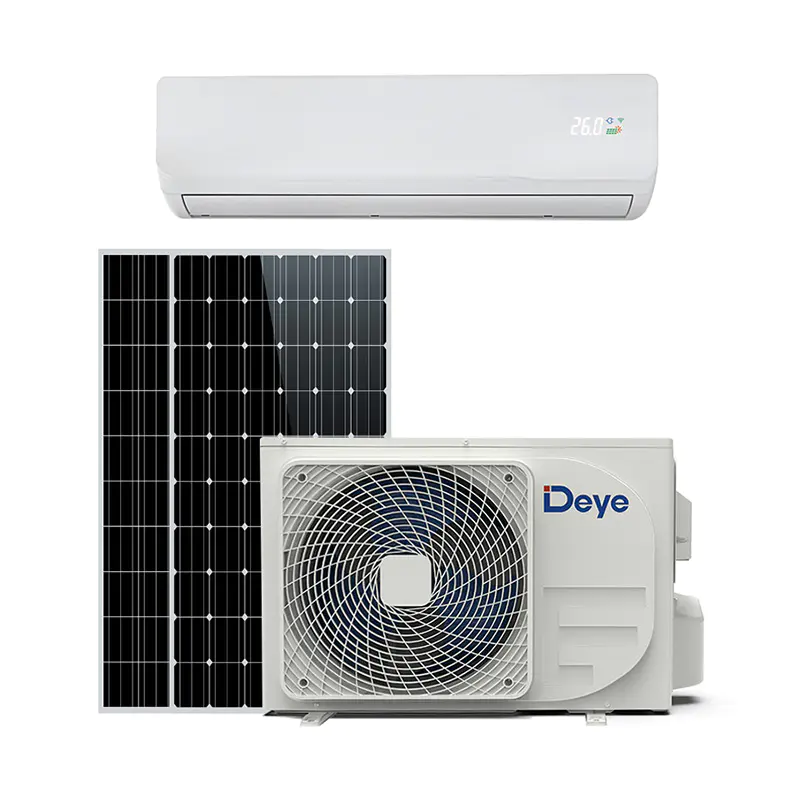
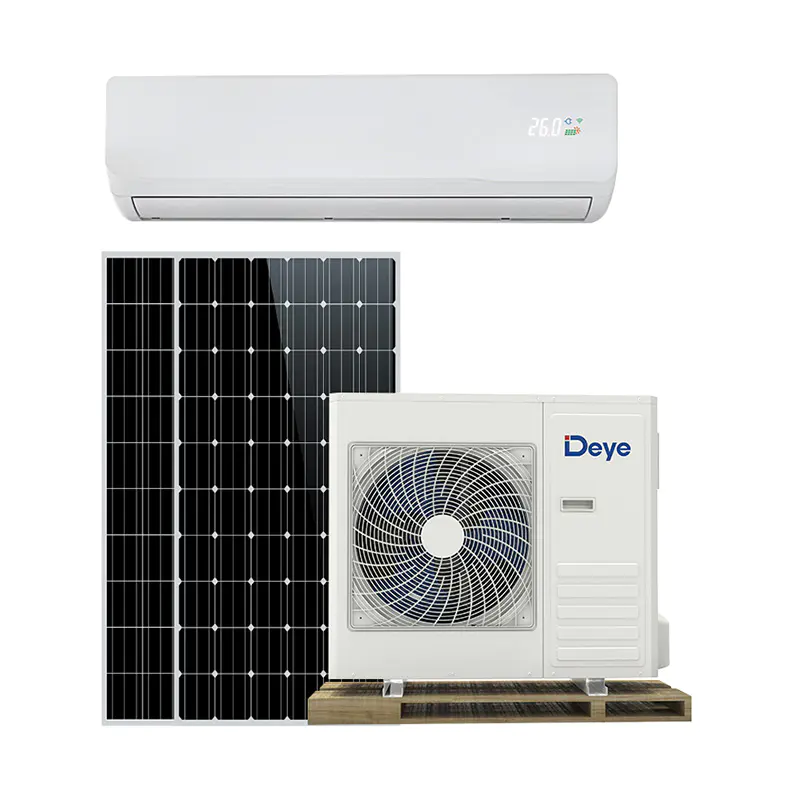
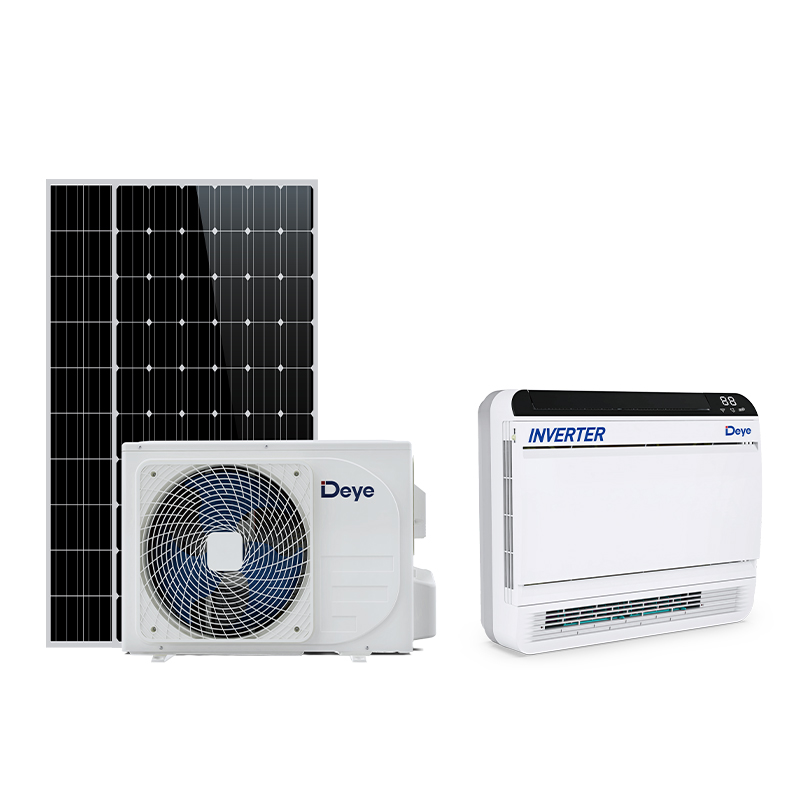
When engineers and facility managers search for an acdc hybrid cooling solution, they are usually trying to solve one of three problems at the same time: unstable grid power, rising electricity costs, and the need for cooling equipment that keeps running when conventional utility power does not. This page explains, from a manufacturing and engineering standpoint, how an acdc hybrid solar air conditioner is built, how it behaves under real operating conditions, and what buyers should look for when comparing dual-source cooling systems.
AC + DC Combined
Accepts direct solar DC input alongside standard AC utility power, switching automatically based on available energy.
DC Variable Frequency
A DC inverter compressor adjusts speed continuously instead of cycling on and off, reducing mechanical wear and power spikes.
Solar-First Logic
The control board draws from solar panels first, then blends in AC power only when solar output cannot meet the cooling load.
How An ACDC Hybrid Solar Air Conditioner Is Engineered
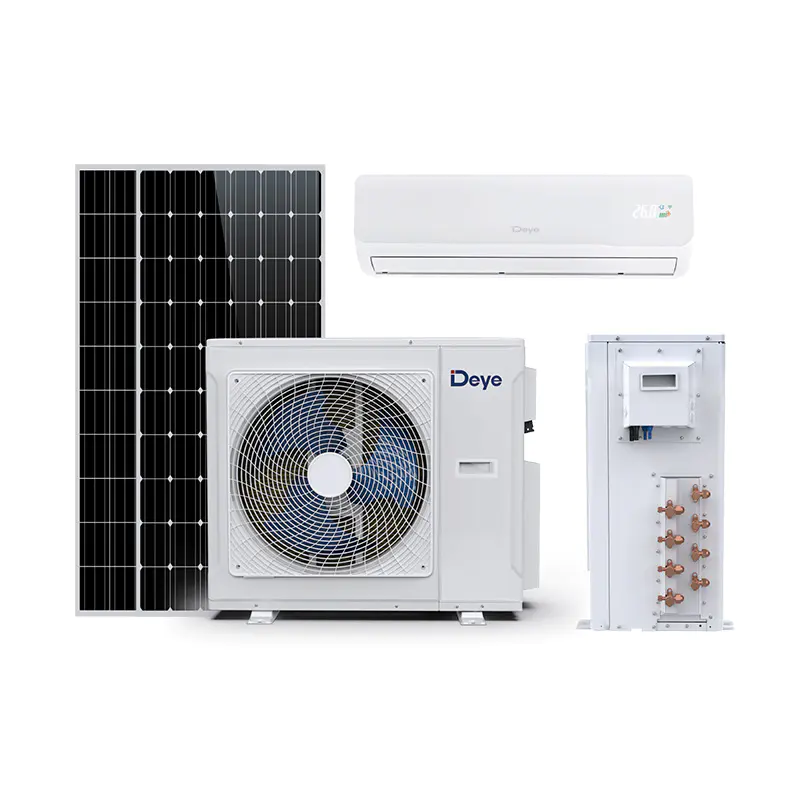
A hybrid acdc solar air conditioner is not a standard split unit with a solar panel attached to it. The internal architecture is different from the compressor board up. Inside the outdoor unit, there is a DC bus that receives current from three possible sources: photovoltaic panels through an MPPT (maximum power point tracking) charge controller, rectified AC power converted from the utility line, and, in systems that include storage, a battery bank. All three sources are merged onto the same internal DC bus, and a single variable frequency drive board uses that combined DC power to run the compressor motor.
This is why the compressor itself is almost always a DC brushless motor rather than a traditional AC induction motor. A DC compressor can start with a much lower inrush current, ramp speed up and down smoothly to match cooling demand, and tolerate voltage fluctuations from solar input far better than a fixed-speed AC motor. The result is a unit that can run partially or fully on solar power during the day, fall back to AC power automatically when clouds pass or the sun sets, and in some configurations continue running from stored battery power for a set number of hours after both other sources are unavailable.
The engineering challenge is not simply combining two power sources — it is making sure the transition between them is seamless. A poorly designed switching circuit causes the compressor to stall or restart every time the power source changes, which shortens compressor life and creates uncomfortable temperature swings in the space being cooled. In our production line, the switching logic is tested across thousands of simulated cloud-cover cycles before a model is approved for shipment, specifically to confirm that compressor speed adjusts smoothly rather than cutting out.
Is A Hybrid AC Or DC System? Understanding The Real Answer
This is one of the most common technical questions we receive, and the honest engineering answer is: both, by design. Is a hybrid AC or DC unit is not a matter of choosing one current type over the other — it is a matter of the equipment being built to accept and convert between them. The photovoltaic array produces raw DC current, which varies in voltage depending on sunlight intensity, panel temperature, and shading. Utility power arrives as AC current at a fixed frequency and voltage. A hybrid unit takes both, converts and stabilizes them onto a shared DC bus, and delivers clean, regulated power to a DC compressor.
Put simply, the compressor and the internal control electronics run on DC. The unit's ability to plug into a normal AC wall outlet or distribution panel is what makes it "hybrid" — it can operate independently on solar DC, independently on converted AC, or on a blended combination of the two, without a technician physically changing any wiring.
In field installations, this dual-input capability is what allows the same air conditioner model to be deployed in a location with strong, stable grid power and in a remote location where grid power is weak, seasonal, or absent altogether — using the identical hardware.
What Is A Hybrid AC/DC Microgrid — And How It Applies To A Single Air Conditioner
The term what is a hybrid AC/DC microgrid originally comes from electrical power engineering, where it describes a small-scale power network that contains both an AC bus and a DC bus, connected through bidirectional converters so that energy can flow between them as needed. Applying that concept to a single piece of cooling equipment might sound like a stretch, but it is actually an accurate description of what happens inside the outdoor unit of an acdc hybrid system.
Inside the cabinet, you have a miniature version of that same architecture: a DC bus fed by solar panels and battery storage, an AC input path that gets rectified onto that same bus, and a central controller making real-time decisions about how much power to draw from each source. When the compressor needs more current than the solar array can provide, the controller pulls the remainder from AC or battery. When solar output exceeds what the compressor needs, some designs redirect the surplus toward battery charging rather than letting it go unused. This is functionally identical to how a building-scale microgrid balances renewable input against grid backup, just scaled down to fit inside a single condensing unit.
Comparison: Standard AC-Only Unit vs. ACDC Hybrid Solar Unit
| Comparison Point | Standard AC-Only Air Conditioner | ACDC Hybrid Solar Air Conditioner |
| Power Input Sources | Utility AC power only | Solar DC, utility AC, and optional battery DC |
| Compressor Type | Fixed-speed or AC variable frequency | DC brushless variable frequency |
| Operation During A Power Outage | Stops completely | Continues on solar and/or battery power |
| Daytime Utility Consumption | Full load drawn from the grid | Reduced significantly when solar irradiance is adequate |
| Voltage Fluctuation Tolerance | Narrow tolerance band | Wide-range adaptive input handling |
| Startup Current Draw | Higher inrush current | Lower, smoother startup current |
| Suitable Installation Sites | Areas with stable, continuous grid power | Off-grid, weak-grid, and grid-connected sites alike |
What Are The Benefits Of Hybrid AC Systems For Real Installations
Buyers frequently ask what are the benefits of hybrid AC equipment compared with staying on a conventional unit, especially when the upfront cost of solar-ready equipment is higher. The answer depends on the installation site, but four benefits show up consistently across the projects we manufacture units for.
Continuity Of Operation
Facilities in regions with frequent grid interruptions keep cooling running through outages instead of shutting down equipment or occupied spaces.
Lower Daytime Grid Draw
Cooling load typically peaks during the same daylight hours that solar output is highest, which is a favorable overlap for reducing utility consumption.
Extended Compressor Life
Smooth DC-driven speed control reduces the mechanical stress caused by frequent full-power starts and stops common in fixed-speed AC compressors.
Site Flexibility
The same unit can be installed on stable urban grids or in remote locations with unreliable electrical infrastructure without hardware changes.
What Does ACDC Stand For In Electricity — And Why It Matters Here
To answer what does ACDC stand for in electricity plainly: AC stands for Alternating Current, where the direction of current flow reverses periodically, and DC stands for Direct Current, where current flows in a single, constant direction. These are not competing technologies — they are the two fundamental forms electrical current takes, and nearly every modern power system uses both at different stages.
In the context of an acdc hybrid solar air conditioner, the naming convention directly reflects this dual-current capability. Rather than forcing a choice between a solar-only DC system or a grid-only AC system, the equipment is engineered to process both current types internally and deliver stable output to the compressor regardless of which source is active at a given moment.
Technical Specification Reference
| Parameter | Typical Range |
| Compressor Type | DC inverter, brushless |
| Solar DC Input Voltage Range | Wide-range MPPT input, adaptive to panel array configuration |
| AC Input Voltage | Single-phase or three-phase, standard utility frequency |
| Cooling Capacity Range | Configurable by model, from residential-scale to multi-zone commercial-scale |
| Refrigerant Type | Environmentally compliant refrigerant per current regulatory standards |
| Switching Mechanism | Automatic, load-based priority control between solar, AC, and battery input |
| Operating Ambient Range | Engineered for extended high-temperature ambient conditions |
Where ACDC Hybrid Systems Are Typically Deployed
Because the equipment does not depend on a single power source, deployment sites vary widely. Off-grid residential structures use the solar-first logic to avoid running a generator during daylight hours. Remote communication stations and equipment shelters rely on the battery-backed configuration to keep sensitive electronics within a safe temperature range even when the surrounding grid is unstable for extended periods. Multi-zone commercial buildings in regions with high daytime electricity tariffs use the solar-priority behavior specifically to shift cooling load away from peak-rate hours.
Agricultural facilities, construction site offices, and temporary or modular buildings represent another common category, since these locations frequently lack a permanent, high-capacity grid connection but still require consistent indoor temperature control for equipment, storage, or occupied space.
Off-Grid Residences
Runs primarily on solar during daylight hours, reducing or eliminating dependence on generator fuel.
Remote Equipment Shelters
Maintains stable internal temperature for sensitive electronics through extended grid interruptions.
Peak-Rate Commercial Buildings
Shifts cooling load to solar hours to reduce exposure to high daytime electricity tariffs.
Modular And Temporary Sites
Provides reliable cooling where a permanent, high-capacity grid connection is not yet available.
Manufacturing And Quality Control Considerations
Producing a reliable acdc hybrid solar air conditioner requires more testing than a conventional AC-only unit, because the equipment must be validated across multiple power scenarios rather than one. Every unit leaving our production facility is tested under three separate power conditions: solar-only input at varying simulated irradiance levels, AC-only input at rated voltage, and a mixed-source scenario where the control board is forced to switch between sources mid-cycle. This third test is the most important, since it verifies that the compressor does not experience a hard stop or restart delay during a source transition.
The DC bus components, including the MPPT charge controller and the rectifier stage handling AC-to-DC conversion, are stress-tested against voltage spikes and drops that simulate real-world conditions such as sudden cloud cover or grid brownouts. Enclosure sealing, corrosion resistance on outdoor components, and vibration testing on the compressor mounting are carried out in line with standard environmental durability protocols for outdoor cooling equipment.
Sizing And Configuration Guidance
Selecting the right configuration depends on three factors working together rather than any single number: the cooling load of the space, the available solar array capacity at the installation site, and whether battery backup is required for nighttime or extended cloudy-period operation. A unit sized correctly for solar-only daytime operation may still need a properly rated AC backup path if the site experiences long stretches of low irradiance, since undersizing the AC fallback defeats the purpose of having dual-source reliability in the first place.
For multi-zone applications, load calculations should be done per zone rather than as a single combined figure, since simultaneous demand across zones affects how much of the total load the solar input can realistically cover at any given moment. This is one of the most common sizing mistakes in early-stage project planning, and it is worth resolving before equipment is ordered rather than after installation.
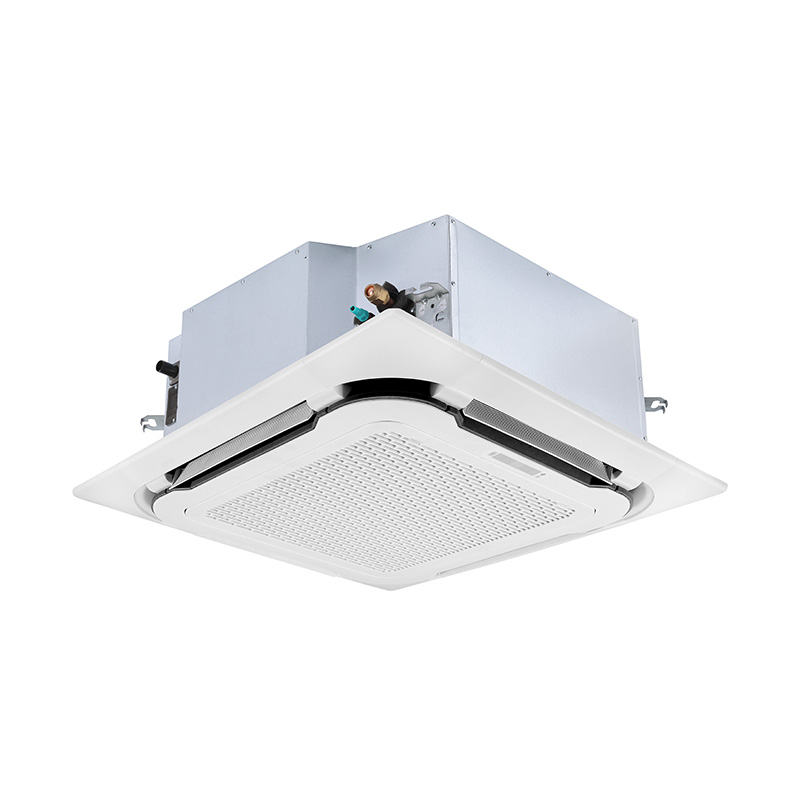
A correctly configured acdc hybrid multi-zone system distributes cooling load intelligently across zones while still applying the same solar-priority, AC-backup logic at the whole-system level, not just per individual indoor unit.
Maintenance Profile Compared To Conventional Units
| Maintenance Item | Standard AC-Only Unit | ACDC Hybrid Solar Unit |
| Compressor Wear Pattern | Higher wear from repeated full-speed cycling | Lower wear due to continuous variable-speed operation |
| Panel Cleaning Requirement | Not applicable | Periodic cleaning needed to maintain solar input efficiency |
| Control Board Complexity | Single-source logic | Multi-source switching logic requiring periodic diagnostic checks |
| Battery Maintenance (If Equipped) | Not applicable | Scheduled inspection of battery health and connections |
Frequently Raised Technical Questions
Is a hybrid AC or DC unit safe to connect directly to solar panels without a separate inverter? Yes, in most acdc hybrid designs, the MPPT controller inside the unit performs the necessary voltage regulation directly from the panel array, which removes the need for a separate standalone inverter stage between the panels and the air conditioner.
Does the unit require a battery to function as a hybrid system? No. Battery storage extends operation into low-light and nighttime periods, but the core solar-plus-AC hybrid function works without a battery, since the unit can switch to AC power the moment solar input drops below what the compressor needs.
Can an existing installation site with unstable voltage still use this equipment reliably? This is one of the specific conditions the wide-range input tolerance is designed for. Sites with voltage sag, brownouts, or inconsistent grid quality are, in practice, some of the strongest candidates for a dual-source system, since the equipment is built to keep operating smoothly under exactly those conditions.
Understanding how an acdc hybrid solar air conditioner is engineered — from the DC bus architecture and compressor selection through to the switching logic that ties solar, AC, and battery power together — makes it easier to evaluate whether this equipment category fits a specific site's power profile, cooling load, and reliability requirements.
