

 Español
 русский
 Français
 Português
 Deutsch
 عربى
 italiano


Content
- 1 The short answer: R32 wins on GWP and charge size, R410A holds its ground on A1 safety and service maturity
- 2 What R32 and R410A actually are
- 3 Environmental impact: separating direct and indirect emissions
- 4 Efficiency: where the 5% to 10% actually comes from
- 5 Pressure and discharge temperature: the two design constraints
- 6 Safety classification and installation rules: A2L versus A1
- 7 Cost and supply: what the refrigerant choice does to the budget
- 8 Regulatory direction: why R410A is being pushed out of new equipment
- 9 How the refrigerant choice interacts with solar and hybrid AC/DC systems
- 10 Low-ambient operation: where R32 needs the most attention
- 11 Light commercial ducted and cassette units: matching refrigerant to the building
- 12 Five procurement mistakes that show up again and again
- 13 Frequently asked questions
- 13.1 Can R32 be used to top up an R410A system?
- 13.2 Is R32 actually more dangerous than R410A?
- 13.3 Which refrigerant gives better efficiency in real buildings?
- 13.4 Why do some suppliers still offer R410A equipment?
- 13.5 Will R410A refrigerant still be available in ten years?
- 13.6 Does a lower-GWP refrigerant automatically make a system more sustainable?
The short answer: R32 wins on GWP and charge size, R410A holds its ground on A1 safety and service maturity
The number that settles most of the argument is GWP: 675 for R32 against 2,088 for R410A on the AR4 hundred-year basis. Under an equal leak rate, R32 carries roughly one-third of the direct climate impact of the older fluid.
Volumetric capacity then widens the gap. R32 delivers more cooling per unit of swept volume, so a system built for the same rated capacity needs less refrigerant, typically 20% to 30% less by weight than an equivalent R410A design. Lower GWP and a smaller charge do not simply add together; they multiply.
Efficiency gains are real but narrower. Across matched compressor, coil and control designs, R32 usually lands 5% to 10% ahead on seasonal efficiency. That number is earned by the engineering built around the refrigerant, not by the molecule alone.
R410A still makes sense where A1 safety classification outranks carbon reduction: unattended plant rooms, tight installations with limited ventilation, and sites whose service teams are trained on one refrigerant and have no appetite for retooling.
What R32 and R410A actually are
R410A is a 50/50 blend of R32 and R125. R32 is a single-component fluid, difluoromethane. Neither contains chlorine, so both sit at zero ozone depletion potential and neither is a concern for the ozone layer.
The structural difference carries consequences. A single-component refrigerant does not fractionate during a leak, does not drift in composition during recycling, and does not need the same handling discipline as a blend. R410A is near-azeotropic, so practical drift is small, but the handling and record-keeping requirements remain.
| Parameter | R32 | R410A |
|---|---|---|
| Chemical composition | Difluoromethane, single component | R32 / R125, 50/50 blend |
| ASHRAE 34 safety class | A2L, lower flammability | A1, non-flammable |
| GWP, AR4 hundred-year | 675 | 2,088 |
| Ozone depletion potential | 0 | 0 |
| Volumetric cooling capacity | Higher | Lower |
| Charge for equal capacity | Roughly 20–30% lower | Reference |
| Saturated pressure | About 3% higher | Reference |
| Discharge temperature | Higher | Lower |
| Common lubricant | POE or PVE | POE |
Two rows in that table carry most of the engineering weight: the A2L classification and the discharge temperature. Everything else is arithmetic a competent designer can handle. Those two rows change how the machine is built and where it can be installed.
Environmental impact: separating direct and indirect emissions
Regulation and marketing both tend to collapse environmental impact into a single GWP figure. That hides the structure of the problem. Lifetime emissions split into two streams, and the refrigerant only controls one of them.
Direct emissions come from leakage and end-of-life recovery, calculated as GWP multiplied by charge and by the fraction eventually released to atmosphere. Indirect emissions come from the electricity the equipment consumes across its service life. In warm climates with heavy cooling loads, the indirect share usually dominates.
GWP on the AR4 hundred-year horizon
Read the chart with care. A well-maintained R410A system that never leaks and gets properly recovered at end of life produces very little direct emission. A poorly installed R32 system that loses gas every season can erase its advantage within a few years. The refrigerant sets the ceiling; installation quality sets the reality.
Where R32 wins unambiguously is at portfolio level. An operator running several hundred units across multiple sites sees small differences in leak rate compound into large differences in reported emissions, and the lower GWP baseline gives far more headroom before a site breaches an internal carbon target or a reporting threshold.
Efficiency: where the 5% to 10% actually comes from
Volumetric capacity is the mechanism behind most reported R32 efficiency gains. Per cubic metre of suction gas, R32 carries a larger cooling effect than R410A. That allows a designer either to shrink compressor displacement for the same rated capacity or to extract more capacity from the same shell.
Smaller displacement at the same duty usually means lower friction losses, lower starting current and a lighter compressor. Those savings appear on a datasheet as efficiency, but they originate in mechanical design rather than in thermodynamics.
Three things distort comparisons in practice:
- Test standards do not translate directly. A seasonal figure calculated under one rating regime cannot be set against a figure under another without conversion, and the conversion gap is often larger than the difference between the two refrigerants.
- Nominal capacity is not delivered capacity. Two units rated at the same cooling output can behave very differently at 43 °C ambient.
- Control logic dominates part-load performance. Inverter mapping, superheat control and defrost strategy move seasonal efficiency by more than the refrigerant choice does.
The honest summary is this: R32 does not hand a manufacturer eight percent efficiency. It gives a designer roughly eight percent more thermal headroom to work with, which a careful design converts into measurable savings and a rushed design wastes entirely.
Pressure and discharge temperature: the two design constraints
At equal saturation temperature, R32 sits about 3% above R410A on pressure. That is close enough that pipe wall thickness rarely changes, but it is enough that pressure switch setpoints, relief settings and burst-test margins cannot be copied across from an R410A platform without review.
Discharge temperature is the harder problem. R32 runs a higher adiabatic index, and at matched evaporating and condensing conditions the discharge line typically runs 10 K to 20 K hotter than R410A. Compressor lubricant, discharge valves and motor winding insulation all feel that difference.
Practical countermeasures used on production platforms:
- Liquid or vapour injection at part load to cap discharge temperature before it reaches the lubricant's limit.
- Rotary compressors specified with higher-temperature valve steel and upgraded winding enamel.
- Condenser and evaporator circuits resized for the higher superheat so the extra heat does not become lost capacity.
- Discharge temperature sensors on low-ambient models, where the risk peaks during heating operation.
None of this is exotic. It is standard compressor and control engineering. It does cost money, and it is the main reason a cheap R32 conversion of an existing R410A chassis usually underperforms the machine it replaced.
Safety classification and installation rules: A2L versus A1
R32 is classified A2L, meaning lower flammability. R410A is A1, meaning it will not burn under normal conditions. That difference is not academic. It sets the maximum charge allowed in an occupied room, the permitted location of electrical components, and the labelling and service procedures that apply.
The governing standards are ISO 817 for classification and IEC 60335-2-40 for household and similar electrical appliances, with regional variants such as EN 378 in Europe. The core logic is consistent: allowable charge scales with room volume, installation height and whether mechanical ventilation is present.
- Small sealed rooms constrain charge far more than open-plan spaces. A cassette in a 12 m² bedroom operates under different limits from the same cassette in a 60 m² office.
- Ignition sources must be kept clear of probable leak paths. Switches, plugs and relays near the indoor unit need review rather than assumption.
- Service valves and brazed joints need labelling that survives the life of the unit, not a sticker that peels within two years.
- Recovery equipment and leak detectors must be rated for A2L service, which affects tooling investment for installers.
For a buyer, the practical question is not whether A2L is safe. The standards exist precisely because it can be handled safely. The question is whether the installation team has been trained and equipped for it, because an A2L unit installed with A1 habits is where risk actually enters the building.
Cost and supply: what the refrigerant choice does to the budget
On a per-kilogram basis, R32 generally prices below R410A, and a smaller charge means fewer kilograms per unit. Both effects point the same direction, so the refrigerant line item on a bill of materials shrinks noticeably.
That saving is small against total unit cost. The larger financial variable is supply security across the service life of the equipment, which runs eight to fifteen years for most commercial installations.
R410A production is contracting as quota systems tighten under the Kigali Amendment, and shrinking supply against a very large installed base tends to push service prices up rather than down. Buyers who specify R410A today are effectively betting that reclaimed and stockpiled gas will stay affordable into the early 2030s.
R32 supply looks more stable because it sits well below the GWP thresholds appearing in most current regulation, and because it is also a feedstock for several lower-GWP blends. That demand base supports continued production at scale, which matters when a project needs replacement gas five years after commissioning.
Regulatory direction: why R410A is being pushed out of new equipment
Three frameworks act on the same question from different directions, and they broadly agree with each other.
- The Kigali Amendment to the Montreal Protocol sets a phasedown schedule for HFC production and consumption, measured in CO2-equivalent tonnes. High-GWP fluids become progressively more expensive to place on the market.
- EU Regulation 2024/573 tightens the existing F-gas rules and restricts new equipment using refrigerants at or above a GWP threshold that R410A exceeds comfortably.
- The US AIM Act gives the EPA authority to manage HFC production and consumption, with parallel state-level rules in several markets.
The direction of travel is consistent: refrigerants in the R410A GWP range are being squeezed out of new small and medium equipment first. R32 at 675 sits below the thresholds now in force in most markets, which is why it has become the default transitional choice rather than a niche option.
It is worth saying plainly that R32 is not the endpoint. R454B at 466 and R290 at 3 are already present in commercial equipment. R32 is the pragmatic middle step that most manufacturers can build at scale today without rebuilding the entire plant.
How the refrigerant choice interacts with solar and hybrid AC/DC systems
Solar-assisted cooling changes the arithmetic in a useful way. In a hybrid AC/DC air conditioner, compressor displacement is matched to the DC bus and to the photovoltaic array feeding it. Because R32 needs less swept volume for the same cooling output, the same panel area supports a larger rated capacity, or the same capacity runs on a smaller array.
Charge size matters for a second reason in solar installations. Many of them sit in remote or off-grid locations where service access is slow and expensive. A smaller charge means less gas to transport, faster leak checks and lower top-up cost when a circuit does need attention.
The trade-off is the A2L classification. Off-grid sites often lack the ventilation assumptions built into urban installation rules, so charge limits and unit placement deserve more attention rather than less.
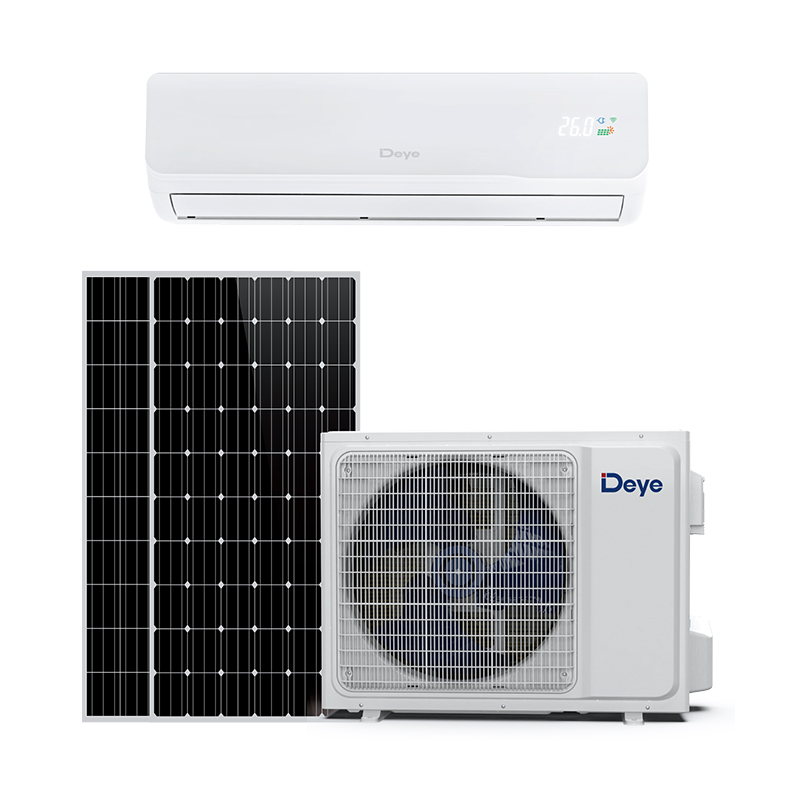
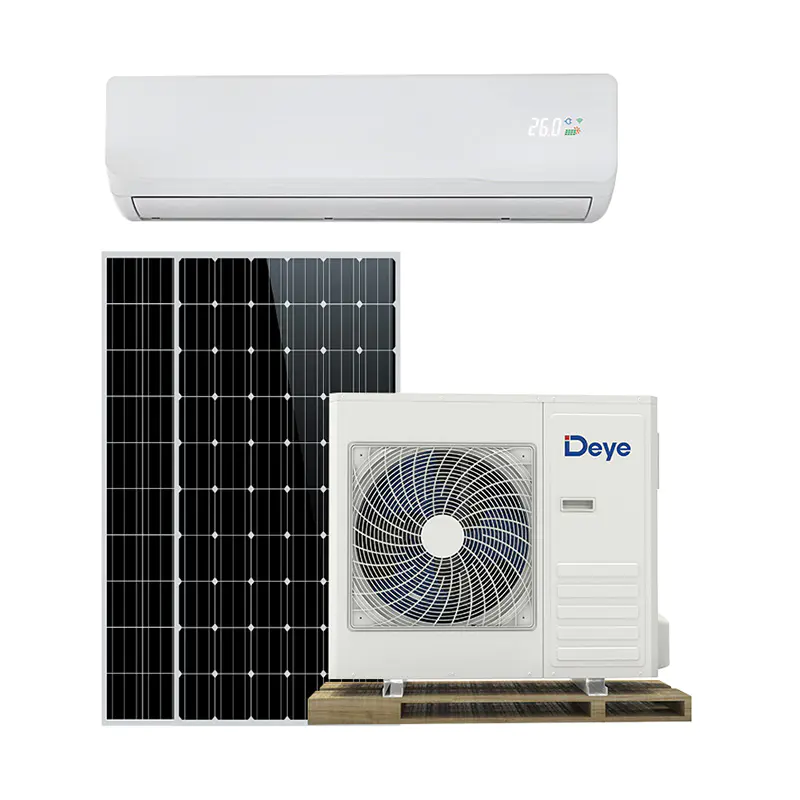
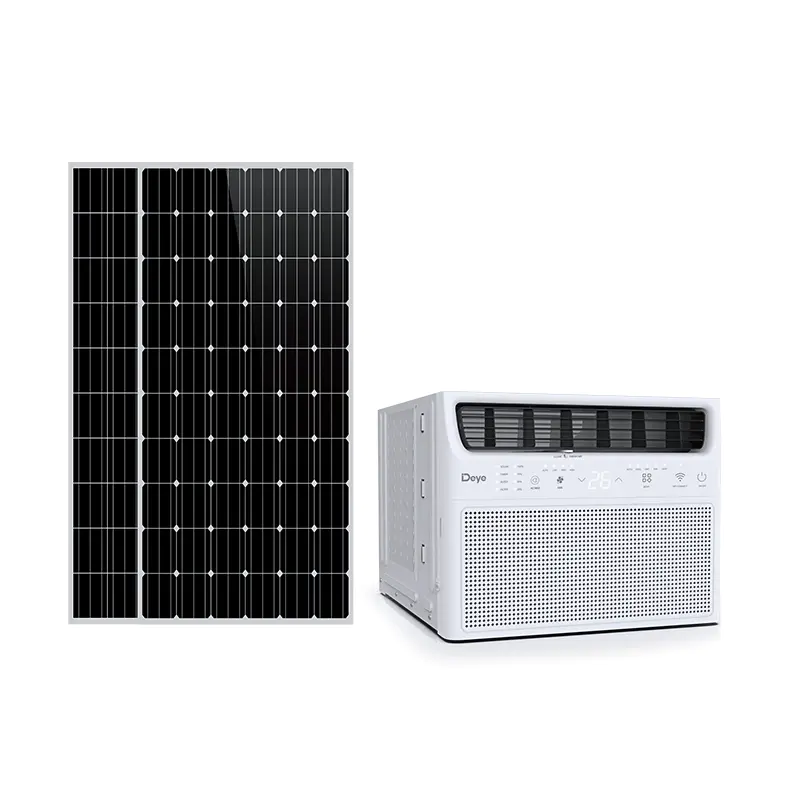
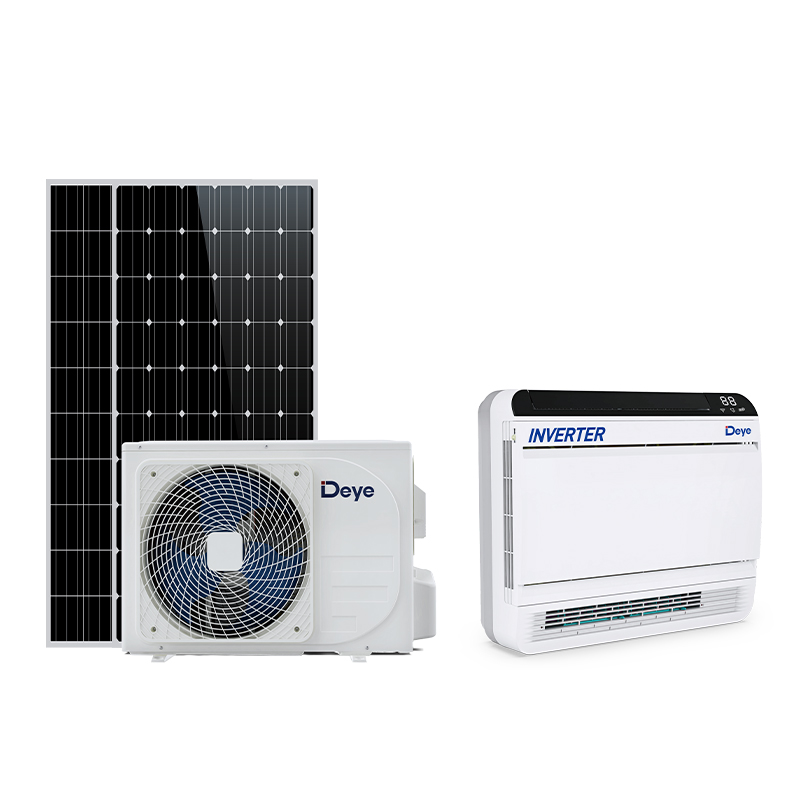
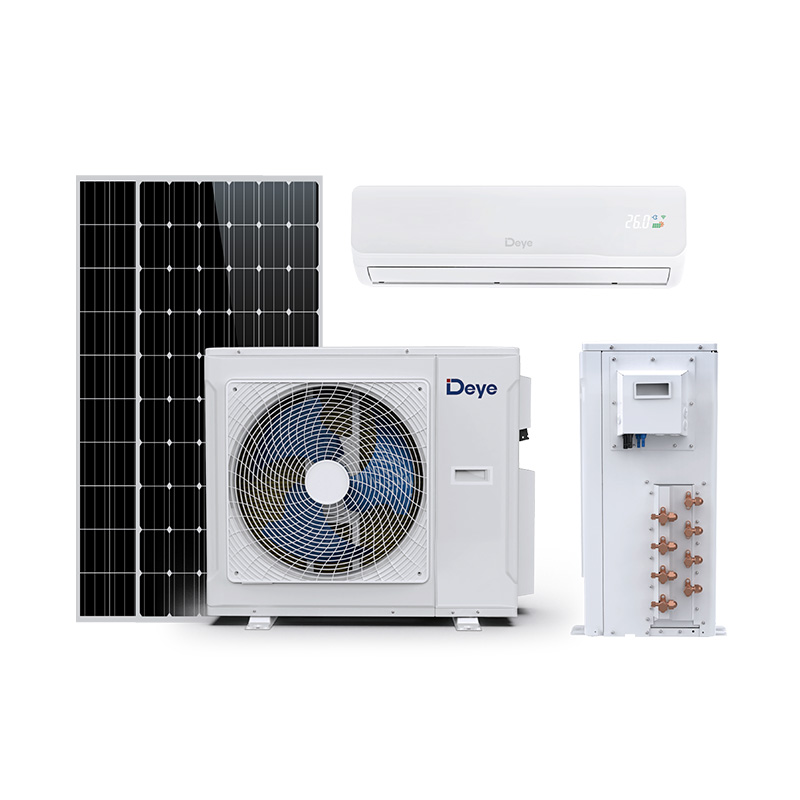
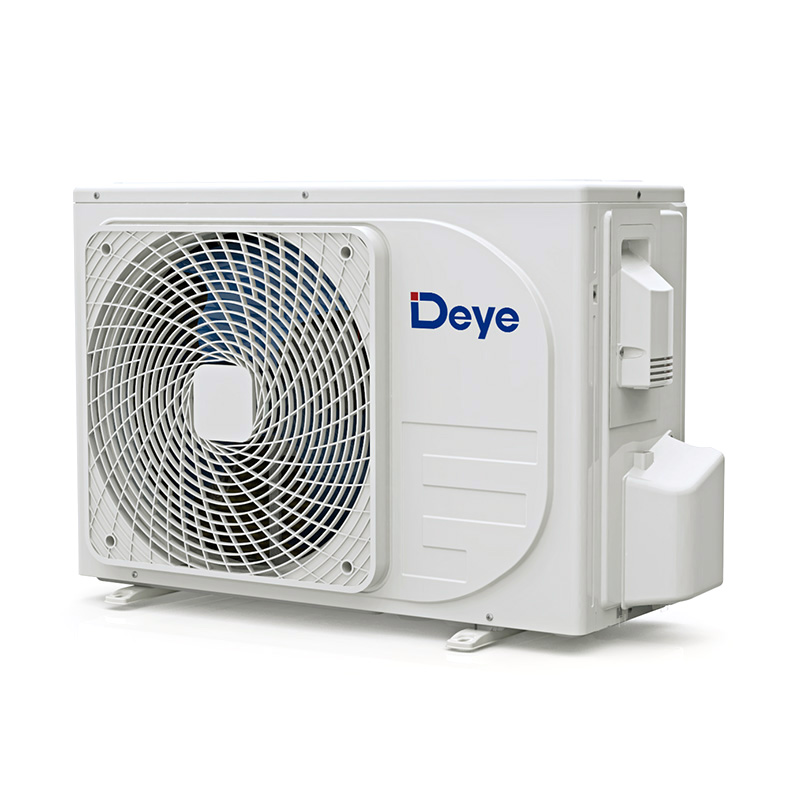 Wall-Mounted Hybrid Solar AC in R410A and R32Split wall-mounted solar air conditioner with MPPT and DC inverter, available in R410A or R32 for projects balancing refrigerant transition and off-grid placement.View Product →
For projects that need to keep both refrigerant options open across a product range, a wall-mounted hybrid AC/DC platform offered in both R410A and R32 variants lets one specification cover markets sitting at different stages of regulation. Our technical team can walk through charge limits, array sizing and control settings for a specific site, so get in touch before the specification is frozen.
Low-ambient operation: where R32 needs the most attention
Heating at low outdoor temperature is the hardest duty for any heat pump, and the higher discharge temperature of R32 concentrates the risk exactly there. At minus 15 °C ambient the compression ratio climbs, discharge temperature climbs faster than it would on R410A, and lubricant film strength becomes the limiting factor rather than capacity.
Designs that handle this well share a few traits. Vapour injection at low ambient, a discharge temperature sensor that actively trims the compressor envelope, and a defrost strategy driven by actual coil frost rather than a fixed timer. Engineered properly, R32 low-temperature units hold usable capacity in conditions where earlier R410A platforms had to fall back on electric resistance heat.
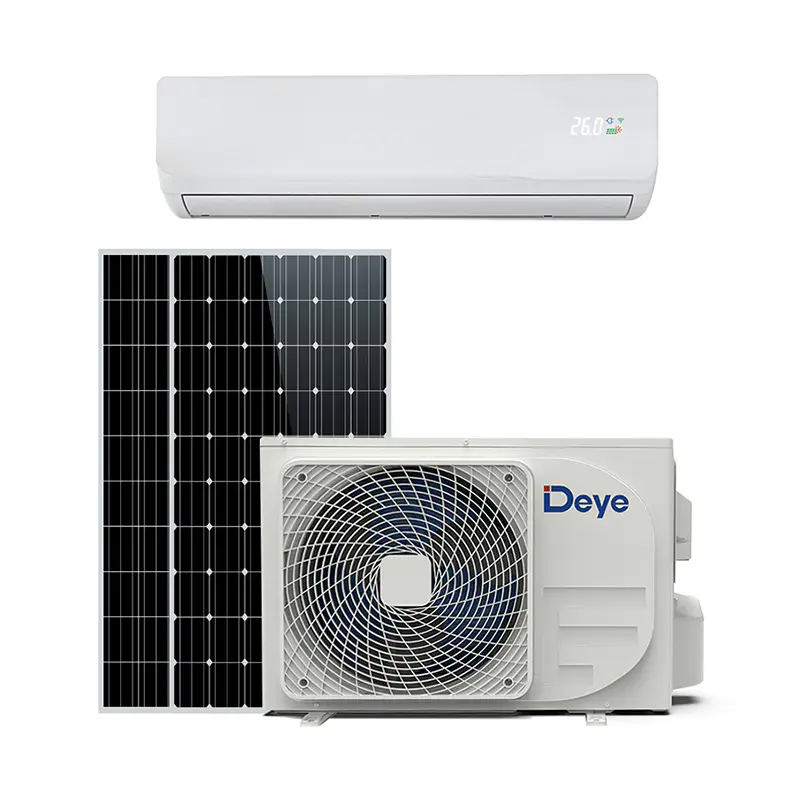
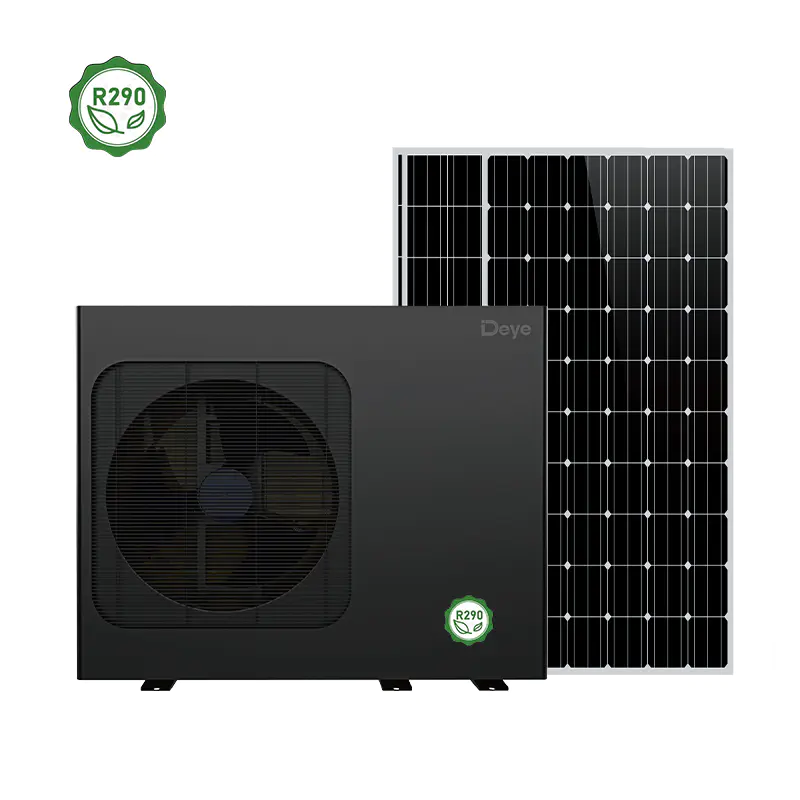
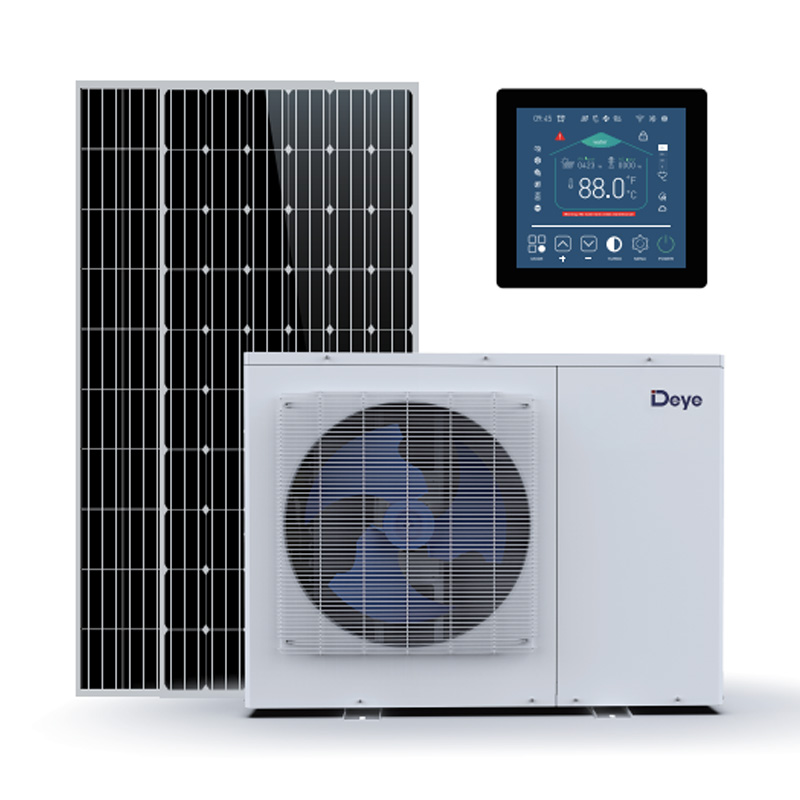
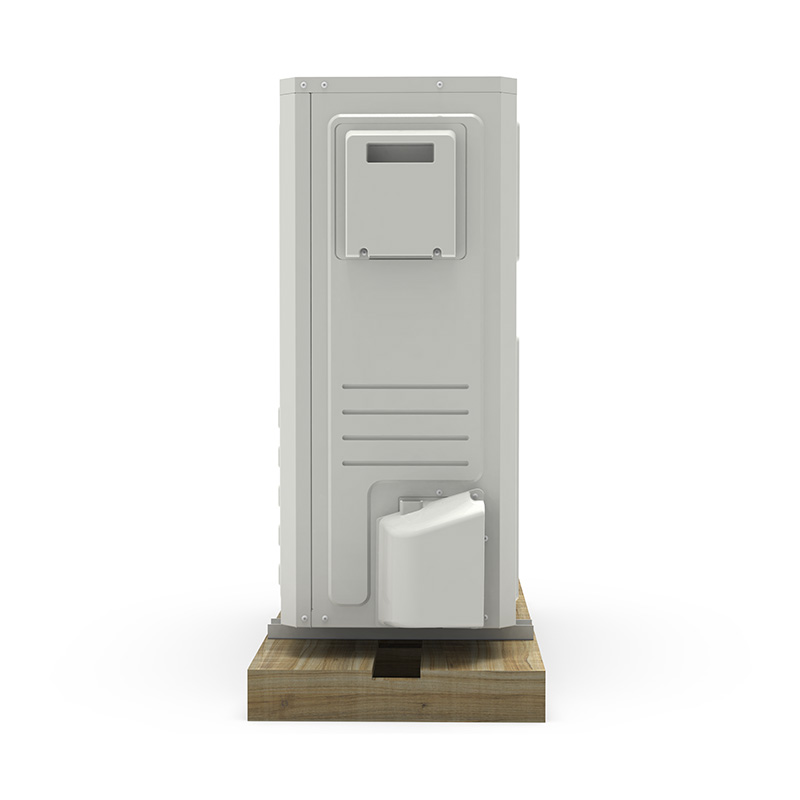 Low-Temperature Hybrid Solar AC with R32 and EVIR32 solar air conditioner for cold-climate heating, with enhanced vapor injection and DC inverter control, switching between solar DC and grid AC.View Product →
For cold-climate projects, ask two questions of any supplier. At what ambient temperature is rated heating capacity published, and what mechanism limits discharge temperature at that point? A datasheet number without those two answers behind it is not a specification, it is a marketing headline.
Light commercial ducted and cassette units: matching refrigerant to the building
Light commercial applications change the charge-limit calculation. A cassette serving a large open retail floor has far more room volume to work with than a bedroom unit, so the A2L charge limits that constrain residential design rarely bind in the same way.
Where they do bind is in small offices, hotel rooms and partitioned spaces, which are exactly the places cassette and ducted units frequently get installed. That makes the room-by-room check part of the design work, not an afterthought during commissioning.
R410A remains a defensible choice for light commercial work in markets where regulation has not yet tightened, mainly because the service network knows it well and the A1 classification simplifies approval in partitioned buildings. Where the project sits in a market already pressing on GWP thresholds, specifying R32 from the start avoids a redesign in three to five years.
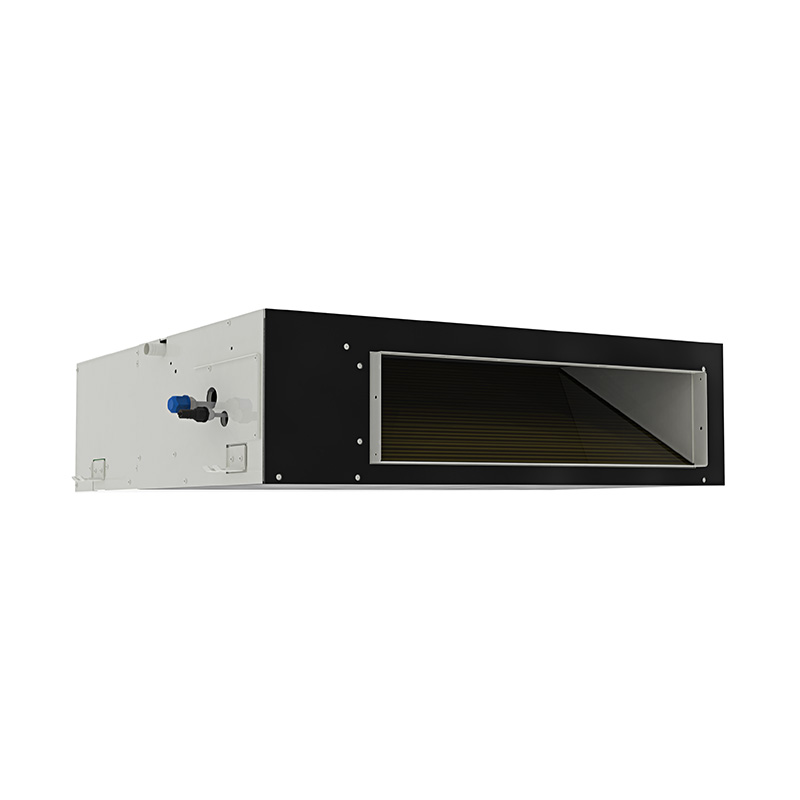
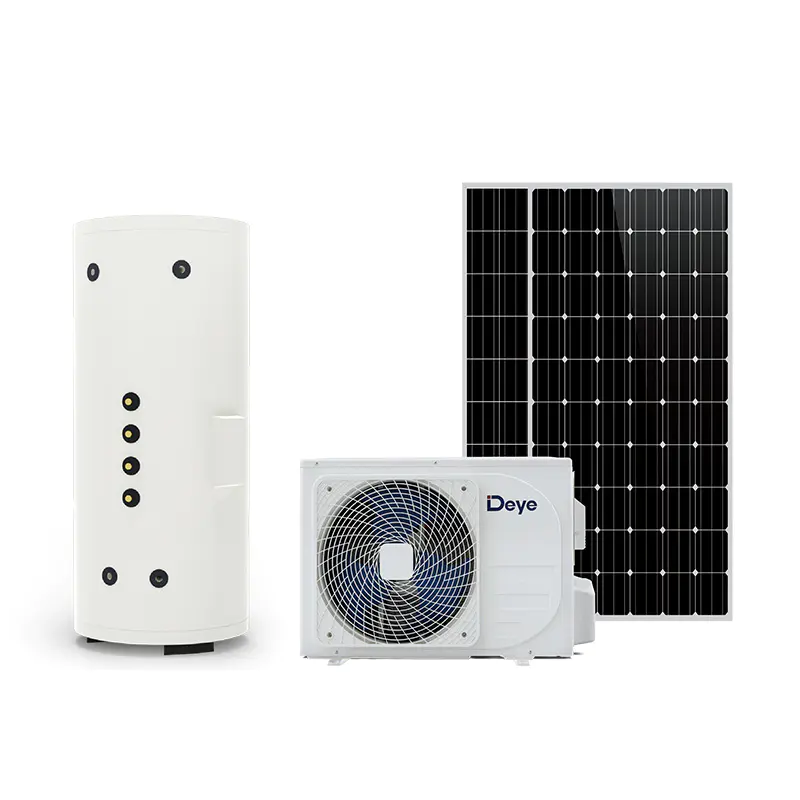
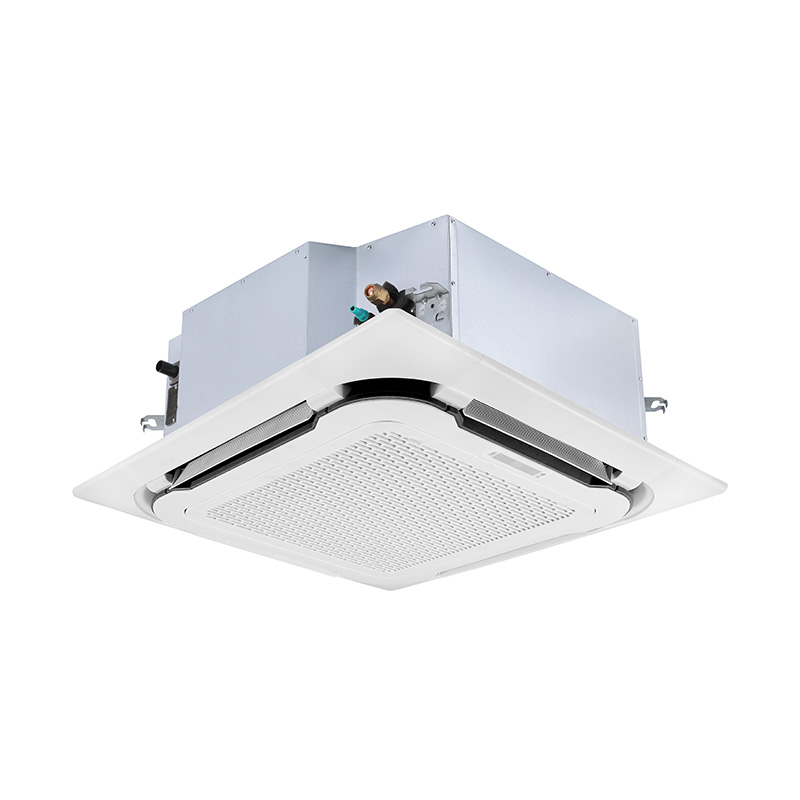 Light Commercial Cassette Solar AC in R410A/R32Ceiling-mounted cassette solar air conditioner with DC hybrid operation, four-way airflow and Wi-Fi control, offered in R410A or R32 for phased light-commercial projects.View Product →
Ducted and cassette platforms offered in both refrigerants give a project team room to phase the transition: R32 for new-build phases, R410A where the existing installed base has to stay uniform for maintenance and spare-part reasons.
Five procurement mistakes that show up again and again
- Comparing GWP without comparing charge. A 3 kg R32 charge and a 4.2 kg R410A charge are not separated by a factor of three; they are separated by more than that once the charge difference is applied.
- Reading efficiency across incompatible test standards. Seasonal figures from different rating regimes cannot be set side by side without conversion, and the conversion gap is frequently larger than the gap between the two refrigerants.
- Ignoring the room-volume calculation until commissioning. A2L charge limits are a design input. Discovering them after the cassette is already on the ceiling is an expensive way to learn.
- Assuming R32 is a drop-in replacement. It is not. Different pressure curve, different discharge temperature, different safety class, different allowable charge.
- Costing only the first fill. Service gas availability across ten years is the larger number, and it moves in opposite directions for these two refrigerants.
There is one further point that does not fit neatly into a list: refrigerant selection interacts with how the equipment will be maintained. A site with a contractor trained on R410A will often get better outcomes from an R410A machine than from an R32 machine nobody on site has been trained to handle. The refrigerant is only as good as the service standing behind it. For hybrid and solar-assisted systems, the special requirements around refrigerant selection are covered in more depth in our refrigerant selection guide for hybrid systems.
Frequently asked questions
Can R32 be used to top up an R410A system?
No. They are different refrigerants with different pressure-temperature curves, different discharge temperatures and different safety classes. Mixing them produces a fluid with unknown properties and voids any equipment warranty. A system designed for R410A must be charged with R410A, and a system designed for R32 with R32.
Is R32 actually more dangerous than R410A?
It is classified A2L, which means lower flammability rather than high flammability. It will not ignite under normal handling conditions, and the standards governing charge limits, ventilation and ignition sources exist to manage the residual risk. The realistic risk comes from untrained handling, not from the classification itself.
Which refrigerant gives better efficiency in real buildings?
R32 usually wins by 5% to 10% when systems are designed for it from the ground up. In retrofits, or in designs where only the refrigerant changed and nothing else did, the gap narrows or disappears. Seasonal efficiency in a real building is driven more by part-load control logic and installation quality than by the refrigerant alone.
Why do some suppliers still offer R410A equipment?
Because large installed bases still need matching equipment and spare parts, and because some markets have not yet restricted R410A in new small and medium equipment. Offering both lets a project stay uniform across phases while the regulatory position settles.
Will R410A refrigerant still be available in ten years?
It will be available, but likely at a higher price and with more supply volatility, because production is contracting under phasedown quotas while the installed base needing service gas remains large. Budgeting for rising service costs is more realistic than assuming stable pricing.
Does a lower-GWP refrigerant automatically make a system more sustainable?
No. Lifetime emissions include electricity consumption, and in cooling-dominated climates that share usually dominates the total. A lower-GWP refrigerant reduces the direct emission ceiling, but the indirect side depends on efficiency, control strategy and how the building is actually operated.
