

 Español
 русский
 Français
 Português
 Deutsch
 عربى
عربى italiano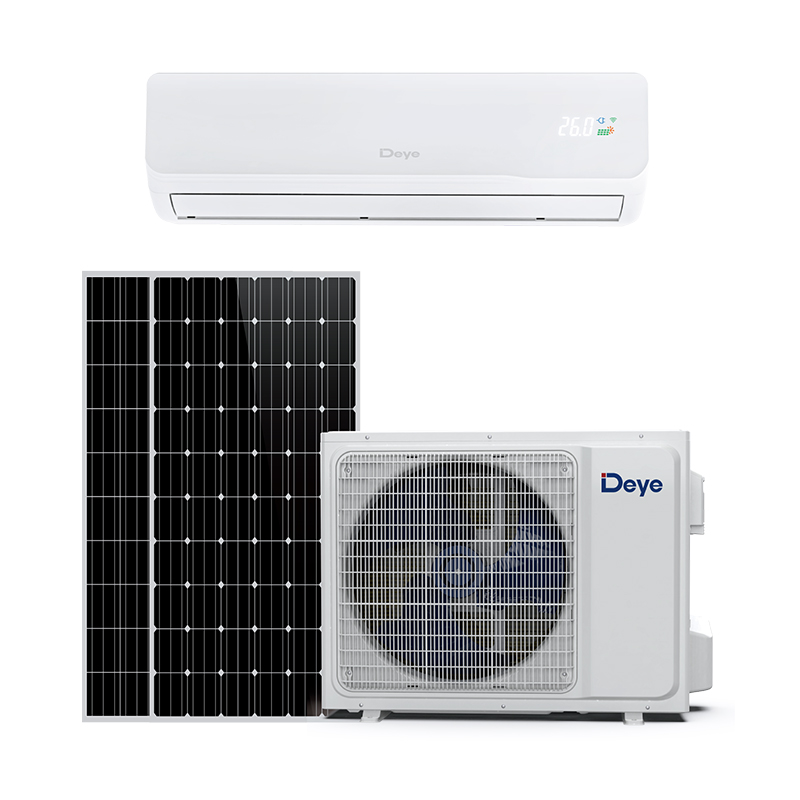
-1.jpg)

Content
- 1 What Is a Solar Powered Air Conditioner?
- 2 How a Solar Powered Air Conditioner Works
- 3 Main Types of Solar Air Conditioners
- 4 How to Size a Solar Panel System for an AC Unit
- 5 Cost, Savings, and Payback Period
- 6 Installation Requirements and Considerations
- 7 How to Choose the Right Solar Air Conditioner for Your Situation
- 8 Bottom Line: Is a Solar Powered Air Conditioner Worth It?
What Is a Solar Powered Air Conditioner?
In a sun-belt state like Florida or Texas, the hottest hours of the day are also the most expensive ones. Air conditioners pull their heaviest load just as afternoon electricity prices climb, which is why so many homeowners begin researching solar powered air conditioners in the middle of July. The principle is straightforward: use the sun's energy at the moment you need cooling most.
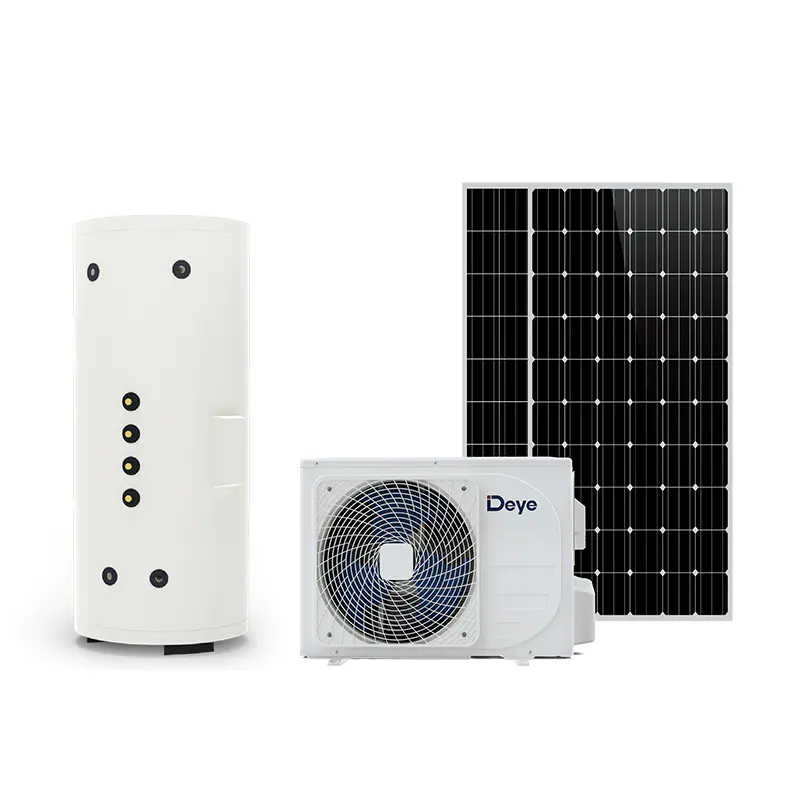
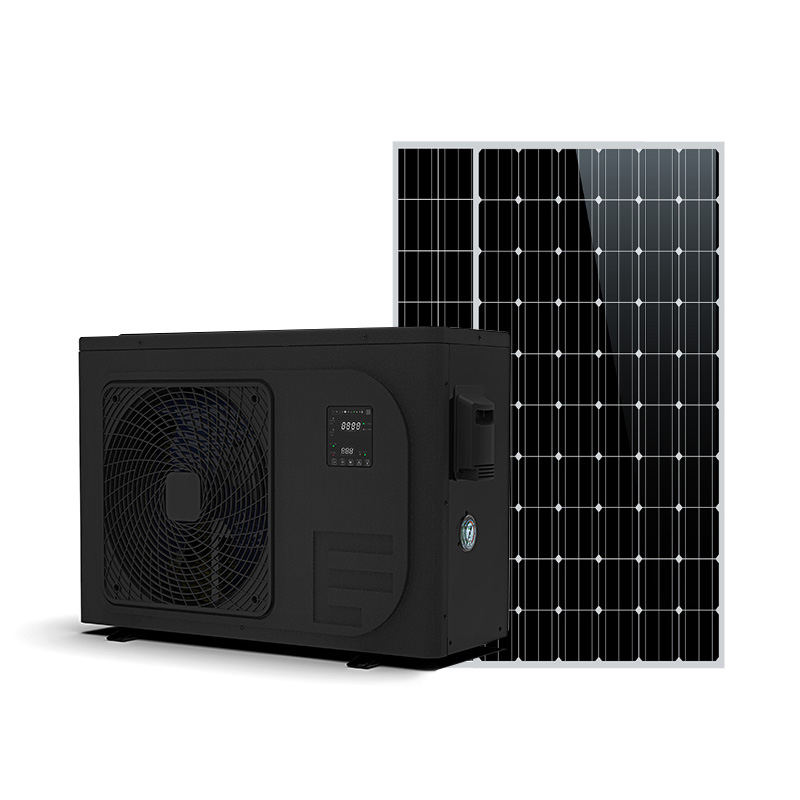
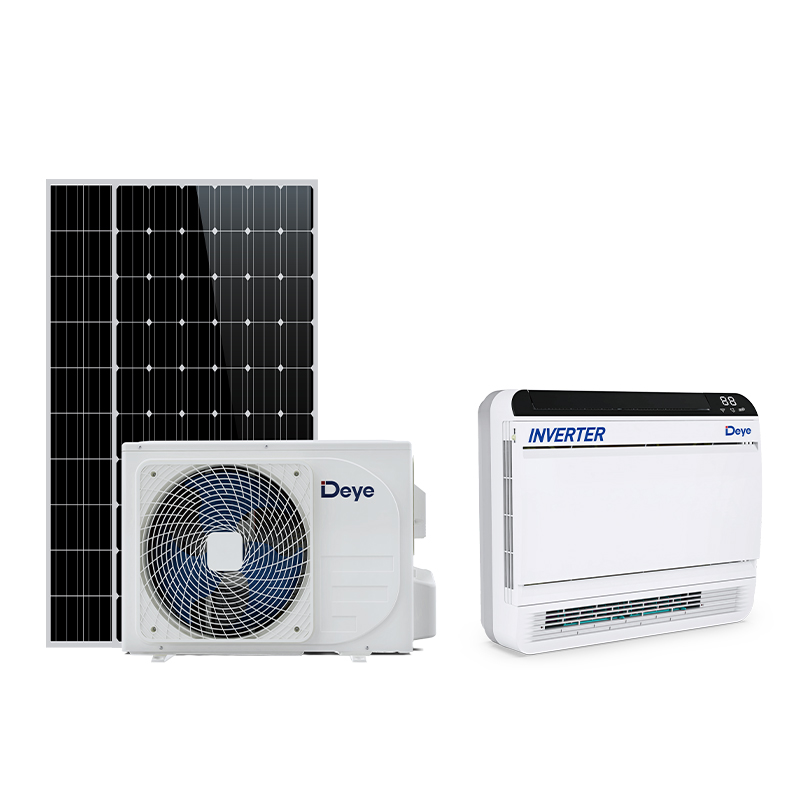
A solar powered air conditioner is a cooling system that runs partly or entirely on electricity from photovoltaic panels. The phrase covers two different approaches. The first is a dedicated solar air conditioner, usually a mini-split with a DC compressor that can run directly from solar panels, either on its own or combined with grid power. The second is a conventional air conditioner powered by a whole-home solar array through a standard inverter.
This guide focuses on the first approach, because that is where the practical questions live: which type to buy, how many panels you need, what it costs, and whether the payback is real.
How a Solar Powered Air Conditioner Works
Solar panels generate direct current (DC). Standard air conditioners run on alternating current (AC). Every solar air conditioning design is essentially an answer to that mismatch.
Some off-grid units avoid the mismatch entirely: the DC array feeds a DC compressor directly, with no inversion step, which is the most efficient path available. Other systems invert the panel DC to AC, feed a conventional unit, and accept the conversion losses. Hybrid AC/DC systems, the type you will see most often on the market, combine both paths in one air conditioner. The unit accepts solar DC on one input and grid AC on the other. Its controller prioritizes solar power and draws from the grid only when the panels cannot cover the load. At night or under heavy cloud cover, it simply runs on grid power like a normal unit, with no manual switching and no battery required. For a closer look at the switching logic, see how hybrid AC/DC solar air conditioners work.
Inverter experience matters in this design. A variable-speed DC compressor needs precise control to shift smoothly between solar and grid input, and that is exactly the capability built on years of inverter-drive development. Deye, for example, has been refining 180-degree sine wave DC inverter controller technology since 2007, a technical foundation that carries directly into its solar air conditioning products.
Main Types of Solar Air Conditioners
When you compare products today, you will find three practical categories.
Hybrid AC/DC Solar Air Conditioners
Hybrid AC/DC units are built for homes and businesses that already have grid power but want lower cooling bills. The controller decides moment by moment whether to use solar DC or grid AC. On a sunny afternoon, a hybrid mini-split can run almost entirely on the sun for six to eight hours, which is the exact window when many U.S. households pay their highest electricity rates.
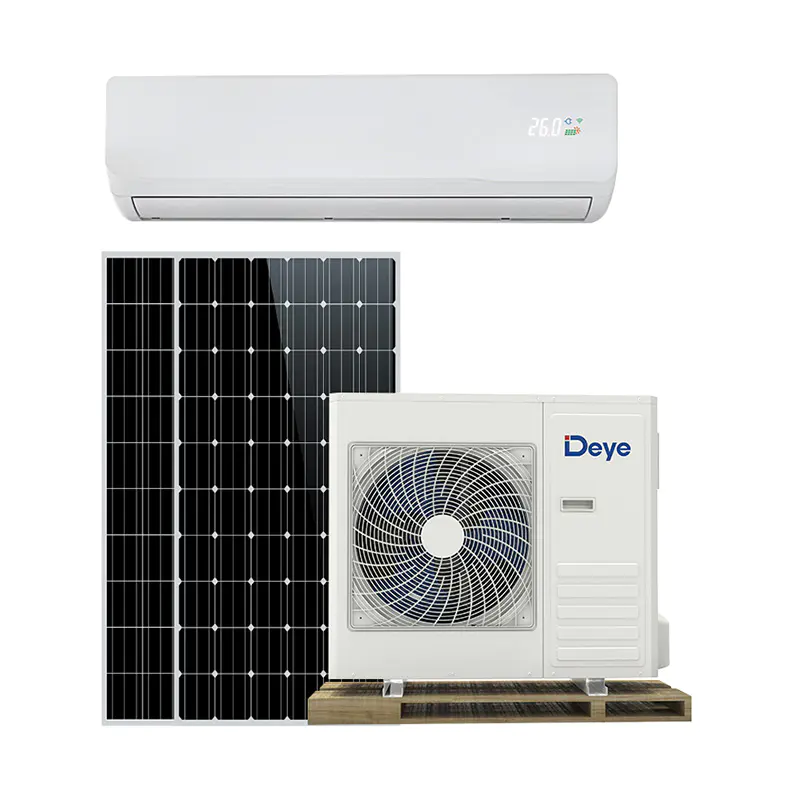
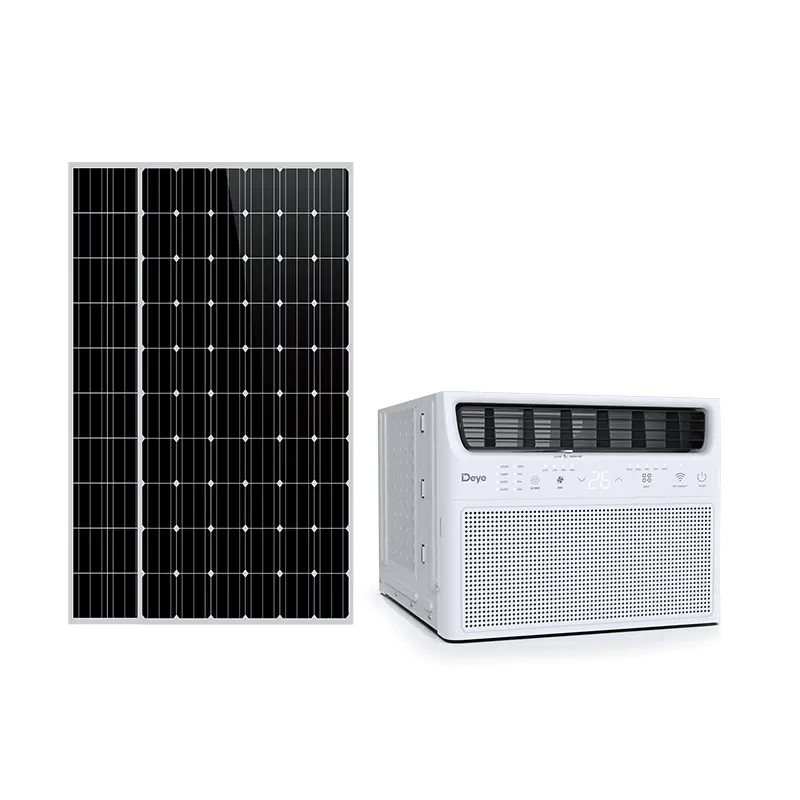
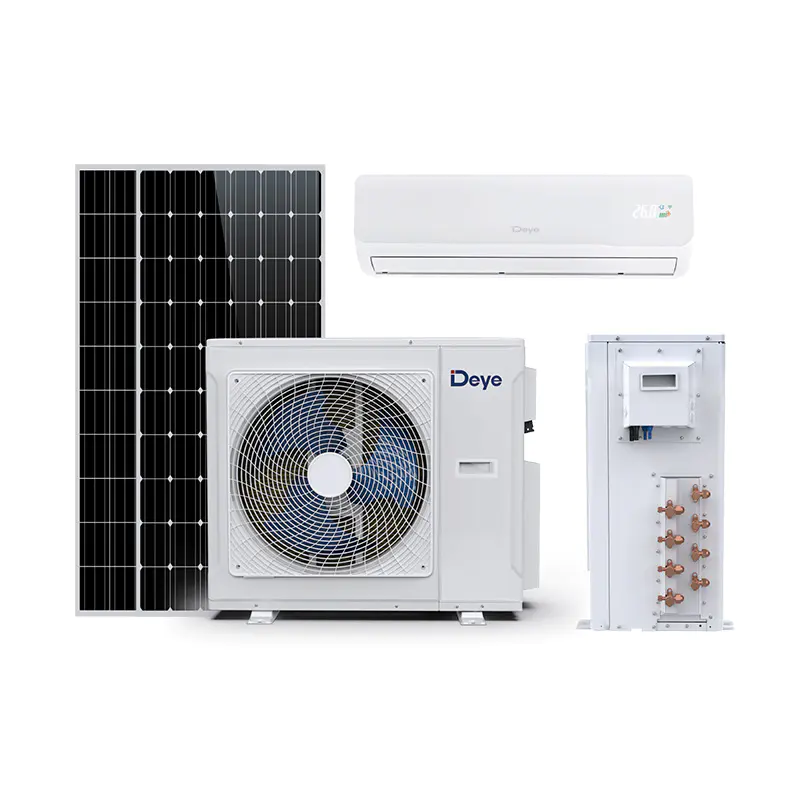
These units are most often wall-mounted mini-splits, available with R410A or R32 refrigerant and in cooling-only or heat-pump versions. If your grid is reliable and your goal is to reduce monthly bills, this is the category to start with. A typical representative is the hybrid AC/DC wall-mounted solar air conditioner from Deye.
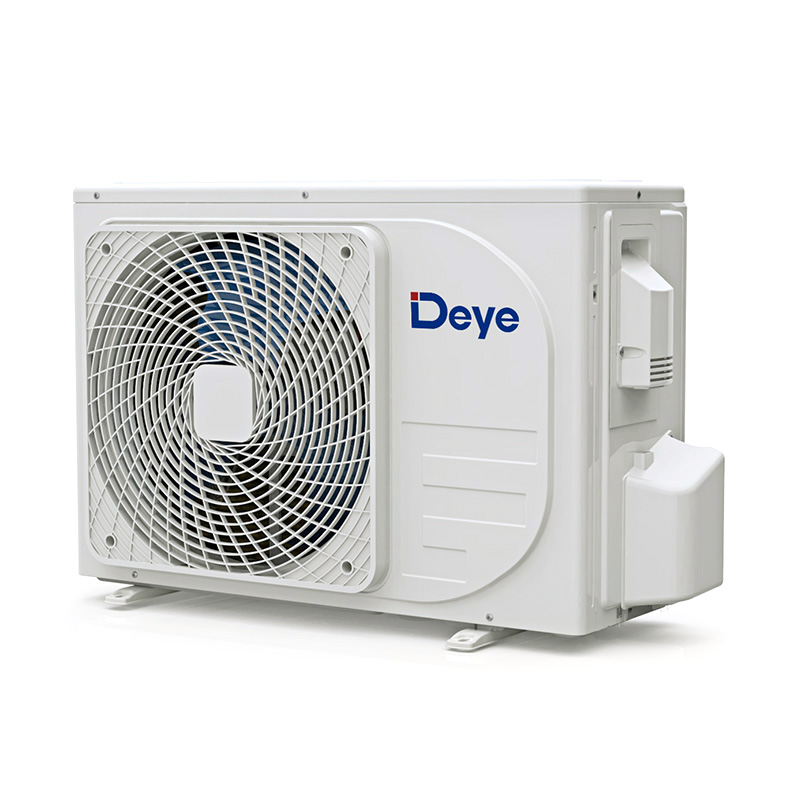 Dga2-Acdcblw-12k Wall Mounted Solar AC-Hybrid ACDC Solar Air Conditioner R410A/ Zhejiang Deye HVAC Technology Co., Ltd. is China Dga2-Acdcblw-12k hybrid ACDC solar air conditioner manufacturers and suppliers, our fact...View Product →
Off-Grid DC Solar Air Conditioners
Off-grid DC units are designed for places the grid never reaches or cannot be trusted: horse barns, hunting cabins, workshops, and buildings in weak-grid regions. They typically operate on a 48V DC bus, the same voltage used by common off-grid battery banks and charge controllers. Panels can drive them directly during daylight, and batteries can extend cooling into the evening.
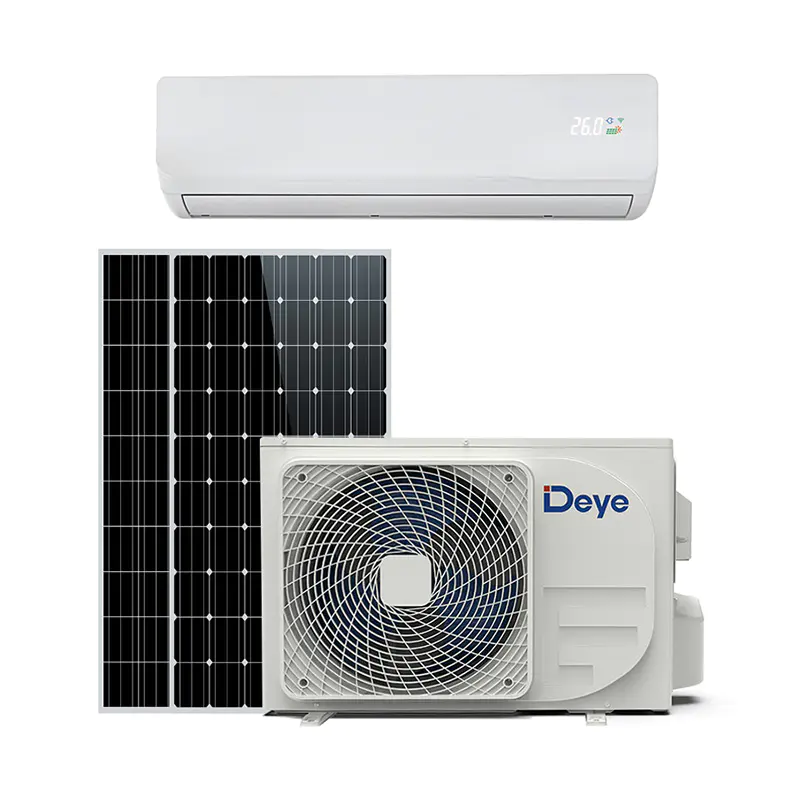
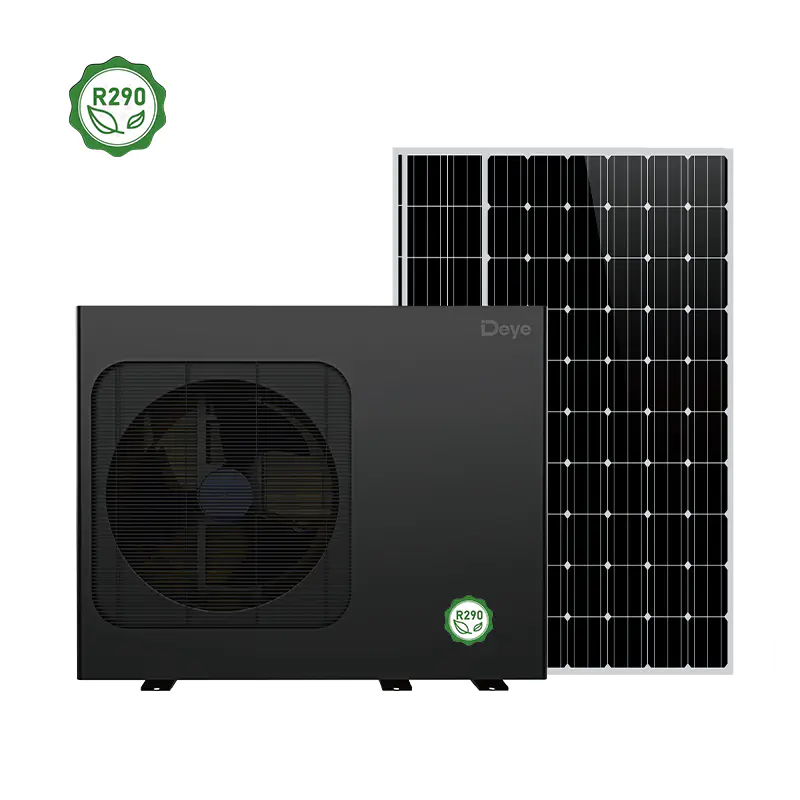
Because there is no AC inverter in the path, these units are electrically simple and highly efficient in remote settings. The tradeoff is that they are not designed to connect to the grid, so they make sense only where grid power is unavailable or severely unstable. For genuinely remote projects, the off-grid 48V DC solar air conditioner is the standard answer.
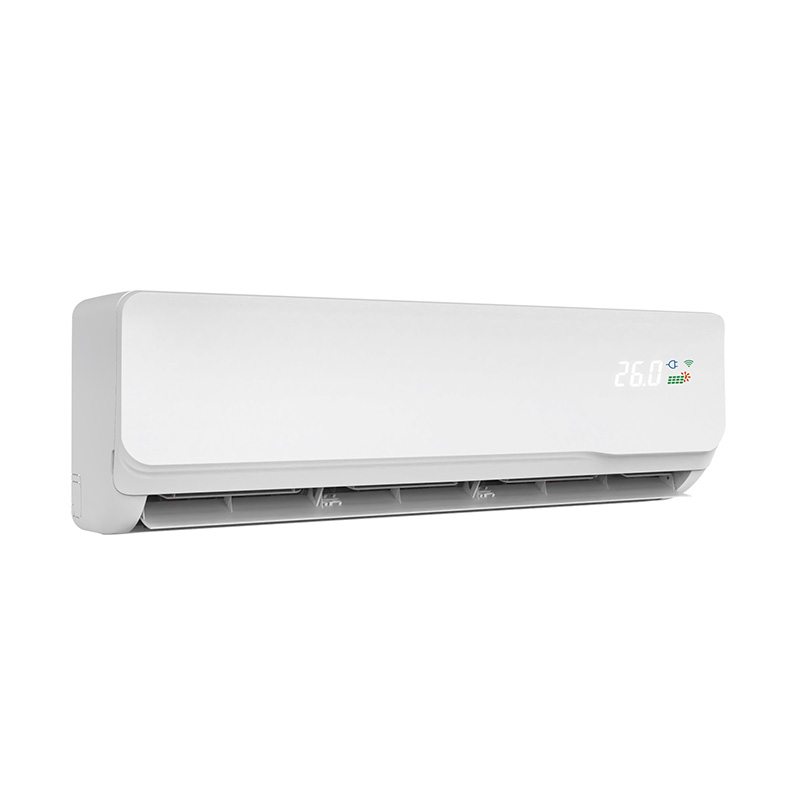 OEM/ODM Wall mounted Solar AC-Off grid DC 48V R410A Manufacturers, Suppliers, FaZhejiang Deye HVAC Technology Co., Ltd. is China OEM/ODM Wall mounted Solar AC-Off grid DC 48V R410A suppliers and Wall mounted Solar AC-...View Product →
Grid-Tied Solar Plus Conventional AC
The third option uses no special air conditioner at all. You install a standard rooftop solar array, the inverter produces AC, and your existing air conditioner runs from the house supply. This is also the retrofit path: if you already own a conventional AC unit and want to run it on sunshine, you add panels to the roof rather than replacing the unit.
This approach works well when you want one solar system to serve the whole home. Its limitations are worth understanding. Every watt travels through two conversions, DC to AC for the house and then back to DC inside an inverter-driven compressor, so there is an efficiency loss that a dedicated solar unit avoids. Without batteries, a grid-tied system shuts down during a power outage for safety, even in full sun. And net metering rules vary by state and utility, so the credit you receive for exported power may be far below the retail rate you pay. For many homes this path still makes excellent sense, but the economics belong to the overall solar system rather than to the air conditioner.
How to Size a Solar Panel System for an AC Unit
The most common sizing mistake is choosing panels by the air conditioner's BTU rating instead of its electrical input. BTU/h describes cooling output; watts describes what the compressor actually draws. A 12,000 BTU/h inverter mini-split typically consumes roughly 900 to 1,100 watts at full load, depending on efficiency.
A practical rule of thumb for direct solar operation is to size the panel array at 1.3 to 1.5 times the air conditioner's rated input power. The extra margin covers inverter and controller losses, panel heating, dust, and passing clouds, so the unit receives close to full solar coverage during peak sun hours.
For example, a 1,000-watt unit would want roughly 1,400 watts of panels. With today's 400 to 450-watt residential modules, that is three to four panels. The table below gives general reference ranges for common mini-split capacities. These are estimates for typical inverter equipment, not guarantees for any specific model.
| Typical Cooling Capacity | Typical Rated Input Power | Recommended Array (1.3-1.5x) | Number of 400-450W Panels |
|---|---|---|---|
| 9,000 BTU/h | 700-900 W | 1,000-1,300 W | 3 |
| 12,000 BTU/h | 900-1,100 W | 1,300-1,600 W | 3-4 |
| 18,000 BTU/h | 1,400-1,700 W | 1,900-2,500 W | 5-6 |
| 24,000 BTU/h | 1,900-2,300 W | 2,600-3,400 W | 6-8 |
Actual output also depends on latitude, roof orientation, shading, and local sun hours. If a hybrid unit will fall back to the grid at night, size the array for daytime coverage only; oversizing adds cost without proportional savings.
Cost, Savings, and Payback Period
Total cost includes five parts: the air conditioner itself, the photovoltaic panels and mounting hardware, cables and control components, optional batteries, and installation labor. In most small residential projects, panels and labor dominate the budget. Because installer pricing varies widely, it is smart to collect several quotes.
Savings come from replacing grid electricity consumed during peak daylight hours with free solar power. If a hybrid unit runs on the sun for six to eight hours per day in a region with electricity rates around 18 to 30 cents per kilowatt-hour, the monthly reduction is substantial. In high-sun, high-rate markets such as Australia, California, and Texas, owners commonly report payback in the range of three to seven years. In low-rate or low-sun areas, payback stretches further, and a conventional high-efficiency AC might be the better investment.
The factors that move payback most are your electricity rate, how many hours a day the unit operates at full load, your local sun hours, and any available incentives or tax credits. Batteries improve resilience but lengthen the payback period, so for grid-connected hybrid systems we usually recommend skipping the battery and letting the grid handle nights.
Installation Requirements and Considerations
Most installation issues are familiar to any solar contractor, but a few points are specific to solar air conditioning.
- Roof orientation and shading. In the northern hemisphere, face the panels south; in the southern hemisphere, face them north. Trees, chimneys, or neighboring structures that shade the array at midday directly reduce your free cooling hours.
- Electrical connection. Hybrid and grid-tied systems should be wired by a licensed electrician to switch safely between solar DC and grid AC and to meet local electrical codes. This is not a DIY task.
- Battery sizing for off-grid. If an off-grid unit runs only during daylight, no battery is needed. Night operation requires a 48V battery bank sized to the unit's input power multiplied by the expected evening running hours.
- Refrigerant choice. R32 has lower global warming potential than R410A and requires a smaller charge, but it is mildly flammable and demands certified handling. For most buyers, local service availability should decide.
- Comfort and monitoring. Solar mini-splits are inverter heat pumps, so cooling comfort is on par with premium conventional units. A display or app that shows watts from solar versus watts from the grid is genuinely useful for verifying savings.
How to Choose the Right Solar Air Conditioner for Your Situation
Once the categories are clear, selection becomes a matching exercise between your building and the system.
| Your Situation | Recommended System | Main Reason |
|---|---|---|
| Reliable grid with moderate or high electricity rates | Hybrid AC/DC mini-split | Solar covers daytime load; grid handles nights and clouds |
| No grid or very unstable grid | Off-grid DC 48V unit | Runs from panels or battery bank without any grid connection |
| Small shop, office, or retail space | Cassette or ducted light commercial unit | Ceiling installation, even air distribution, higher capacity |
| Cold climate with winter heating needs | Low-temperature hybrid heat pump | Keeps heating output in freezing conditions while using solar |
| Large home with multiple rooms | Multi-split solar system | One outdoor unit serves several indoor units with shared solar input |
- Reliable grid, high rates: choose a hybrid AC/DC wall-mounted mini-split. It installs like a normal mini-split, requires no battery, and keeps the grid as a backup.
- Genuinely off-grid: choose the DC route. A wall-mounted off-grid 48V DC unit operates directly from panels with optional battery storage.
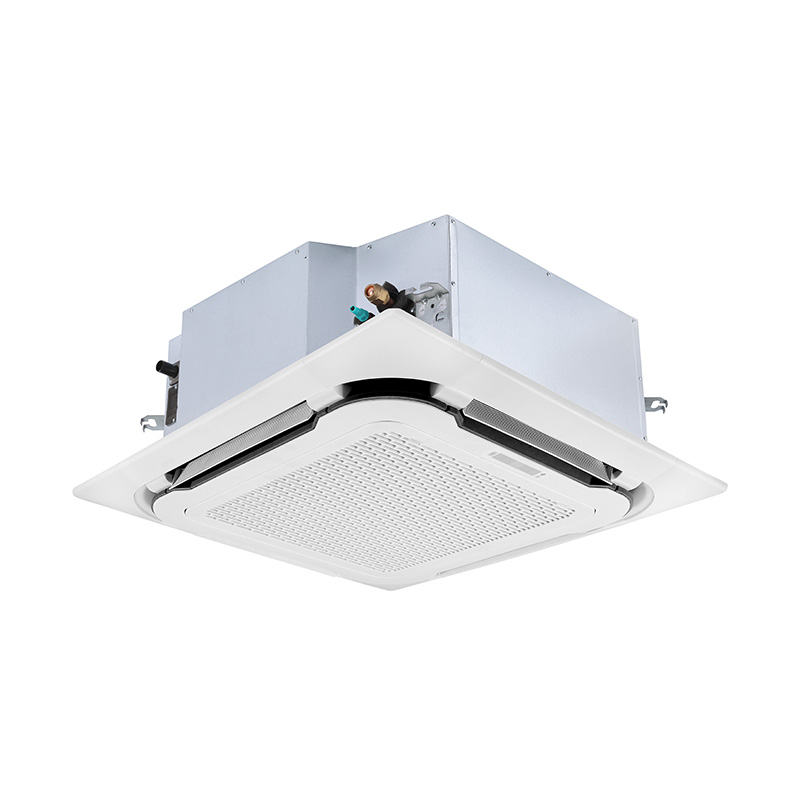
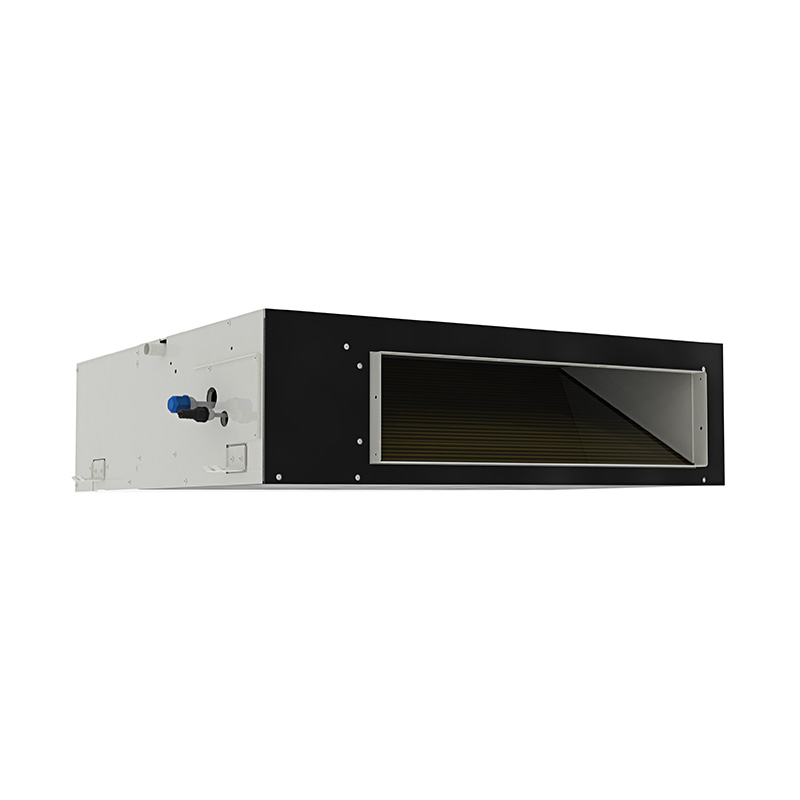
- Small shop, office, or cafe: choose a ceiling cassette. Deye's cassette-type light commercial solar AC
 Light Commercial Solar AC Cassette Type R410A/R32 Manufacturers, Suppliers, FactZhejiang Deye HVAC Technology Co., Ltd. is China light commercial solar AC cassette type manufacturers and suppliers, our factory custom ...View Product → distributes air evenly across the room and handles the higher, longer-running loads of customer-facing spaces.
 - Cold climate: specify a low-temperature heat pump version rather than a cooling-only unit.
- Multi-room home: look at multi-split systems with one outdoor unit serving several indoor wall or ceiling units.
Bottom Line: Is a Solar Powered Air Conditioner Worth It?
The answer is conditional, and for the right buyer it is clearly yes. Solar air conditioning works best when three conditions are present: strong local sun, moderate-to-high electricity rates, and most of your cooling demand concentrated in daylight hours. For that profile, a hybrid AC/DC unit is the lowest-risk choice. The grid remains as backup, no battery is required, and payback typically lands in the three-to-seven-year range in favorable markets.
Off-grid buyers face a different comparison. Their realistic alternatives are a generator, a battery-powered cooler, or no cooling at all. Against those options, an off-grid DC system usually wins on fuel cost, noise, and maintenance even before payback is calculated.
Grid-connected owners with an existing large solar array may be better served by powering a conventional high-efficiency AC from that system directly. The right answer depends on your roof, your utility rate structure, and whether you need outage protection.
The technology is mature. Deye's fourth-generation solar air conditioners are already sold in more than 20 countries, and the decision today is less about feasibility than about matching the right configuration to your property. A practical next step is to compare the mini-split solar air conditioner product range on the Deye website, then review your roof and load details with a qualified installer. You can also contact the Deye sales team directly for help with system matching.
