

 Español
 русский
 Français
 Português
 Deutsch
 عربى
عربى italiano
-1.jpg)

Content
Site Selection
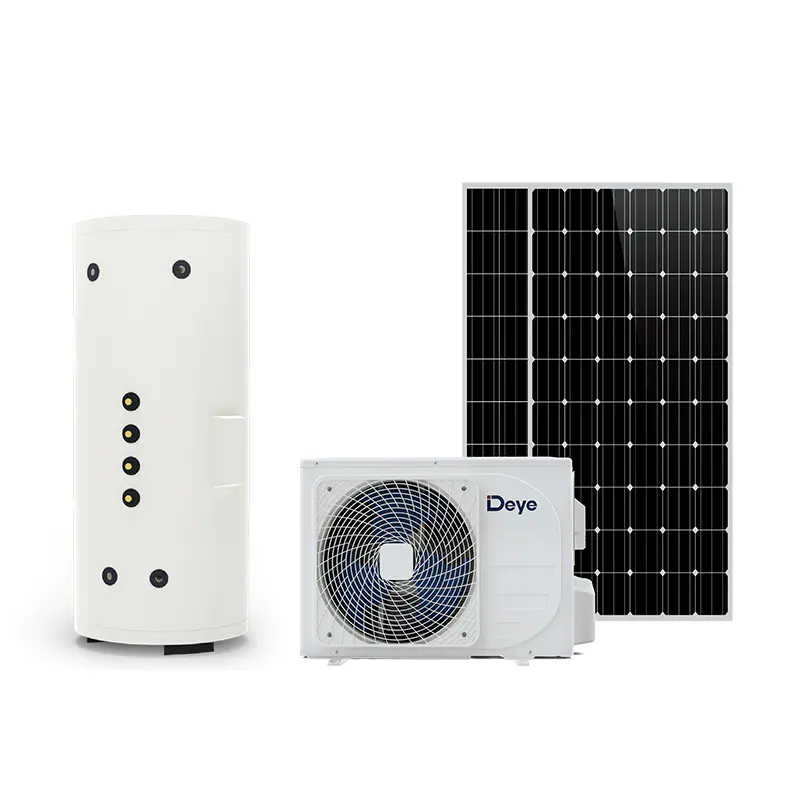
The performance of a Solar Air Source Water Heater (Hybrid AC/DC) is closely linked to its installation site. The solar collector should be positioned in an area with maximum sunlight exposure, free from shading caused by tall buildings, trees, or other obstacles. The air source heat pump’s heat exchanger requires unobstructed airflow to ensure efficient heat transfer. Avoid enclosed or stagnant-air locations that could compromise the unit’s performance and reduce overall heating efficiency.
Ground and Mounting Stability
The mounting structure must be robust enough to support the combined weight of the water storage tank, solar collector, and fan system. Outdoor exposure requires corrosion-resistant materials and rust-proof coatings. Wind load considerations should be factored into the design to prevent displacement or structural failure. The tilt angle and orientation of the collector should be optimized based on the local latitude and seasonal solar path to maximize year-round energy capture. Solid, level surfaces such as concrete pads or treated steel platforms are recommended to prevent tilting or operational issues.
Waterproofing and Moisture Protection
Outdoor environments expose the system to rain, snow, dew, and high humidity. The water storage tank, pipe connections, and electrical enclosures must have high-grade waterproof protection to prevent water intrusion, short circuits, or corrosion. The collector and heat pump casing should be UV-resistant and moisture-proof to extend service life. Piping should have proper drainage slopes to avoid water accumulation, and insulation must resist moisture to ensure freeze protection in winter and heat retention in summer.
Electrical Connection and Safety
Hybrid AC/DC systems combine alternating and direct current, making electrical safety paramount. All wiring should use UV-resistant, waterproof outdoor-rated cables with sealed connectors. Electrical enclosures must have proper grounding and include residual current devices (RCD) for protection. DC circuits should be clearly labeled for voltage and polarity to avoid misconnection. Installers should follow local electrical codes and standards to ensure long-term operational safety.
Airflow and Heat Pump Ventilation
The air source heat pump relies on ambient air for heat transfer. Ensure at least 50 cm of clearance around the heat exchanger to prevent recirculation of hot or cold air. Avoid corners or enclosed spaces that can reduce airflow and compromise efficiency. Exhaust outlets should not face walls or obstacles to maintain smooth airflow. In extremely cold conditions, auxiliary defrosting features or scheduled defrost cycles may be necessary to maintain winter performance.
Piping Layout and Insulation
Minimize outdoor pipe lengths to reduce thermal losses. Limit the number of bends to decrease pressure drop. Use weather-resistant, UV-stable insulation materials suitable for long-term outdoor use. In cold climates, consider electric heat tracing or antifreeze solutions to prevent pipe freezing and bursting. Secure all pipes properly to prevent vibration or wind-induced movement that could lead to damage.
Maintenance Accessibility
Outdoor installation should allow easy access for inspection, cleaning, and component replacement. Collectors, heat pumps, and storage tanks must have sufficient space for routine maintenance. Filters, fans, and electrical panels should be easily reachable for cleaning and inspection. Convenient access helps maintain system efficiency and prolong service life.
Wind Resistance and Extreme Weather Protection
Systems installed outdoors must account for extreme weather conditions. In high-wind areas, mounting structures should be reinforced to prevent displacement. Snow-prone regions require proper tilt angles and structural reinforcement to prevent deformation from heavy snow loads. Temporary protective measures during storms or hail can help reduce potential damage.
