

 Español
 русский
 Français
 Português
 Deutsch
 عربى
 italiano


Content
- 1 What Is a Hybrid ACDC Solar Window AC?
- 2 How It Works: Solar Priority, Grid Backup, and the Auto-Balance Logic
- 3 Core Technical Features to Evaluate Before Buying
- 4 Hybrid ACDC Solar Window AC vs Conventional Window AC
- 5 Sizing and Selecting the Right Solar Window AC
- 6 Installation, Circuit Safety, and Compliance
- 7 Real-World Energy Savings and Payback Calculation
- 8 Maintenance, Cleaning, and Common Faults
- 9 Where Hybrid Solar Window ACs Deliver the Most Value
- 10 Working with a Factory That Builds Solar AC Systems
- 11 Frequently Asked Questions
- 11.1 Can a hybrid ACDC solar window AC run completely on solar panels?
- 11.2 Do I need any extra equipment like a charge controller or inverter?
- 11.3 Will it work at night or on cloudy days?
- 11.4 Are these window ACs noisy?
- 11.5 Can I use it to heat the room in winter?
- 11.6 How many solar panels does a 12,000 Btu/h unit need?
A small apartment above a laundry room, a metal-roof workshop in a hot inland city, a remote mountain cabin with weak grid supply—these are the real places where a hybrid ACDC solar window AC earns its keep. Unlike a conventional window unit that only draws AC power from the outlet, this type of AC can take DC electricity directly from solar panels during the day, reduce the load on the grid, and switch back to AC when sunlight drops. It is not a niche gadget. For anyone who needs cooling in a limited space and wants to lower energy bills without installing a bulky multi-split system, it is one of the most practical solar-powered cooling solutions available today.
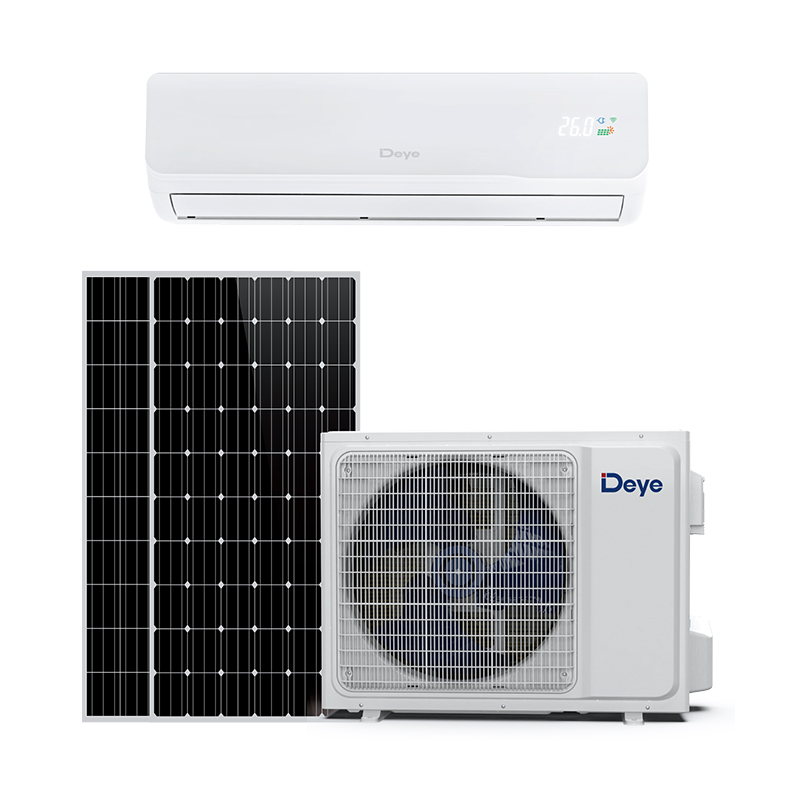
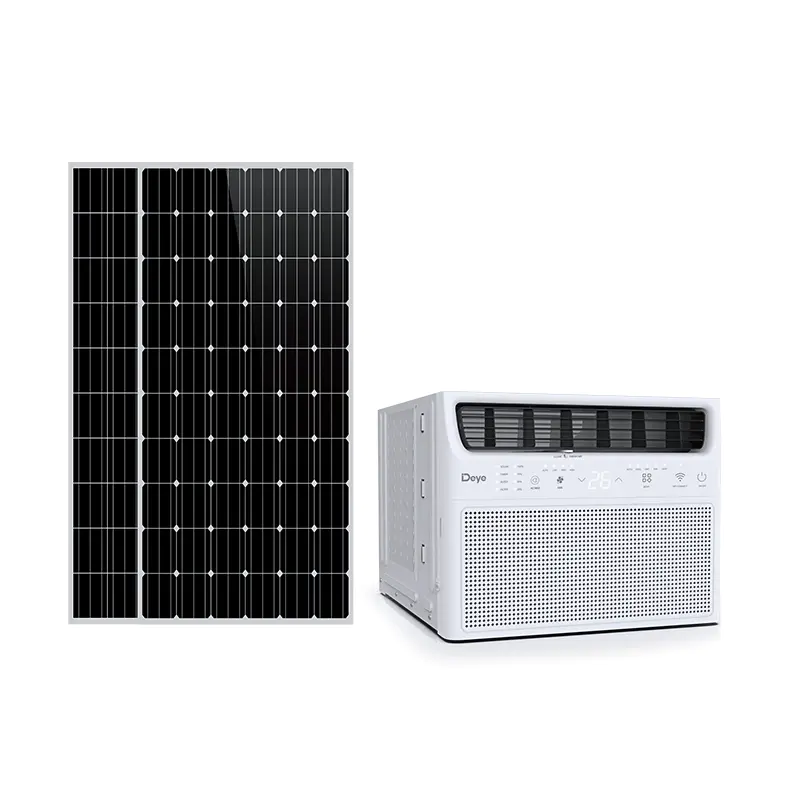 Hybrid ACDC Solar Window AC for Single-Room CoolingThis compact unit uses solar DC power when available, then switches to grid AC automatically, making it ideal for apartments, bedrooms, or offices seeking lower energy bills.View Product →
What Is a Hybrid ACDC Solar Window AC?
A hybrid ACDC solar window AC is a self-contained air conditioner designed to fit into a standard window frame while accepting two power sources: DC input from a photovoltaic array and AC input from the utility grid or a generator. The word “hybrid” here refers to the power supply logic, not the refrigerant or the compressor. Internally, the unit uses a DC inverter compressor, the same type found in many modern split ACs, but the control board is built to prioritize solar DC power whenever it is available.
From the user’s point of view, the benefit is simple: while the sun is shining, the AC runs mostly or entirely on solar energy. When clouds pass, in the evening, or on rainy days, it automatically draws AC power from the grid. No transfer switch is needed. The system decides for you. This is why these units are popular in places with high daytime electricity rates or unreliable grid power, because they reduce peak-time consumption without forcing occupants to monitor the weather.
Direct solar input
PV panels connect to the AC through a dedicated DC input, commonly operating in a range of 120–330 V DC, depending on the model. This avoids the efficiency loss of converting DC to AC through a separate inverter and then back to DC inside the air conditioner.
Grid backup
When solar power is insufficient, the unit seamlessly draws AC from the socket. The transition is not noticeable in normal operation, and it prevents cooling interruptions during cloudy periods or at night.
Inverter compressor
The DC variable-speed compressor adjusts its rotational speed to match the cooling load. This lowers the average power consumption and keeps the room temperature steadier than a fixed-speed window AC.
How It Works: Solar Priority, Grid Backup, and the Auto-Balance Logic
To understand why a hybrid ACDC solar window AC is more than an ordinary window AC with a solar sticker, it helps to look at the internal power flow. In a conventional solar air conditioning installation, you need solar panels, an inverter, and a separate AC unit. The solar electricity goes from the panels to an inverter, where DC is converted to AC, then the AC unit converts that AC back to DC for its compressor. Every conversion step loses a few percent of energy. A hybrid ACDC unit removes one conversion step when solar power is sufficient.
- Solar panels produce DC electricity during daylight hours.
- The built-in controller reads the solar DC voltage and current.
- If solar power exceeds the compressor and fan demand, the AC uses only solar DC and ignores the grid.
- If solar power drops below the demand, the controller blends in AC power from the grid and then uses its internal rectifier/DC bus to keep the compressor running without a hard stop.
- When the sun goes down, the unit runs fully on AC grid power like a normal high-efficiency window AC.
This logic is often called “auto-balance” or “solar priority.” The quality of this control algorithm determines how well the unit performs in real-world conditions. A badly designed controller may oscillate between solar and grid power, causing voltage fluctuations or repeated compressor speed changes. A well-designed controller, like the one used in our production line, adjusts the balance every few seconds and maintains a stable indoor temperature. For a more detailed discussion of the switching behavior and its technical advantages, see our analysis of hybrid ACDC automatic switching logic.
Core Technical Features to Evaluate Before Buying
Not every hybrid solar window AC is the same. When we build these units at our factory, we focus on features that directly affect reliability, comfort, and long-term ownership cost. Buyers who understand these features can ask better questions and avoid purchasing a unit that underperforms in the field.
| Feature | Why it matters |
|---|---|
| Wide DC voltage input range | Allows the AC to work with different solar panel string sizes. A wider range gives installers more flexibility in panel count and makes the unit less sensitive to partial shading. |
| DC inverter compressor | Uses less electricity at partial load, which reduces energy bills and prevents the compressor from short-cycling during mild weather. |
| Refrigerant type: R32 or R410A | R32 has a lower GWP and slightly better energy efficiency in many designs. R410A is a widely available service refrigerant in many markets. Both are acceptable, but the choice affects future service and environmental compliance. |
| Auto-balance solar/grid control | Prevents frequent switching between solar and grid power, which protects the compressor and improves reliability. |
| Self-cleaning and defrost functions | Self-cleaning removes dust from the heat exchanger more effectively in dry climates, while defrost helps the unit operate as a heat pump at low ambient temperatures. Not every window AC offers these. |
| Wi-Fi monitoring and remote control | Lets the owner monitor solar power generation, grid consumption, and room temperature from a mobile app. This is especially useful for vacation properties or rental units. |
These features are not just marketing points; they change the daily experience. A unit with a narrow DC input range, for example, may shut down when a cloud covers the panels, whereas a wide-range controller can keep operating on the reduced power without falling back to the grid. Similarly, a unit without defrost cannot be used for heating in cold weather, which limits its usefulness in spring and autumn.
Hybrid ACDC Solar Window AC vs Conventional Window AC
If you already have a working window AC, the main question is whether upgrading to a hybrid solar version is worth the extra upfront cost. The answer depends on your electricity rate, daily cooling hours, and roof or balcony space for solar panels. The table below gives a direct comparison of the two options.
| Aspect | Hybrid ACDC solar window AC | Standard window AC |
|---|---|---|
| Power sources | AC grid + DC solar panels | AC grid only |
| Energy cost during sunny hours | Near zero if solar is sufficient | Full grid price |
| Backup at night | Automatic grid power | Already grid power |
| Installation complexity | Requires solar wiring and perhaps a breaker | Plug into existing socket |
| Peak grid demand | Lower during the day, which helps in areas with demand charges | Highest every afternoon |
| Initial cost | More expensive, plus panels if not already installed | Lower purchase price |
| Payback | Usually 3–6 years depending on local electricity price | No payback, only running costs |
| Cooling performance | Same or better because compressor is inverter-driven | Fixed speed, more temperature fluctuation |
For a room that is used all day and receives strong sunlight, a hybrid solar window AC can cut the summer electricity bill by 40–70% depending on how many hours the PV panels can cover the load. For a room used only at night, the payback is much longer because solar power is not available. That is why it is important to think about your actual usage schedule before choosing.
Sizing and Selecting the Right Solar Window AC
Window ACs are sold by cooling capacity in British thermal units per hour (Btu/h). The right capacity depends on room area, ceiling height, window orientation, and local climate. A unit that is too large will short-cycle and fail to remove humidity; a unit that is too small will run for long hours without reaching the target temperature.
Small rooms and bedrooms
For rooms around 9–14 m², a 9,000 Btu/h class hybrid solar window AC is usually sufficient. If the room has poor ceiling insulation or large west-facing windows, choose the next size up.
Medium living areas
For 15–25 m² spaces with normal ceiling height, a 12,000 Btu/h unit provides a stronger safety margin. This is the most common category in our production line because it covers both small apartments and offices.
Open plan or commercial light-duty
For 26–35 m² rooms, look for a 18,000 Btu/h unit or a light commercial cassette/duct type if you do not want window-mounted equipment. A single window AC cannot always handle long or narrow spaces without uneven cooling.
Solar panel sizing rules of thumb
- For a 9,000 Btu/h hybrid window AC, a solar array of 900–1,200 W is generally an appropriate match.
- For a 12,000 Btu/h unit, use 1,200–1,500 W of panels to get at least five to seven hours of solar-only operation on a clear day.
- If you can only install fewer panels, the unit still works, but it will simply draw more AC power.
- Orient the panels in the direction that gives peak output during the hottest part of the day, usually south in the northern hemisphere.
To see how this product fits into a complete solar air conditioning lineup, compare it with wall-mounted hybrid units or light commercial cassette systems for larger rooms. The window type is best for single-room applications where wall mounting is not allowed or not desirable.
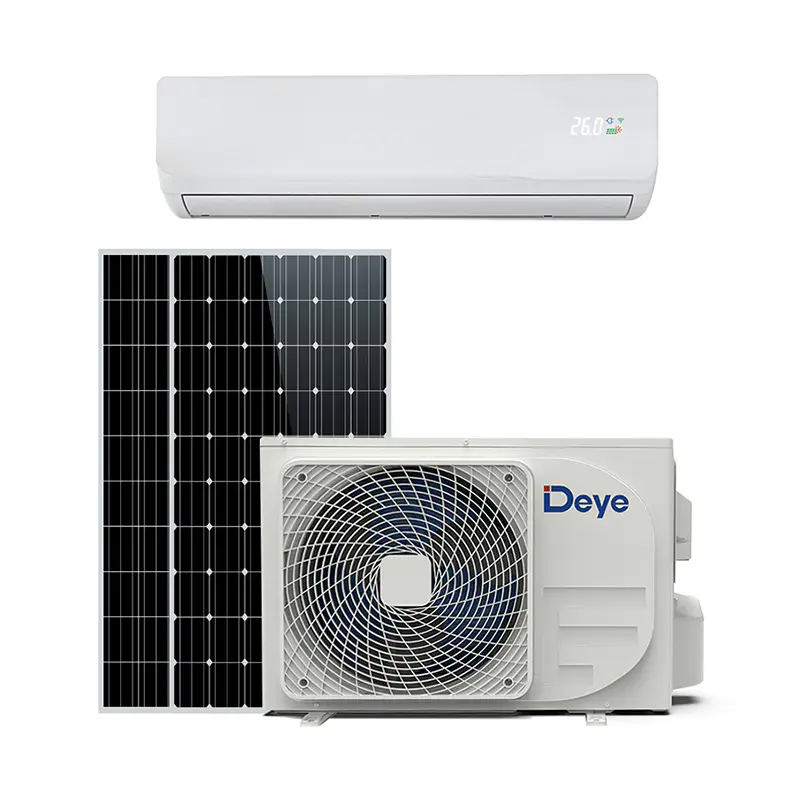
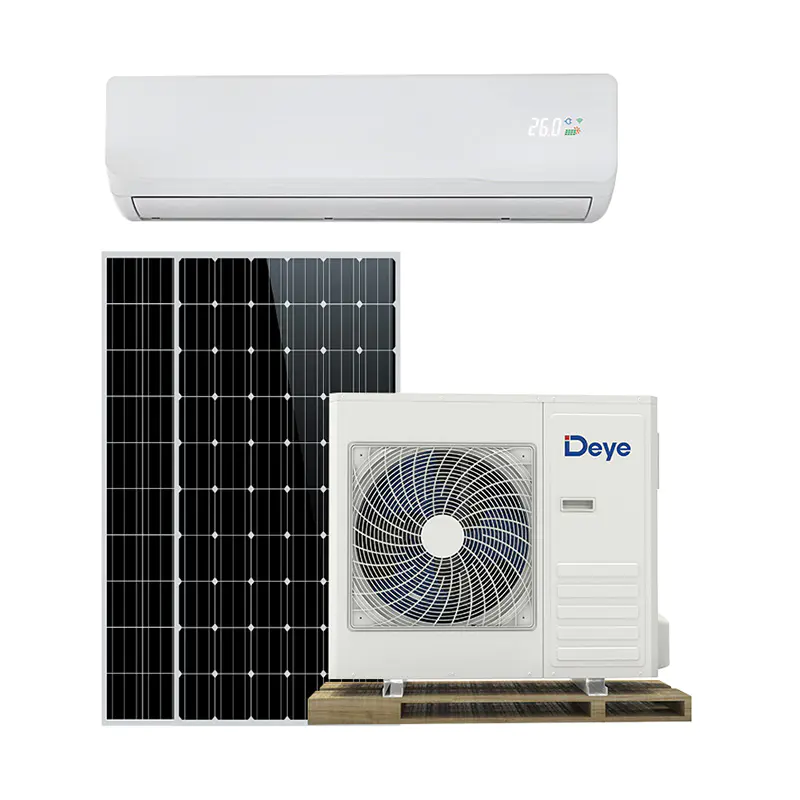
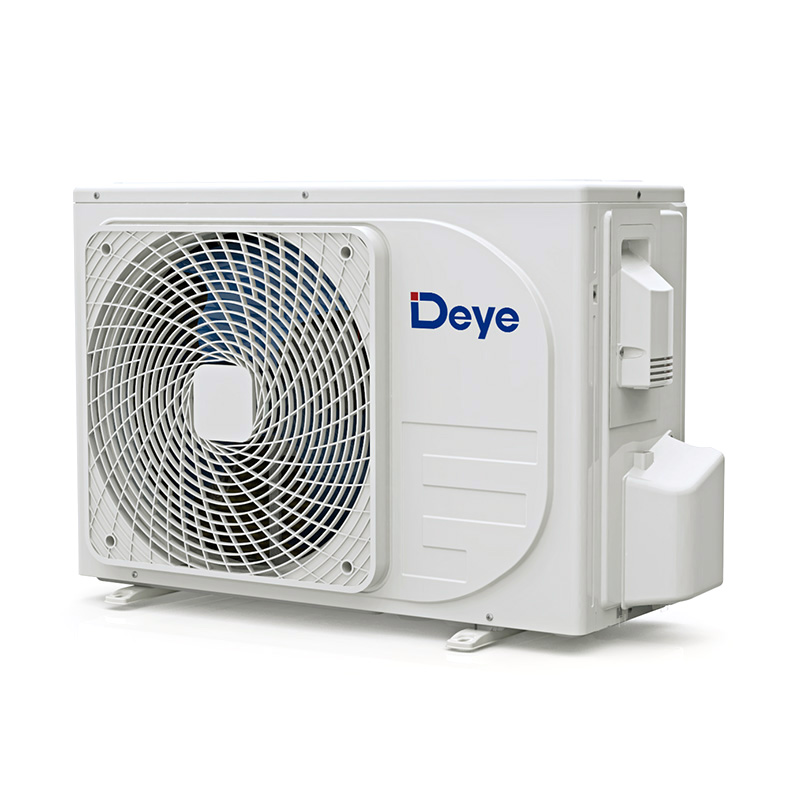 Wall-Mounted Hybrid Solar AC with Built-in MPPTA split system offering heating and cooling, this 4th-generation unit integrates solar MPPT and inverter technology, suited for rooms where a window unit isn't practical.View Product →
Installation, Circuit Safety, and Compliance
Installing a hybrid ACDC solar window AC is more involved than installing a standard window AC, mainly because of the DC side. If you have a solar array on the roof or on a ground rack, the DC cables must be routed to the AC unit with proper polarity and overcurrent protection. The good news is that the AC unit itself contains the solar charge/controller function, so you do not need a separate box, but you still need to pay attention to safety.
- Choose a window location that can support the weight of the unit and allows the rain panel to tilt outward for drainage.
- Use the bracket and side panels supplied with the unit to close the gap between the AC casing and the window frame.
- Check the grid side. The AC must be connected to a grounded outlet with adequate circuit rating. Never remove the ground pin.
- For the solar side, verify the total open-circuit voltage of the panel string does not exceed the unit’s maximum input voltage.
- Connect the DC wires with MC4 or matching connectors and ensure they are protected from mechanical damage.
- Make sure that shading from the building or a tree does not hit the solar panels during the hottest part of the day.
Electrical compliance is a frequent point of confusion. Each market has its own standard for grid-connected equipment, so it is important to confirm that the unit is certified for the destination country. For a deeper look at the specific circuit rules, please read our guide on hybrid ACDC solar window AC installation circuit safety and compliance.
Because a hybrid unit can be powered from two sources, some installers assume that the AC must be permanently wired by a licensed electrician. In many countries, the grid side can be plugged into a standard socket if the unit meets the plug rating. The solar side should still be considered part of a fixed PV system and installed by an experienced technician. Water, direct sunlight, and loose connections are the three most common failure causes on the DC side, so keep wiring protected inside a rated conduit.
Real-World Energy Savings and Payback Calculation
To show a realistic picture, we can model a 12,000 Btu/h hybrid solar window AC in a hot climate. Assume the unit runs 8 hours per day, six days per week. The average power draw at moderate temperature settings with an inverter compressor is about 650 W, higher during the initial pull-down and lower once the room reaches temperature.
Daily consumption example
| Configuration | Total cooling load | Solar contribution | Grid electricity used |
|---|---|---|---|
| Standard window AC | 5.2 kWh | 0 kWh | 5.2 kWh |
| Hybrid with 400 W panels | 4.6 kWh | 2.0 kWh | 2.6 kWh |
| Hybrid with 1,200 W panels | 4.6 kWh | 3.5 kWh | 1.1 kWh |
With an electricity price of $0.20 per kWh, the standard unit costs about $1.04 per day to cool. The hybrid version with 1,200 W of panels costs roughly $0.22 per day, a saving of about $0.82 per day. Over a 120-day cooling season, that is around $98 saved every year. After accounting for the higher price of the hybrid window AC and a portion of the solar panel cost, the payback period is typically between three and five years. In regions with electricity prices above $0.30/kWh, the payback can be less than three years.
This calculation assumes that the solar panels are already installed or installed together with the AC. If you have a separate purpose for the PV power when the AC is not running, the economic picture improves further because the panels can feed the grid or charge batteries at other times.
Maintenance, Cleaning, and Common Faults
Hybrid ACDC solar window ACs are generally reliable, but their environment is harsh: direct sun, insects, dust, rain splash, and voltage surges. Regular maintenance keeps the heat exchanger clean and prevents the compressor from overheating. Most of the same maintenance rules apply as for any window AC, but the solar input brings another set of potential issues.
Dust accumulation
Dust on the condenser fins reduces airflow and makes the compressor work harder. If the AC is in a window facing an unpaved street, clean the fins every two to four weeks with a soft brush or low-pressure water.
DC connector corrosion
MC4 connectors are generally waterproof, but if they are not properly engaged, moisture can enter and cause corrosion. Check the DC connectors twice a year, especially in coastal areas.
Auto-balance logic disorder
When the solar voltage fluctuates near the switching threshold, a low-quality controller may repeatedly switch between solar and grid power. This usually appears as flickering indoor lights or irregular compressor noise. Updating the controller firmware or replacing the main control board may be necessary.
- Clean or replace the air filter at least once a month during the cooling season.
- Check the drain pan and make sure water is flowing out freely, not collecting inside the unit.
- Inspect the window seal and side panels once a year; damaged panels let hot air in and reduce efficiency.
- If the unit has a heat pump function, avoid running it in heavy rain or when ice accumulates on the outdoor side without a proper defrost cycle.
- Keep the solar panel surface clean. A layer of dust on the PV modules can reduce output by 10–30%.
If something goes wrong, many common faults can be diagnosed by the user before calling a technician. For example, when the unit does not start and the display shows a DC voltage error, the first step is to measure the solar panel open-circuit voltage with a multimeter. If the voltage is normal, inspect the DC fuse. For a summary of the most frequent problems, see our article on common malfunctions of hybrid ACDC solar window AC.
Where Hybrid Solar Window ACs Deliver the Most Value
The hybrid solar window AC is not the best choice for every situation, but it is an excellent fit in several specific scenarios where other solar AC types create installation difficulties or cost too much.
Urban apartments and rental rooms
Landlords and tenants often cannot install a split system because of building rules that prohibit drilling into façades. A window unit is a removable, self-contained solution. When paired with a small balcony-mounted PV panel or a shared solar canopy, it works without altering the building envelope.
Remote cabins and off-grid rooms
Houses with a weak grid or an existing battery bank can use a hybrid unit to run during the day from solar and switch to battery-fed AC at night. The wide DC input range also makes it compatible with many 48 V battery systems through a simple DC voltage step-up/controller.
Workshops and small offices
Hot workshop spaces are usually occupied during the day, which is exactly when solar power is strongest. A 9,000–12,000 Btu/h window unit can cool a small tool shed, a server closet, or a guardhouse with 2–3 people without requiring a professional HVAC contractor.
Outbuildings with no AC wiring
In a detached garage or a pool house, running a dedicated AC circuit can be expensive. If a solar panel is already available for other loads, a hybrid window AC can be installed with the grid side connected to a small existing circuit and the DC side fed from the nearby solar panels.
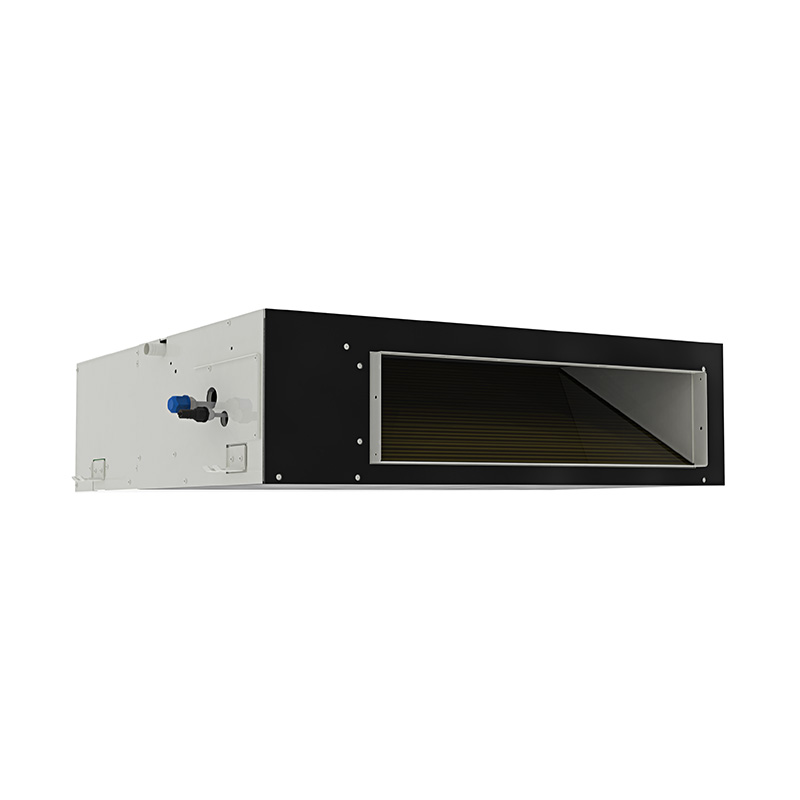
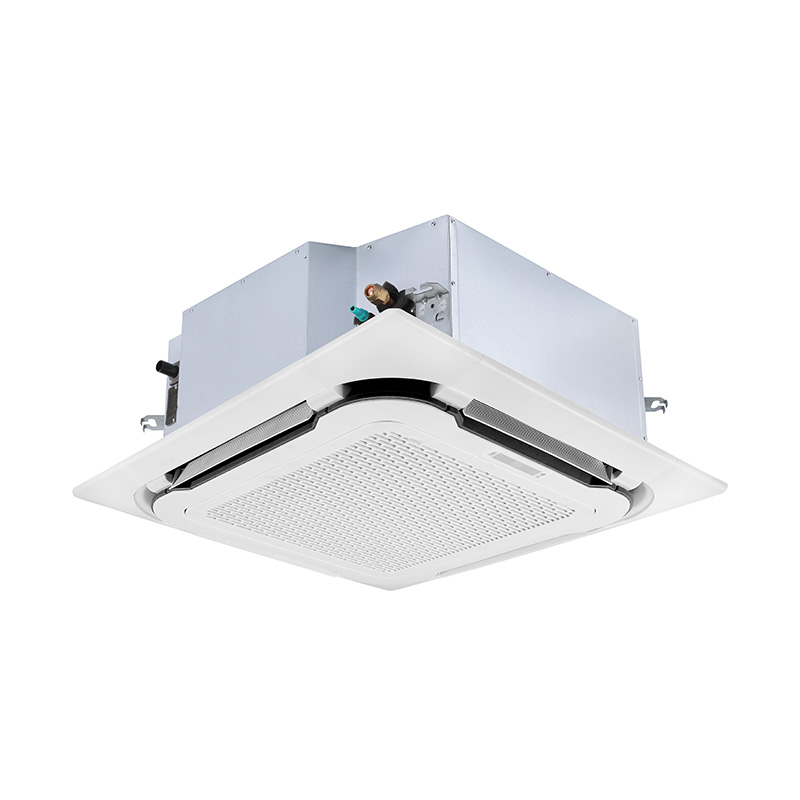 Light Commercial Solar Cassette AC for Even CoolingA ceiling-mounted hybrid AC with four-way airflow, designed for offices and shops, it reduces grid reliance using solar power without batteries or charge controllers.View Product →
Working with a Factory That Builds Solar AC Systems
For project planners, importers, and installation companies, buying from a manufacturer that actively produces solar air conditioners brings significant advantages over assembling a system from generic components. Our production line in Zhejiang focuses on hybrid ACDC technology, and we do more than just assemble standard window ACs with an added solar connector. The control algorithm, the component matching, and the factory test procedures are designed for the specific needs of solar-powered cooling.
When you source directly from a factory, you can request modifications that would be impossible with a shelf-bought unit. A few examples include:
- Custom solar DC input voltage ranges to match a particular inverter/panel string layout.
- Random-start delay or remote lockout functions for hotel rooms and rental apartments.
- Different plug standards for the target market.
- Custom packaging and equipment brand marking for small-lot delivery.
- Technical documentation and warranty support in the required language.
Our range of solar air conditioners includes window-type hybrid ACDC units, wall-mounted hybrid ACDC units, and light commercial cassette systems for larger spaces. The wall-mounted version suits rooms with no window space, while the cassette type is used when a false ceiling exists. All three share the same solar-priority control platform, which means installation crews only need to learn one system concept.
Before ordering, ask the manufacturer for the detailed specification sheet, including the solar DC input range, the rated cooling capacity at standard conditions, the energy efficiency ratio (EER or CEER), and the maximum allowable PV voltage. Then confirm that the control software supports the auto-balance function in the way that your customers expect. A reliable factory will provide test videos and a sample unit for third-party evaluation.
Frequently Asked Questions
Can a hybrid ACDC solar window AC run completely on solar panels?
Yes, if the solar array is large enough to cover the compressor and fan demand at the current cooling load. For a 9,000 Btu/h unit, that usually means at least 900 W of solar panels. When the sun is strong, the unit may still use a tiny amount of grid power for the display and sensors, or it may run completely off-grid depending on the design. In our units, the controller is programmed to prioritize solar power as close to 100% as possible without causing the compressor to stall.
Do I need any extra equipment like a charge controller or inverter?
No, the hybrid window AC integrates the solar DC/DC control and the AC power supply circuit. You connect solar panels to the unit, connect the grid plug to an outlet, and let the internal controller manage the energy flow. You might still need a DC breaker between the solar panel string and the AC for safety and service isolation, but there is no separate solar inverter.
Will it work at night or on cloudy days?
Yes. When the DC input drops below a certain voltage, the unit automatically draws AC power from the grid. The cooling continues without interruption. On partly cloudy days, the controller may oscillate between solar and grid power, but the compressor speed does not need to stop completely.
Are these window ACs noisy?
Like all window units, the compressor and condenser fan are mounted in the same chassis, so indoor noise is generally higher than a wall-mounted split AC. However, because the compressor is inverter-driven, the noise varies with the cooling load. At night when the room is close to the set point, the compressor speed drops, and the unit becomes quieter than a fixed-speed window AC.
Can I use it to heat the room in winter?
The hybrid ACDC solar window AC is available with a reverse-cycle heat pump, which provides heating efficiency usually 2.5 to 3.5 times better than an electric resistance heater. If you plan to use it for heating, check the maximum heating capacity at 7°C and verify that the unit has a defrost function to prevent frost from building up on the outdoor coil.
How many solar panels does a 12,000 Btu/h unit need?
A common recommendation is 1,200–1,500 W of photovoltaic panels for a 12,000 Btu/h hybrid window AC. If the panels are mounted in a location with very high irradiance, a smaller array may be enough. The exact number of panels also depends on the individual panel wattage; for example, six 200 W panels or four 350 W panels both produce around 1,200–1,400 W. Always check the maximum input voltage of the AC before wiring the panels in series.
If you need to cool one room efficiently and want to reduce grid dependence without investing in a full split system, a hybrid ACDC solar window AC deserves serious consideration. Start by measuring your window size, estimating your daily cooling hours, and checking whether you have suitable space for solar panels—then compare the rated capacity, solar input range, and warranty terms of the units you are considering. For project-level requirements, factory support can make the selection process much easier.
